
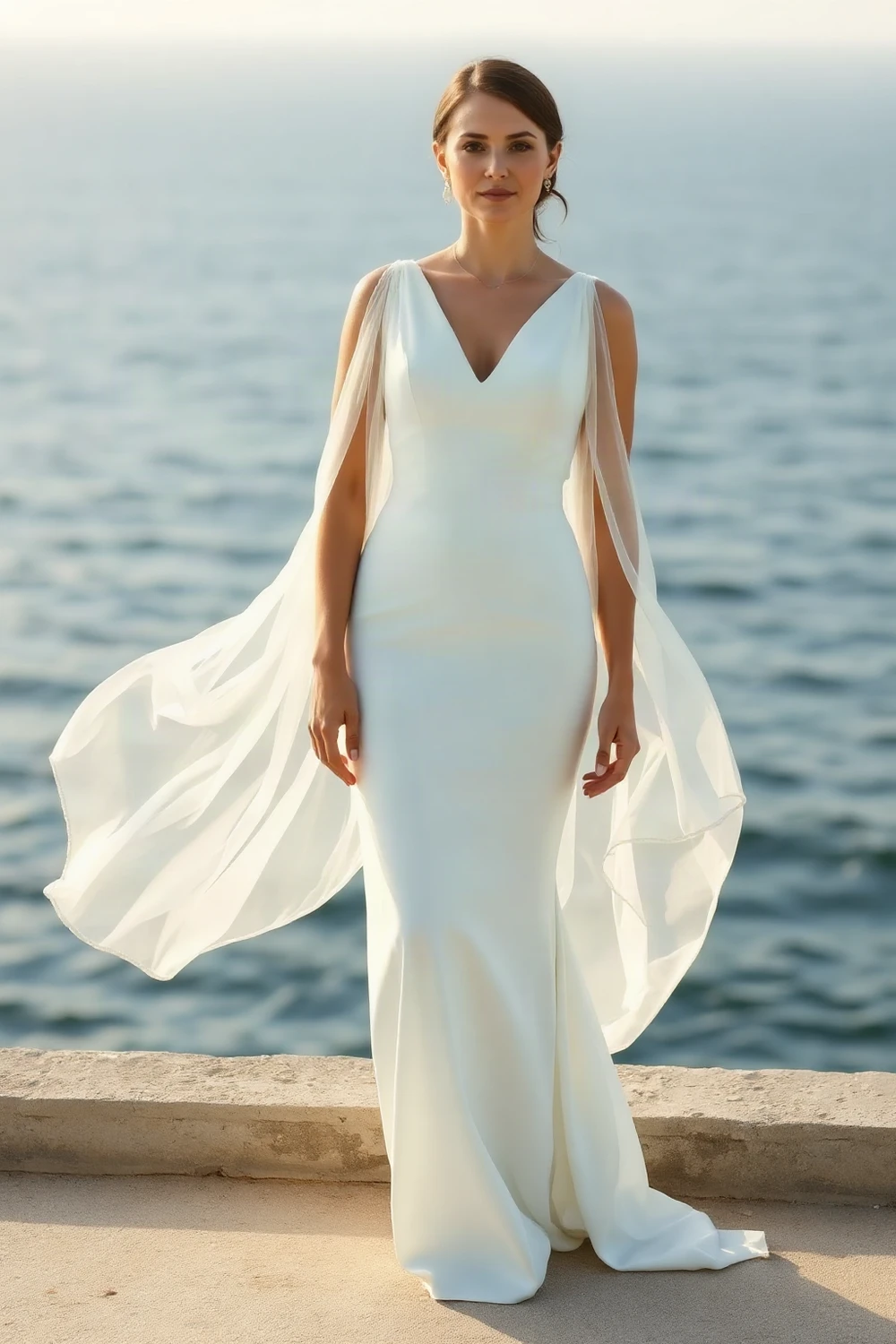
The fifth concept places long, wide panels over an otherwise clean V-neck column. The front of the white dress is almost uninterrupted and follows the body before loosening slightly at the floor. From each shoulder, a light, translucent-looking panel falls beside the arm. The panel on the image’s left opens into a broad curve in the breeze, while the opposite side drops more vertically, capturing two stages of motion in one frame. The water behind the wearer and the low stone edge in front help define the pale panel boundaries against different shades of blue and beige.
Cape panels offer a more open frame than fitted long sleeves and more surrounding volume than a simple sleeveless dress. That movement should be tested rather than assumed. Observe whether the panels travel forward in the wind or catch on jewelry, a bouquet or seating, and check their reach while turning. A swept-back hairstyle can keep the shoulder attachments visible, whereas loose hair may overlap them. The slim skirt balances the width above, but its stride allowance still needs assessment. The best panel length is one that retains the floating outline while remaining manageable throughout the actual ceremony route.