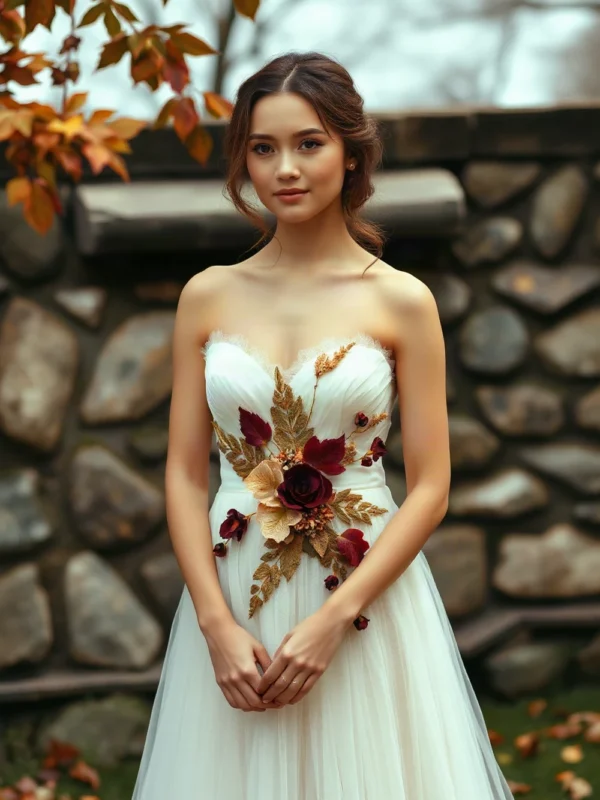
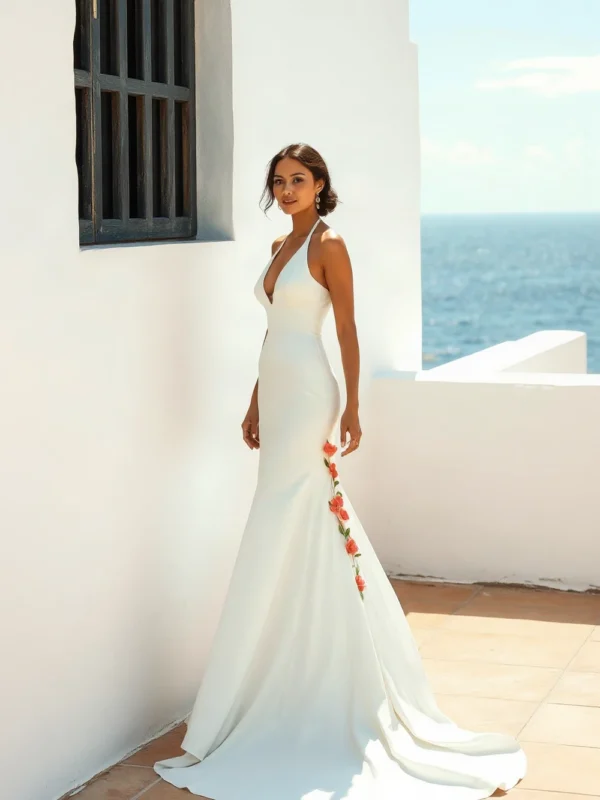
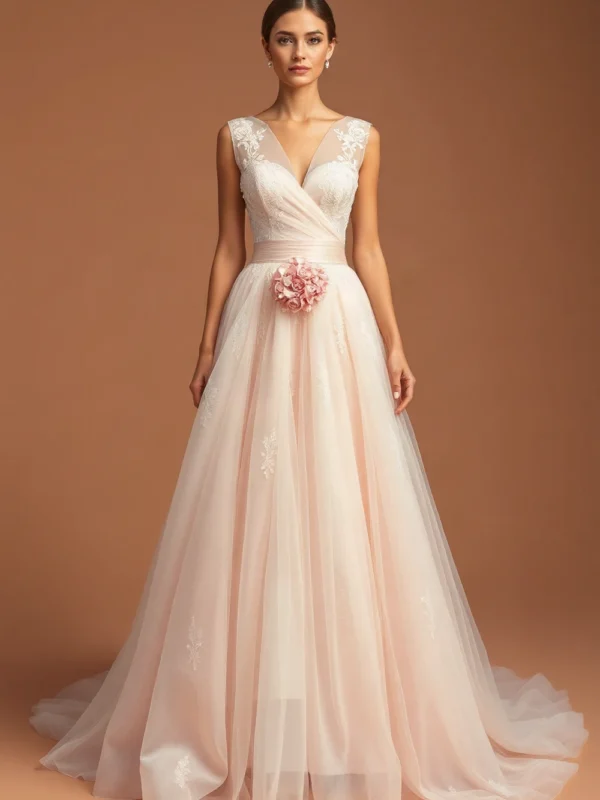
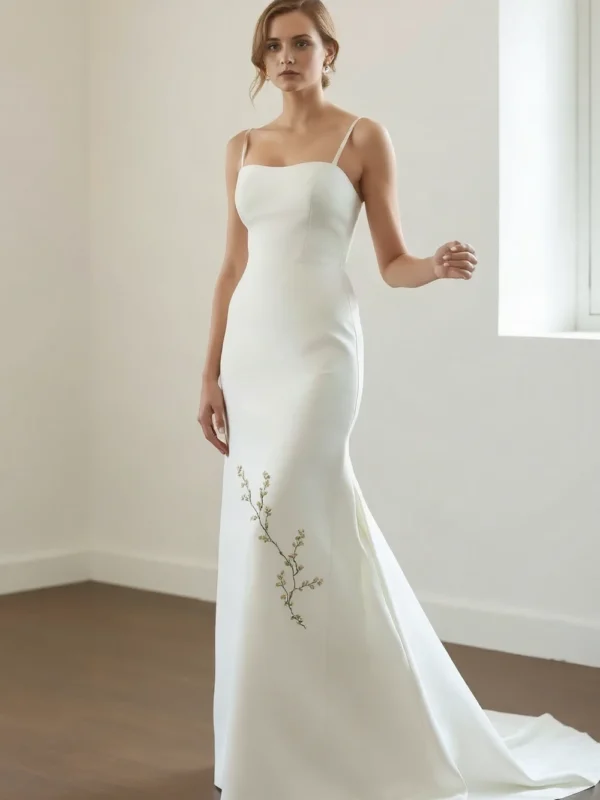
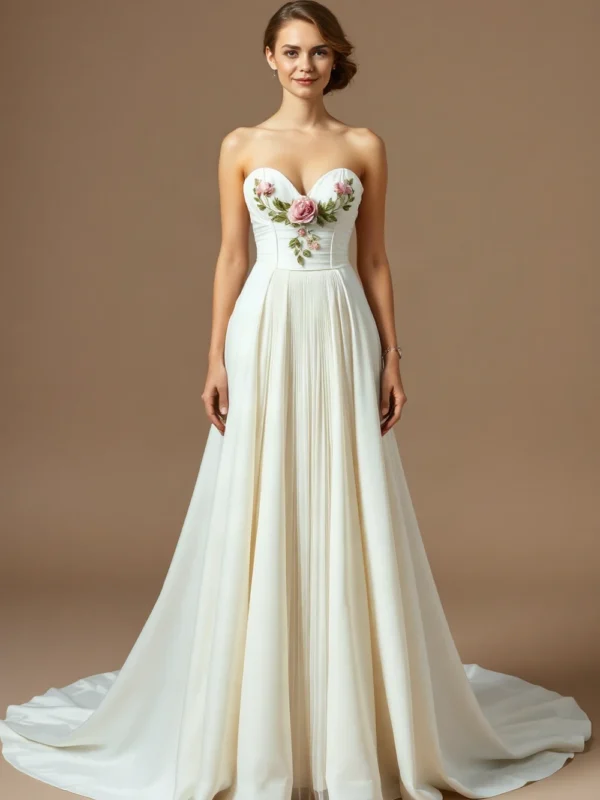
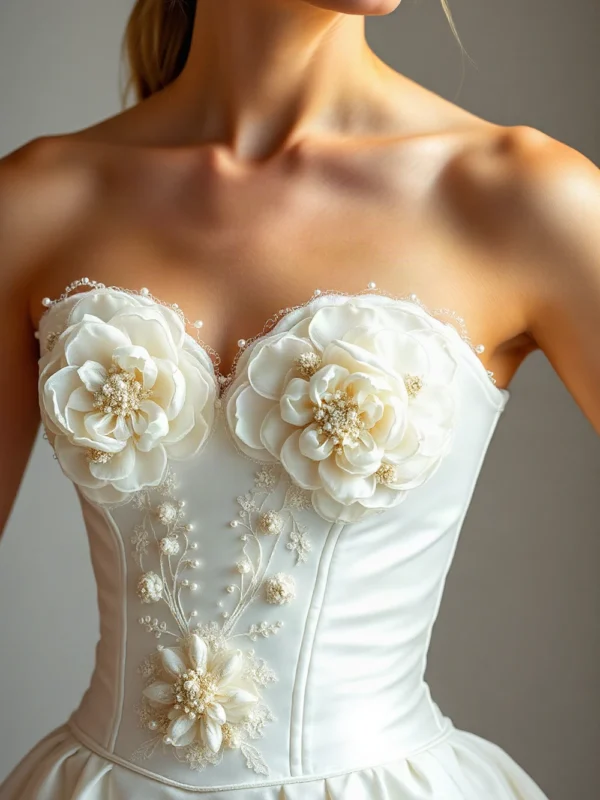
The shared idea in this gallery is that a flower can do more than decorate a wedding dress: its scale and placement can direct the proportions. The same pale ground feels dramatic beneath burgundy botanical forms, yet exceptionally restrained when interrupted by only one slender branch. Volume, color and empty space therefore deserve to be considered together.
The first concept concentrates burgundy flowers and golden-brown leaves from the strapless bodice to the waist. The second takes the opposite approach. A narrow line of coral flowers descends along one side of a close-fitting halter silhouette. One creates impact through rich contrast and density; the other uses direction and a large expanse of unadorned white.
The blush third dress offers a softer transition. Its pink floral cluster anchors the center waist, while pale scattered motifs lightly echo it across the full skirt. In the fourth image, a square neckline and clean fitted surface remain almost entirely plain. A fine botanical branch near the lower skirt functions like an asymmetrical signature rather than a central focal point.
The fifth and sixth concepts both bring flowers close to the face, but their scales differ substantially. Pink roses and green leaves frame a sweetheart neckline in a controlled, symmetrical arrangement. The close-up ivory design instead relies on oversized, layered blooms, fine embroidery and bead-like edging. Its impact comes from relief and shadow rather than strong color contrast.
Begin selection with the silhouette, then decide where the eye should settle. A colorful or highly dimensional bodice often benefits from a restrained bouquet and open neckline. A sparse skirt motif leaves more room for expressive earrings or a hair detail. During fittings, also test sitting, walking, turning and holding the bouquet so that raised flowers remain comfortable and visible in real movement.