
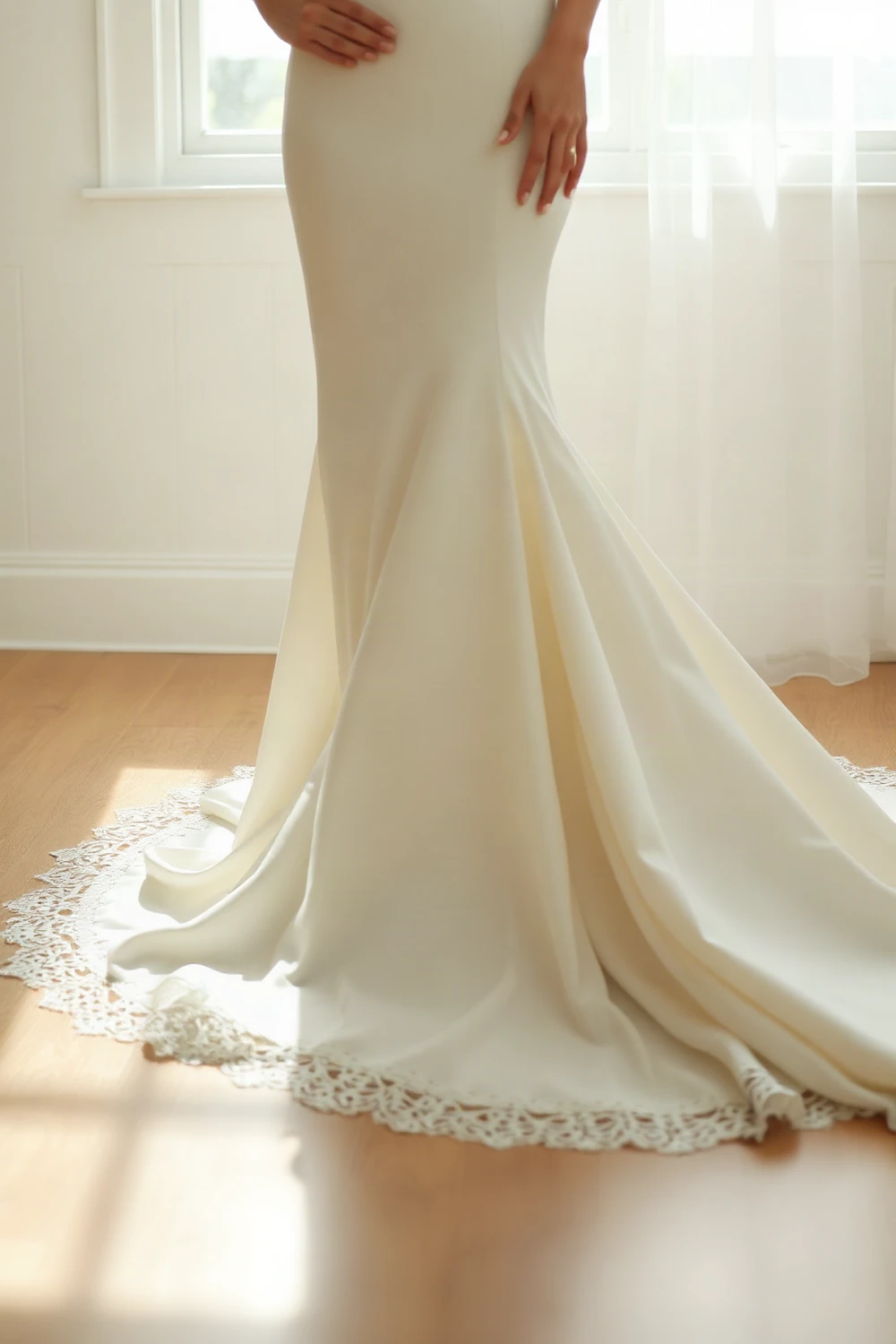
This close crop concentrates on the section from the lower torso to the floor. A smooth, undecorated-looking surface follows the hips and knees before opening through long vertical folds into a broad train. Around its edge, a continuous scalloped lace-look border establishes a detailed boundary without interrupting the quiet center. Because the upper body is outside the frame, the image offers no evidence about the neckline, sleeves or back closure; its useful information lies specifically in the flare and hem treatment.
Strong window light reveals the warm ivory tone, the shadows within the folds and the open pattern of the border. Pale walls and a wooden floor remove competing detail, directing attention to the train's outline. This approach may appeal to someone who prefers ornament to become visible mainly during movement or low-angle photographs rather than cover the whole dress. Practical comparisons include the floor space required for turns, the amount of edging in contact with the ground and how the train might gather if lifted. Against the third image's widely distributed motifs, this concept reads quieter from a distance but more decorative at floor level.