The shared theme across these six concepts is that black does not dictate a single bridal mood. Smooth surfaces make construction lines prominent, while beaded-looking ornament, strong lapels or a spreading train shifts attention elsewhere. A useful choice therefore begins with deciding which feature should remain legible against the dark silhouette.
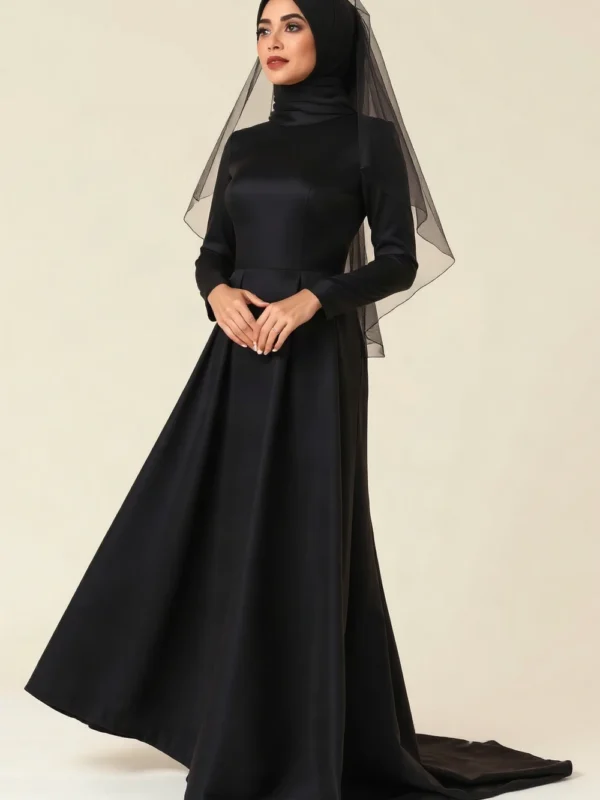
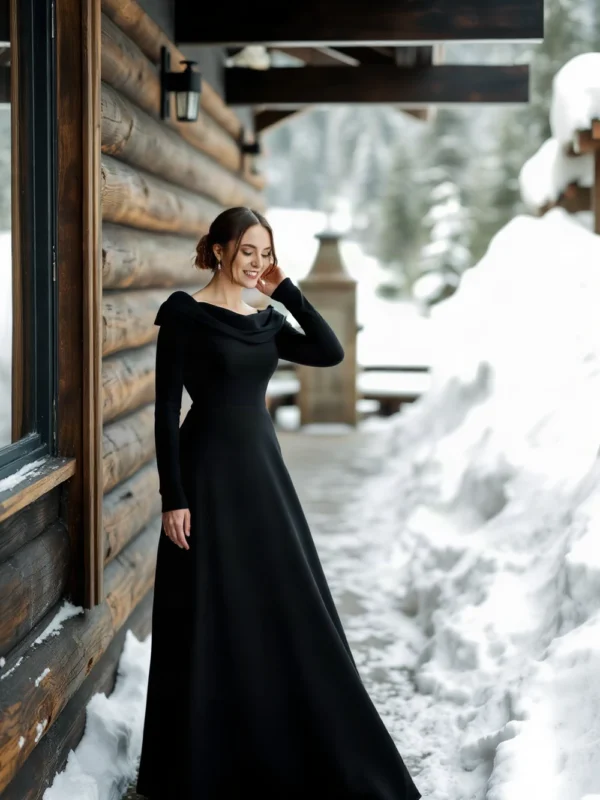
The first two looks are long-sleeved and restrained. The high-neck A-line gown, coordinated hijab and translucent veil create a covered, ceremonial composition. Beside the snowy cabin, a wide draped neckline frames the face instead. Its plain, floor-length skirt forms a particularly sharp contrast with the white landscape.
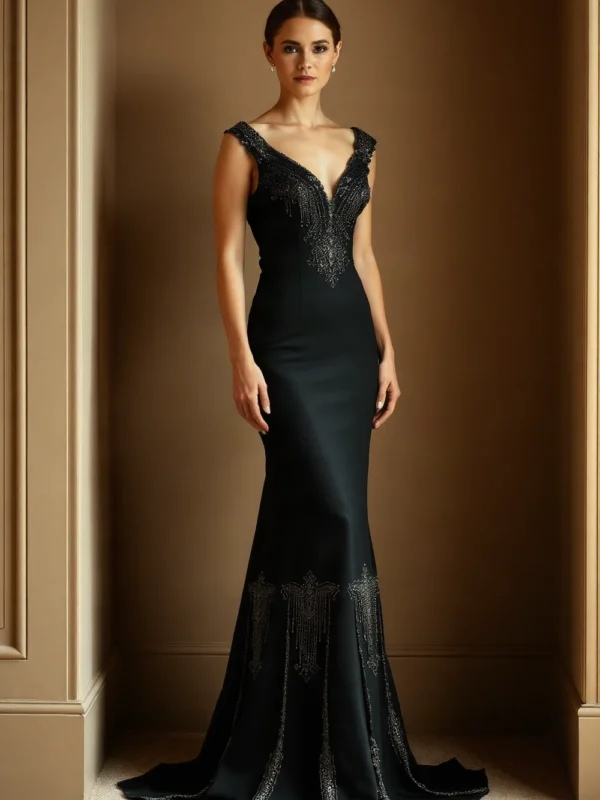
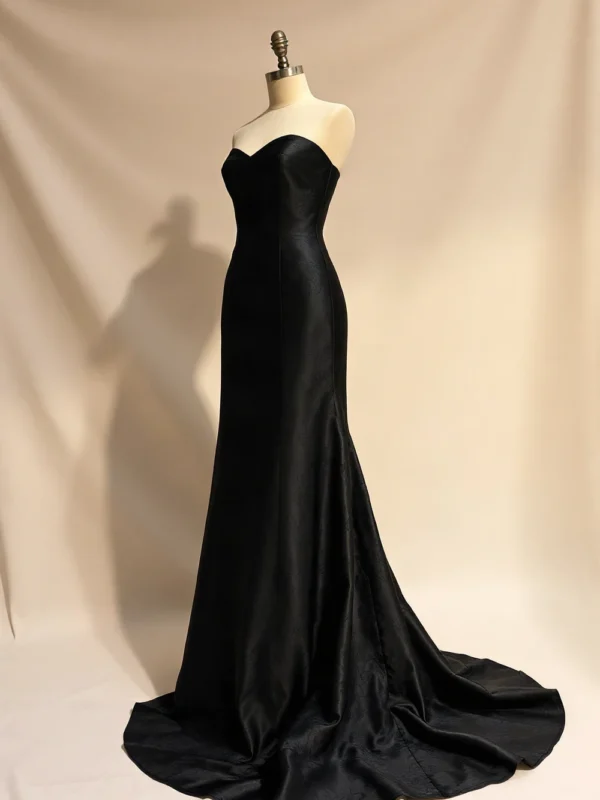
The third and sixth images offer different kinds of drama. Geometric, light-catching decoration combines with a deep V-neck and fitted mermaid line in the alcove portrait. The strapless mannequin display relies less on applied ornament and more on its sculpted bodice, subtly patterned surface and broad train. One uses repeated highlights; the other draws impact from an uninterrupted outline.
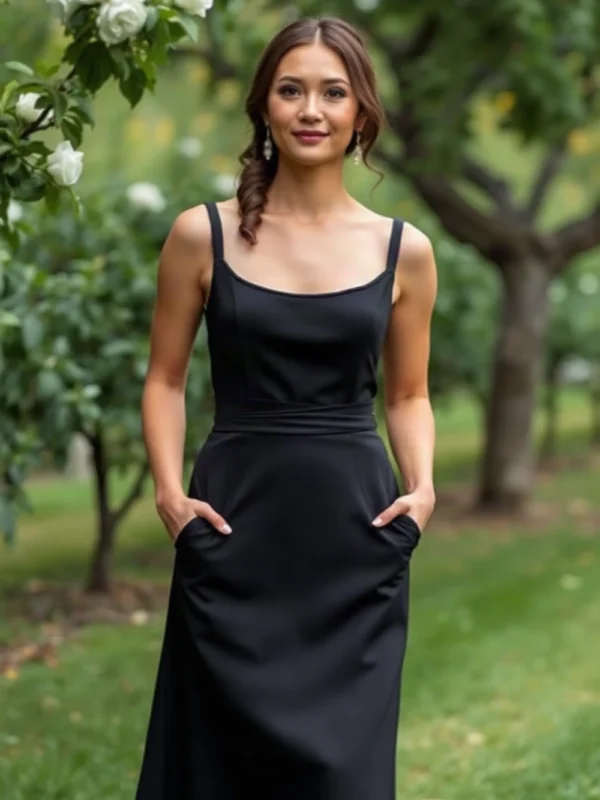
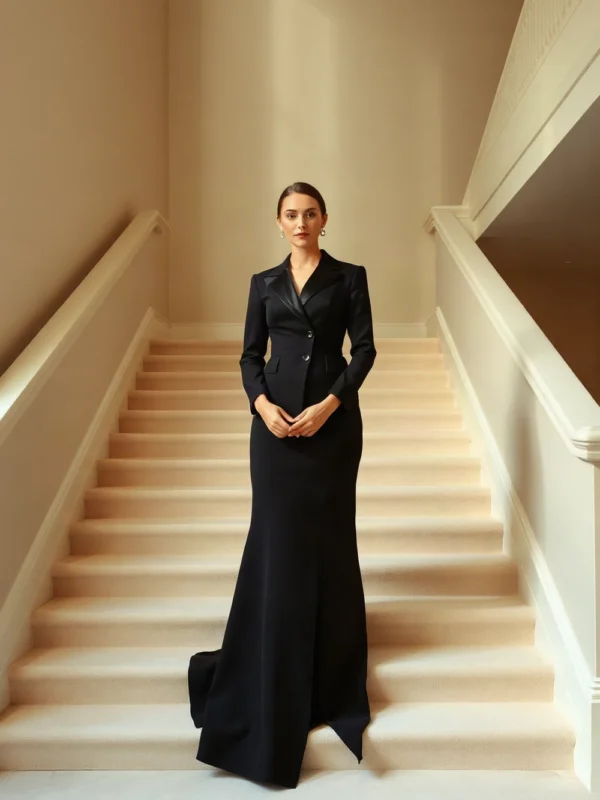
The pocketed slip-style gown and the tailored lapel dress present two approaches to function and structure. Pockets give the hands an easy position within the garden portrait, while the simple neckline and waistband keep the mood relaxed. Sharp shoulders, buttons and a jacket-like bodice make the staircase look more formal and architectural.
Before favoring one image, consider floor conditions, time spent sitting and walking, desired arm coverage and how the neckline will interact with accessories. A long train increases visual reach but needs handling; pockets add convenience but can affect the skirt when filled. If beading or lapels already provide a focal point, quieter jewelry will usually preserve the concept more clearly.