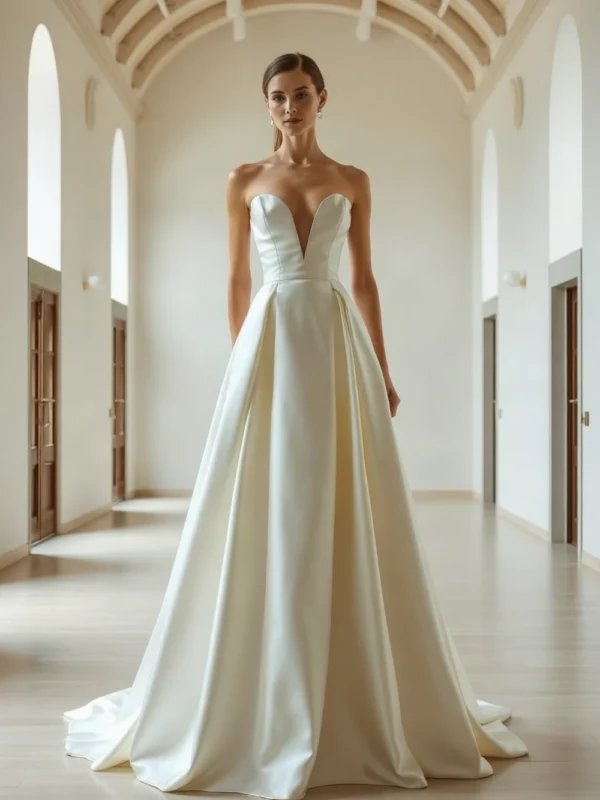
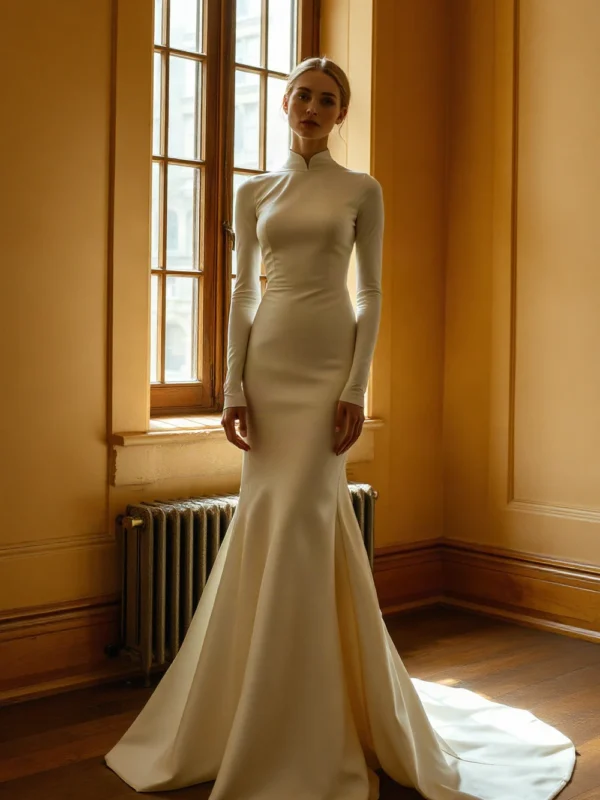
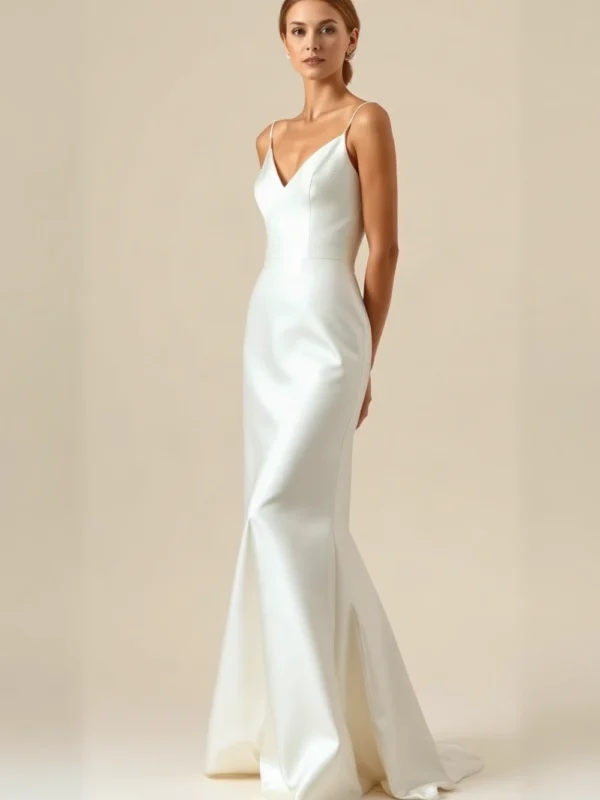
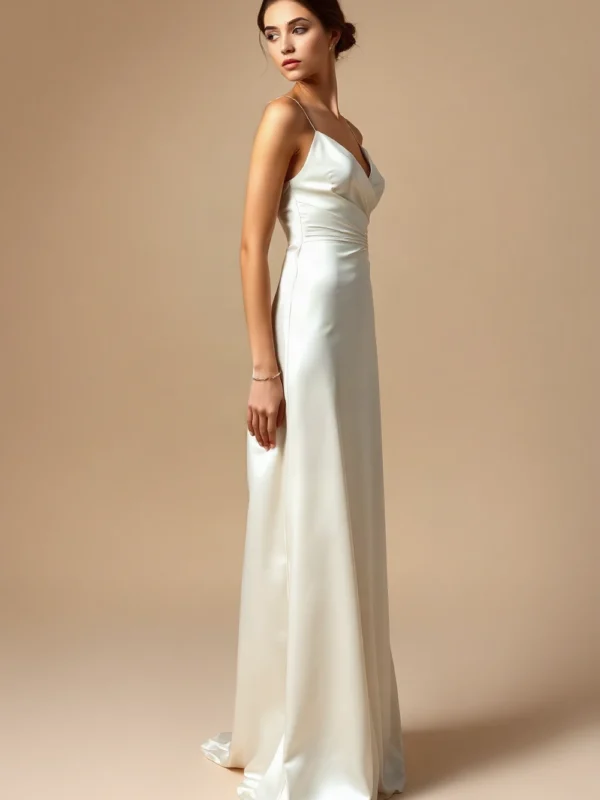
The shared theme is an ivory satin-look surface used without lace, beading or dense ornament. As a result, neckline geometry, waist construction and skirt volume carry the visual interest. The plunging strapless bodice in the first image and the small standing collar in the fourth represent the most open and most covered ends of the selection.
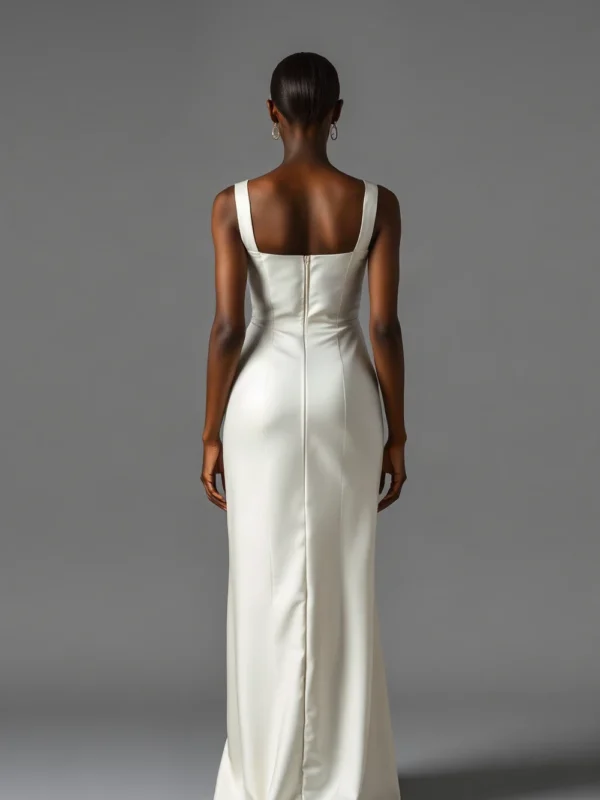
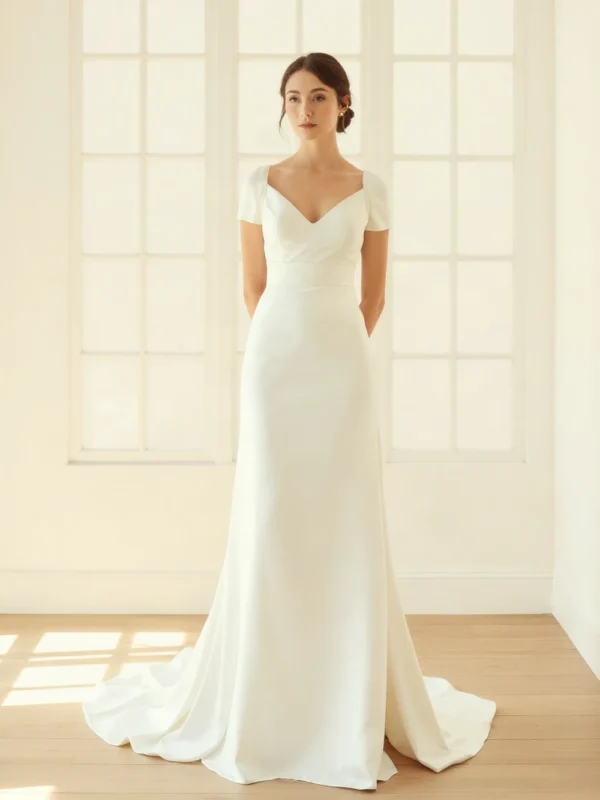
The skirts differ just as clearly. Deep pleats open into a generous A-line in the first concept, while the back-view dress in the second stays close to the body in a narrow column. The third combines a soft V-neck and short sleeves with a restrained A-line. In the fourth, the fitted line continues past the hips before flaring around the knees into a long train.
The fifth and sixth images show why slender straps and a V-neck do not always produce the same effect. The fifth bodice is clean, seamed and graphic, with an uninterrupted fitted skirt. The sixth uses overlapping panels and diagonal waist folds to introduce controlled movement. The former suits a preference for a smooth surface; the latter offers softness without adding ornament.
It is useful to look beyond the front neckline. The square back in the second image demonstrates how broad straps, a horizontal upper edge and vertical seams can make the rear view a defining part of the design. Consider back support, sitting comfort and the views likely to be seen during the ceremony.
During a fitting, test walking, sitting and raising the arms under more than one type of light. Satin-look surfaces can make seams, folds and tension points appear different in a bright studio and warm window light. A balanced choice connects the preferred degree of coverage with support, movement and skirt volume that remain manageable throughout the setting and schedule.