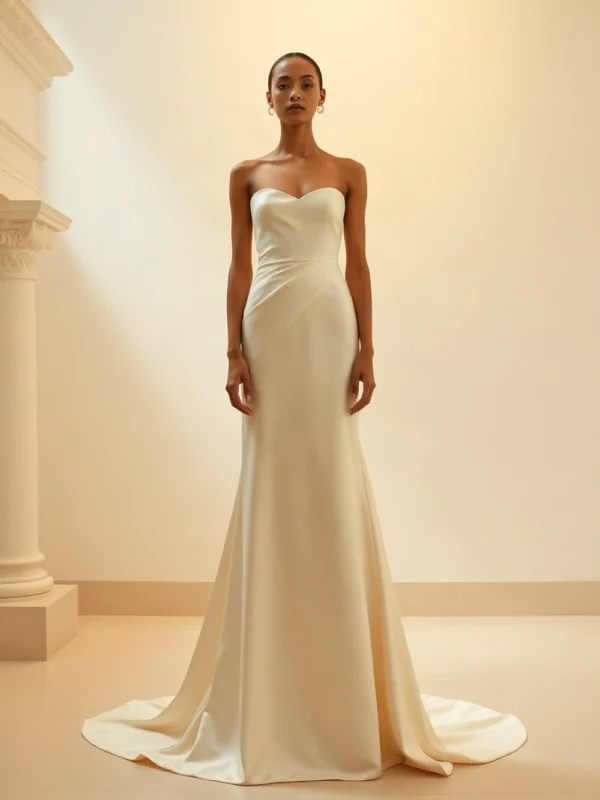
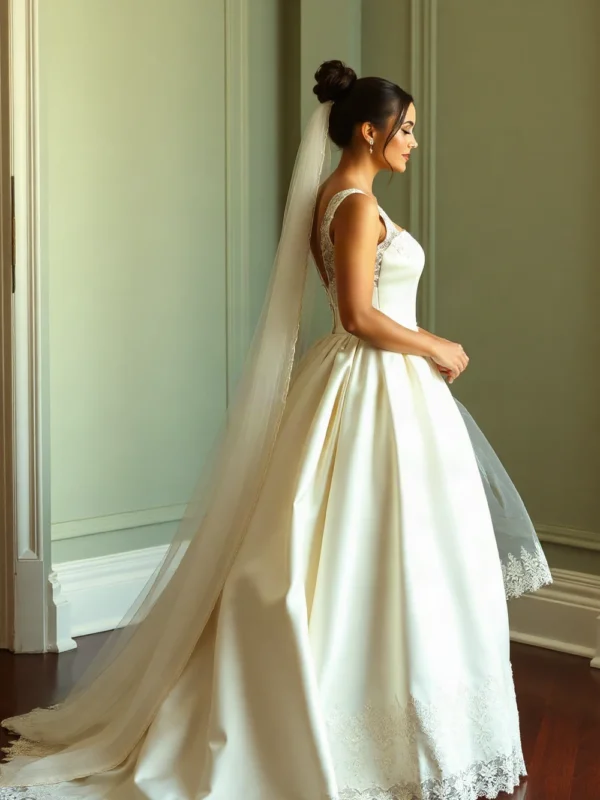
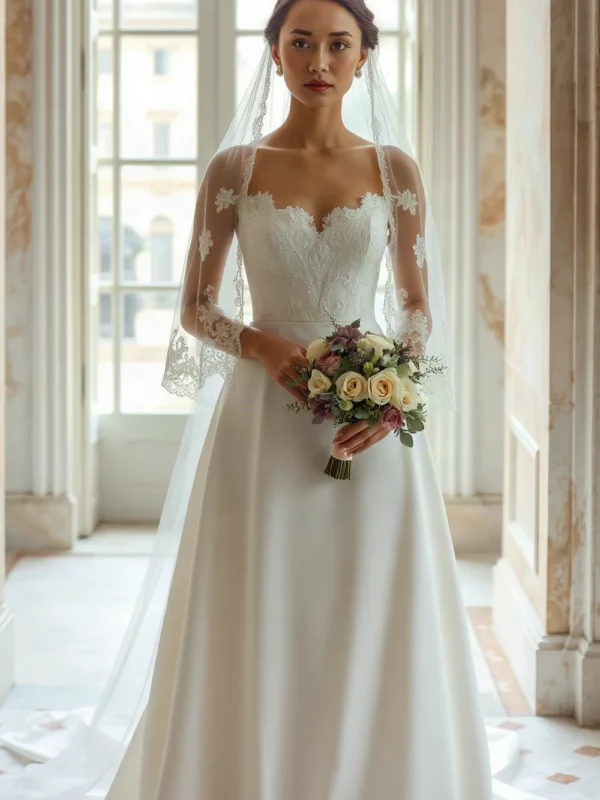
In satin-look wedding dresses, minimalism does not mean an absence of detail. Shape instead comes through seams, folds, proportion and the direction of the surface. A smooth finish carries light across broad areas while revealing every deliberate twist, diagonal drape and change at the waist. For a sculptural effect, consider not only the neckline but how the whole surface moves over the body when walking or sitting.
These six concepts interpret a restrained ivory palette through different proportions: a long-sleeved midi column, centrally gathered A-line, side-knotted one-shoulder silhouette, geometric diagonal band, off-shoulder fishtail and sweetheart A-line. Comparing shoulder exposure, waist focus, hip emphasis, train volume and movement is more useful than seeking one universally correct shape. The images offer inspiration, but the final choice depends on fitting, support, setting and comfort.
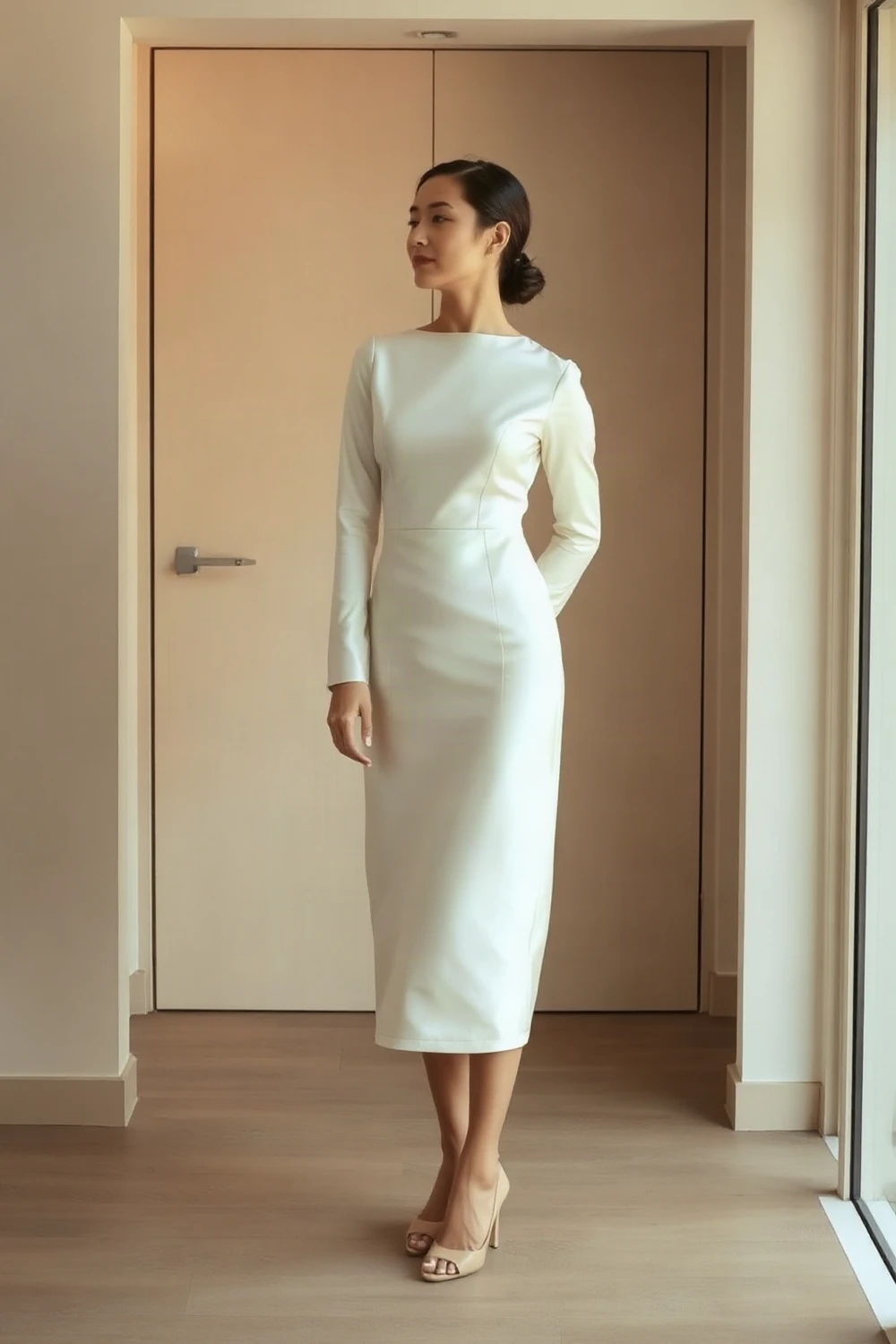
A Continuous Line with a Boat Neck and Long Sleeves
The first concept pairs a boat neckline and narrow long sleeves with a close, below-knee skirt. Its quiet surface runs almost continuously from shoulder to hem, though a waist seam and angled shaping line keep it from looking flat. Because the midi length exposes the feet, shoe color, toe shape and heel proportion are more visible than beneath a floor-length gown. The covered upper body and exposed ankles create measured balance rather than sweeping volume.
This proportion can suit a civil ceremony or pared-back celebration where no train is wanted. Yet a plain finish will not hide shoulder pulling, horizontal waist creases or a skirt that rotates while walking. Reach forward, sit and take several normal steps during a fitting to confirm that the sleeves, waist and narrow hem remain comfortable together.
A Soft A-Line Released from Central Draping
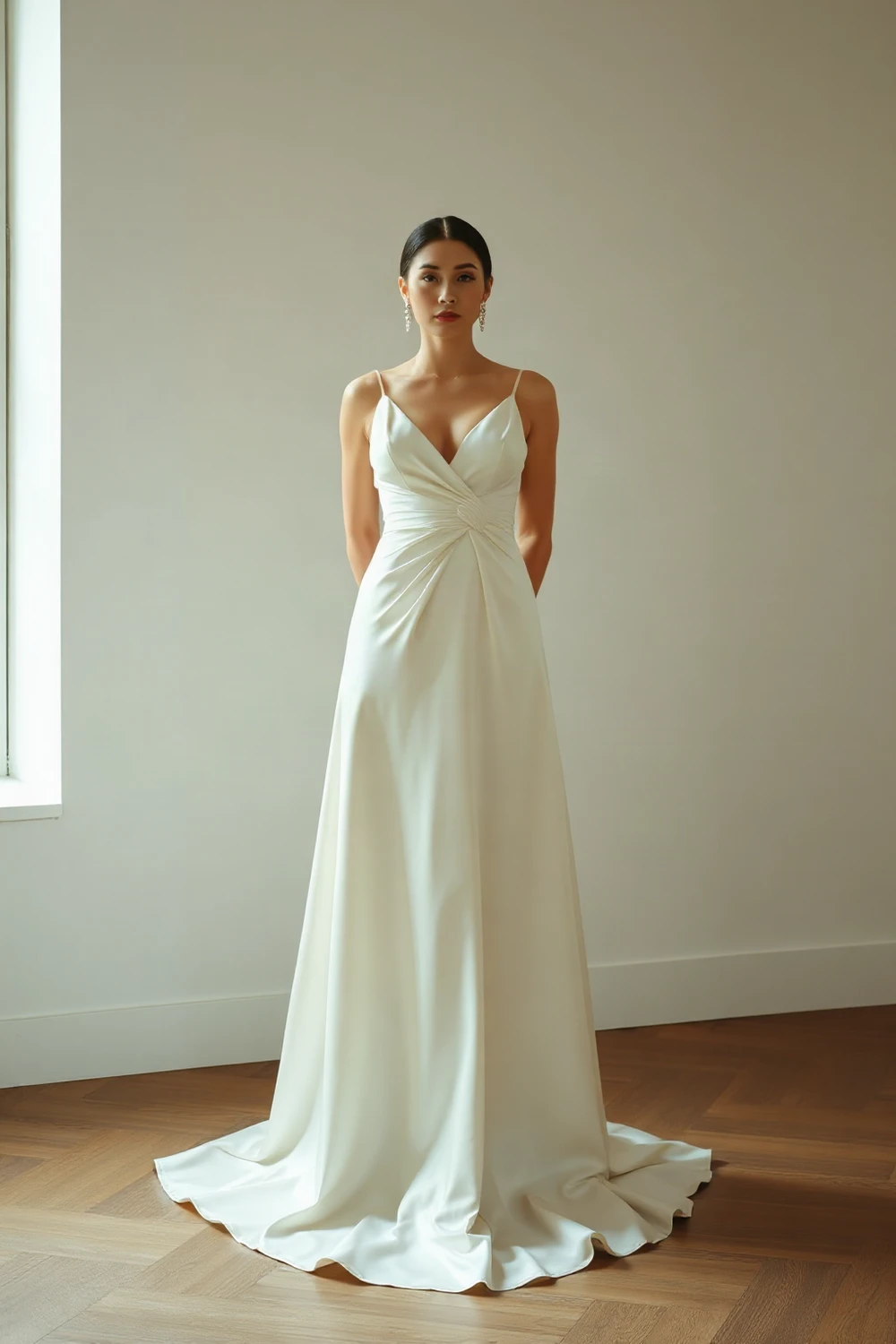
In the second look, fine straps and a V-neck meet crossing folds that twist at the center of the waist. This focal point gathers the bodice visually, while a soft descending fold reinforces the skirt’s vertical movement. The A-line expands beyond the hips and ends in a short train, producing a more fluid, ceremonial result than the narrow midi. Although pronounced, the centered draping keeps the composition balanced.
Evaluate the fine straps alongside their length and the dress’s internal support. They should hold the neckline without pressing into the shoulders, while the central twist should not feel bulky when seated. This construction suits someone seeking clear waist emphasis without a skirt that traces the hips as closely as a fishtail.
Directional Draping from One Shoulder to the Hip
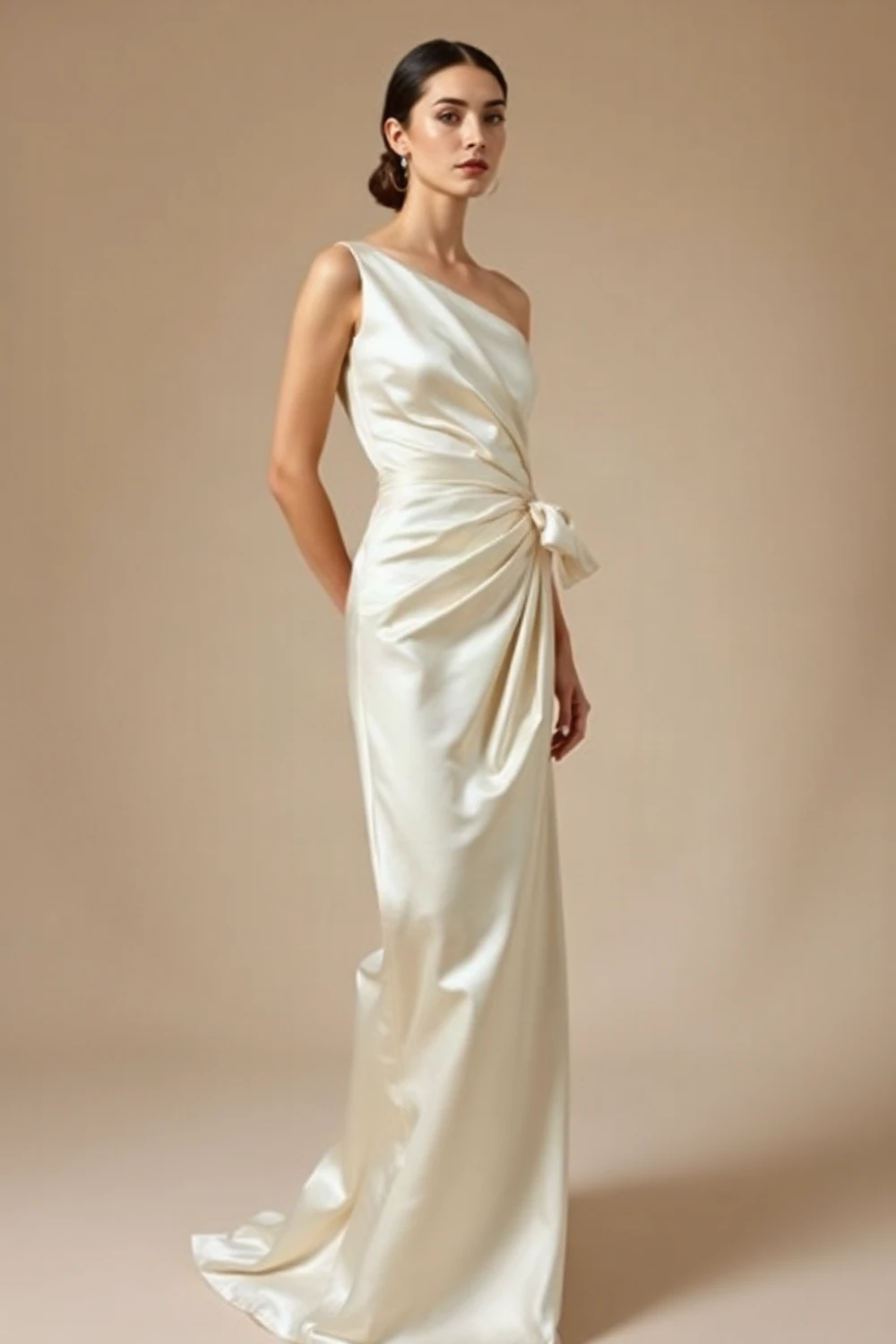
The third concept carries asymmetry from one shoulder to a knot at the opposite hip. Diagonal folds guide the eye across the body, and the off-center tie creates a more sculptural focus than central gathering. A long, close-falling skirt calms the active upper section, while the hanging panel continues the same direction toward the hem.
Each side of an asymmetric dress presents a different impression. Camera angle, ceremony orientation and which shoulder feels more comfortable to expose can inform the choice. During fitting, check that the shoulder edge stays secure when the arm rises and the hip knot remains comfortable when sitting. Because the diagonal is already assertive, small earrings or an uncluttered hairstyle may preserve its clarity better than a strong necklace.
A Diagonal Shoulder Band Above a Quiet Skirt
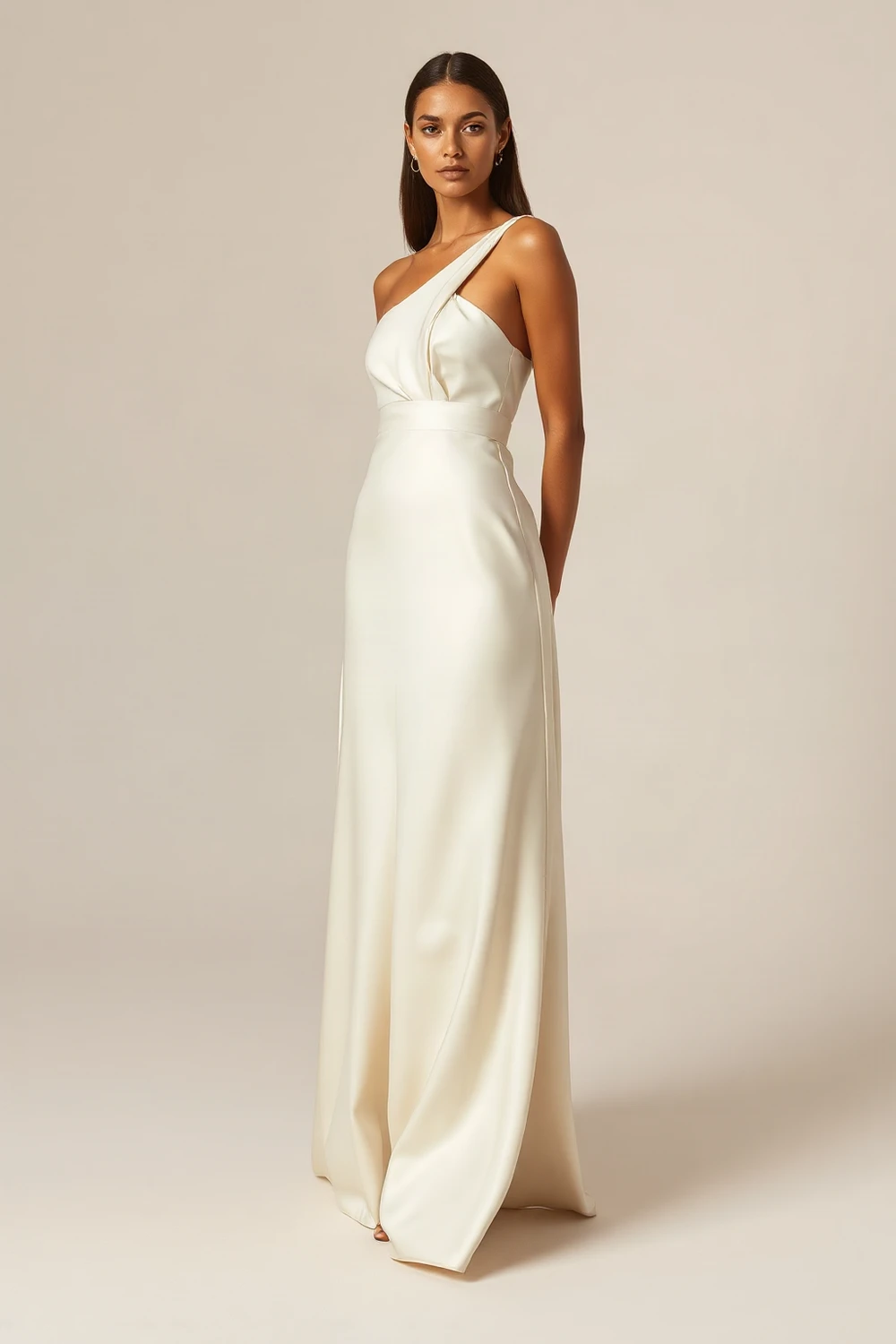
The fourth look is also asymmetric, but its sculptural feature remains on the upper body rather than moving to the hip. A broad diagonal band crosses above a narrow opening and soft fold, while a horizontal waistband steadies the composition. Below, the skirt reaches the floor without a side knot or dense gathering. The result is geometric above and uninterrupted below.
This approach may suit someone who wants a one-shoulder neckline with a visually quieter waist and hips. Check the side opening, discreet support and the band’s response to arm movement together. Set the hem with the intended shoes so the front does not collect underfoot. When comparing the one-shoulder designs, decide whether the main interest should stay near the face or travel toward the hip.
A Defined Rear Silhouette with an Off-Shoulder Band
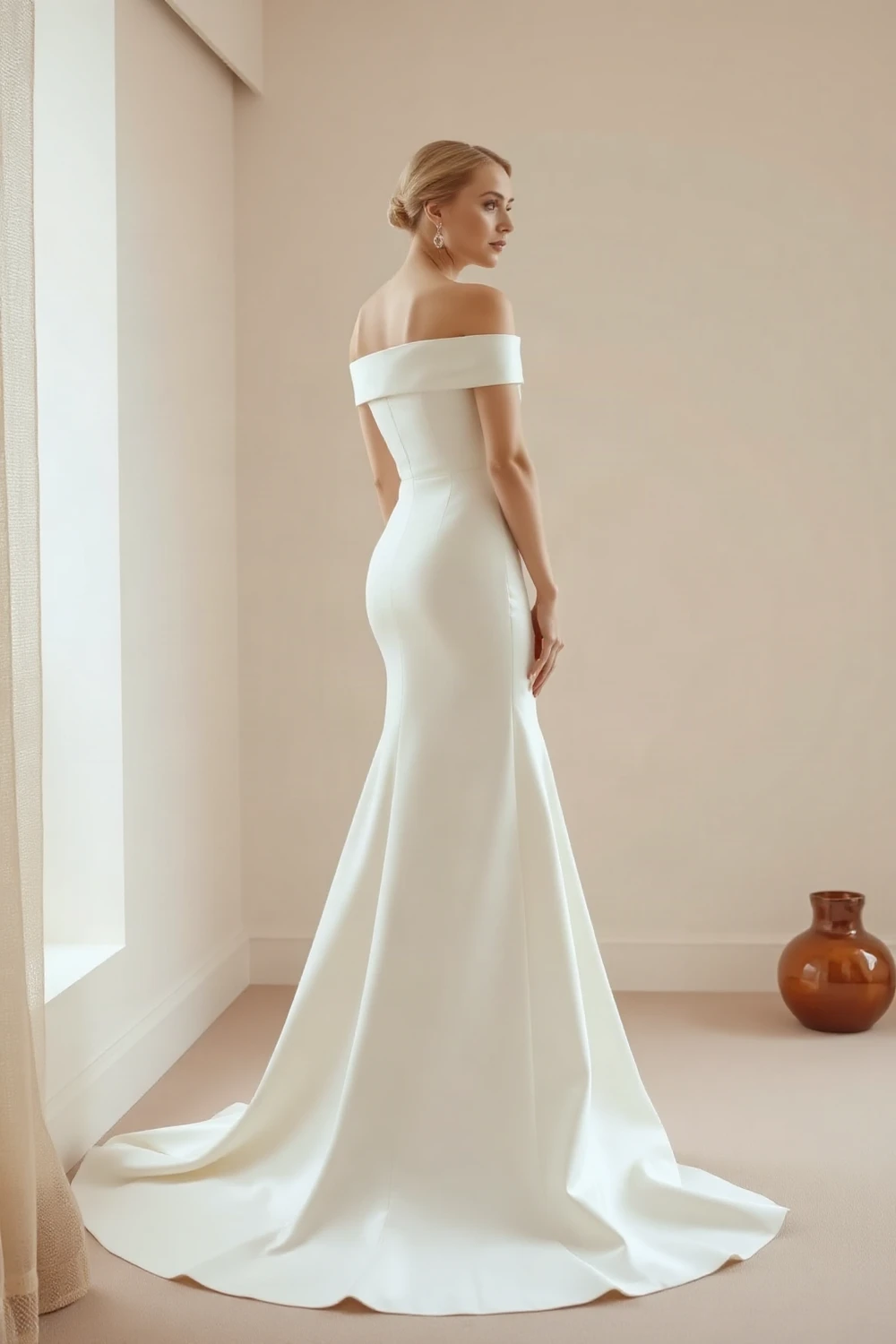
The fifth concept’s back view shows a folded off-shoulder band paired with a fitted fishtail skirt. Its horizontal neckline forms a broad frame, while back seams follow the waist and hips. Below the knees, the skirt opens into a rounded, expansive train. Here, the rear silhouette and the entrance into a space can matter as much as the front detail.
This shape can restrict movement more than a straight or A-line skirt. Sitting, climbing a step, turning and raising the arms reveal how the low band and close upper skirt feel. The train also needs a practical plan for later movement, not merely an even appearance when spread. An updo can expose the neckline, but any veil or rear accessory should be considered together with the prominent train.
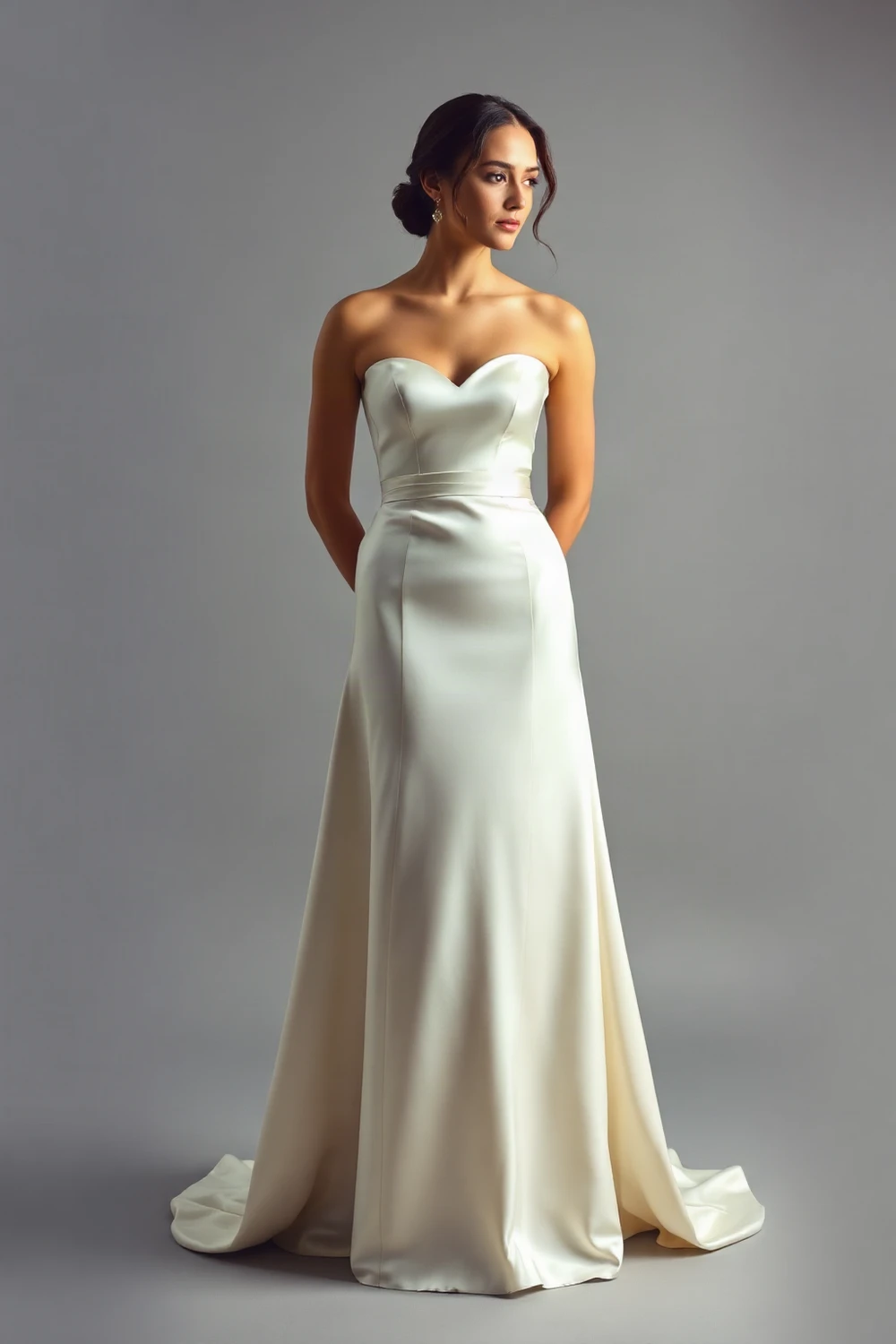
Centered Volume with a Sweetheart Neckline and Waistband
The sixth look combines a defined sweetheart neckline and horizontal waistband with a gently widening A-line skirt. Vertical bodice seams shape the upper section, while the symmetrical neckline draws attention toward the face and center of the shoulders. The skirt follows the hips less closely than the fishtail, and its surface is quieter than the centrally draped design. The effect is sculptural but balanced rather than directional.
A strapless neckline works only if it stays secure while sitting, bending and lifting the arms. Assess the internal support, upper edge and waistband as one system. The open shoulder line allows room for jewelry, though the sweetheart outline may be expressive enough without a necklace. This is a middle ground for someone wanting a shaped bodice with less draping than the asymmetric alternatives.
The strongest sculptural minimalism is not automatically the dress with the most folds. It is the one whose focal point, movement needs and fit work together. A midi column offers manageable length, A-lines provide gentler volume, and a fishtail creates a more defined contour and prominent train. Central draping feels balanced, a side knot appears more directional, and off-shoulder and sweetheart necklines open the collarbone area differently.
After making a shortlist, try each silhouette with the intended shoe height and inspect it from the front, side and back. Walk, sit, turn and raise the arms under more than one kind of light. On a smooth surface, the meaningful distinction is whether the shape remains composed on the body while allowing comfortable movement throughout the event.
How can a smooth surface, deliberate folds and restrained lines work together? Compare necklines, draping, waist emphasis, skirt volume and trains through six distinct satin-look wedding dress concepts.
Frequently asked questions
How should I choose between central draping and a side knot?
Central draping gives a more symmetrical, front-facing focus. A side knot produces a directional effect and draws attention toward one hip. View both while sitting and from several angles before deciding.
What should be checked when fitting a smooth satin-look surface?
Look for horizontal pulling at the shoulders and waist, straight seam alignment, excessive bulk within folds and any tendency for the skirt to rotate. Check these details under more than one light source.
Is a midi wedding dress more practical than a gown with a train?
A midi hem generally requires less train management, but it makes footwear prominent. A long gown with a train can create a more sweeping outline and requires planning for walking, steps and gathering the train.
Which accessories work with a one-shoulder wedding dress?
The neckline already creates a strong diagonal, so small earrings and a clean hairstyle can preserve its shape. Test any necklace with the dress, as a prominent piece may interrupt the open line.
How do fishtail and A-line skirts differ in movement?
An A-line releases more freely beyond the hips. A fishtail may follow the hips and upper legs closely, so sitting, turning, climbing steps and dance movements should be tested carefully during the fitting.