
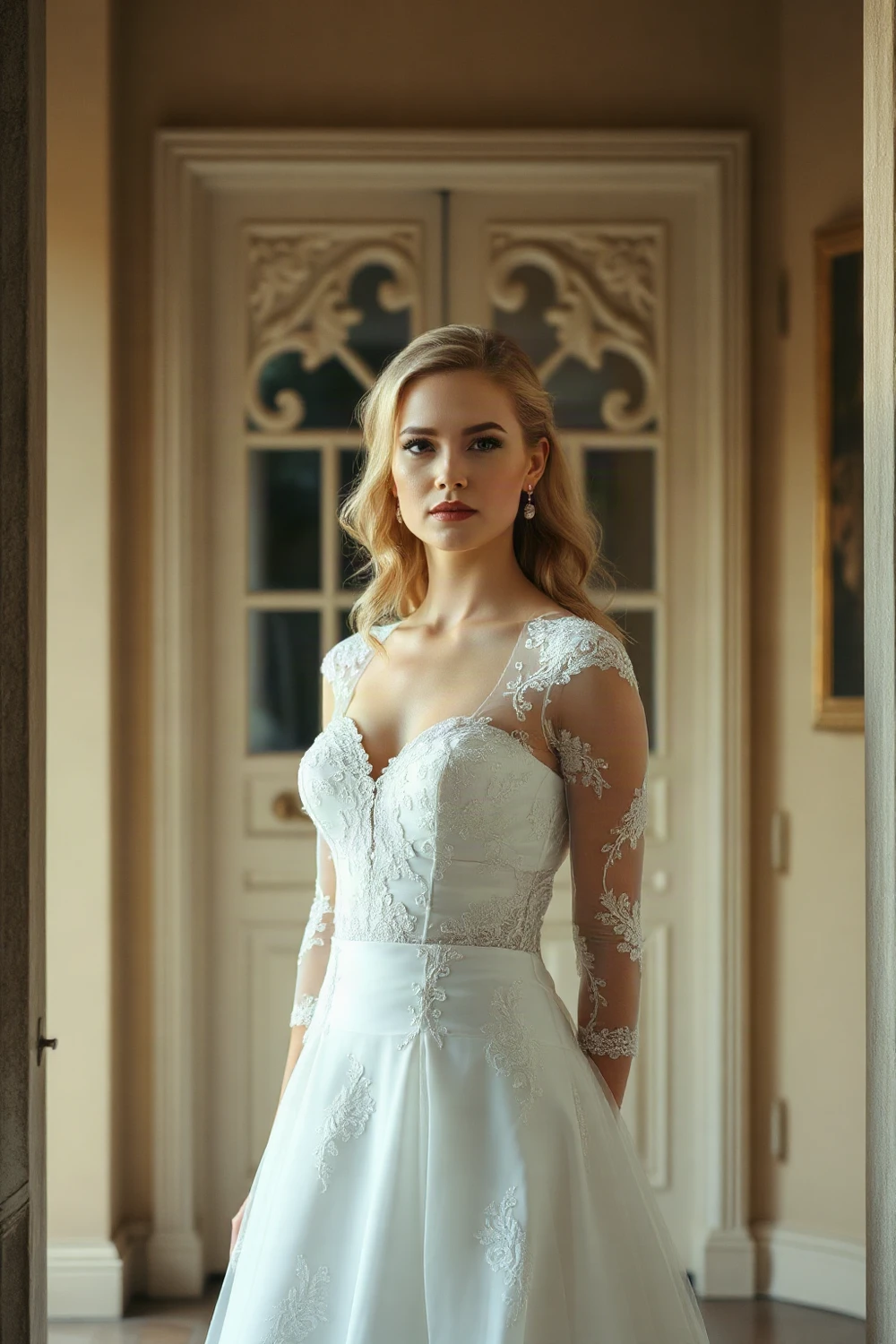
When choosing a lace wedding dress, the motif may attract attention first, but the overall effect depends on how that lace works with the silhouette, neckline and back. These six visual studies use a similar off-white palette in notably different proportions. In some, lace defines the entire form; in others, it directs the eye across an otherwise smooth skirt. Inspiration therefore lies not only in the pattern, but also in its placement and the amount of clear surface around it.
The first approach balances a sweetheart underlayer, sheer shoulders and below-elbow lace sleeves with a widening skirt. Floral motifs are concentrated over the bodice and used sparingly below the waist. The fourth look also has a defined waist and ample skirt, but its short lace shoulder details and largely unadorned, light-reflective surface feel cleaner. Someone seeking arm coverage may prefer the first idea, while the fourth offers a more open frame around the neck and shoulders.
The second and fifth concepts reveal two sides of a close-fitting silhouette. Seen from the front, the second places a high illusion lace neckline over a sweetheart-shaped lining, then creates a pronounced transition from short peplum to smooth mermaid skirt. The fifth is designed to be read from behind: a low V-back, central buttons, allover lace and a broad train form one long, uninterrupted line. The former feels graphic and architectural; the latter is more continuous and texture-led.
The third look combines long sheer sleeves with a plunging V-neck and a light A-line skirt. Fine floral appliqués descend at intervals from the bodice, visually connecting the dress to the plants in the glass conservatory. The sixth takes an opposite route with narrow straps, an open back and substantially greater skirt volume. Large motifs sit far apart on the broad, smooth surface, while the turning skirt and translucent edges make them feel animated.
It is useful to consider a neckline as part of a complete view rather than an isolated front detail. A plunging V creates a strong vertical axis toward the face, whereas a high illusion neckline establishes a calmer horizontal frame. A low back shapes the view during the many moments when the wearer faces away. When comparing sheer sleeves with narrow straps, consider arm movement, the required internal support, whether the hairstyle will cover the back and whether jewellery will compete with the lace borders.
Setting also changes perception. The delicate skirt in the conservatory appears soft and organic, while the arched corridor reinforces the symmetry of a mermaid shape. In the traditional drawing room, a wide luminous skirt creates a clean visual field against detailed furnishings. The final skirt in motion suggests that a voluminous design needs open floor space and room to turn. When considering a train, account not only for the entrance but also for walking, sitting and dancing later in the event.
The most balanced choice is not necessarily the one with the most lace, but the one that answers personal priorities clearly. Long or three-quarter illusion sleeves can provide romantic coverage; a mermaid line or peplum can sharpen the waist; and a low V-back with a train can give the rear view greater presence. Full, smooth skirts offer visual breathing room by using motifs selectively. Looking at any design from the front, side and back—and while moving—is the most practical way to turn these six ideas into an individual style decision.
Lace creates a different impression with every cut. These six visual concepts compare A-line and mermaid shapes, sheer sleeves, plunging necklines, low backs, peplums and sweeping skirts.


