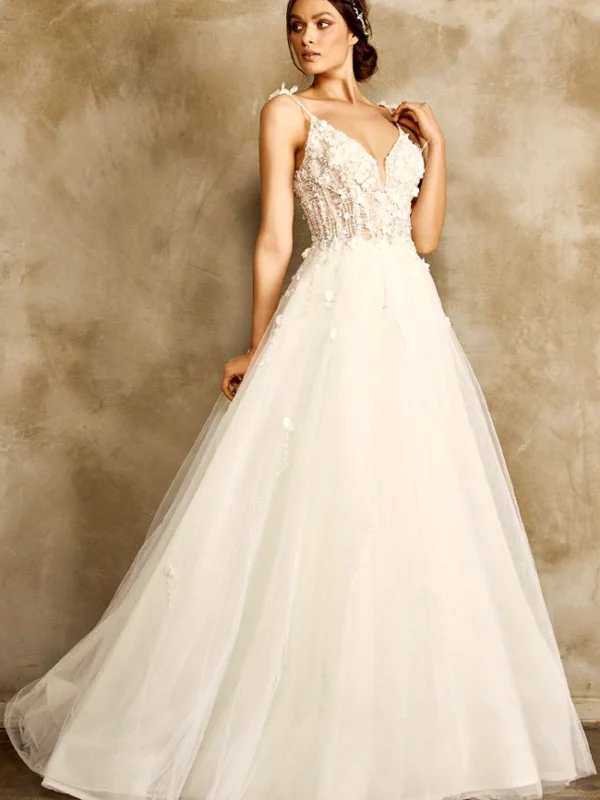
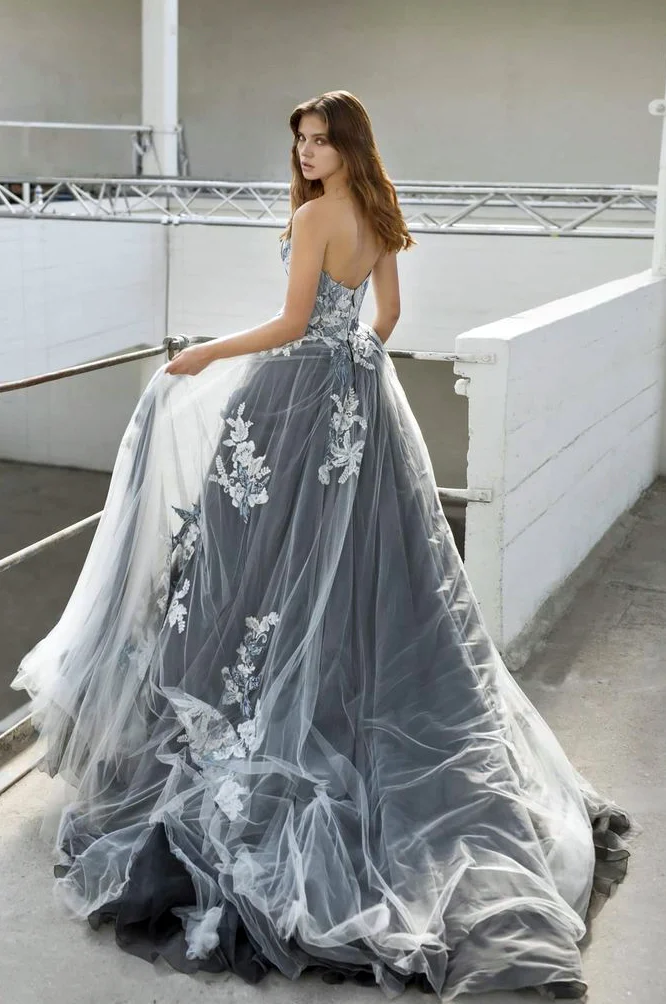
A wedding dress with silver accents can be selected through the contrast’s location before you settle on a material name. Do you want individual brighter motifs against a darker ground, or a denser light drawing over the bodice? These two independent references show different routes. The grey rear three-quarter view distributes pale floral shapes over a broader skirt. The paler front places many reflections across a strapless bodice. Neither photograph confirms silver as a precious metal. The archive’s earlier 2025 reference establishes neither a shared collection year nor the popularity of these ideas at that time.
Choose the area you want to stand out first. A wedding dress with silver accents need not appear silvery from top to bottom. The visible ground colour and brighter areas can be described separately. Record a preference for a quieter larger base with individual floral paths, or for a more densely drawn chest area. Ask how that distribution connects from front to rear on the actual candidate. The photographs provide comparison ideas rather than documented front and back views of the same garment.
1. Wedding dress with silver accents: select the contrast zone
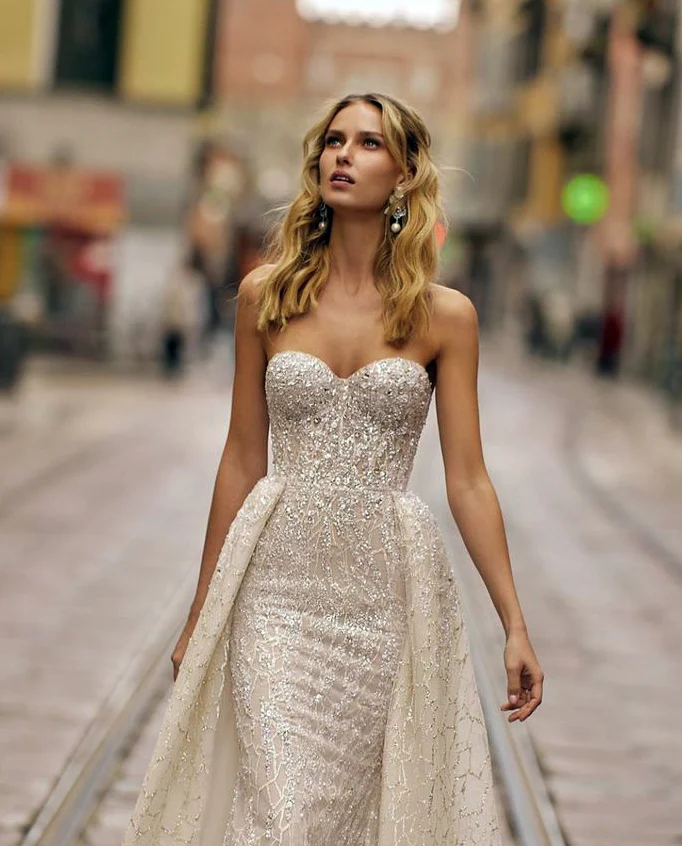
In the grey reference, brighter floral forms appear near the upper back and across the broader rear skirt. Larger less distinctly drawn areas remain between them. The paler front instead places many smaller reflections closer to chest and middle. Ask whether spaced motifs or a more continuous drawing appeals first. These are different distributions rather than two stages of one supposedly correct amount. Choose the preferred zone before additional jewellery and before making a final decision about the whole skirt’s width.
If a consistently silvery base is your main interest, the silver-colour wedding dress guide develops that different starting question. This guide keeps individual or denser accent distribution central instead. A wedding dress with silver accents may retain a larger ground with a different appearance. Keep its base colour and contrast zone in separate notes. You can then reject an offer whose ground you dislike even when one small decorated area initially attracts attention. Assess both preferences together on the same actual candidate.
2. Separate the colour name from confirmed components
The manufacturer’s page for Maggie Sottero’s Salvadora names a colour version containing Silver Accent and describes decorative components separately. This illustrates a specific product description. Such a colour name is not a precious-metal analysis, and identifies none of our archive photographs as Salvadora.
Ask for the exact version and composition of the actual offer. Have the seller show which description applies to the garment in front of you and which may concern another colour or option. A bright point may shine in a photograph without being a confirmed pearl or named crystal product. Do not transfer features from the linked manufacturer page to a similar-looking image. Your decision concerns the offered combination of an identified version, explained components and connected views. A general collection label does not supply every missing detail.
3. Compare motifs and smaller light points separately
The grey rear view has larger recognisable flower forms, while the paler front shows a denser small drawing around the chest. They may stand out differently at an ordinary distance. Look at the whole upper or lower area before examining the closer view. One particularly bright point does not explain the distribution across the rest of the garment. Similarly pale forms in two photographs establish neither shared composition nor model identity. Describe the visible effect before proposing a technical explanation for how it was made.
For rounded decorative forms, the beaded-look wedding dress guide offers another comparison. Decide whether the shape of individual points or the route of larger motifs interests you most. Both questions can inform your choice of a wedding dress with silver accents, but should remain recognisable as separate preferences. Ask about the desired zone on the particular model rather than assuming a similar drawing identifies the right version. Drawing, density and confirmed component information have different jobs. An answer about one cannot automatically answer the others.
4. Connect the actual front and rear views
The grey rear three-quarter image shows an open back between narrower upper sides and an expansive lower area. One hand holds part of the outer skirt to the side, affecting its spread. The paler front does not include the entire lower finish and feet. You can assess its chest drawing without establishing the complete length. Treat the two pictures as independent references. A matching front for the grey view or rear for the pale one is not documented by this selection. Similar colour cannot supply the missing view.
Request all connected sides of the actual candidate in an ordinary stance. Let your hands rest lower before anybody spreads the skirt for a photograph. Notice which motifs remain visible without that arrangement. Try sitting and walking in the intended shoes afterwards. Record which area produces the effect you want. If alterations are planned, discuss their effect on that exact motif zone and complete hem. Another image’s dramatic spread cannot replace this personal test or confirm the result of a particular alteration on a different offered version.
5. Add jewellery and hair after the main accent
In the paler front, larger floral earrings sit beside the densely drawn strapless bodice. This is a visible combination rather than a fixed rule for every similar chest area. Try the planned hairstyle without additional pieces initially. Add one jewellery item and inspect the same zone again. Do you want to notice the upper boundary, face or one motif area first? Decide through the actual combination. An extra necklace is neither automatically required nor ruled out by the image selection. Compare it beside the intended focus.
The bridal accessories coordination guide supports the sequence of hairpiece, earrings and veil. Check your intended outer layer alongside them. It may cover the chosen shoulder zone or part of the back. Look at it open and closed if you intend to use both arrangements. A wedding dress with silver accents requires no identical metal colour across every accessory. This guide concerns the visible areas you want to work together; the jewellery’s actual materials need independent descriptions rather than identification through colour alone.
6. Confirm the preferred distribution through product details
Record the desired ground, location of the brighter drawing and its extent. Add the confirmed model version and components alongside the shoes and accessories tried together. Ask specifically about an unclear term. Care concerns the finished garment: GINETEX explains its label symbols. A silvery reflection determines no treatment.
Compare two real candidates through the same notes at the end. The right wedding dress with silver accents connects your desired contrast zone with an understandable offered version. You need not recreate the pose or entire colour atmosphere of a reference. Pictures help describe the differences; composition, complete connected views and proposed changes must be clarified for the selected garment itself.
Select the ground and accent zone separately. Two independent references compare larger pale motifs with denser upper drawing without claiming silver metal.
Frequently asked questions
Do silver accents on a wedding dress prove real silver?
No. A colour name or reflection is not a precious-metal analysis. Ask about the exact version and composition of the actual wedding dress with silver accents.
Must a wedding dress with silver accents appear silvery throughout?
No. Individual brighter motifs or a densely drawn zone may sit beside a larger ground with another appearance. Select the base and accent area separately.
Must the brighter motifs cover the entire skirt?
No. Choose the preferred location and extent first. A chest zone, back area or individual paths across the skirt are different decisions.
How are the actual components of a decorated dress established?
Request the exact product version and associated composition. Have the description explained for the actual offer; a similar photograph cannot replace that information.