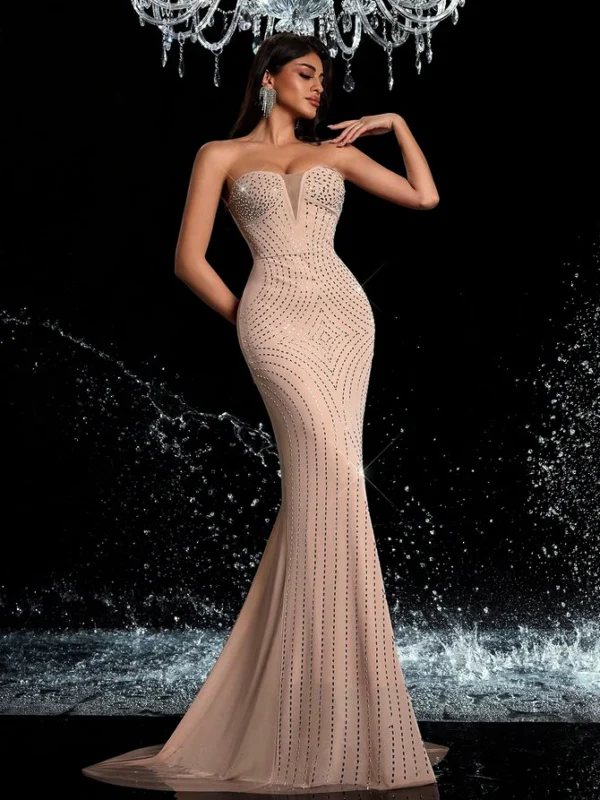
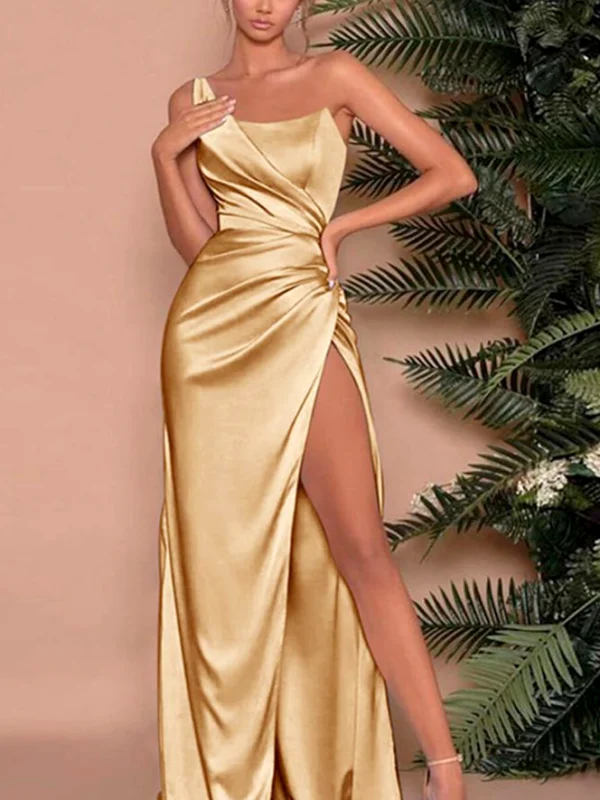
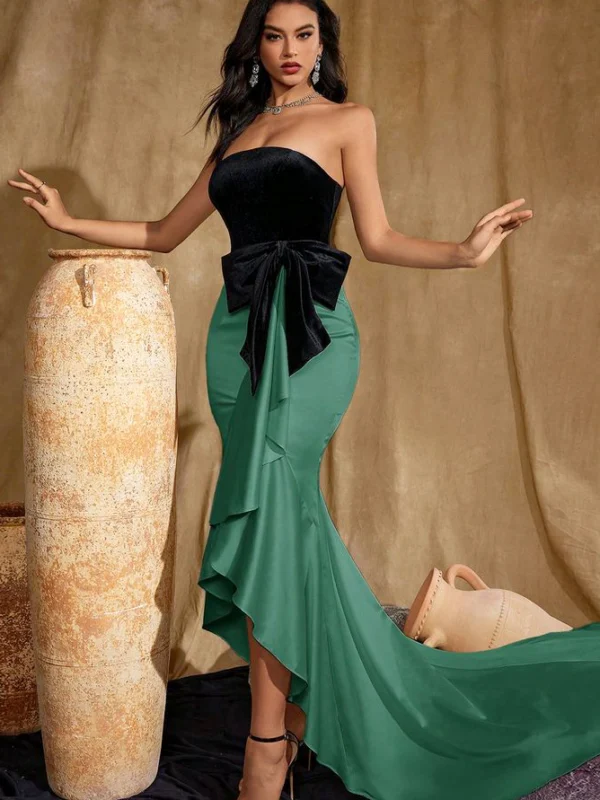
Evening dresses for tall women should be chosen through more than the word maxi or a photograph that looks long. The offered model’s measurements and the position of its lines on your body matter together. Does the waist sit where you want it, does the opening begin at your preferred point and does the lower finish work with your shoes? Our five independent references show long shapes with different upper edges, skirt widths and side surfaces. The pictured people’s heights are not established. Use the photographs to name design questions, then check the actual proportions on your candidate rather than treating a long appearance as a measurement.
1. Separate body measurements from garment length
Record the body measurements required for the actual offer instead of choosing a larger clothing size simply to obtain more length. Circumference and length answer different questions. A longer skirt alone does not explain where the bodice ends or waist sits. Ask for the model-specific length with its measuring point explained. Do not unknowingly compare a measurement from the shoulder with another taken from the waist. Similarly labelled long dresses can still have different upper boundaries and lower finishes. Ask for the measuring points to be shown if the description leaves them unclear.
The ASOS dress size guide provides its own body-measurement charts, including a separate Tall chart, and refers to each product for its length. It states that dress lengths vary by style. This is a particular own-brand guide, not a guarantee for other suppliers or our archive pictures. A Tall label still cannot replace the chosen garment’s length. Use that product’s description and ask about an absent measuring point or unexplained version. A long photograph of another dress cannot supply the missing specification.
2. Check the waist and upper boundary together
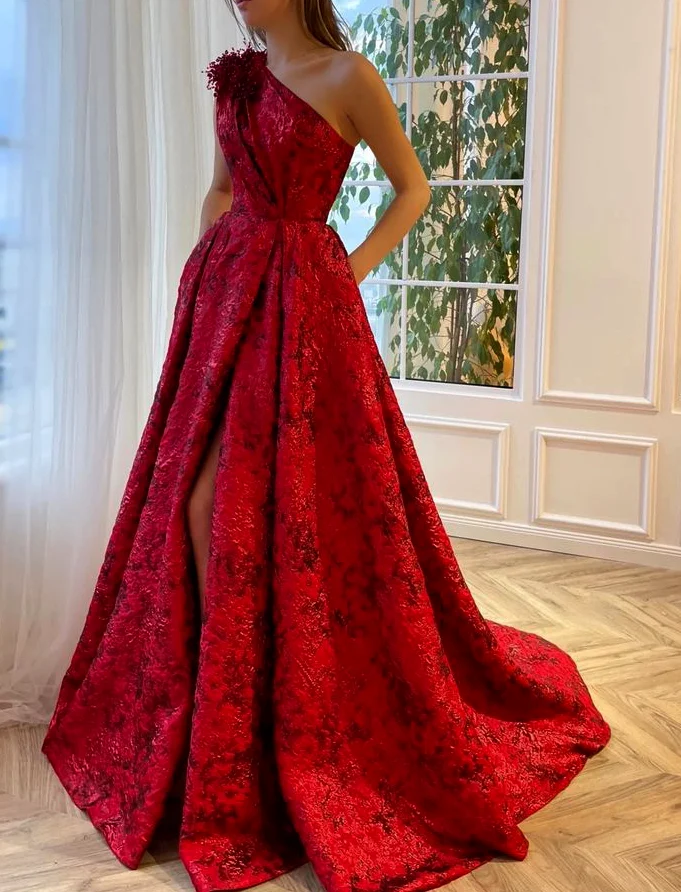
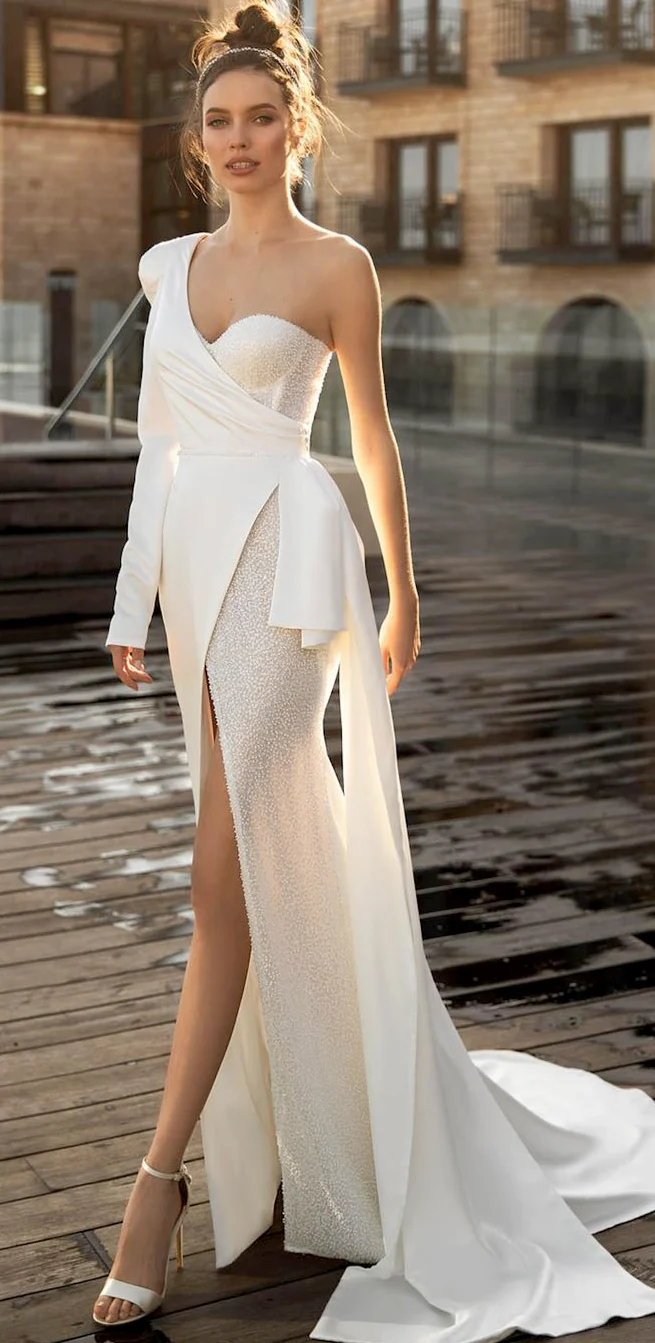
See the dress from the front and side while standing normally. Compare its actual waist position with your intended one before considering only the lower length. The red reference joins an asymmetric bodice to a broad pleated skirt. The rose alternative instead shows narrow straps and a more visibly shaped upper front. These are separate design choices, not general rules about what tall women may wear or a cut that must fit every body. Clarify your own preference by locating those lines on the actual garment.
Request the same angle with relaxed arms. Hands at the hips, a hand moved behind the body or a held skirt can conceal a section. Hands near the hips in the red and yellow pictures do not establish pockets. If a distinct waist transition matters to you, point to its actual position. Before an alteration, ask which adjoining seams or decorations would be affected. A larger size does not move only the preferred line in a controlled way. Seeing the complete altered dress again is more informative than discussing one measurement in isolation.
3. Compare the complete lower finish with your shoes
Try the actual dress with the shoes you intend to wear. See a quiet front view, both sides and the back without continually lifting fabric. In the pale asymmetric example, a long side surface spreads on the floor beside a visible pale open shoe. Other pictures conceal the footwear or show it only partly. Those differences cannot calculate a length for you. Check the relationship between the ground and lower finish on your own dress rather than through an apparent height in a photograph. Keep the same shoes during this comparison.
Where fabric extends on the floor behind or beside the dress, discuss its handling separately from the front skirt length. The party dress with a train comparison helps name that additional area. Walk an ordinary distance and turn once, then request the complete standing view again. If a length alteration is planned, ask how the lower border and any pattern there would be treated. See the whole changed form again instead of discussing only a section to be removed. Another dress’s train cannot complete the missing rear of your candidate.
4. Assess the leg opening while walking and sitting
The red, yellow and rose examples show a front or slightly side-positioned leg opening. Its location in one pose does not determine how much it reveals while sitting or taking ordinary steps. The party dress with a slit guide adds detail to that separate choice. Request the same sequence with your actual underslip or intended inner arrangement where one is needed. The leg visible in another picture cannot establish an unknown lining. Pieces appearing together are not automatically included in your offer either.
Do not choose the opening only by its highest visible point. See how adjoining surfaces return after a step and how they sit in your normal seated position. Then explain the intended change on the actual model. A longer skirt can exist alongside a higher opening; they answer different questions. The whole lower area therefore matters more than the single word long on a product page. Your shoes and inner pieces complete that comparison on the same candidate instead of relying on unrelated photographic poses.
5. Choose arm surfaces and volume for your own preference
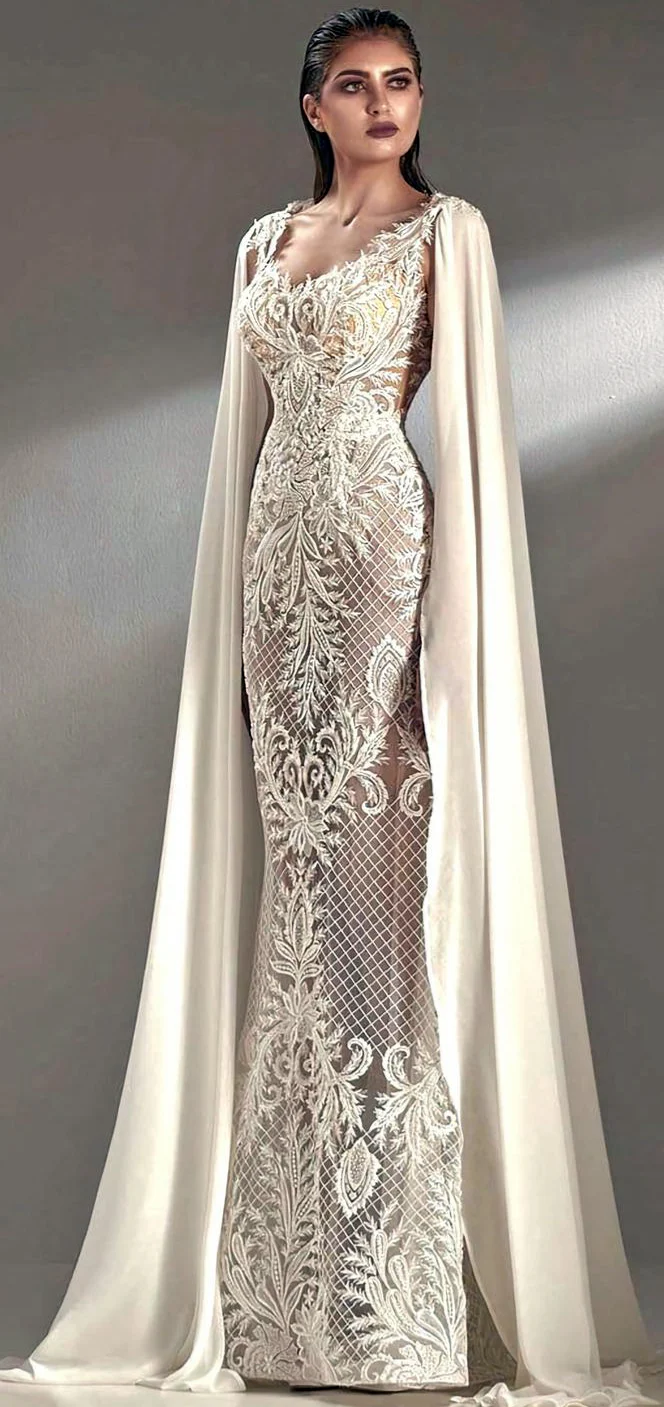
The gallery’s pale long shoulder panels frame a closer decorated centre. The other pale asymmetric front instead has one long sleeve and the opposite arm bare. You may like or dislike those differences independently from your height. A broad pleated skirt need not be avoided as a general rule. The puff-sleeve evening dress comparisons add options for arm volume. They create no requirement to hide or alter the appearance of your height. The aim is to recognise the form you actually prefer.
Check long sleeve endings at your own wrists and shoulder areas while moving your arms. An additional long panel can lie beside an arm without being a closed sleeve. Have its actual construction shown before planning it as a removable piece. Keep jewellery and other additions as consistent as possible during this first comparison. You can then distinguish an impression created by the cut from one caused by newly added decoration. Another person’s photographed pose guarantees neither your movement nor an unchanged arrangement throughout use.
6. Confirm the particular offer before deciding
Record the model, explained measurements, planned shoes and agreed alterations. Ask for the real material and finished garment label instead of naming shine as silk or dense pattern as a specific weave. GINETEX explains care symbols; the actual item’s label remains decisive. Evening dresses for tall women can then be chosen through understandable proportions. The references help name your wishes, while product details and your own complete fitting supply the measurements that photographs cannot. Assess the upper section, waist, lower finish and intended accompanying pieces together on that same real model.
Model-specific length and personal proportions matter together. Five long shape references help name preferences without establishing personal heights.
Frequently asked questions
Do these pictures establish personal heights or a Tall version?
No. The long evening dress references establish no personal height or Tall version. Measurements and construction must belong to the actual offered model.
Is the word maxi enough for evening dresses for tall women?
No. Evening dresses for tall women also require the model-specific length, measuring point and positions of the bodice and waist to be checked.
Does the ASOS chart apply to other brands?
The ASOS dress chart is an own-brand guide. It confirms neither another model’s measurements nor the identity of our archive pictures.
Must tall women avoid broad skirts?
No. Skirt width and arm volume are separate design choices. Try your preferred form and movement on the actual dress instead of following a general height rule.