A colour-block wedding dress is a request for clearly named colour fields here, rather than an established property of the four photographs. The main reference carries multicoloured flowers on a pale ground. Three further pale views show floral drawing, quieter skirt areas and different upper frames. These differences establish neither geometric colour blocks nor a particular connection between differently coloured cloth pieces. Begin by identifying what you want: individual coloured motifs, larger separated colour fields or simply a stronger pattern contrast. The specific offered execution must answer that enquiry.
1. Name fields and motifs separately
Red, pink, yellow, purple and green floral elements spread across the main reference’s pale upper surface. The motifs become more widely spaced below. This is a visible colour distribution rather than proof of large plain blocks. The other fronts remain predominantly pale. Dense drawing and a quieter skirt can exist beside each other without establishing different colours or fibres. Write your request so a real product explanation can distinguish motif position, colour and surface change. These are separate parts of the decision rather than interchangeable descriptions.
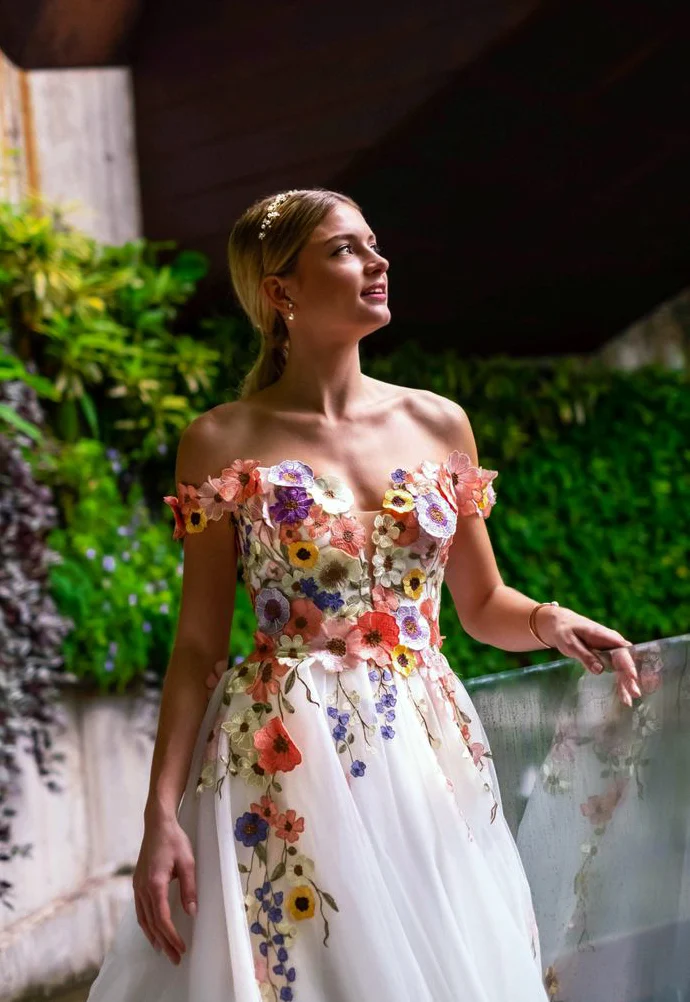
The floral wedding dress comparison helps separate individual motifs from the remaining surface. Name their desired position next: only above, also on the skirt or across a larger continuous area. A photograph can prompt that distribution question. It cannot guarantee an available version in your exact colours. Ask about the specific model and keep confirmed execution separate from alteration requests. That makes a mixed picture selection a traceable enquiry rather than a supposed list of verified products in a shared collection.
2. Use a named historical example precisely
The Metropolitan Museum describes individual pieced colour blocks and a seam grid on an Yves Saint Laurent dress from fall/winter 1965–66. That named historical object explains why colour fields and their connections can be specific construction questions. The description belongs to that museum object. It identifies none of our wedding dress photographs, establishes no historical provenance for them and transfers neither material nor maker. Use the example to ask about an actual current offer rather than attaching a designer name to a similar picture.
Ask whether your desired colour comes from a motif, an applied area or genuinely separate pieces. Have the existing execution shown on the real candidate. A colour name alone explains neither a seam nor an internal connection. If you want larger plain fields, request a corresponding verifiable view of those fields. A floral comparison need not be relabelled as a colour-block product. It can also help show the different distribution you do not mean, while remaining useful as the visible reference it actually is.
3. Compare the four visible upper frames
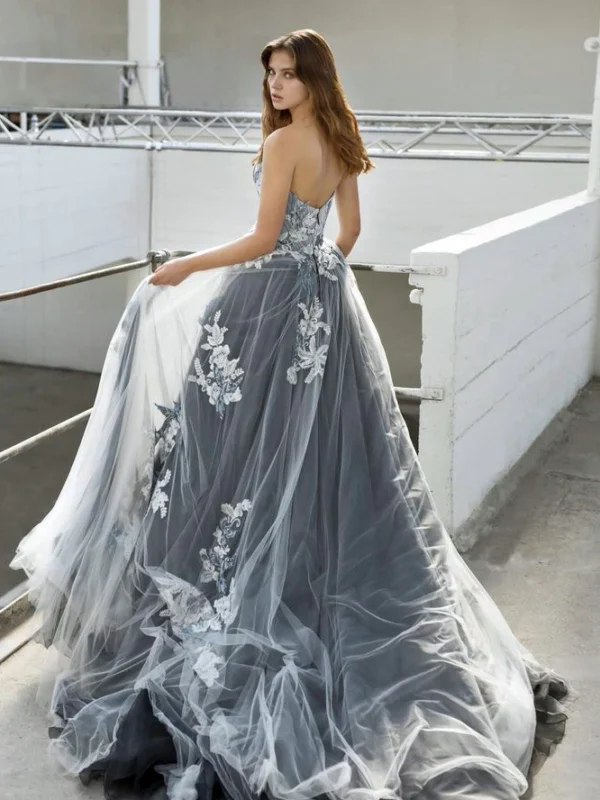
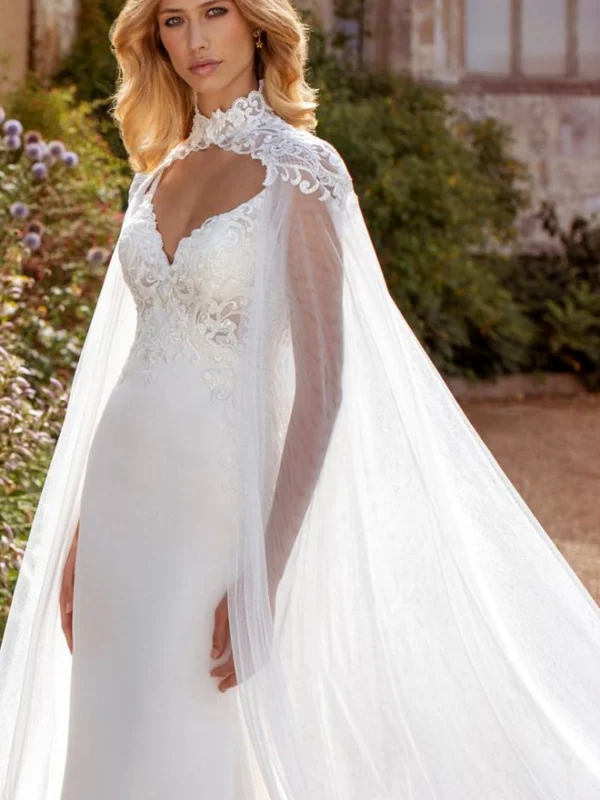
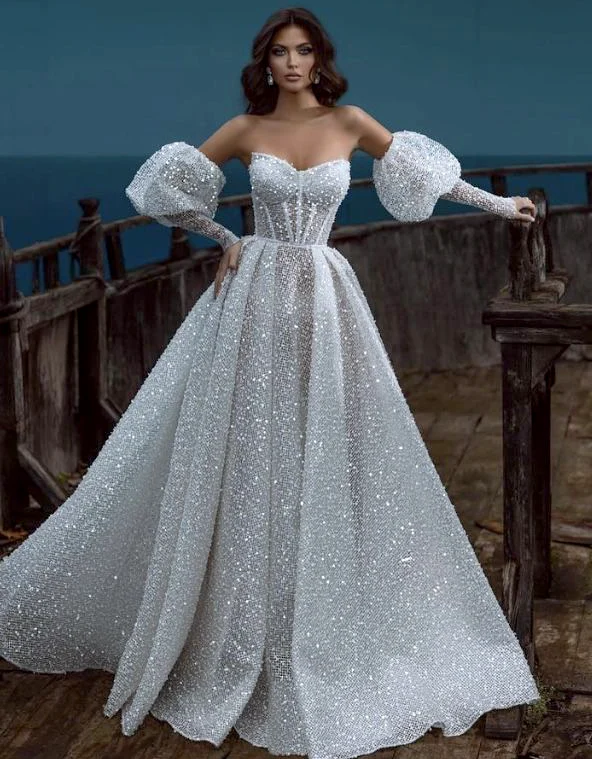
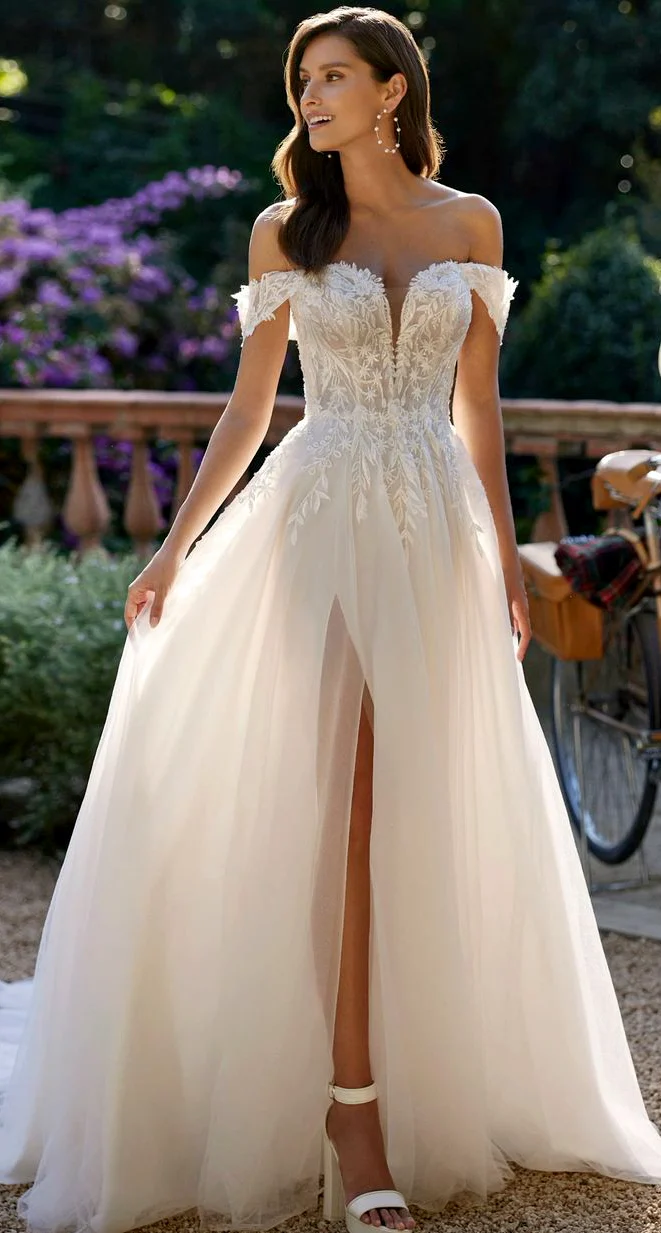
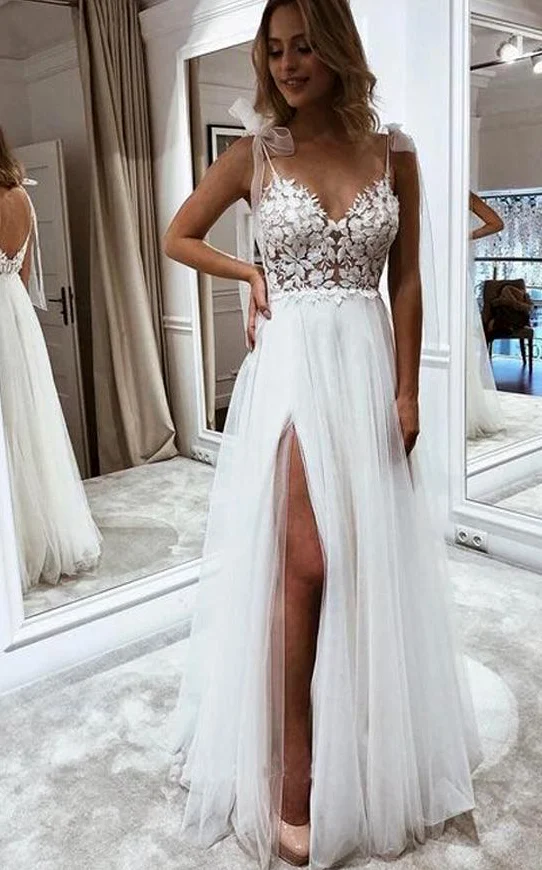
The multicoloured main front leaves shoulders bare above low floral arm edges. A notch divides the upper middle. The pale bow reference has finer shoulder straps and a V-shaped upper line. Another front combines a deeper central V area with floral side edges. The fourth shows finer straps and denser point-like drawing. Name these frames independently of colour. A requested colour change chooses neither neckline nor sleeves nor internal support. Each of those questions still needs its own answer on the offered candidate rather than a guess from another photograph.
The off-the-shoulder wedding dress guide develops questions about the actual upper edge. See your favourite normally with arms lowered and intended underwear. A hand on a railing or skirt explains only the photographic pose. Request the same garment’s own rear. Similar pale fronts are not established versions of one shared model. They supply neither its absent back nor proof of a common construction. Keep your own fitting separate from another person’s photographed position and confirm existing connections on that real piece.
4. Verify colour execution through the specific offer
Ask for the colour version actually offered and its specific description. If you see only a small section, ask how it continues over the complete dress. One flower on a bodice does not automatically explain the lower hem. Our main reference ends before its complete lower edge. The quieter pale comparison skirts cannot supply that missing view. Separate a preferred colour idea from the still-unresolved full continuation of your actual candidate. Also record which pieces the offer genuinely includes rather than assuming everything pictured together forms an included set.
If you want an alteration, ask about its scope, limits and the point at which you can try the complete result again. A pale ground does not establish unrestricted recolouring. An existing model is not a blank surface for any colour request. Learn what is actually possible and how you can inspect it before deciding. The answer may be that your chosen version is unavailable. A better real alternative is then more useful than an unsupported promise derived from a comparison picture. Keep your initial request and the execution you accept clearly separate.
5. Complete skirt, footwear and accessories on the same dress
The pale fronts provide different lower information. One has cloth held at the side and shows a pale open-toe shoe. The bow reference reveals a pale pointed shoe through a higher front opening, while its mirror gives only rear fragments. The point-patterned front ends before the complete hem, as does the multicoloured main picture. Another reference cannot replace those missing angles. The wedding dress buying guide helps bring unresolved product questions together before you choose.
Try the actual length with your intended shoes. Let cloth and hands fall freely first, then walk, turn and sit. Add hairstyle, selected jewellery and, where relevant, a veil actually offered. Multicoloured motifs prescribe neither one jewellery colour nor a specific wedding setting. Assess your selected pieces together on your own actual candidate. Note which additions you bring and which are expressly included, rather than reading the complete photographed combination as an automatically supplied set. Base the final decision on that complete garment and the pieces you will really use.
6. Decide with confirmed execution and care information
Summarise visible colour distribution, confirmed execution and remaining questions separately. Treatment follows the finished garment’s label; GINETEX explains textile care symbols. Neither multicoloured flowers nor pale lines determine a wash programme or cleaning method. Clarify unreadable or absent information for the actual offer before treatment. Search for a colour-block wedding dress through named fields and verifiable details rather than a motif photograph whose manufacture or available version remains unresolved. That keeps your own visual request distinct from what a real product can establish.
Separate bounded colour fields from multicoloured flowers and pale pattern changes. Four visible wedding dress references help frame questions for the actual offered execution.
Frequently asked questions
Do these photographs establish a colour-block wedding dress?
These wedding dress photographs establish no clearly separated colour-block fields. The main reference shows multicoloured flowers; the others compare pale floral and quieter areas.
Do multicoloured flowers already count as large colour blocks?
Multicoloured flowers on a wedding dress are individual motifs first. They establish neither larger plain-colour fields nor a particular connection between differently coloured pieces.
Can I freely change the colours of an offered wedding dress?
A requested wedding dress colour change is not an established option. Ask the specific offer about available executions, possible alterations and when you can inspect the complete result.
Does a multicoloured wedding dress surface determine cleaning?
A multicoloured wedding dress surface determines no cleaning method. Follow the actual finished garment’s care label and clarify unresolved treatment questions for that specific product first.