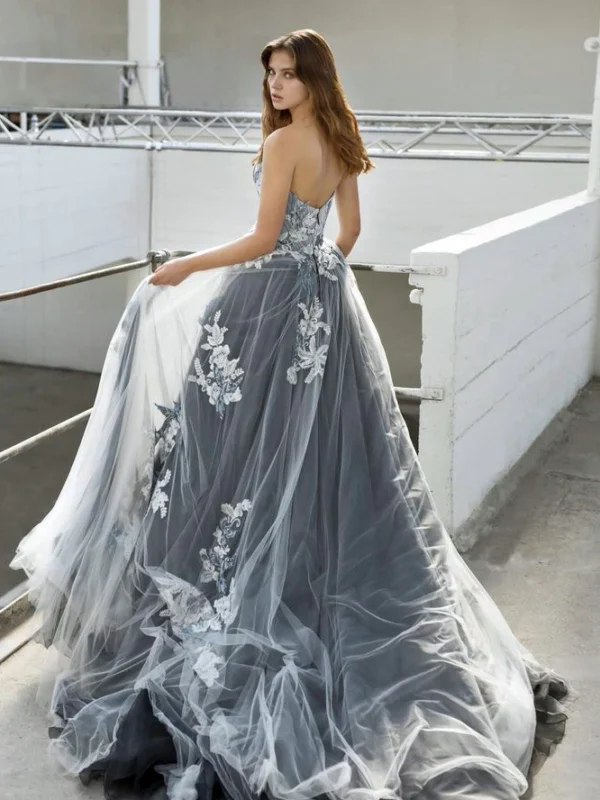
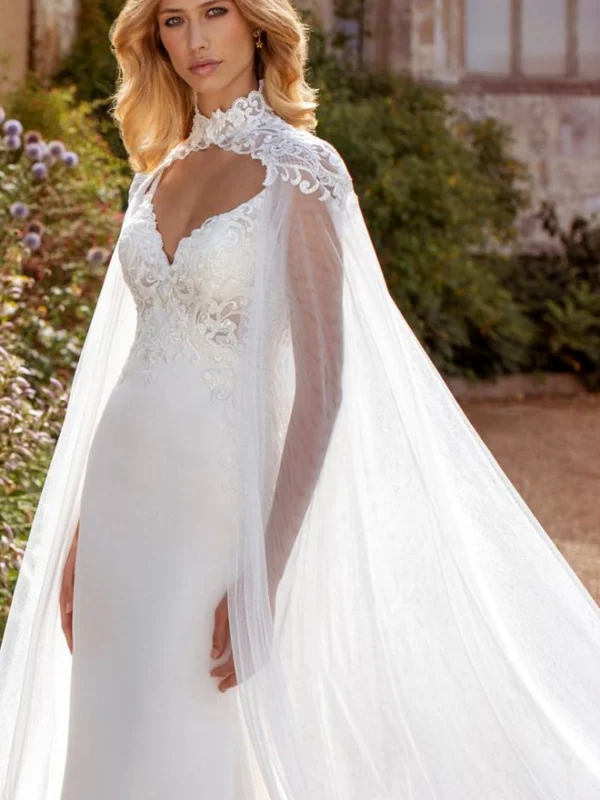
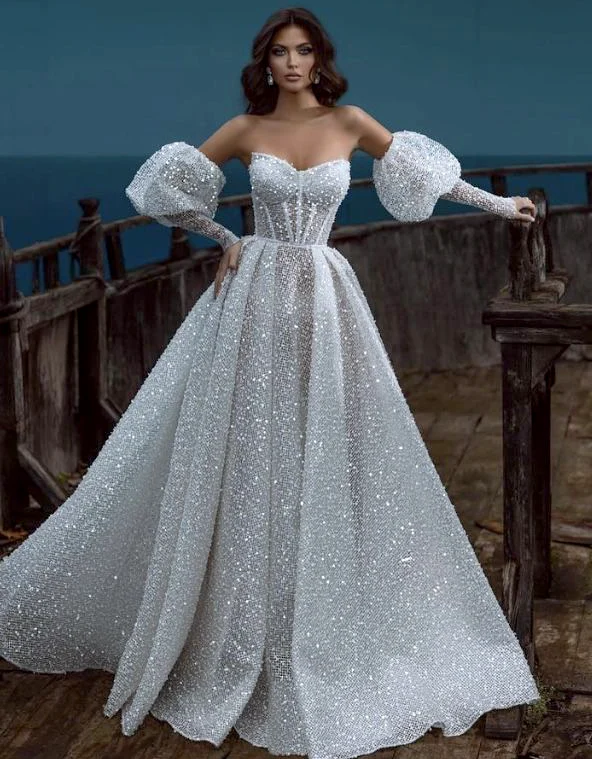
A wedding dress with sleeves becomes easier to choose when you name sleeve starting point, width and finish separately. A long fine-looking sleeve can begin beneath an exposed shoulder, join a higher bodice or sit visually beside a narrow shoulder line. These three references show different distributions. They confirm neither a shared collection nor a particular year’s new design. Use the pictures to describe your preferred line; material, inner arrangement and connection need establishing on the actual dress offered rather than deriving them from appearance alone.
1. Follow the upper starting point first
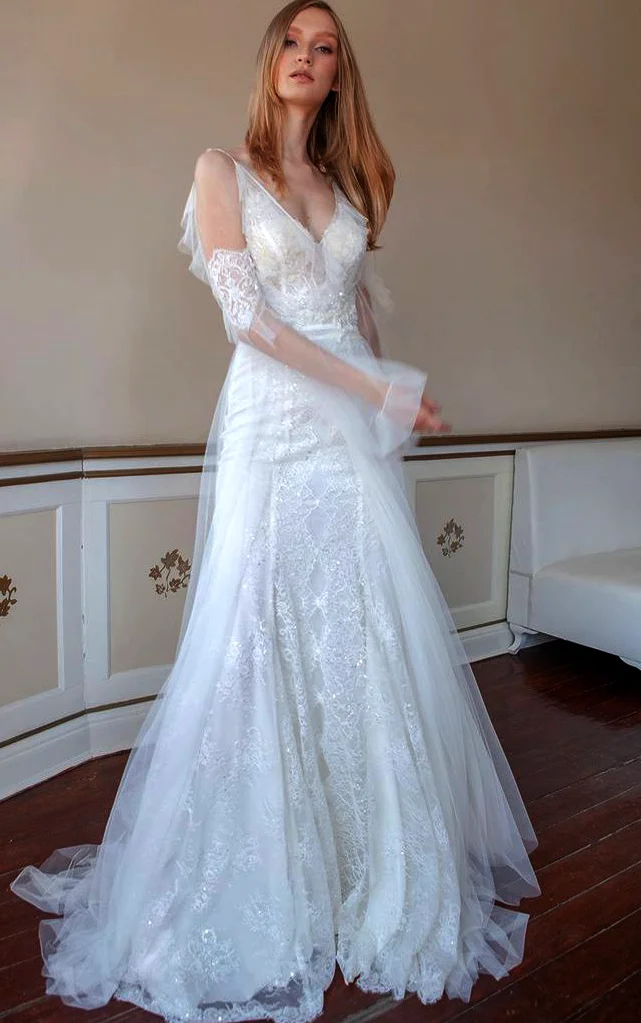
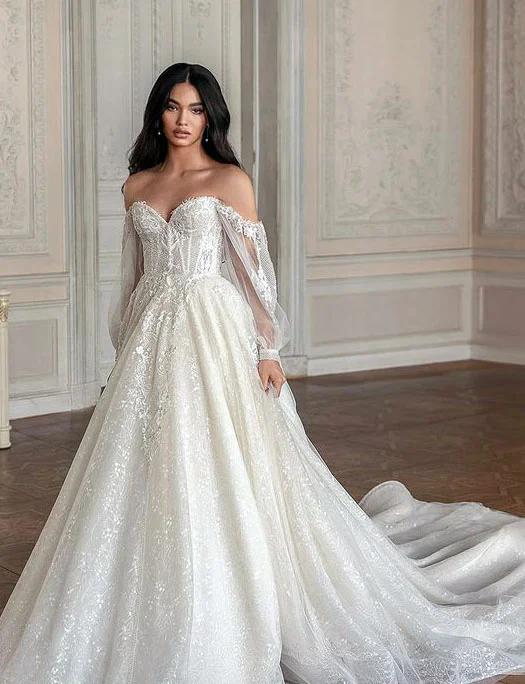
The main reference leaves shoulder tops exposed. A shaped floral front edge sits above a closer waist, with lower fine-looking sleeves beginning beside the upper arms. One hand rests near an ear and the other farther down, changing the two visible sleeve forms within one picture. The longer V counter-image instead has finer shoulder lines beside a floral upper centre. Its finer outer arm areas begin lower. Name those two visible boundaries separately without immediately treating them as identical connections or corresponding versions of the same model.
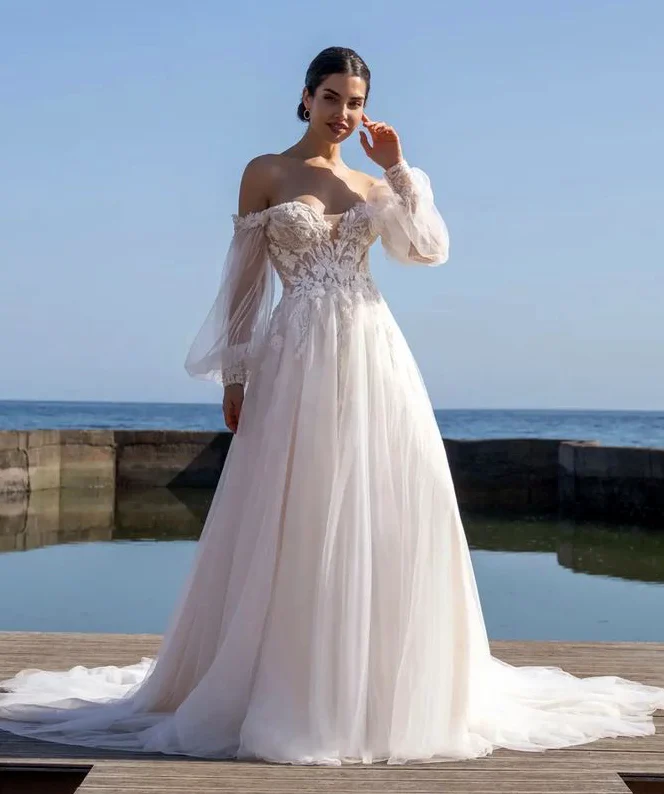
Choose how much exposed shoulder you want on the real candidate. Inspect the front edge with relaxed arms and request a corresponding side perspective. The off-shoulder wedding dress guide develops that combined upper line. A front photograph cannot explain whether a band continues behind or how an outer area attaches. Have the precise region shown on the genuine model before turning it into a requirement for a specific component. Use the intended hairstyle when comparing how much upper edge remains visible.
2. Describe sleeve fullness separately from the wrist finish
Longer sleeves stand farther from the arms in the main image before gathering at floral-patterned finishes. The V reference places quieter broader finishing areas beside finer arm surfaces. The third, broader front also shows longer fine sleeves, below another curved floral upper edge. Related length does not make those distributions identical. Assess where the sleeve stands away from the arm first, then how its visible fullness gathers at the end. Hand position belongs to that view rather than being independent of it.
Try the preferred arm position on the actual dress before deciding width. Inspect the sleeve with the arm lowered, then during a movement you ordinarily need. Does it end where you want? The three-quarter sleeve comparison helps introduce a shorter alternative as a separate length question. A visibly broad finish establishes neither an opening cuff nor stretch fabric. Ask about possible adjustments on that precise piece instead of assuming them from its form, and plan to examine the whole result again.
3. Establish a detachable version explicitly
Justin Alexander explicitly describes Nikita Sleeves 88562SL as detachable off-the-shoulder long sleeves. That named accessory’s description states the function separately from length and upper position. The information concerns only that product. It identifies none of our references and confirms no identical fastening on a related floral dress. A visible boundary between bodice and outer sleeve alone does not demonstrate removal or establish another manufacturer’s components as compatible with your candidate.
Have the change demonstrated on the offered model if you plan one. Request the complete view afterwards too: how does the upper edge look without that piece, and which visible connections remain? Record whether the accessory is included or separately offered. Two photographs with different arm areas need not show before and after. Request corresponding views of the same candidate rather than assembling an undocumented convertible combination from independent images. That distinction also applies to an addition discussed later instead of already supplied with the dress.
4. Examine sleeves beside the whole lower shape
The main picture combines finer arms with a broader quieter skirt. The V reference shows a closer floral inner length with longer finer outer areas. Denser pale drawing spreads across the broader lower surface in the third image, with fabric on the floor at the right. Those differences change the frame around a shared wish for a long sleeve. Do not choose a lower form only from the larger apparent area produced by another pose. Record the desired upper edge separately from the skirt you prefer.
Inspect the candidate’s complete front with genuinely intended shoes and inner layers. Add its corresponding back. All three references conceal shoes under cloth, so none supplies the heel height of your later outfit. Establish which lower border belongs to which component where outer surfaces surround the centre. A long outer layer need not be detachable or share the inner skirt’s length. Upper sleeve preference and lower direction require separate entries, brought together only on the real model rather than completed through another garment’s rear photograph.
5. Compare the movements you genuinely need
The hand near an ear in the main front raises one arm, changing the sleeve’s outer curve. One arm bends before the body in the V reference, where part of the finer area appears blurred. That is no fixed sleeve outline for every stance. Begin your fitting with both arms down, then raise them as needed for your own actions. Observe the bodice-to-sleeve transition instead of assessing possible pulling solely through a still photograph. Repeat the same starting position when comparing another candidate.
Name a location precisely if you want more or less room there. Have the possibility assessed along with any other edge the change would affect. The wedding dress buying guide helps record those points beside model, version and agreed work. Plan another complete fitting of the result. Fine or dense photographed decoration establishes neither warmth nor skin feel or suitable wearing duration for you. The genuine construction and your own trial are needed for those questions rather than someone else’s pose.
6. Retain component and care information for each piece
Request composition and existing underlayers for the actual dress. A finer area with floral drawing proves neither a particular lace technique nor handwork. A translucent photograph impression cannot prescribe fixed coverage under every light either. Request a closer view of the region that matters alongside its corresponding product information. Add the description of separate sleeves if they genuinely belong to the offer. This distinction prevents one dress detail being automatically transferred to an accessory with another construction, label or supplied status.
Cleaning, ironing and storage follow the finished piece’s own label. GINETEX explains care symbols rather than uniform treatment for every fine-looking bridal sleeve. Record selected upper position, preferred fullness and actual finish beside the complete tested combination. A wedding dress with sleeves remains a specific choice: the pictures help name visible preferences, while connections, included components and possible adjustments come from your own model and fitting. An older year retained in a link cannot replace any of those details about the actual offer.
Three independent fronts compare low finer sleeves, floral or quieter finishes and different whole skirt lines. Establish connections and components on the real model.
Frequently asked questions
Are low wedding dress sleeves automatically detachable?
Low wedding dress sleeves are not confirmed detachable through visible position. Have any advertised change function demonstrated on the specific dress and its included pieces named.
Does a wedding dress with sleeves automatically feel warmer?
A wedding dress with sleeves supplies no reliable warmth promise through visible sleeve length. Request the actual construction and test that dress under your intended conditions.
Do floral bridal sleeves prove a particular lace technique?
Floral bridal sleeves prove no particular lace technique, fibre or handwork in a photograph. Request material and workmanship information for the precise offered piece.
Why does a wedding dress with sleeves need a corresponding rear view?
A wedding dress with sleeves needs its corresponding rear to complete the upper edge and connection routes. Another dress reference cannot confirm those missing connections.