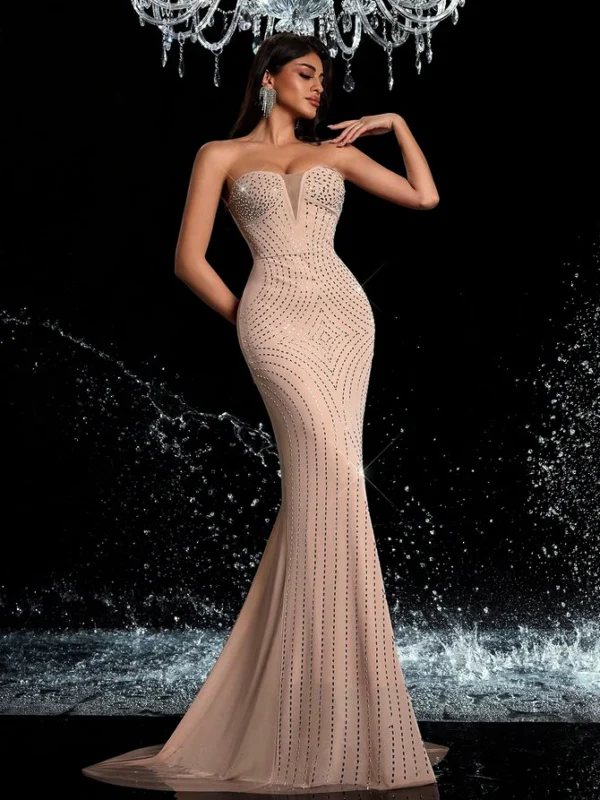
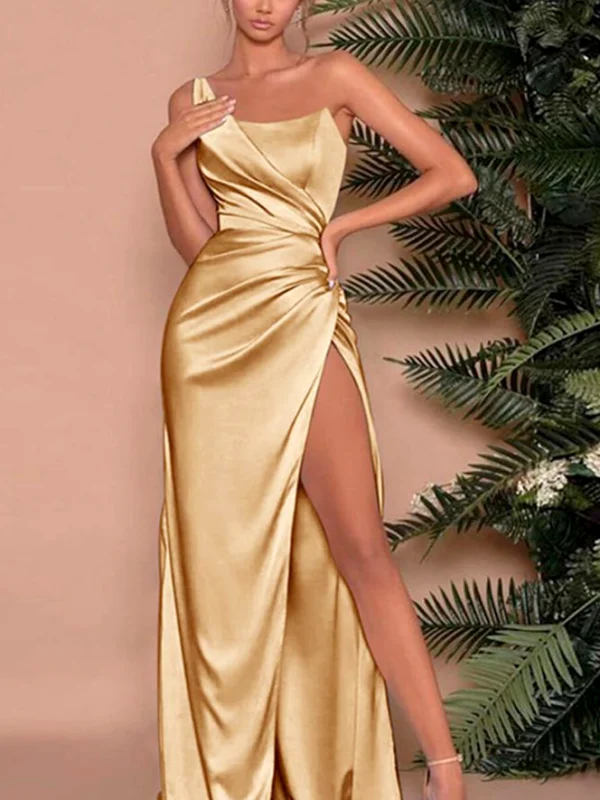
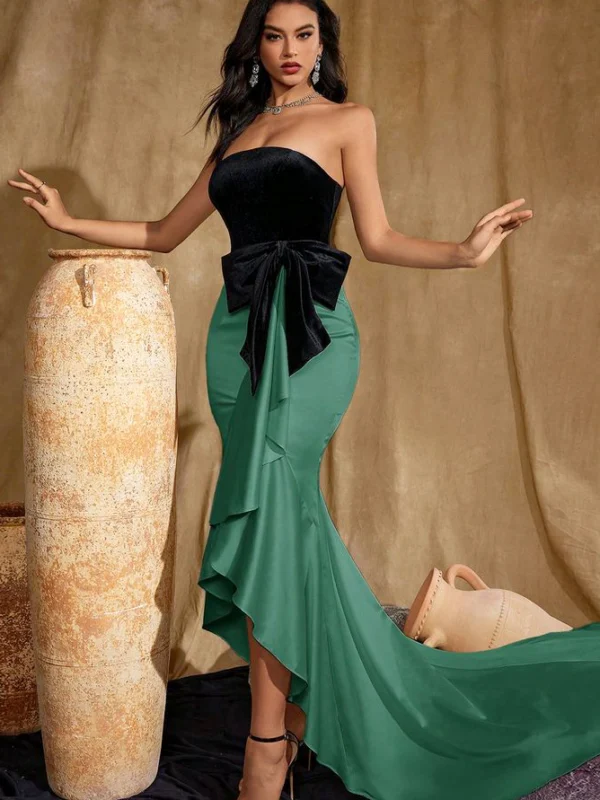
You can choose a modern evening dress through one clear leading feature: many small points of light, a soft front drape or a slanting upper line. The five references show these possibilities in copper and rose tones, pale gold and grey-lilac. Some combine several details at once. Decide which you want to notice most in your own outfit first. Modern describes your intended look here, not a verified current annual collection. A quiet surface can be just as interesting for that preference as a more reflective one.
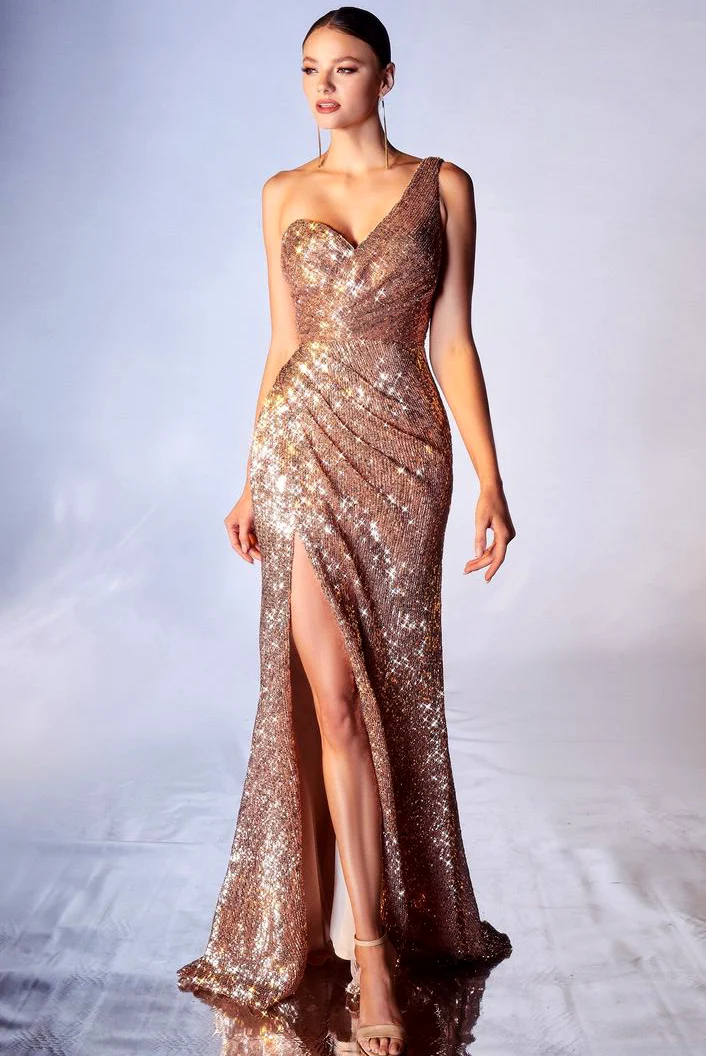
Compare the whole visible arrangement first, then one area at a time. The copper example combines a broad shoulder connection on one side with a heart-like edge on the other. A rose-toned dress lets the front centre fall low and softly. Other references add side gathering, a slanting upper edge or long outer areas. These differences help you describe your modern evening dress precisely. They do not yet establish how an actual offered model is constructed or sits during your own movements.
1. Which feature should lead your modern evening dress?
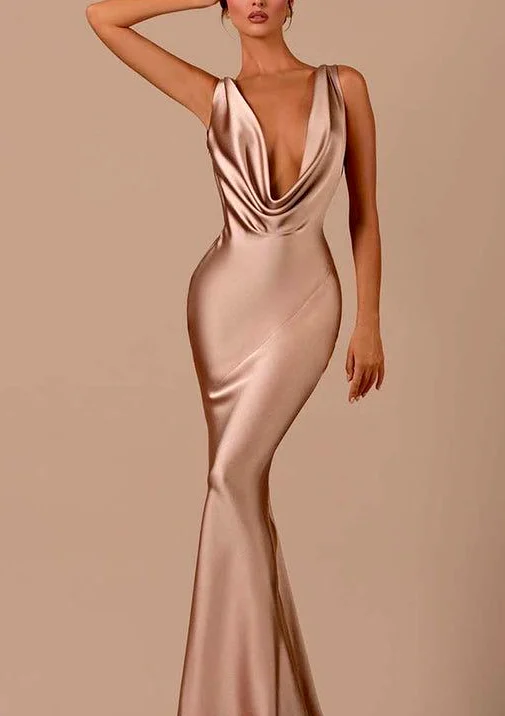
Choose two different starting points from the pictures. The copper dress shows many small reflections across a closer basic outline. The quieter rose-toned front presents larger continuous light areas and a low falling centre. Compare the kind of visible emphasis first, rather than only the colour. Do you want to notice the surface itself or the shape into which it is arranged? A clearer decision makes later questions about jewellery and bags easier to consider independently.
In an editorial about its own interpretation of 1990s style, Pronovias describes clean lines and a restrained palette as an eveningwear approach. It is a named counterexample to the idea that a contemporary look must always sparkle strongly. It identifies none of our dresses and explains no general market trend. Our simple evening dress guide develops the quieter direction. Use it as a comparison here, then return deliberately to a more reflective surface or a more distinctly folded version if you prefer.
2. Which upper line do you want beside neck and shoulder?
The copper reference has a broader shoulder connection on one side, while its opposite upper edge follows another direction. The pale gold close-up also shows a slanting upper edge but no comparable broad connection crossing the shoulder. Compare these visible lines carefully before grouping them under one label. A similar diagonal impression can result from a different arrangement beside the shoulder. Request matching front, side and back views of your actual candidate so that the visible outline can be described precisely.
In the grey-lilac example, a sheer-looking slanting outer area lies over a heart-like inner front edge. A small decorated cluster marks the shoulder region, and long areas extend down the sides. Decide which line should lead your modern evening dress: the upper inner shape or the larger outer frame. A visible overlap does not confirm a removable addition. Have the actual connection and included parts demonstrated if this particular arrangement is what you want to choose.
3. How do quiet reflections differ from many light points?
The rose-toned references place larger bright zones beside quieter dark areas. Many individual small reflections appear on the copper dress, while the pale gold example shows a finer and more continuous textured-looking surface. These are visible differences you can use. They establish neither a metal component nor the identity of each decoration. Describe whether you want larger light areas or many small points first, then ask about composition and construction on the particular product.
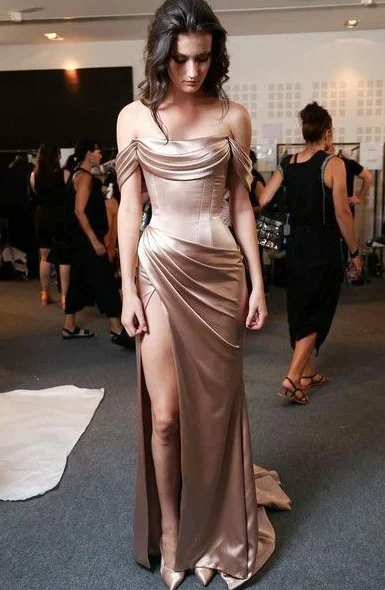
A modern evening dress with a soft front edge need not also carry the strongest surface drawing. Compare the low rose-toned centre with the more visibly divided other rose front, whose lines gather at the hip. Our evening satin dress guide helps separate visible shine from actual material information. That link assigns none of our unidentified garments to a fabric. Reflection distribution and fold direction are enough for the first style comparison because both can be observed separately in these pictures.
4. Which shape remains visible during your planned movements?
Try your modern evening dress with the intended inner pieces and shoes first. View its upper edge from front and side, bring your hands forward and sit on a suitable ordinary seat. An arm is raised in the closer rose photograph; that pose gives its own picture impression. Compare the real candidate with relaxed arms too. You can then describe the upper line you want to wear and what you specifically wish to assess if an alteration is offered.
Several references show a front leg opening. Observe its position on your own dress while standing, stepping and turning. The photographed leg position does not demonstrate those actions completely. Also assess long outer areas separately from the closer middle, particularly if you like the grey-lilac frame. The connections must be explained for your actual version. Afterwards, name the specific movement and place that you want to alter or compare with another genuine candidate.
5. How do you add jewellery, a bag and hair?
Begin with the intended hairstyle and a single jewellery group beside your modern evening dress. The copper example leaves a clear side neck area beside its broad shoulder connection. The low rose front raises a different question about necklace placement. Try the actual piece instead of turning a photographic reference into a general prohibition. Our jewellery with a statement evening dress guide helps you include the area already occupied by the dress in this comparison before adding another detail.
Add the bag next and hold it where you intend to carry it. Does it conceal a side gathering point or sit in front of an opening you selected? Compare only that change first. Add the outer layer last and assess the outfit after taking it off too. You do not need to change hair, shoes and every piece of jewellery at the same time. A gradual fitting makes it clearer whether you prefer another addition or another emphasis on the dress itself.
6. What information do you need before deciding?
Request the actual model name, size information and matching views for the modern evening dress you choose. The close rose image with the low front edge does not show the complete lower finish; the pale gold picture also leaves length open. A fully photographed different dress cannot supply that information instead. Discuss the hem and any intended alteration on the real candidate with your shoes. Record which confirmed version the agreement concerns and when you will try the result again.
Use the finished garment information and label for treatment. GINETEX explains textile care symbols; a reflective surface supplies no independent care instruction. Record your leading feature, the addition chosen beside it and one outstanding product question. Your modern evening dress then becomes a specific combination to check against the actual offer. The five references provide visible comparison points, while construction, size and any discussed alteration continue to concern the real garment that you select.
Choose one leading feature: many small reflections, a softer front edge or a slanting upper line. Add jewellery and other pieces individually on the actual dress.
Frequently asked questions
Must a modern evening dress sparkle strongly?
No. A modern evening dress can use a quieter surface, a clear upper line or a distinctly folded front edge. Choose your leading feature instead of making the number of light points the only criterion.
Does every slanting upper edge mean a broad single shoulder strap?
No. The copper picture shows a broad shoulder connection; the pale gold slanting upper edge shows no comparable area crossing the shoulder. Check the specific arrangement on the actual candidate.
Do long outer areas on a modern evening dress confirm detachable parts?
Long outer areas on a modern evening dress do not confirm detachable parts. The visible overlap explains neither connections nor included pieces. Have construction and any advertised changeable version demonstrated on the real dress.
How do I assess additions beside a modern evening dress?
Add jewellery, a bag and an outer layer individually on the worn modern evening dress. Observe which upper edge, gathering or opening remains visible before changing the next addition.