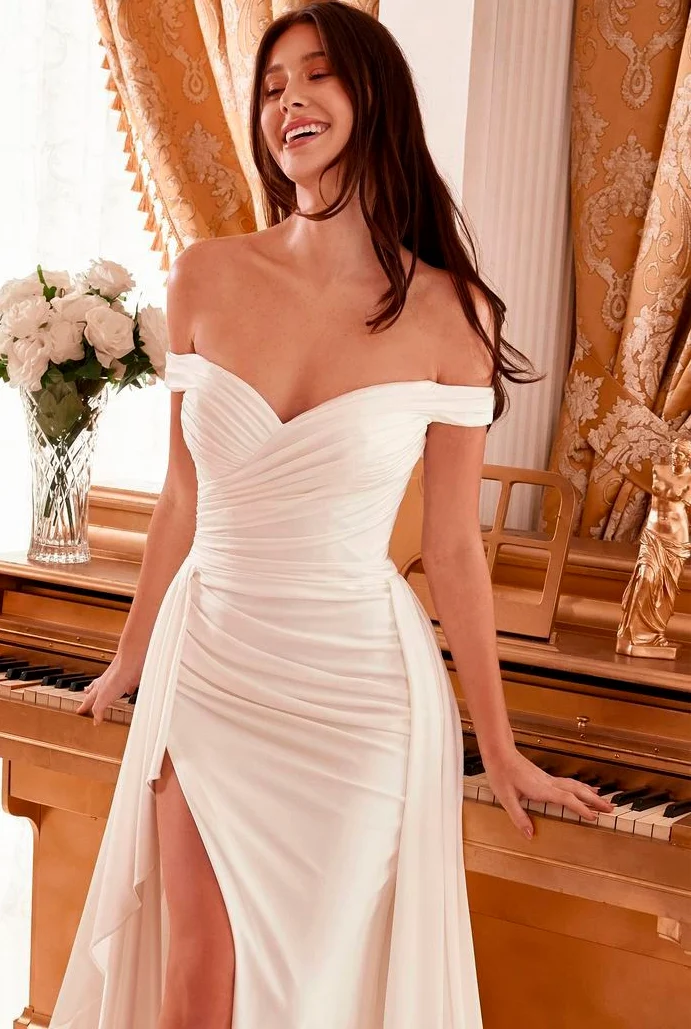
A V-shaped upper fold leads from the side arm areas towards the centre in this view. The pale dress shows little visible pattern. Several lines gather farther down at one hip, with a front opening beside them. The complete lower dress edge is outside the crop.
Follow the upper direction first, then the diagonal lower lines. They can draw attention to different places. Do you want a clear upper centre or a more noticeable hip fold? Compare two actual candidates in similar poses for this question, so that a changed stance does not take over the decision. Record which line you preferred.
The hands rest to the sides on the piano in the photographed pose. Bring your hands forward during the real fitting and add the intended bouquet. Which area remains visible? Changing only the accessory position helps you check whether you still like the folds without choosing another dress shape immediately.
The quieter surface does not establish a fabric name. Request composition, inner construction and care information for the actual offer. Also ask for complete front and back views to address length. The visible opening becomes a specific fitting decision only when tried on the real candidate with your shoes and ordinary steps.