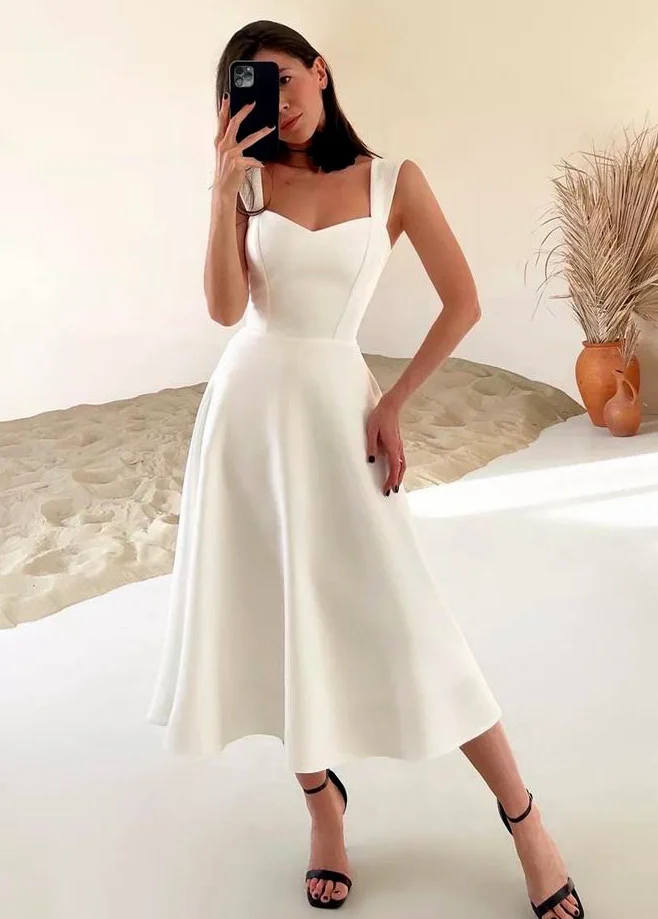
A plain midi dress shows a largely quiet pale surface, broad shoulder straps and a skirt widening below the waist. The upper front edge dips slightly in the centre. The arms remain bare. Dark open shoes with ankle straps add their own accent below the visibly shorter skirt edge.
Use this photograph as a deliberate contrast to the long decorated arm areas. Do you miss a line beside the forearm or prefer the clear area? Answer that question independently of skirt length first. You can be interested in sleeves without deciding to adopt the long skirt of another reference picture at the same time.
The photographed person holds a phone in front of the face and the other hand near the hip. This pose belongs to the visible view; it confirms no property of the fit during other movements. A real dress comparison needs views and a fitting of the actual offered candidate with the intended additions.
The dark shoes need not become part of your own combination. Compare the bare arm area first and decide on extra accents afterwards. This picture is neither a second view of the floral dresses nor a promised way to add arbitrary sleeves. Record its open arm outline as an independent alternative to the other references.