A traditional wedding dress might mean a Dirndl combination to you, or a pale form with a more general classical appearance. Establish that wish before trying to read the dress’s origins from a photograph. Two references show apron-like patterned fronts, short arm areas and long waist bows. Two others add longer floral sleeves and a higher decorated chest frame. Compare those visible parts, then ask about the real outfit being offered. These pictures do not confirm a particular region, family history or earlier period.
1. Define what traditional means for your choice
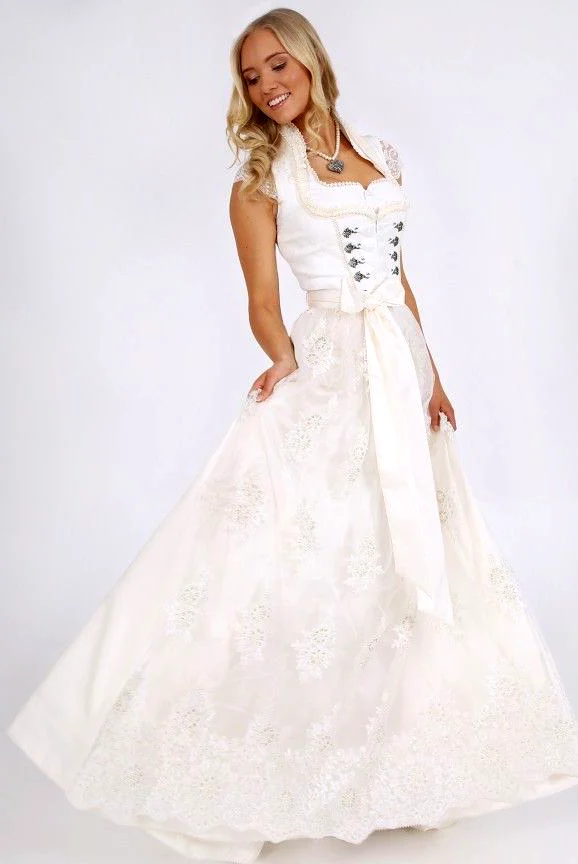
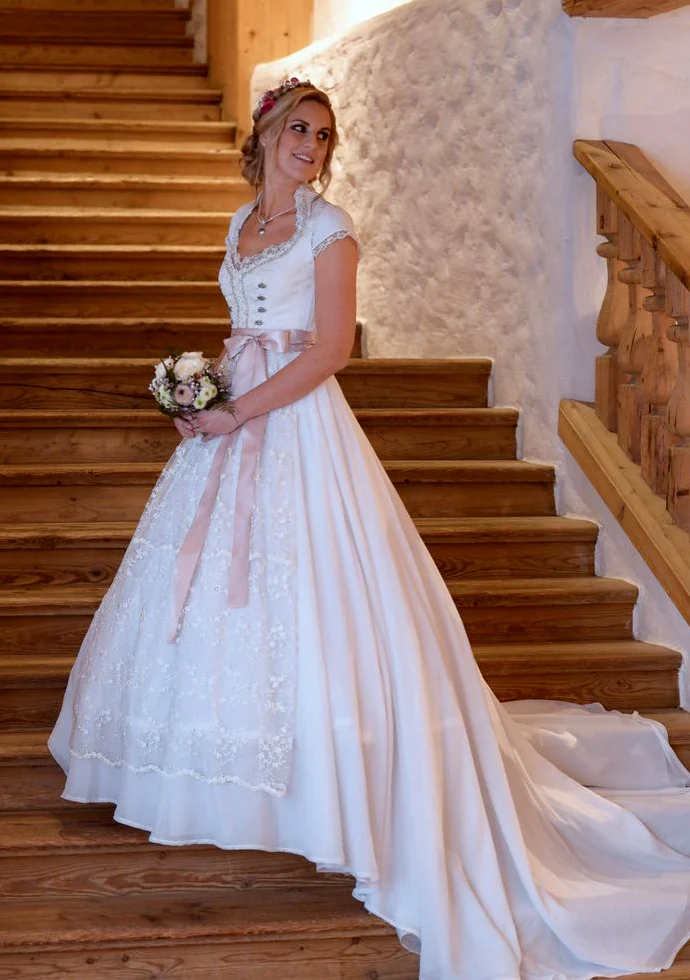
Start with a specific feature. Do you mean the apron-like front, the smaller button arrangement, the pale colour or a particular upper frame? The main picture combines a closer shaped centre with a white bow and a fuller lower outline. The staircase reference places a pink bow beside a longer floral front. If a family custom matters to you, discuss the actual version you want with the people involved. The pictures can illustrate a shape preference, but cannot settle that personal question for you.
Wenger names bridal Dirndl outfits, blouses and aprons in its own bridal collection. That named offer explains why it is useful to discuss the components separately. It does not identify any of our archive images or confirm their brand or materials. Ask which pieces are included with your candidate and which must be selected separately. A photographed combination is not a complete list of the items supplied. Have the actual offered pieces shown together before planning several different versions.
2. Compare the neckline and front arrangement
In the main image, finer short shoulder areas frame a deeper open chest section. Two darker rows of decorative shapes sit at the front centre. The staircase view has a different upper border and a narrower central button-like arrangement. Read the visible order first, without assuming every shape is an opening you can operate. Where do you want a closed-looking centre, and which upper area would you like visible? Ask to see an unobstructed front with relaxed arms on the real dress, alongside any close view of decoration.
Add the same model’s own rear view. The comparison of visible back buttons and actual connections helps separate appearance from function. Our front pictures do not establish a rear construction. Have any fastening on the offered dress demonstrated and explained. If you want an alteration, ask which actual area would change. Similar button details do not establish that the front and back of different references can be combined. Seeing the complete offered version is more useful than imagining an unseen matching rear.
3. Look at the apron-like front, bow and skirt together
The main image’s white bow sits above a longer floral front. Its ends continue downwards, while quieter pale areas remain at the sides. On the staircase, a pink bow accompanies a differently distributed floral area. First decide whether you want that additional front section at all. Then compare its length and pattern. A clear outer boundary does not explain how the section is attached or which underlying pieces are included. Have the visible layers related to the actual components of the offered outfit.
Ask to see your real candidate standing normally with the skirt sides released. Both hands hold side fabric in the main photograph, affecting its pictured spread. The staircase arrangement does not supply a transferable hem measurement for your own shoes either. Check the complete lower edge on yourself and include the rear length. Liking an apron idea does not require the same bow or skirt width. Describe those wishes separately and ask for a genuinely available combination rather than assembling one only from two different pictures.
4. Choose arm coverage and inner layers separately
The short-sleeved Dirndl-style references sit beside another pale front with longer fine floral-looking sleeves. There, the pattern continues to the wrists while the lower skirt remains quieter. The short-sleeve wedding dress comparison adds questions about where the arm area begins and ends. Decide what you want to see beside your torso. Short and long sleeves are different preferences; their shared pale appearance does not establish a common construction or a suitable season.
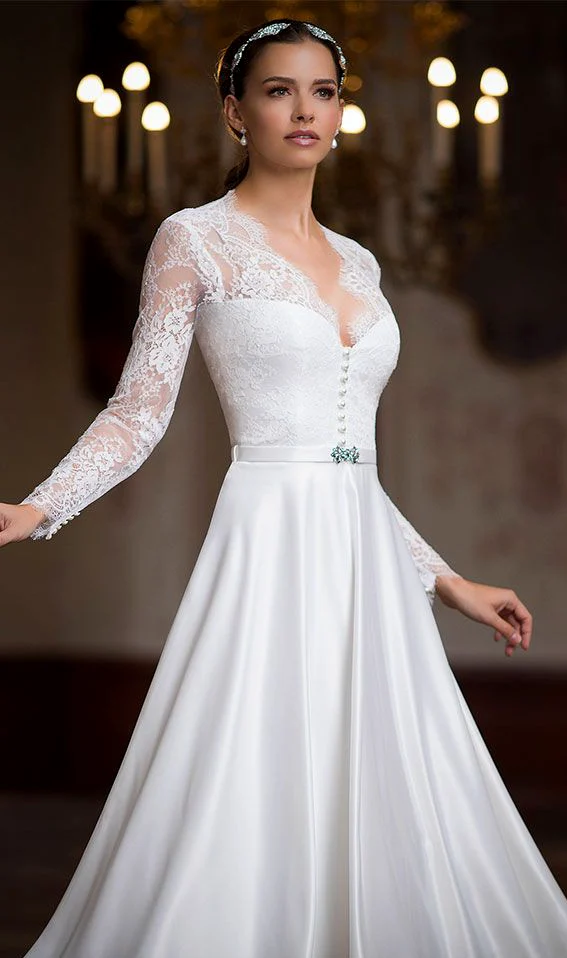
Try the actual favourite with your intended underwear and ask about the inner layers supplied. A fine sheer-looking shoulder section does not explain them all. Move your hands forward and let them fall again. Assess the chosen combination during your ordinary movements. You can ask about another sleeve version, but should see it on the specific model. The photograph offers no guarantee of freedom of movement, warmth or the fit of an unknown blouse beneath another bodice. Keep the appearance you want separate from the construction you have actually tried.
5. Compare your hairstyle, flowers and accessories in sequence
Begin with your planned hairstyle. The higher floral chest area in the classical comparison raises a different jewellery question from the more open chest in the main image. The bridal accessories guide helps you compare real additions individually. Add earrings and then a necklace if wanted. A photographed piece of jewellery is not compulsory for your own selection. Assess the visible frame alongside your face and the upper edge you are actually wearing, rather than assuming the same placement suits another neckline.
Hold your planned bouquet low, then in front of the centre. Both hands carry flowers in front of the body in the staircase reference; another position can expose a different part of the front. Add your intended bag afterwards. If you want a veil, the veil and wedding dress comparison helps complete the rear view. Check the real combination instead of deriving a universal headwear rule from the word traditional. Each selected piece needs its own position on the actual dress.
6. Confirm the complete outfit before alterations
See the outfit from the front, side and back with your intended shoes. Sit, stand and walk a few steps before rearranging any held fabric. Discuss the desired length with all actual outer and inner pieces in place. Ask which area would be changed and when you can try the complete result again. The number of visible borders or a long bow end is not a shortening instruction. Record the model, included pieces and specifically agreed work so the discussion stays attached to your own candidate.
For treatment, follow the finished product’s label. GINETEX explains textile care symbols; white fabric and floral pattern do not determine a washing or ironing method. Keep the instructions for any separate piece too. Your traditional wedding dress can then be chosen through a concrete combination: desired front, upper line, actual components and complete length. You do not need an invented regional attribution or a material promise drawn from the picture to make that selection.
Choose the desired form first and establish its actual components. Four pale references compare Dirndl styling with other classical upper lines.
Frequently asked questions
Are a blouse and apron automatically included with a traditional wedding dress?
A traditional wedding dress photograph does not confirm the items supplied. Ask exactly which blouse, outer front section and other pieces are included with the offered model and which are selected separately.
Does Dirndl styling in a bridal image prove a particular regional origin?
Dirndl styling in a wedding dress reference does not confirm a particular regional origin or family history. Discuss any desired custom personally and use the offered dress’s own information.
Does the pale colour of a traditional wedding dress establish a fibre?
The pale colour of a traditional wedding dress does not explain its fibre composition. Ask about the materials of each actual offered piece separately.
When should I check the length of a traditional wedding dress?
Check the traditional wedding dress with your intended shoes and all included layers. Release held sides and discuss a new hem on the complete real outfit.


