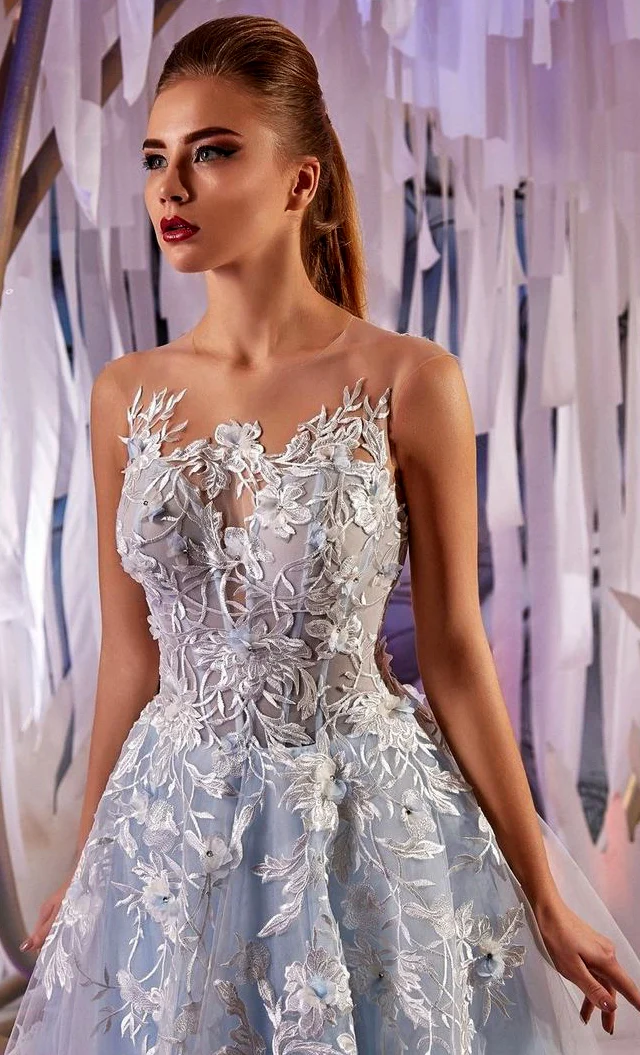
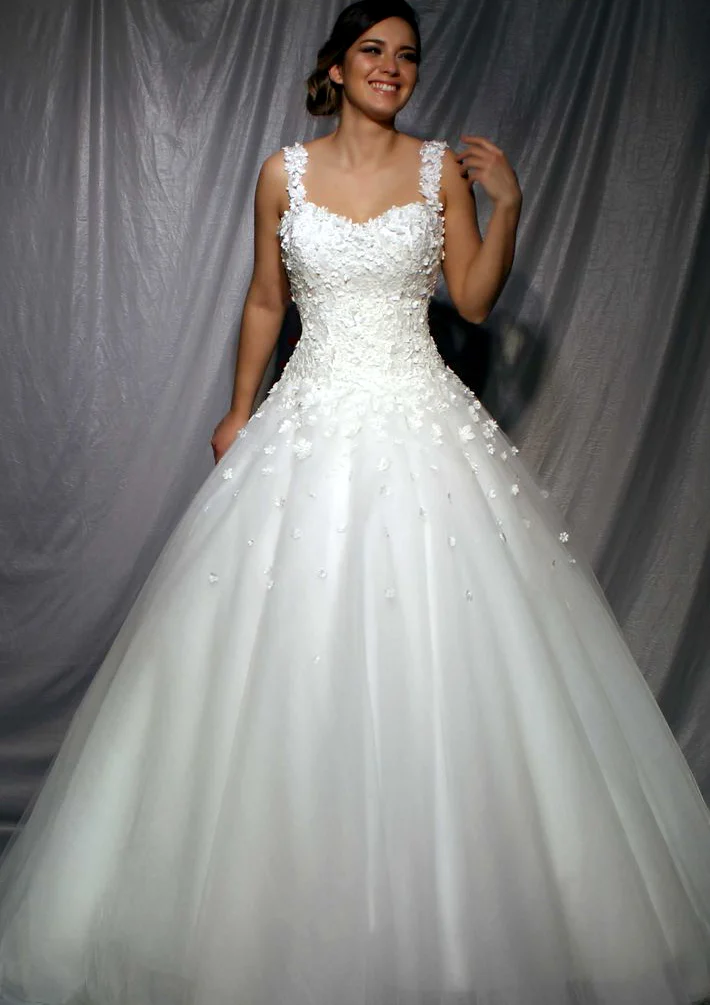
Compare a voluminous wedding dress at three separate points: where fullness starts below the waist, the outer line from the side and the complete lower finish. The white main reference puts large quieter skirt areas beneath a closer decorated bodice. Another broad white form distributes floral motifs differently, while a closer floral crop adds only the upper transition. These photographs supply specific preferences to take to a fitting. They explain neither the number of inner layers nor a particular historical or royal origin. Record the visible line you actually want to retain first.
1. Establish where the intended fullness begins
A narrow brighter line separates the shaped bodice from the larger lower area in the white main view. The skirt opens distinctly to both sides below it. The broad floral white comparison instead continues more drawing across that transition. Decide whether you prefer a visible division or a more continuous motif direction initially. Name the starting point of fullness separately from the size of individual folds. You can then bring the same question to another real candidate without depending on the complete photographed styling.
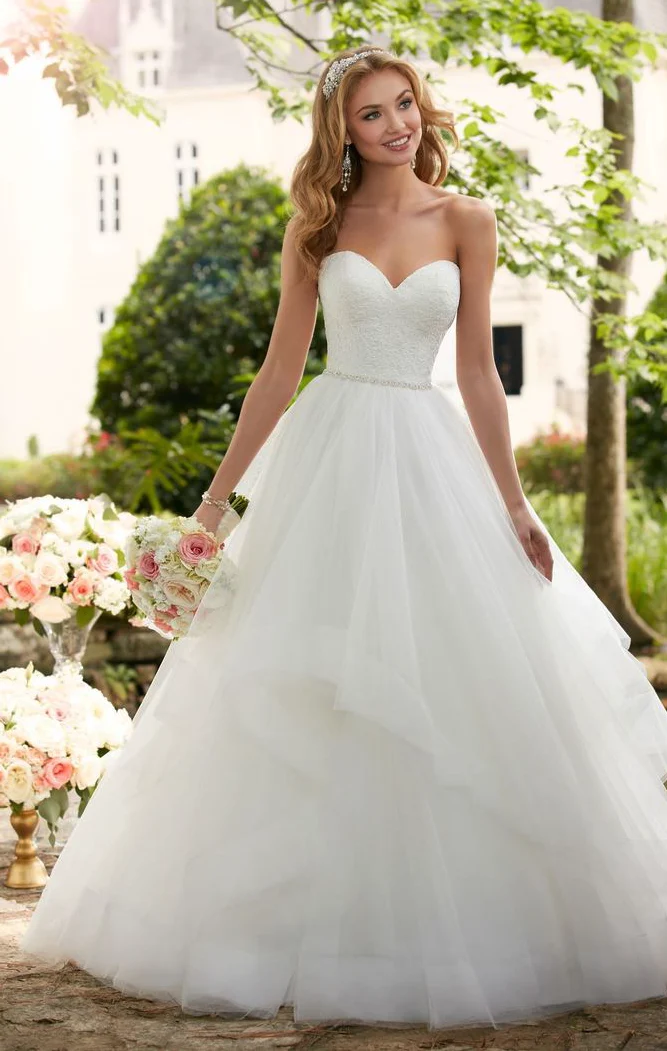
The A-line wedding dress comparison develops the lower-outline question. Similar pale colour does not make two contours identical. View the favourite straight from the front and from the side. Record which area develops immediately below the waist and which becomes larger farther down. A close crop cannot explain overall side breadth. Request a complete view of that precise offered model from a reasonably consistent distance, including ordinary drape without someone opening the skirt by hand.
2. Separate outer form from explained inner components
A large visible surface confirms neither a hoop underskirt nor a particular number of petticoats. A diagonal overlapping edge cannot reveal how many independent pieces lie beneath it either. Have existing inner layers, connections and supplied components explained on the actual dress. Ask about a genuinely offered configuration if you want another level of fullness. A desired alteration initially remains a product question rather than a possibility already demonstrated by the archive photograph. Keep that distinction clear in your order notes.
One named example makes the difference concrete: the manufacturer describes a detachable hard-net layer with snaps at the hips for Justin Alexander Signature JOAN 99227. That information applies to this model. It identifies none of the archive dresses and establishes no corresponding inner layer on them. Ask about an existing component, its fastening and the view with the intended layers just as specifically on your own candidate. Similar skirt fullness cannot transfer that function. See both arrangements if different configurations are actually offered.
3. Compare the bodice independently from skirt size
The main reference places a strapless sweetheart front border above the full skirt. Broader patterned shoulder connections and a curved front line appear on the floral white comparison. Those differences remain separate decisions. One skirt breadth does not oblige you to select the same upper border. Record one preference for the waist and another for the shoulder region. Establish which relationship the actual offer contains afterwards rather than mentally assembling independent pictures into a confirmed model version.
The princess wedding dress comparison develops upper lines and complete combinations. Begin with intended underwear and an ordinary arm position on the real favourite. Examine front and back together. A fine or translucent-looking upper area establishes neither particular opacity nor support. Those details need the actual offered version. Discuss your preferred contour beside the proposed inner arrangement while keeping them as different information. A related outer shape cannot establish the same construction inside another garment.
4. Examine the skirt sides without held fabric too
One hand gathers a skirt side in the main photograph, while the other holds a bouquet low at the side. Its lower area is therefore arranged for that moment. Release the sides on the real model and examine an ordinary standing position first. Take a few usual steps before fabric is arranged again. Compare the outer line with the preference you recorded. Photographed spread supplies no fixed measurement for the space your own dress occupies; name what changes between held and released views instead.
Try sitting and standing again under the fitting conditions too. Ask about your actual route and movements intended during the celebration. A large pictured surface establishes neither straightforward handling nor the opposite. Have an existing solution demonstrated on that particular garment if lifting or guiding part of it is planned. The bridal look change guide develops other wearing arrangements. A change is not automatically possible by removing one skirt layer. Establish what genuinely changes and whether you intend help for the actual arrangement.
5. Complete the hem view with your own shoes
The main reference conceals footwear beneath a large long surface. The additional broad floral front does not show the entire lower finish unobstructed, while the closer floral crop ends much higher. None of these pictures therefore prescribes a suitable heel height for you. Bring your intended pair to the length trial. Examine the actual front hem and add the complete back. A clearly shown waist cannot replace missing information at the bottom. Make that decision with the selected layers rather than through arranged floor contact alone.
Add an intended veil after establishing the dress contour. The veil and wedding dress comparison helps assess two different rear surfaces. Have the supplier show which border belongs to each piece. An overlapping veil should not be counted as a confirmed extra skirt layer. Assess the genuinely planned combination with your hair and shoes instead of supplying a missing rear area from another reference. Comparing the view before and after adding the veil shows which line it actually covers on your own garment.
6. Record the actual offered combination
Write down model, size, intended colour, included inner layers and discussed work together. Identify the precise selected version where several configurations are offered. Add complete front, side and back views under comparable conditions. A bouquet or bag may obscure the transition; examine it unobstructed first. Introduce genuinely planned additions individually afterwards. This keeps it clear whether you enjoy the chosen fullness or mainly a surface you have just changed. Retain unexplained connections as questions beside the confirmed supplied components.
Treatment and storage depend on information for the finished garment. GINETEX explains textile care symbols; gloss, pale colour and visible folds cannot replace its label. A useful voluminous wedding dress choice connects your preferred starting point of fullness with explained actual components and a completely tried outfit. Keep remaining questions beside those established details. Apply the same upper, waist and lower-finish questions to subsequent candidates so a newly appealing decoration does not silently change the whole decision.
Compare the starting point of fullness with the ordinary outer line. Establish actual included inner layers and length in your own shoes separately.
Frequently asked questions
Does a voluminous wedding dress prove a hoop underskirt?
The visible breadth of a voluminous wedding dress establishes neither a hoop underskirt nor a particular number of inner layers. Have the actual offered model’s existing construction explained.
Can I remove a skirt layer from every voluminous wedding dress?
A removable skirt layer is a property of the voluminous wedding dress only when offered and demonstrated for that precise model. A diagonal outer border alone confirms no such connection.
When should I decide the length of a voluminous wedding dress?
Decide the voluminous wedding dress’s length with your intended shoes and selected layers. Add the complete front hem and entire rear view; the references do not show footwear adequately.
Are the three references versions of one wedding dress?
The three voluminous wedding dress references are not confirmed as versions of one model. Compare visible properties but have the genuinely available combination explained on your actual candidate.


