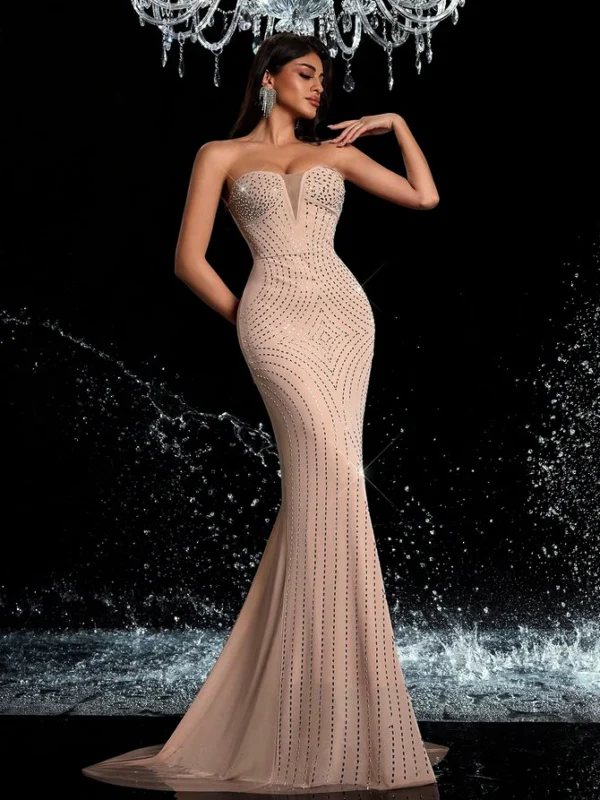
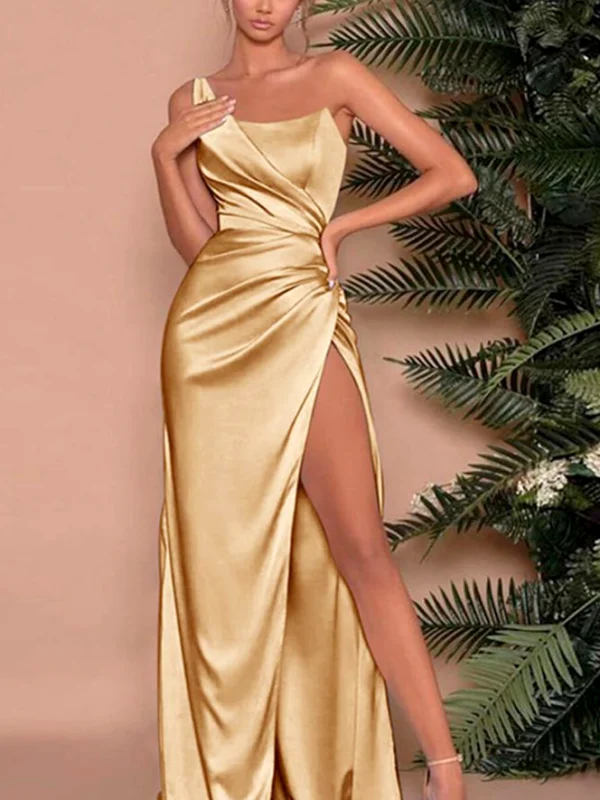
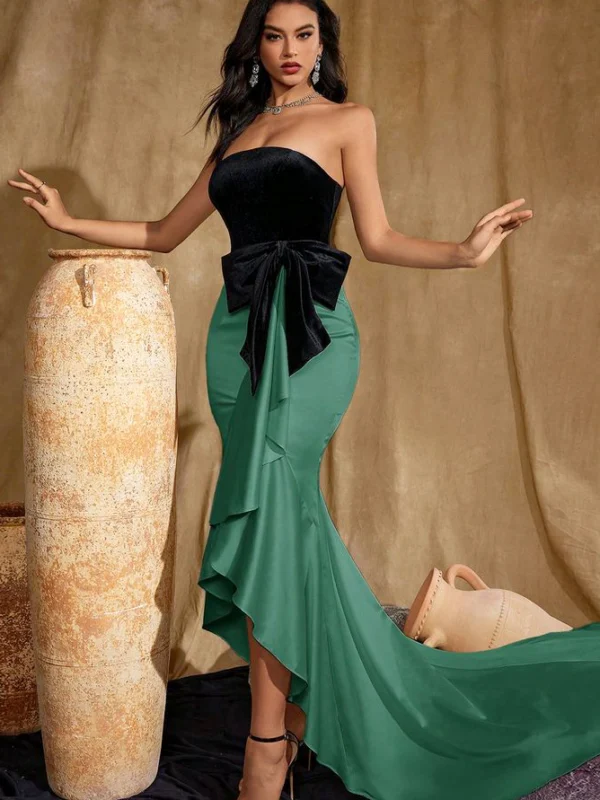
An evening dress with a train needs more than an impressive front photograph. The important question is how the rear area continues beyond the ordinary lower finish and how that version is offered on the actual dress. Our four references show front folds, upper edges and different lower outlines. Some cloth lies at the side or towards the back on the floor in the green starting image. A complete back view confirming a particular train is missing, however. Use the pictures for visible shape ideas and request the missing view of the specific model.
This distinction keeps the choice practical. A high front leg opening does not explain the rear length. A lower area that flares out can also follow a different course from an extended rear section. Decide which feature actually matters to you first. You can then ask about the offer without deriving a fixed train shape or a measurement from a small area of cloth at the side. Connect each preferred feature with the actual model’s own information.
Request the complete back with its floor area
Ask for front, side and rear views of the same offered version. The back view should include the complete lower finish and the area behind it. A close bodice crop may explain an edge or a seam line while leaving the rear extension unknown. Record the exact model name beside the photographs so that another colour or version is not inadvertently treated as a corresponding view.
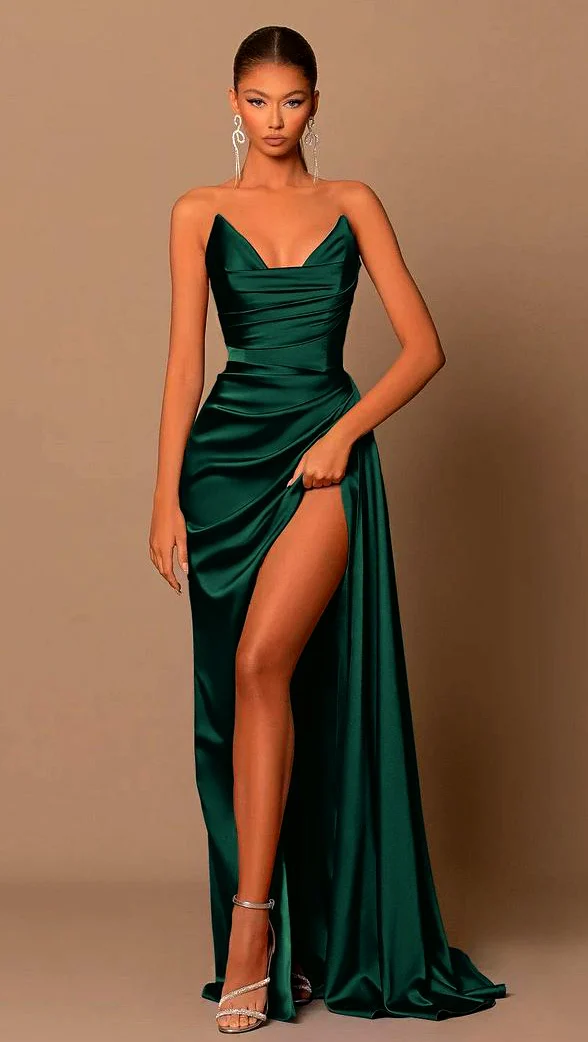
The green image supplies a front-shape idea: pointed upper sides, a lower centre and several diagonal folds. A hand holds the edge of the high leg opening. More cloth gathers at the bottom right on the floor. Those observations remain useful even though the actual rear extension is not yet shown. Ask specifically for its corresponding back view rather than mentally completing it from the front.
Record where a length measurement begins
If an offer gives a train length, ask where it is measured from and which version the measurement describes. A number without a corresponding starting point has limited value for your comparison. Have the ordinary hem length and additional rear continuation explained separately. Even descriptions such as short or long should become clear through the actual model’s matching views.
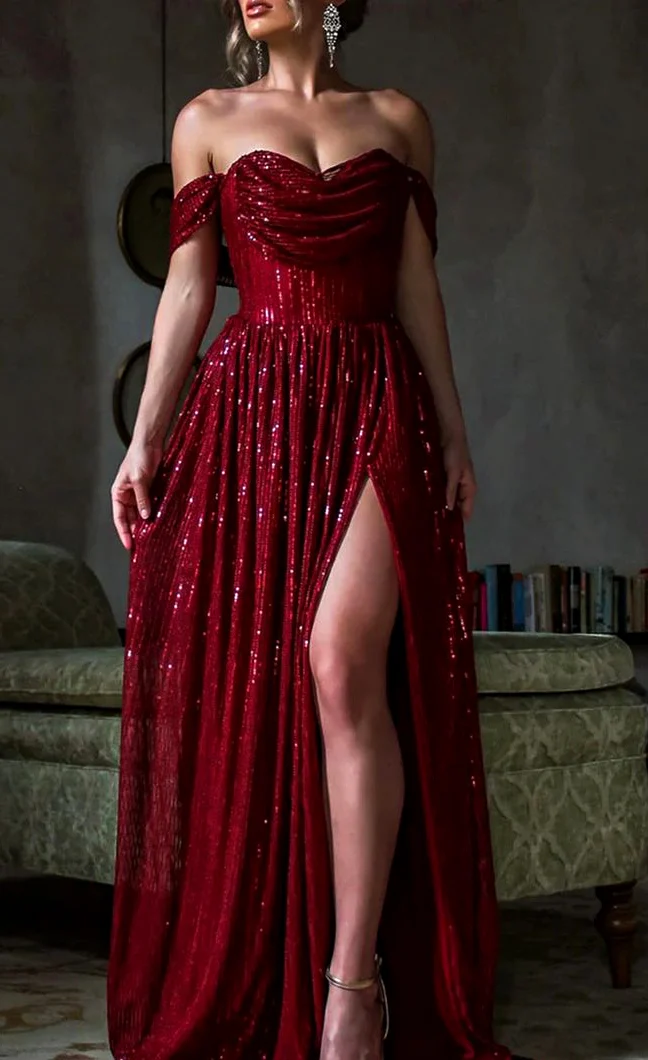
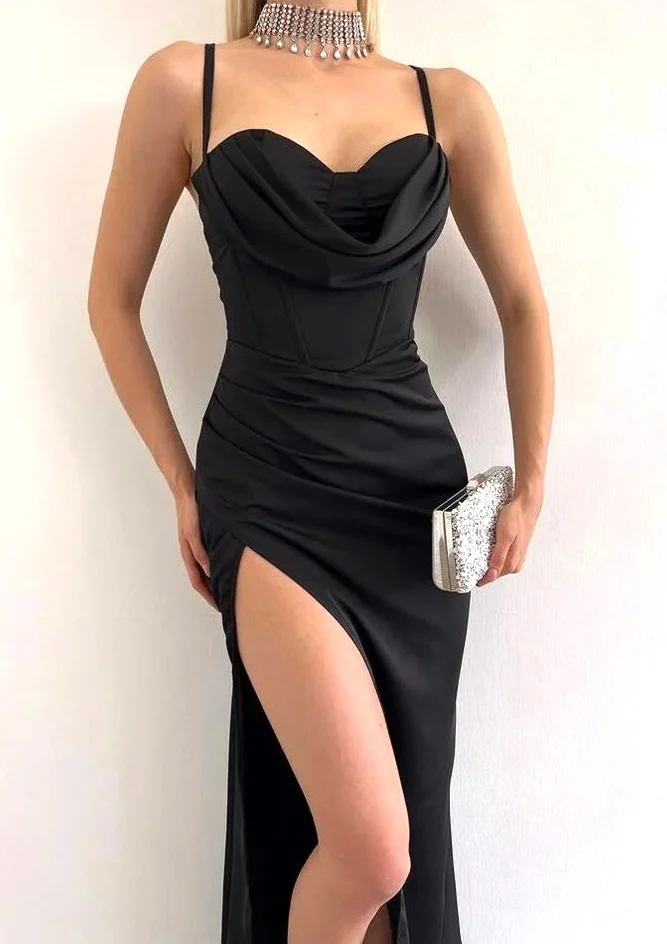
The close black reference omits its entire lower finish. The wider red photograph reaches the image’s bottom edge without showing the complete rear area. The closer burgundy shape opens farther down and has a lower section raised at the side. Read these as different kinds of image information first. A cropped front cannot replace a missing measurement of the actual back or confirm the full rear shape of another dress.
Check length with your intended shoes
The actual lower line belongs to your complete outfit. The guide to shoes for an evening dress adds to that decision. Look at the real model in an ordinary stance with the pair you intend to wear. A photographed open strap shoe establishes neither a particular heel height nor the right length for another person or another dress.
Walk a few steps, turn and sit in the actual candidate. Watch the front edge and rear area separately. If considering an alteration, establish which section would be affected and which existing decoration or fold arrangement should remain. Ask about the specific possibility before assuming a particular shortening. The amount of visibly glossy cloth cannot answer that question by itself. The proposed work needs to be discussed on the actual garment.
Clarify connections and a possible bustle
Cloth resting on the floor does not establish a detachable train or a prepared bustle. In Maggie Sottero’s bridal guide to bustles, the arrangement is planned during alterations for the particular gown, with a professional assessing its construction and embellishment. That is an example of checking the actual product, not confirmation that our independent evening-dress references have those functions.
Ask the seller to show which connection already exists and which work is only being proposed. If a bustle is planned, request a demonstration of that exact arrangement. Ask who can operate it and what the dress looks like afterwards. Keep this state separate from removing an additional section completely. Each request needs its own confirmed product information rather than an assumption based on similar photographed folds.
Choose the upper edge and surface independently
The green front places two pointed upper sides beside a lower centre. The reflective red reference has lower side shoulder areas and a gathered upper edge. The close black picture combines thin straps with a softly draped area, while the burgundy form also has fine shoulder connections. Choose the upper outline you want first. A later train question does not automatically select that edge for you.
The satin evening dress comparison helps separate broad light areas from a verified fabric description. The many small reflections in the red reference create a different impression from the quieter green folds. They establish no fibre or shared maker. Record surface and back length as two preferences so that the seller can identify a combination that is actually offered rather than an imagined product assembled from separate pictures.
Finish with complete views and care information
Add your planned bag and jewellery after the first length comparison. The black reference’s pale rectangular reflective bag sits at the side of the hip, while the burgundy photograph adds a smaller bag on a chain. Those objects are separate choices. A photograph’s hand position should not become a compulsory way to hold your own outfit. Try the bag where you intend to carry it and see which area it covers.
For another lower border, the fringe evening dress guide adds a comparison of hanging ends and the cloth edge; it does not turn that border into a train. Read the actual item’s markings before treatment; GINETEX explains the care symbols. Finally, record the model, confirmed rear continuation, intended shoes and open connection questions. Your evening dress with a train search then becomes a checkable request rather than a general photographic impression.
An evening dress with a train needs its complete back and actual lower outline shown. Four front references help compare necklines, folds and the views still missing.
Frequently asked questions
Do the four front photographs prove an evening dress with a train?
The front references for an evening dress with a train do not confirm the complete rear extension. Cloth lies on the floor in the green image, but the matching complete back view is missing for a particular train shape.
Which details do I need for an evening dress’s train measurement?
For an evening dress’s train length, you need the stated measuring point and corresponding version. Have the ordinary hem length and additional rear continuation explained separately.
Does an evening dress with a train automatically have a bustle?
A bustle on an evening dress with a train needs to be confirmed on the actual model. Ask about existing connections or a specific proposed alteration and have the arrangement demonstrated.
Does a high leg opening determine an evening dress’s train?
An evening dress’s front leg opening and rear extension are separate features. The train needs the model’s own complete rear and side views.