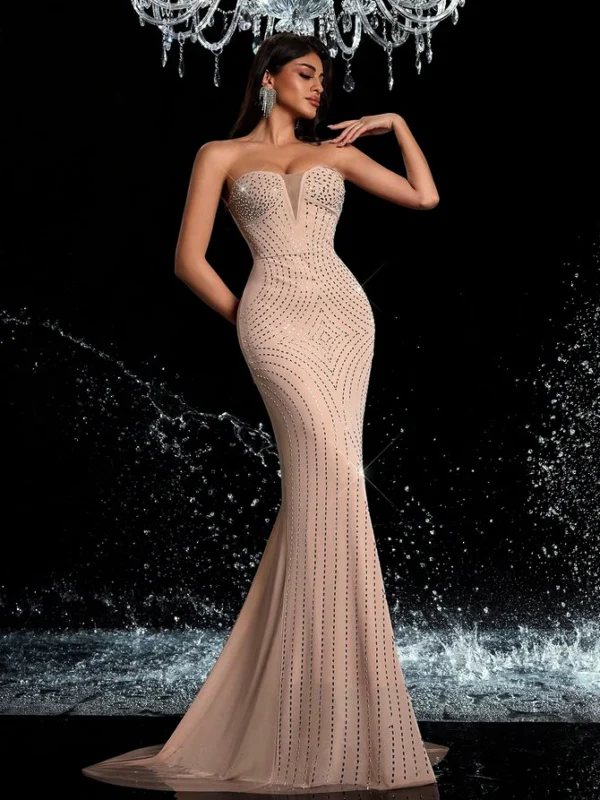
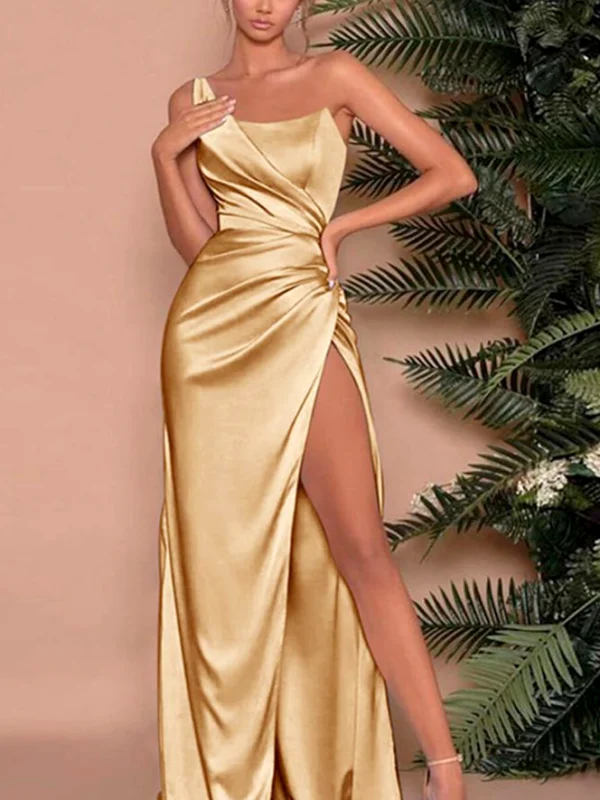
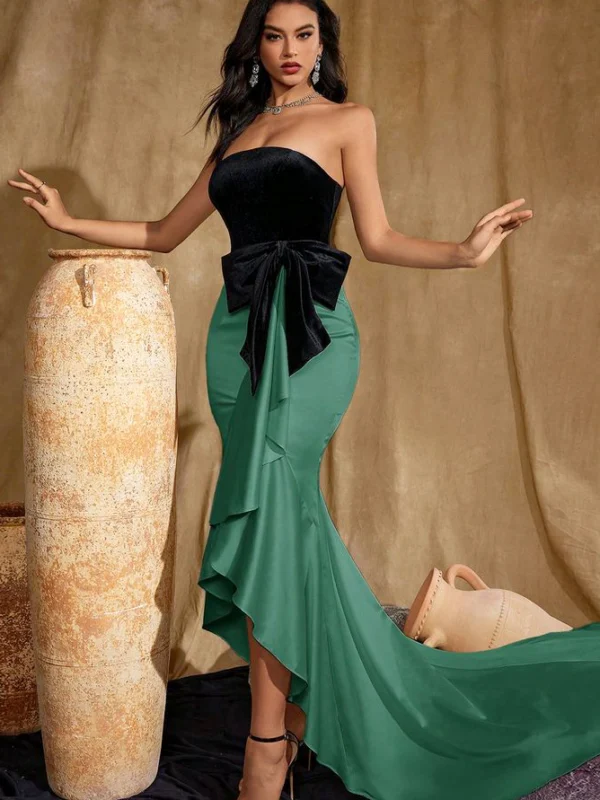
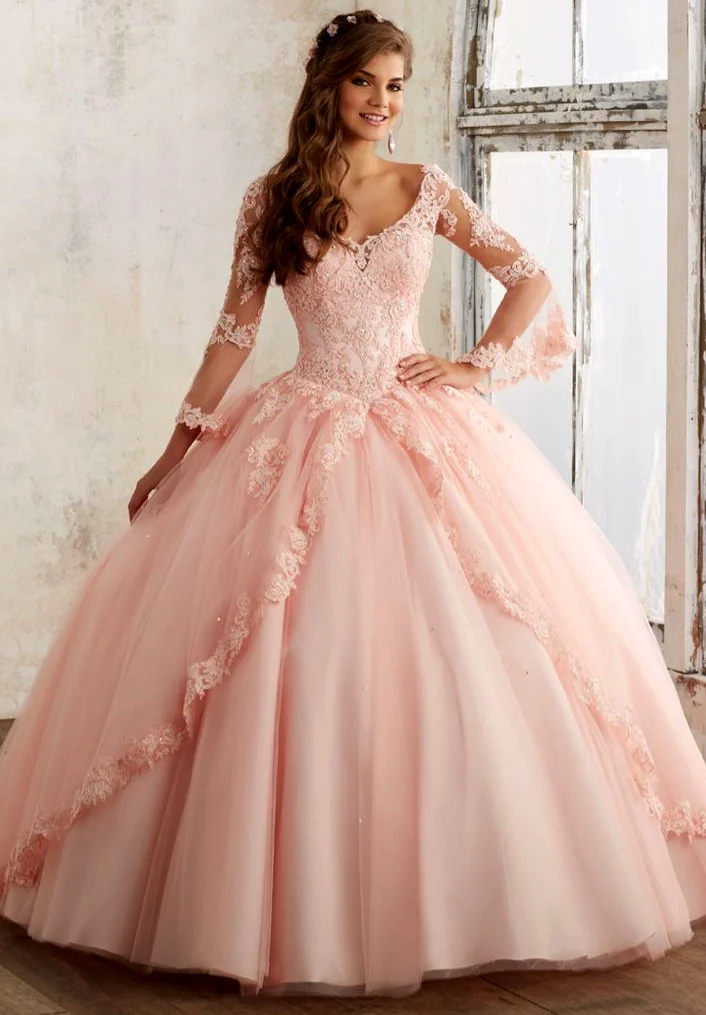
A ball gown is easiest to compare through the point where its skirt widens and the length you actually want to wear. The long pink main reference puts a very full skirt below a closer floral bodice. Two shorter wide shapes and a longer, closer blue dress introduce different decisions. Choosing between a ball gown and an evening dress does not have to start with a prescribed colour or body type. Name the lower outline you want, then examine the complete outfit offered to you.
1. Locate the beginning of the ball gown’s fullness
In the long pink image, a large skirt area opens relatively early below the waist. The long blue comparison follows the hips and upper skirt more closely, with a front leg opening and a longer area of fabric at one side. Both references extend far down the body, but their ideas of width differ. Decide whether you want a broad area immediately below the waist or a closer outline before the skirt opens. That gives a more precise starting point than simply asking for a formal dress.
The Sherri Hill silhouette guide distinguishes a defined waist and full ball-gown skirt from a less voluminous A-line within its own selection. This visible distinction helps you describe a shape. It does not identify any archive dress or explain its inner support. The flared evening dress comparison develops the relationship between a wider skirt and its bodice. Ask to see each real candidate without fabric being held out at the side as well.
2. Choose skirt width and hem height separately
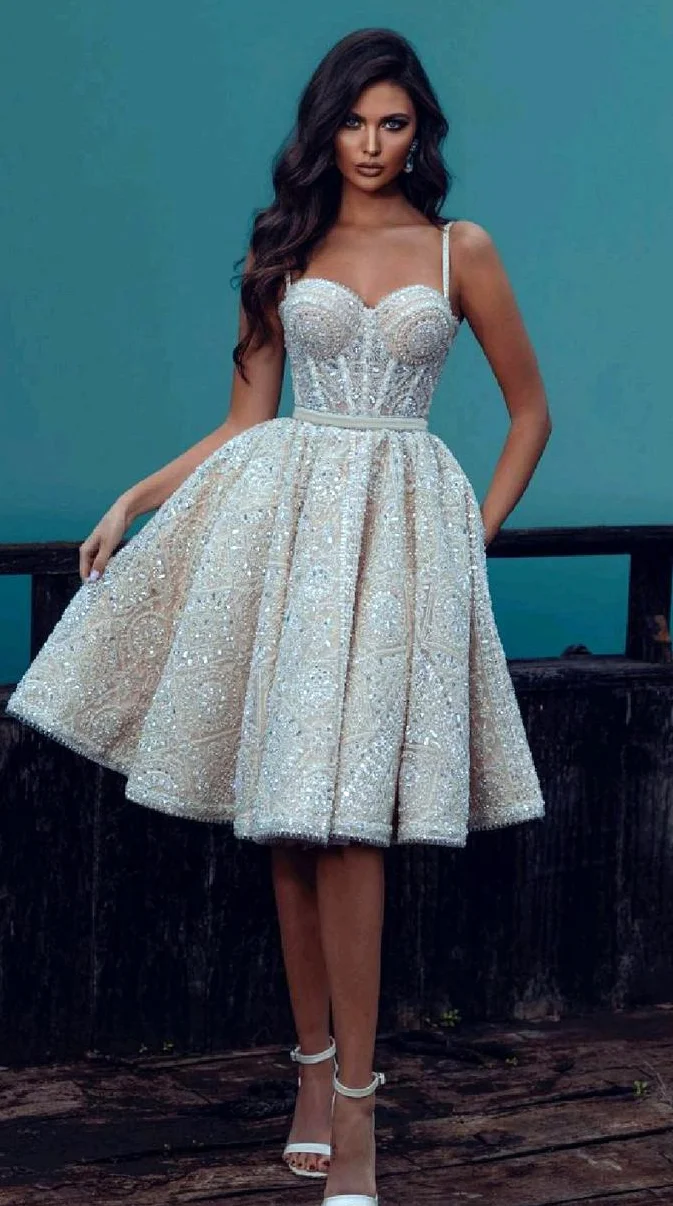
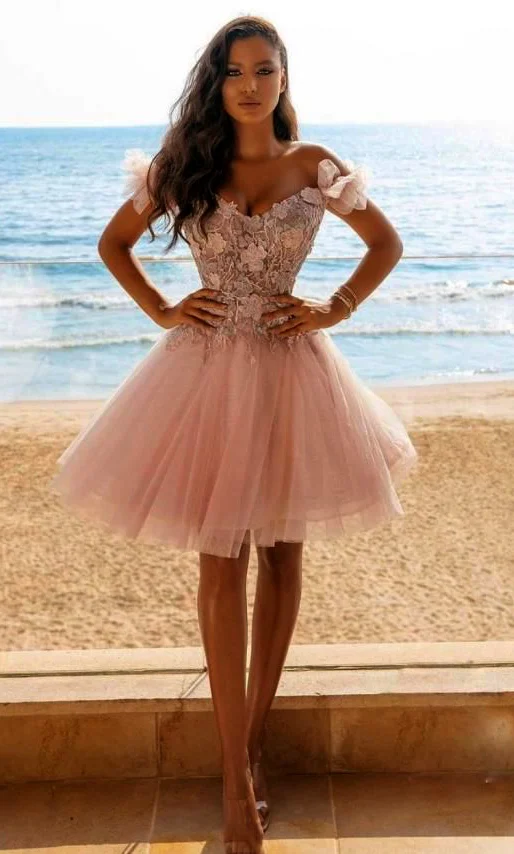
The short pink reference also has a noticeably wider skirt below a floral upper section, but its lower edge ends well above the floor. The short pale reflective dress supplies another broad lower outline. These are useful comparisons if you like fullness but have not settled on length. They do not establish short versions of the long main dress. Even a similar pink colour does not turn two different views into confirmed versions of one model.
The short or long party dress guide helps you compare hem height before deciding on shine or neckline. Where possible, ask for two actual candidates with a similarly full skirt idea. Look at the lower finish first and then the remaining differences. You can discover whether your priority is broad volume, a long uninterrupted line or a visible relationship between hem and shoes. A shorter full dress can remain a deliberately different choice.
3. Read the upper frame independently of the skirt
The long pink ball gown combines a floral front edge with translucent-looking decorated arm areas that widen at their ends. The shorter pink reference leaves the shoulder tops uncovered and adds broader, bow-like sections at the upper arms. The longer blue dress has no visible shoulder straps and carries a quieter, glossy-looking area diagonally across the upper body. Choose between these visible frames without treating the pictured skirt as a compulsory companion to your preferred neckline.
Start by viewing the real neckline with your planned hairstyle. Add earrings or a necklace afterwards. The pale short dress distributes many small reflections across bodice and skirt, whereas larger less decorated areas remain on the long pink form. That distribution answers a different question from sleeve height or shoulder coverage. Write down a priority for each area. An attractive neckline does not establish inner support, particular fibres or the way a fastening operates.
4. Check the broad outline during ordinary movement
A wide skirt in a photograph is arranged at one particular moment. In the short pale view, one hand holds fabric out at the side and the other is partly concealed. In the short pink view, both hands rest at the waist. These poses do not establish a reliable walking range or an unchanged distribution in every situation. During a fitting, begin with an ordinary stance and relaxed arms before making a final judgement about width. Take a few steps, then let the skirt settle again.
Sit in the actual dress and stand up before its skirt is rearranged. Observe which outer areas lie beside you and which you would need to guide deliberately. Ask about the intended handling if a longer area is to be lifted. A setting in an image does not explain your own seat or route. For a particular event, consult the actual invitation and the responsible people at the venue; visible fullness is not a general dress-code approval.
5. Examine shoes and the rear finish completely
Pale open shoes with ankle straps appear below the short reflective skirt. The short pink image also shows only a limited lower shoe area. The long main reference hides its shoes under a broad skirt. None of these views prescribes a heel height. Try the pair you intend to wear and look at the hem in a normal stance first. Then take an ordinary step so that your choice does not depend on fabric laid out for a photograph.
The evening dress shoe comparison helps with open and closed shapes. The long evening dress guide adds hem, rear length and silhouette considerations. Ask to see the entire back of the offered candidate. A front hem close to the floor does not reveal how much fabric follows behind. Discuss an alteration with your intended shoes and identify the affected area rather than requesting an unspecified new length.
6. Record a combination you can verify
Finish with three preferences: where fullness begins, your desired hem height and the upper frame. Add the actual shoes, a planned bag and any unresolved questions about construction. Visible volume does not confirm a hoop skirt or a particular number of underlying layers. Ask for the real components to be explained. If you want two configurations or a different outer area, that possibility must be demonstrated on the offered model; a decorative overlap does not establish removability.
Follow the care label attached to the finished garment. The GINETEX explanation of care symbols helps you read it without deriving a treatment from reflections in a picture. A ball gown need not be defined by a promise of royal impact or suitability for one particular body. Your choice connects a named shape with a fully seen and tried outfit. Judge further evening dresses against those preferences instead of abandoning them whenever a new decoration appears.
Compare early skirt fullness, hem height and upper framing in four references, then verify the complete outfit with your actual shoes.
Frequently asked questions
Does a long dress alone establish a ball-gown shape?
A long hem alone does not establish a ball-gown shape. The defined waist and full skirt are a more useful visible distinction; compare where the skirt opens below the waist.
Must I copy every statement accessory with a ball gown?
You do not need every pictured accessory with a ball gown. View the actual neckline with your planned hairstyle first, then compare one of your own jewellery choices at a time.
Does visible ball-gown fullness prove that a hoop skirt is underneath?
Visible ball-gown fullness does not prove a hoop skirt or a particular number of inner layers. Ask for the actual offered garment and any separate components to be explained.
Does a ball-gown photograph confirm suitability for my event?
A ball-gown photograph does not confirm suitability for your event. Check the actual invitation, venue information and the complete outfit you intend to wear.