Assess a layered wedding dress through its complete appearance and confirmed construction. Separate overlapping surfaces, larger folds and the distribution of decoration. A broad skirt outline alone does not tell you how many layers lie underneath. Decide which outer effect you want first, then ask about the intended version in a specific offer. This gives you a selection based on visible preferences and actual information instead of presumed fabric properties. The image can help you formulate a question without supplying the product specification itself.
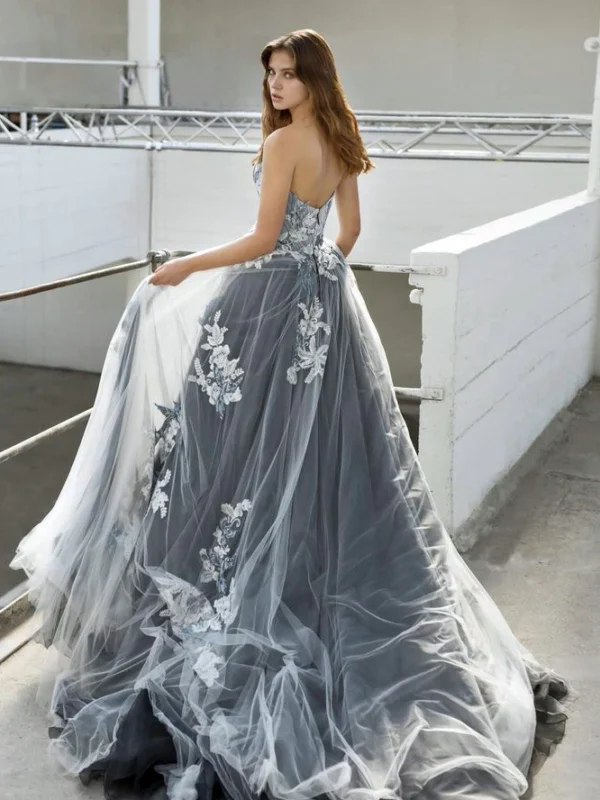
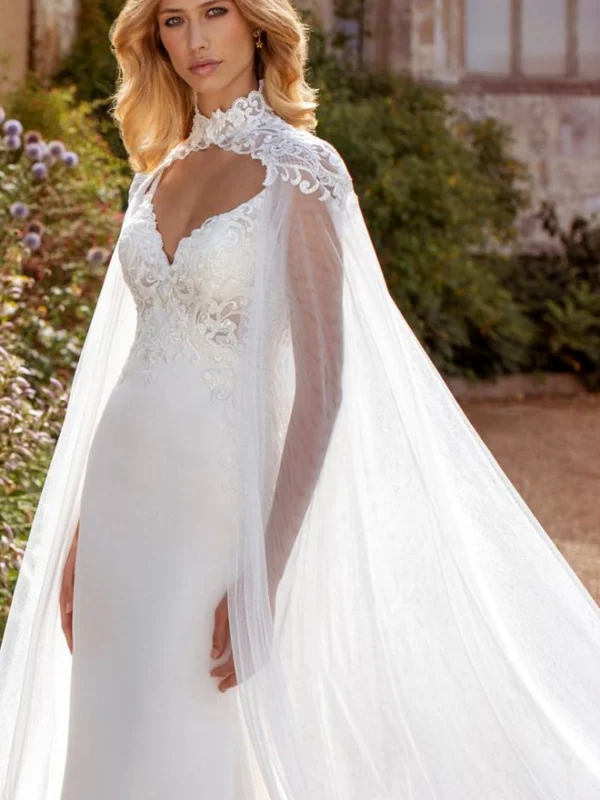
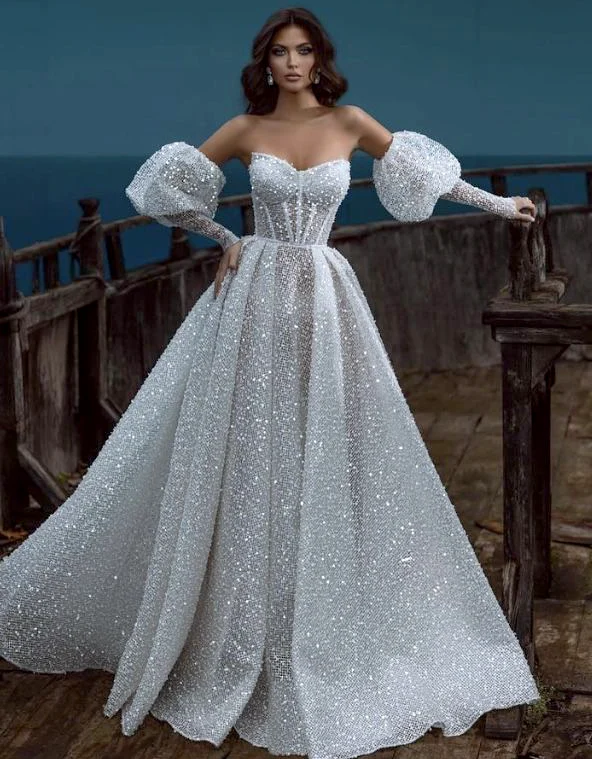
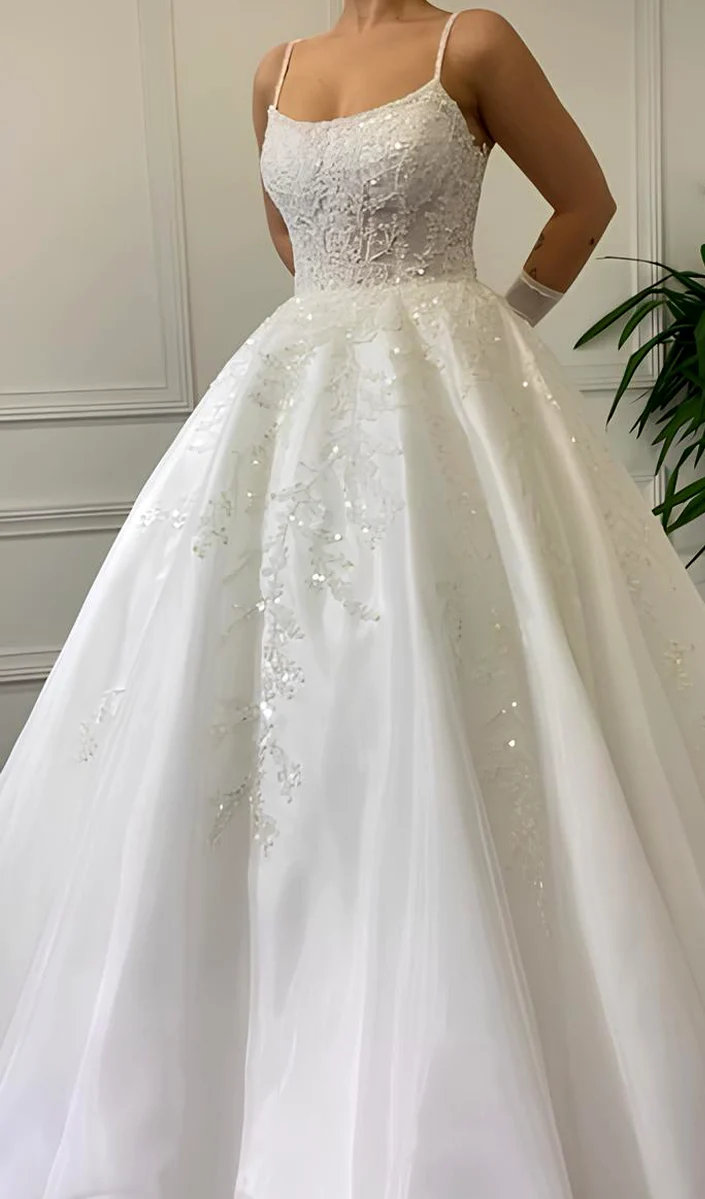
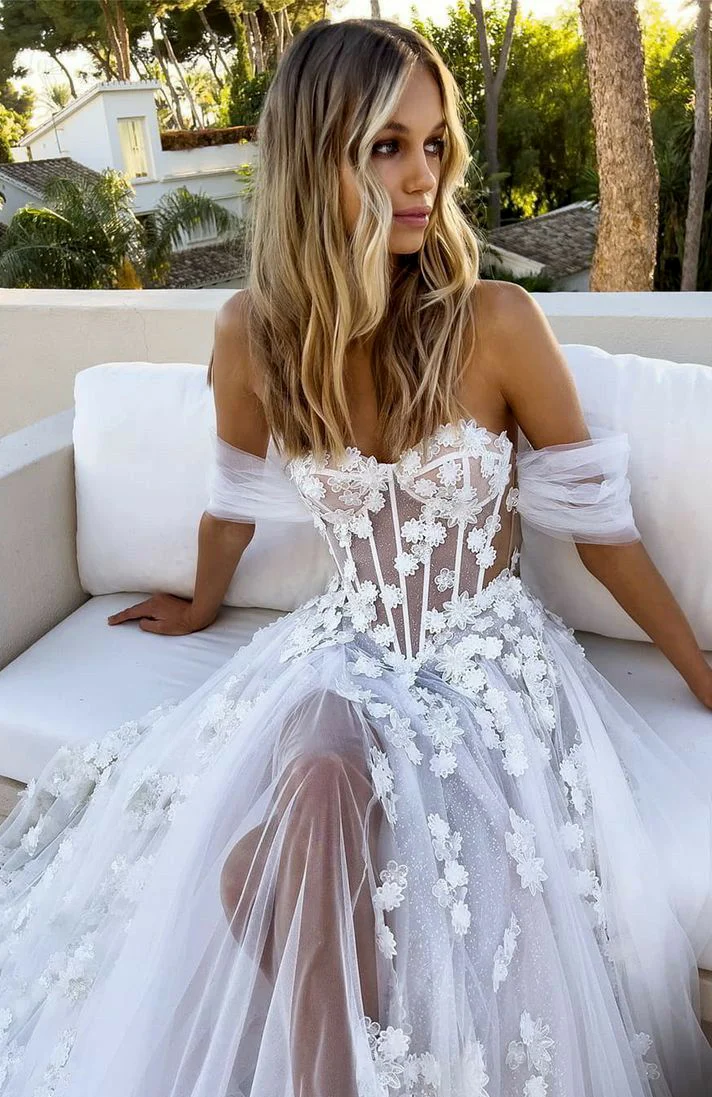
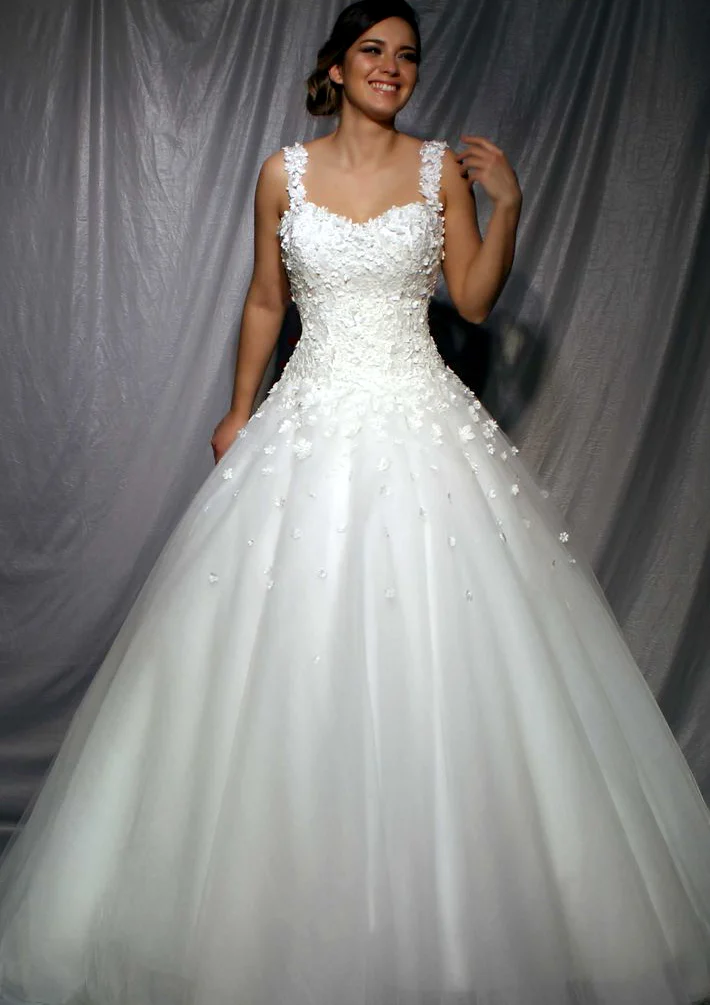
The four bridal references show a close seated view with a sheer-looking skirt area, a warm-pale dress with many light flower forms, a broad white skirt under a densely floral bodice, and larger quieter folds beneath slim straps. They differ through more than width. Use each view for the areas it actually shows. A missing back or cropped hem does not become a complete model by placing another unrelated reference beside it. Request those additional views of the actual garment separately.
1. What does a layered wedding dress actually show in a picture?
Begin at a boundary between two visibly different surfaces. In the seated reference, the outer skirt area allows parts behind it to remain visible. The image with larger quieter folds instead emphasizes more pronounced vertical surfaces. Name that difference first. A fold is a surface shape, rather than proof of another layer. Likewise, sheerness at one point does not explain the construction of the entire bodice or skirt. Identify the precise area you want to investigate before drawing conclusions about the complete dress.
Ask to see the intended pieces and their connections on a real model. Establish which surface belongs to the garment and whether extra pieces are being used at the fitting. Keep the product information beside your picture note. If visible overlapping lower edges interest you instead, the tiered wedding dress comparison offers another question. Horizontal divisions differ from the number of internal layers. The two can occur together, but each needs confirmation for your actual dress rather than being inferred from one decorative edge.
2. How should you assess sheerness and the visible ground beneath?
The close seated reference places floral forms on a sheer-looking lower surface. The warmer pale image distributes many light shapes over a differently appearing ground. First compare how clearly you want the motif and background distinguished. Then add the intended inner pieces and underwear to the actual dress. Assess your preferred coverage from the front, side and rear without treating one photograph’s lighting as a promise for every other condition. Record the arrangement you tried so it is not confused with another offered version.
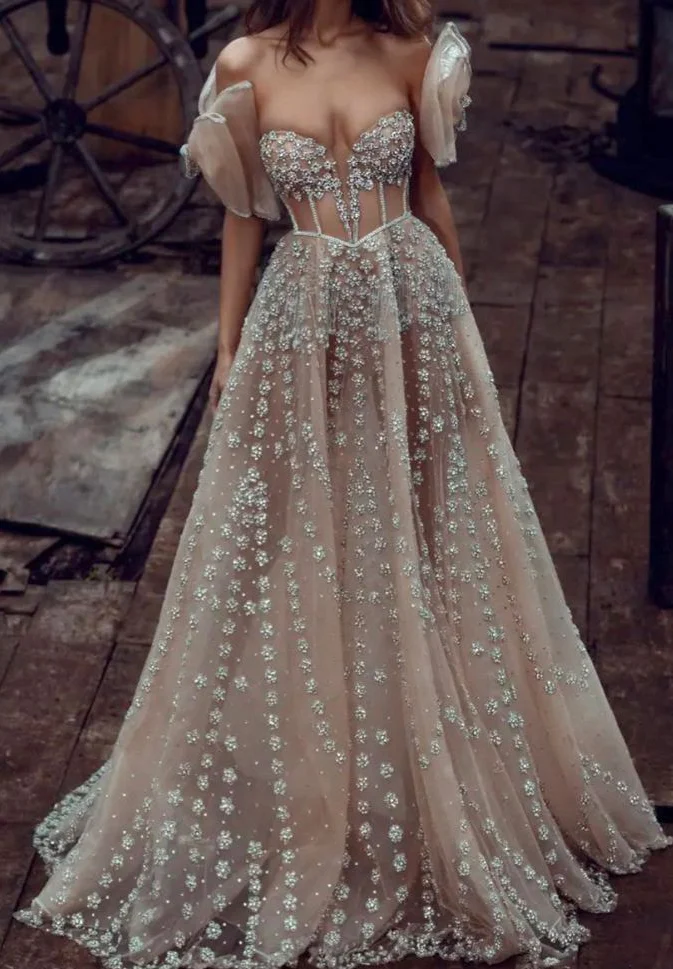
A named product example illustrates why the version matters. Maggie Sottero describes adjustments to glitter tulle and skirt layers on Benjie Royale for different visual effects. That information belongs to the offer named there. It neither identifies our images as Benjie Royale nor confirms the same options for other dresses. Have your intended version specified for the actual product. The wedding dress underwear guide adds questions about the inner pieces you will use. Consider those decisions with your own confirmed bodice and skirt arrangement.
3. How much skirt volume do you want during the celebration?
Set a wider view beside the closer crop and consider the space you want your skirt to occupy. Numerous folds, looser outer surfaces and a broad overall outline are different observations. More layers do not automatically mean a particular preferred width. Ask to see your actual favourite worn completely and assess its shape with the intended inner construction. A lifted or side-arranged skirt would also show different conditions from a freely falling standing view. Keep the presentation of the picture separate from your own practical needs.
Walk a few steps, turn and sit on a comparable chair in the complete fitting arrangement. Notice which areas you want to guide and how you get up again. This is a practical question for your real dress, rather than a comfort benefit established by a photograph. Separate side width from length behind the body. The wedding dress train comparison helps with that second decision without equating a long rear area with a large number of internal layers. Discuss the actual combination when considering your route and seating.
4. Where should flowers give way to quieter surfaces?
On the white dress with floral straps, the denser upper area changes into more spaced individual motifs over the skirt. The quieter surfaces underneath belong to that visible distribution. The warmer pale reference instead places many small light forms across larger areas. Decide whether you want a clearer transition or more decoration lower down. Compare from similar picture distances, or a close frame alone may make every surface seem equally detailed. Liking one distribution does not oblige you to copy its neckline or straps as well.
Discuss that course when considering a length alteration. Show the desired new edge together with the visible pattern beside it. Ask how the proposed work is expected to leave the lower finish. The image cannot confirm a specific solution. Record the affected parts and intended appearance in the proposal. A wider skirt with quieter surfaces is not automatically easier or harder to alter; you need an explanation for the actual construction offered. This keeps the visual result in the discussion alongside the measurement change itself.
5. How can you add the upper line and a veil?
The seated image uses broader sheer-looking areas below the shoulders. The reference with larger quieter skirt folds instead has slim straps and another upper edge. Compare those neckline and shoulder arrangements separately from the skirt first. You can like the lower distribution of one picture while looking for another solution at the top. Describe both wishes, allowing an adviser to show suitable real options rather than assuming an unconfirmed transformation of the reference garment. Return to the complete outline afterwards to assess how the preferences work together.
Add hair, jewellery and an actually intended veil to your fitting one at a time. Observe which part of the floral upper area remains visible. If the veil lies over the skirt, view the complete arrangement and then carefully bring it to one side. You can identify its own contribution without treating that test as confirmation of skirt alterability. For every extra piece, record whether it is offered, included or simply your own styling idea. The pictured arrangement and the contents of a real order are separate information.
6. What belongs in the final version and care confirmation?
Beside your final selection, record the skirt effect you chose and the pieces belonging to the version tested. Settle unanswered questions about inner layers, lining or additional pieces before relying on their properties. Note discussed alterations with their scope and a final fitting. Layer count is not an independent judgement of quality. Your decision brings together the desired appearance, confirmed version and observations in the actual dress. Those notes help distinguish your original response to an image from information established during the appointment.
Confirm transport, storage and treatment from the finished product’s own information. GINETEX explains care symbols; a pale transparent-looking surface cannot identify a fibre or appropriate cleaning method. Ask about different instructions for separate pieces as well. Check the complete result with the intended shoes and relevant accessories. Keep the description of the agreed version beside your fitting notes. The gallery can continue to explain visible differences, but it replaces neither those product details nor an assessment of the real dress. Use each source of information for the question it can actually answer.
Start with the visible outer surface of a layered wedding dress and its relationship to the area beneath. Confirm construction, included pieces and possible versions on the real model.
Frequently asked questions
Does adding layers automatically make a layered wedding dress wider?
A layered wedding dress’s visible width does not by itself explain layer count or arrangement. Assess the actual dress with its intended inner construction and ask to have that construction shown.
Can I order a quieter skirt version of every layered wedding dress?
Ordering a quieter skirt version of a layered wedding dress needs confirmation for the individual offer. The Benjie Royale adjustment is a named manufacturer example, not a promise for other dresses or the archive images.
Which pieces belong at the final fitting of a layered wedding dress?
For the final fitting of a layered wedding dress, use the agreed version, intended inner pieces, suitable shoes and relevant accessories. Recheck the areas discussed together and record any remaining work.