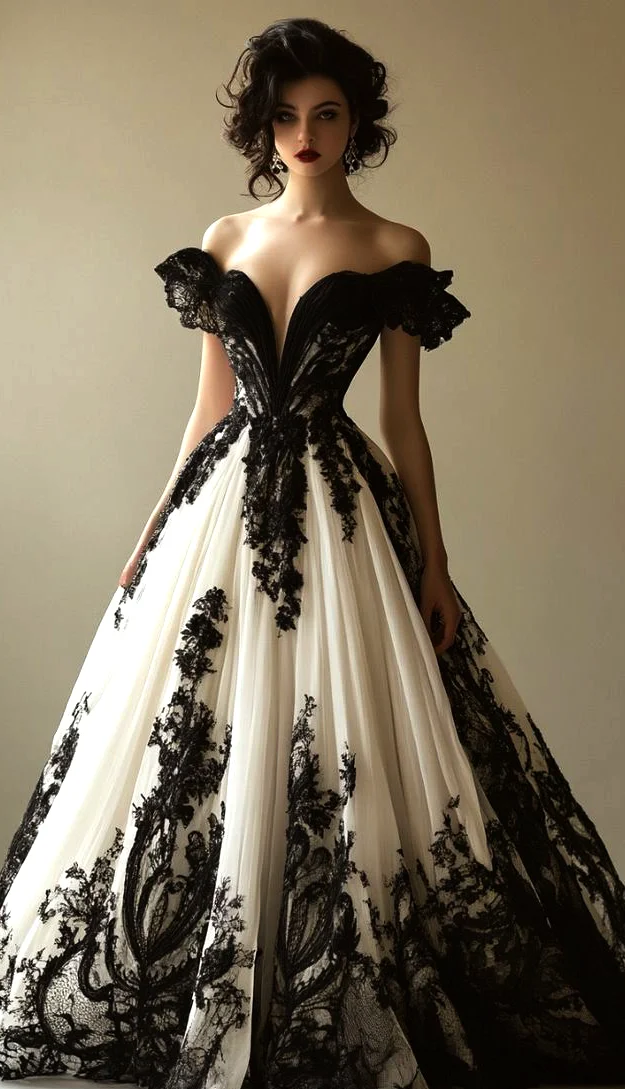
Choose a Gothic wedding dress through specific visible decisions: where should darker colour sit, which upper line do you prefer, and how much drawing should the skirt carry? The leading image connects a dark bodice with large black botanical forms across a pale ground. The other five photographs deliberately provide pale comparisons. They show different shoulder borders, floral distributions and an independent rear view. They establish neither a shared collection nor particular historical origins. Take individual preferences from them for your actual garment rather than combining their unconfirmed properties.
1. Distribute dark and pale areas deliberately
The upper area is predominantly dark in the leading reference. Folded-looking lines accompany its deep central notch, while large black branches run across the wide pale skirt. Dark colour therefore appears both near the face and at the lower border. Decide initially whether you want that connection or a darker emphasis in just one area. An entirely dark dress would be another search direction, but this photograph does not show one. Record the position of the contrast as well as its colour.
A named manufacturer example helps distinguish colour information from a general styling word. Maggie Sottero’s Spring 2022 preview explicitly describes Norvinia through black and champagne. That information belongs to the named model, identifies none of these archive garments and establishes no present availability. Ask about the exact colourway of your offer. The general Gothic wedding dress guide develops personal outfit choices, while this comparison concentrates on visible differences between the photographs.
2. Select shoulder shape separately from colour contrast
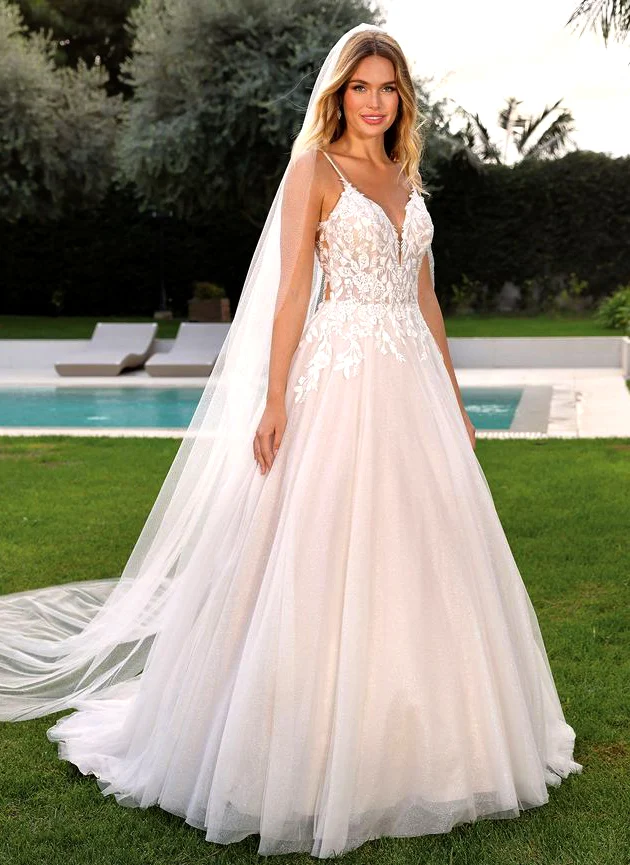
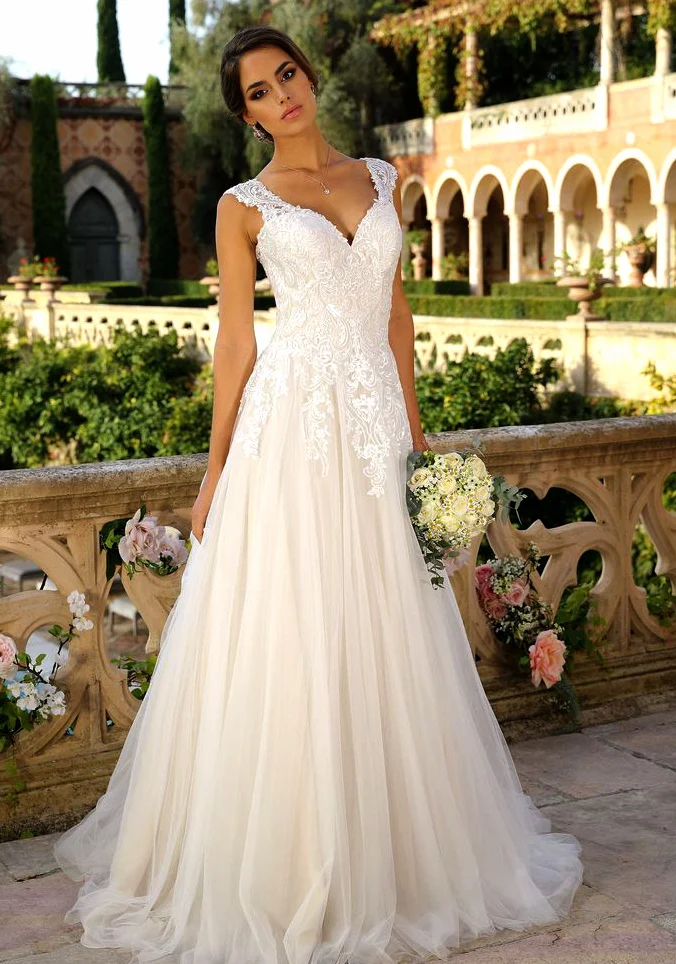
Low ruffled areas sit below exposed shoulders in the dark reference. The pale pool view instead has very narrow straps and a deep floral V. Another pale front has broader florally patterned shoulder connections. Compare those different frames without allowing colour to make every decision. A darker pattern might accompany several upper shapes, but the actual offer needs to show the particular combination you want. Joining one image’s neckline to another’s skirt in your imagination creates no confirmed orderable version.
Establish how much area you want exposed above the bodice during a fitting. Assess the real upper border first with both arms resting normally, then add intended hair and jewellery. A raised hand near the shoulder or an arranged pose may obscure a different part from your ordinary stance. Photographs of different people provide ideas without offering a reliable before-and-after comparison of one fit. Return to your own complete candidate when choosing the frame.
3. Decide where drawing should become quieter
Large botanical forms reach the hem in the dark reference. Some pale views concentrate denser drawing around bodice and upper hips, leaving quieter surfaces below. The indoor view with a higher fine-looking chest area continues one longer branch beneath the waist. Record whether you prefer a continuously patterned lower border or more open surface. You can describe that distribution without guessing a fibre or manufacturing method. Keep the visible preference distinct from information still needed about the product.
The lace wedding dress comparison develops pattern and transition choices. Do not transfer a material description from it to another photograph. Visible floral forms can prompt questions about processing and composition on a real garment; only that product’s information completes them. If drawing will sit beneath an additional veil, assess both components together from ordinary distance. A successful close-up does not determine the pattern’s balance within the complete outfit.
4. Obtain a genuinely matching back
The pale rear photograph shows a very deep V between narrow straps and a longer section spread across the floor. It is an independent reference rather than an automatically matching back for another front. Obtain your actual candidate’s own rear view if this opening appeals. Compare intended depth, strap direction and pattern distribution there before allowing one attractive front photograph to determine an order. Similar colour or motifs cannot establish a shared garment identity between pictures.
Include intended underwear and offered inner layers in that assessment. Ask what the particular model contains and what would need separate ordering. A narrowly drawn waist confirms neither a particular internal construction nor a supporting effect. View the back with your intended hairstyle so hair does not obscure an important connection. A further close-up can supplement that overview without replacing the actual garment’s complete rear. Another model’s internal solution cannot answer those product-specific questions.
5. Build your outfit around the selected emphasis
Dark lipstick and short waved hair belong to the leading photograph’s styling. You need not adopt them to like its colour distribution. Try your intended accessories separately beside the real dress. You can then distinguish whether you want another accent near the face or whether bodice and darker drawing already provide enough emphasis there. A photographed complete look is one arrangement rather than a binding styling rule. Start with your preferred simple combination and compare further pieces individually.
Assess the entire lower area with your shoes. Footwear may disappear beneath a wide skirt in a standing image, even though its height matters to your actual length decision. Include appropriate movement and, where relevant, sitting in the offered garment. One still spread of fabric cannot establish comfort or behaviour while walking. Have those questions answered on the real model rather than deriving them from colour or the Gothic styling label. Complete the assessment within your own intended use.
6. Order the particular combination of shape and components
Record the colourway, upper lines and lower details actually offered for each favourite. Establish included components and discuss possible alterations with the person responsible for that garment. The wedding dress buying guide takes the picture idea towards a particular offer. Another similar-looking product is not automatically the same version. Revisit front, matching back and your intended complete outfit before ordering, checking whether the original preferred feature remains where you want it.
Read the actual product’s instructions too. GINETEX explains textile care symbols; special decorations additionally need their own information. Black colour, fine-looking areas or a widely spread skirt establish no reliable care method. Choose your Gothic wedding dress through the desired visible effect and verified properties so the picture supports a clear decision without substituting for facts about the real garment.
Choose the distribution of dark areas on a Gothic wedding dress first. Compare neckline, drawing and matching back before selecting the actual complete outfit.
Frequently asked questions
Do all the photographs show a Gothic wedding dress?
The leading reference combines a dark bodice with black botanical forms across a pale skirt. The remaining pictures are pale counter-references for individual lines and are not classified as Gothic models.
Must my Gothic wedding dress be entirely black?
Your personal Gothic bridal look can use a deliberate pale-dark contrast. The leading reference distributes black forms across a pale ground instead of showing an entirely black garment.
Does the narrow waist prove a particular supporting construction?
The visible waist of the Gothic wedding dress establishes no particular internal construction or support. Have the actual offered inner layers and connections explained on that model.
Which view is needed to decide on the actual garment?
Obtain the selected Gothic wedding dress’s own complete back and overall view with your shoes. The independent pale rear reference cannot replace its matching rear view.


