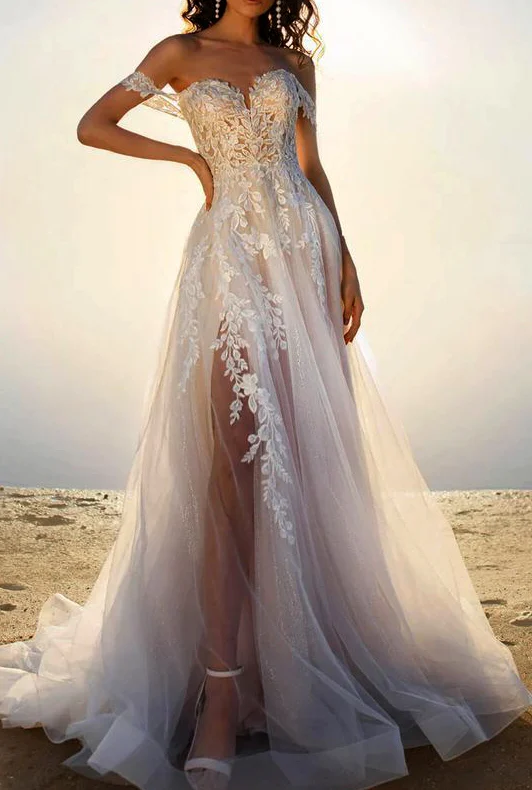
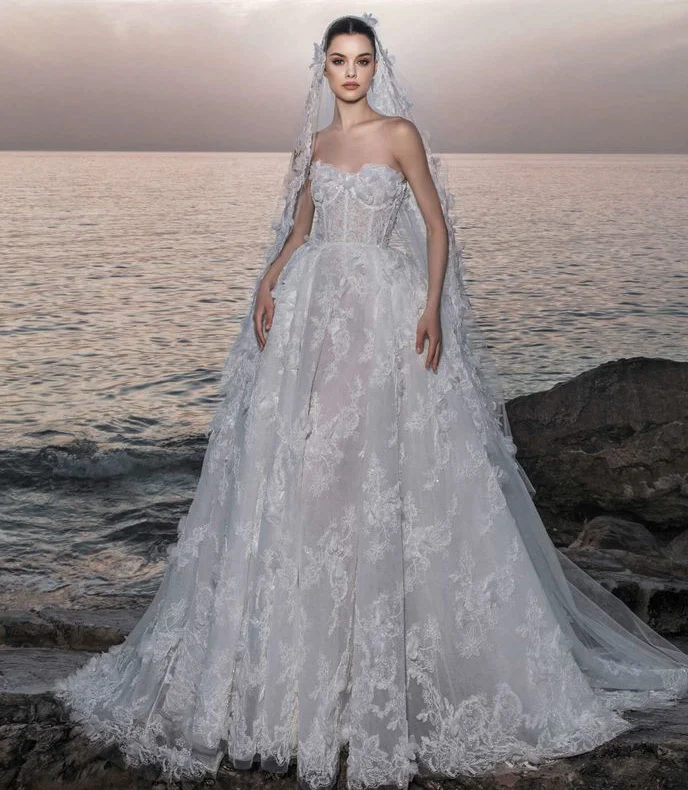
Compare beach wedding dresses more specifically by placing your actual plans beside the pictures. The main reference shows a broad floral front on sand, with a pale strapped shoe visible through its front opening. Another complete view rests on rocks beside the water, while a closer rear image adds a seated position holding a glass. These scenes provide different styling questions. Your decision also needs the real route, your shoes and the dress version actually being offered, connecting the visible idea to an outfit you can assess.
Describe the actual route for your beach wedding dress
Record the stretches you expect to cover in the chosen outfit first. Is there a firm path, sand or a staircase between arrival, ceremony and table? Ask the responsible person at the location about the access actually planned. A photograph beside the sea cannot answer that. You need not commit to one silhouette yet; you are preparing a specific question for the fitting. A preferred long skirt can then be discussed against that sequence rather than rejected through a general beach label.
Assign what you will hold and any intended change to each part. You might carry a bouquet initially and a bag later. Choose two real dresses showing the shape you prefer and explain that sequence during the trial. Request a demonstration of an unresolved point on the actual model. An attractive background then keeps its role as inspiration while your own combination answers the practical question. You can retain the visual preference and identify which information each candidate can genuinely supply.
Compare the hem with your actual shoes
The main reference’s front opening reveals an open shoe with a pale ankle strap. That is a visible component of this picture rather than a universal footwear prescription. Bring the pair you really intend to use. Stand normally and inspect the front edge before the side layers. Walk several steps before arranging the skirt again. Which area would you like to manage by hand, and which would you prefer to see without holding it? That observation belongs to your own trial.
If you intend to change between two shoe pairs, inspect both beneath the same candidate. A hem decision made with one pair has not yet assessed the second outfit. Discuss the intended length of each affected layer and have the proposed alteration explained on the particular garment. A shorter form may appeal, and so may a floor-length one. Choose through the actual view instead of a rule that a beach dress must always be short or worn barefoot. Visible footwear can be another independent preference.
Establish rear length and its handling on the model
The complete reference on rocks shows a larger rear area together with a veil. Keep that longer outline as a separate preference if it appeals. Request the offered candidate’s entire back and establish which train-handling arrangement is genuinely available. A long veil and a dress train remain different pieces. The spread picture confirms neither a fastening nor a detachable version. Indicate the rear area you mean so the explanation concerns that actual model rather than a connection borrowed from another photograph.
Maggie Sottero describes a bustle as a gown-specific alteration and recommends a demonstration at the final fitting. Have the arrangement offered for your candidate shown and practise it with an intended helper. Inspect the complete front and rear length afterwards. The bustle label alone does not make a particular connection suitable for every layer of your garment or every stretch of your route. Assess the demonstrated version and record which pieces it actually changes before relying on that arrangement.
Keep upper contour and veil as separate choices
The floral dress between tall grasses places short lower shoulder sections beside bare arms. The reflective studio reference instead shows longer patterned sleeves and a closer lower outline. Compare those visible preferences separately from the setting. Enjoying one neckline cannot establish the fabric’s outdoor behaviour from a photograph. On the real candidate, relax both arms and inspect the upper edge with your intended hairstyle. You can keep that particular line as the search criterion without adopting every piece of the pictured combination.
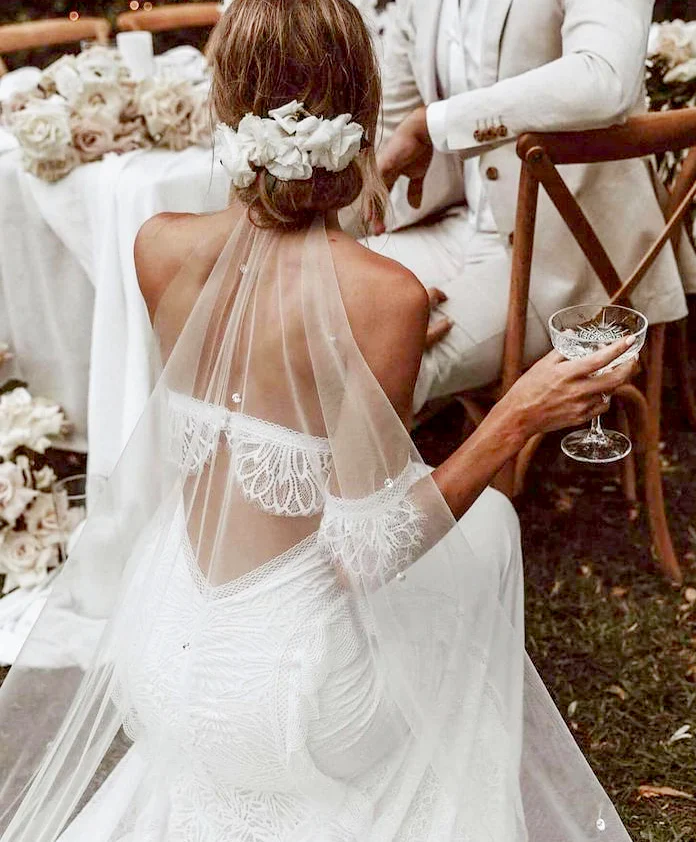
Introduce the veil afterwards. The complete coastal view has a floral border, while the closer back shows a finer dotted-looking veil descending below the bun. Choose the additional drawing you want beside the dress first. The wedding veil guide develops the comparison between edge, back and trailing length. Try the actual connection and inspect the complete rear of that same outfit. Two similarly pale photographs do not establish corresponding garments; see which detail your chosen veil covers on your own candidate.
Try hands, sitting and intended additions together
The seated rear reference holds a glass and shows the veil over an open back area. Use that view to ask which surfaces should rest beside your arms while sitting. Sit with your actual additions during the trial, hold a comparable object and stand again. Inspect the dress before rearranging it. Both hands hold the skirt sides outward in the front between grasses, so add a released-sides view for your ordinary lower outline. The arranged photographic width can then inform a separate styling choice.
Add jewellery and an outer layer individually. The bridal accessories guide helps choose between hair, ear and neck accents. If another state is intended later, the guide to changing your bridal look develops preparation using actual pieces. Confirm the change through your offer. Record who will keep each item and which connection has already been demonstrated rather than deriving an inclusion list from the photographed arrangement. Trying one wanted addition first keeps its own contribution identifiable.
Record the complete version and its care information
Summarise both favourites through the same details: preferred shape, actual shoes, each confirmed layer, rear handling and one unresolved point. Have material and included pieces described. Discuss how the particular dress should be packed for your journey and the handling recommended for it too. A similar white surface cannot answer that product question or define the alteration scope. Choose through the combination you have seen and tried completely, returning to both candidates through the same information rather than comparing unrelated details.
Read the actual label before cleaning or ironing; GINETEX explains care symbols. Sand or a seaside setting cannot prescribe a universal washing or spray treatment. Keep the confirmed version for the next trial and reassess the same front edge after an agreed alteration. Your beach look combines a chosen shape with established plans. Further attractive references can be assessed against that basis without reopening the whole selection every time a new photograph supplies another appealing detail.
Compare beach wedding dresses against your actual plans. Assess length with your shoes, establish train handling, and introduce veil and accessories individually.
Frequently asked questions
Must beach wedding dresses be short?
Beach wedding dresses require no prescribed length. Compare the desired hem with your actual route and shoes. A long shape can remain a deliberate preference, with its handling established on the offered garment.
Does an airy-looking photograph guarantee a suitable version for my beach plans?
An airy photograph of beach wedding dresses establishes neither fibre nor behaviour in heat or wind. Obtain the specific composition and construction details, then assess your actual combination under the available trial conditions.
Is lifting a train the same as removing it?
Lifting and removing a train are different possibilities for beach wedding dresses. Ask which connection the actual model provides and have that particular arrangement demonstrated. A spread train in a picture confirms neither function.
What if I plan different shoes for the beach and indoors?
Try beach wedding dresses with both intended pairs and inspect the front edge in each combination. Discuss the change with the person responsible for alterations before agreeing on one finished length.


