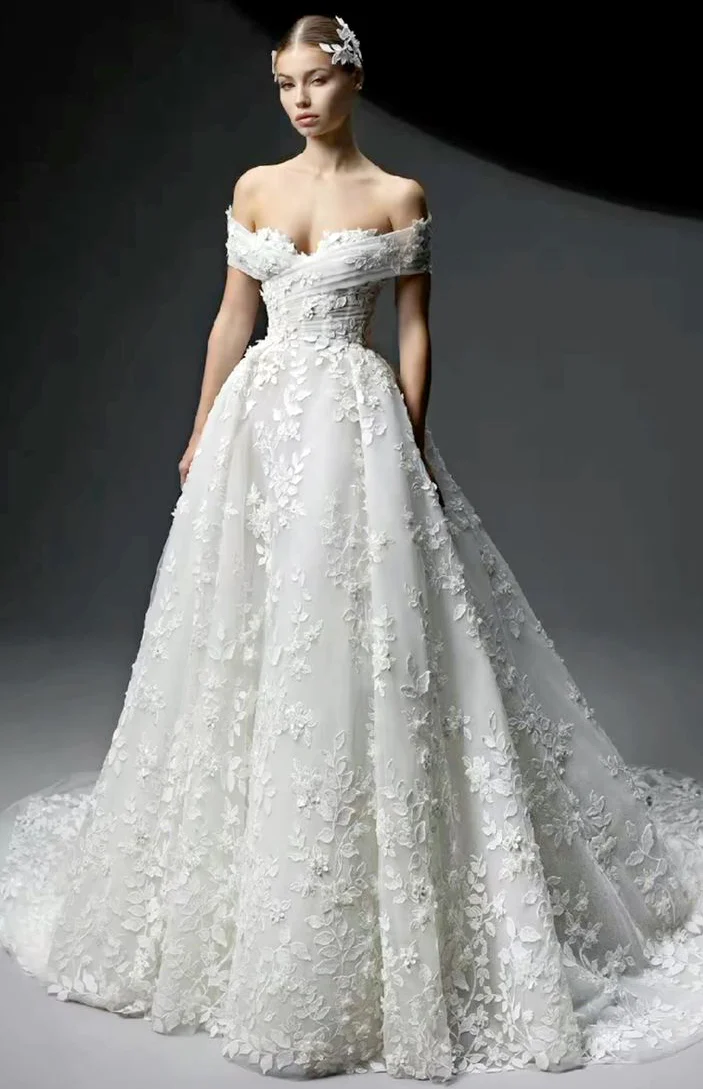
The floral wedding dress combines a folded open upper edge with a dense leaf and flower pattern. Decoration continues across the bodice and larger areas of the wide skirt into the longer rear zone. That gives a more complete view of its distribution within the outline. The folded neck edge forms a shape of its own beside the patterned surface. Follow it separately for a moment before returning to the broader arrangement, so the two preferences remain easy to describe.
Use the reference as a contrast to more spaced floral lines. How much quieter surface do you want between motifs? Compare from a similar distance so a closer crop alone does not favour the denser pattern. You can like the folded neckline while still searching for a quieter skirt. Name both wishes separately and ask which real models offer the combination, rather than assuming every pictured detail must remain together.
At a fitting, add side and rear views to your assessment. Discuss the intended length together with the pattern’s course if alterations are needed. The photograph confirms no particular lace, fibre or production technique. A more complete view supports the style decision, but does not replace product information and a specific alteration proposal for the actual dress you intend to order.