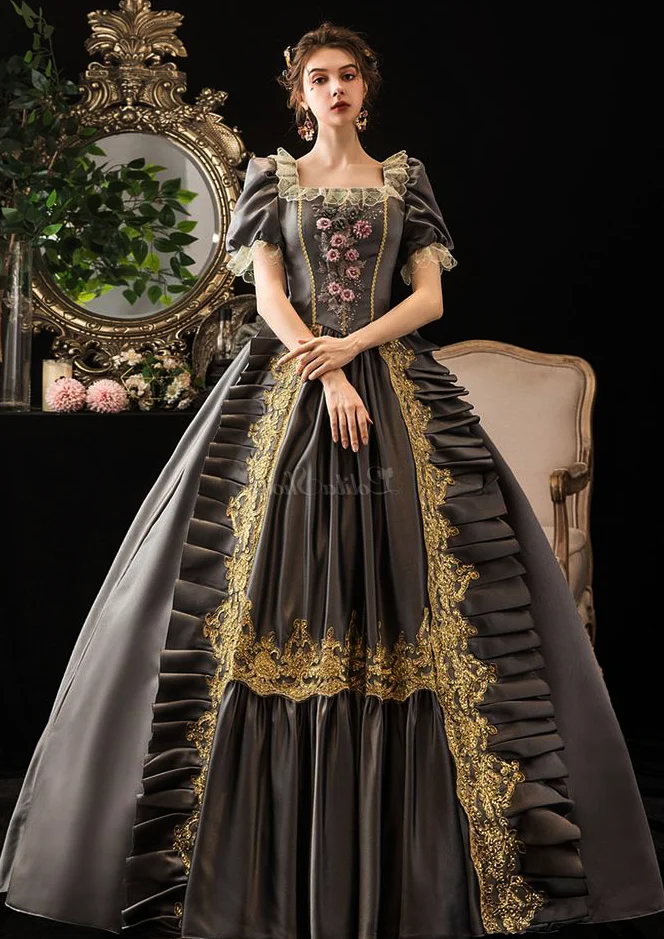
The grey-brown princess dress has a squarer neckline edged in pale ruffles and short puffed sleeves. Pink flowers occupy the central bodice. Below them, a gold-looking border frames an apron-like front area. A more folded central skirt section appears underneath its lower edge, while two folded side strips continue downward. The hands rest in front of the body without completely hiding this arrangement of surfaces and lines.
First compare the directions of the visible details. The gold-looking borders lead along the front field, while the side folds form repeated crosswise sections. Decide which movement you want to borrow. A quieter skirt could still express your preference for a framed upper area; you do not automatically need every layer in the reference. Describe the front view you want before looking for a specific available product.
An apron-like outline does not establish removability. Ask how the visible areas of an actual model connect and whether a proposed alteration would change their course. Examine the front while sitting and getting up as well. Judge its position and handling without reading historical authenticity or material content from the staged surroundings. This scene offers a design reference, rather than a technical view inside the garment.