A puff sleeve wedding dress can look quite different depending on where its fullness starts and ends. These photographs show short side volumes, longer loose shapes with gathered ends and two deliberate alternatives: bare arms beside shoulder bows, and patterned long sleeves following the arm more closely. Begin with the area you want to emphasise rather than the largest visible shape. A short upper-arm puff and a long loose sleeve are different preferences. Choose length, fullness distribution and upper edge separately before assessing the complete dress, so a striking photograph does not settle several unrelated decisions at once.
The Justin Alexander Callaghan sleeves are described as puff sleeves with gathered surface, while detachability is stated separately. This separates visible form from a confirmed function. It identifies none of these archive dresses. Ask about both points individually on your own offer instead of inferring the same connection from a similar curve.
Locate fullness on a puff sleeve wedding dress first
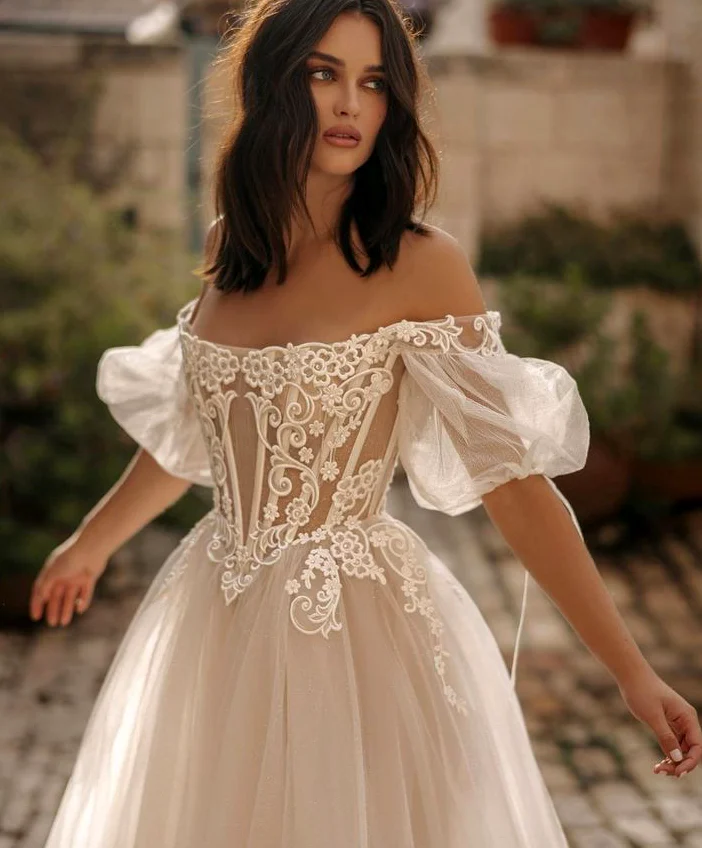
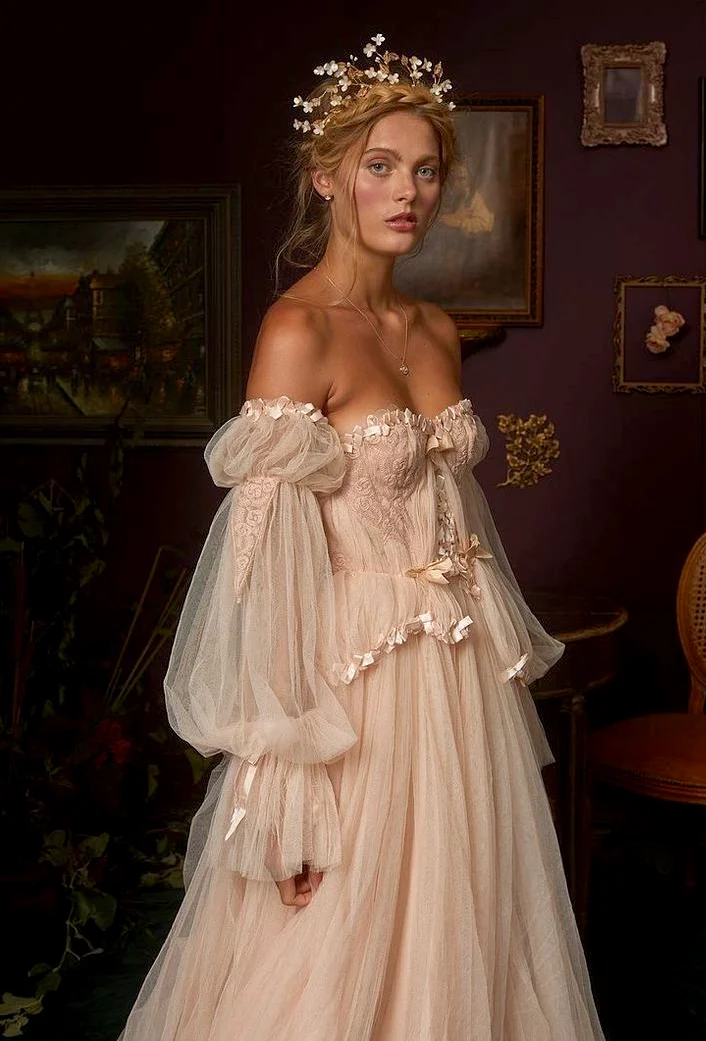
The closer off-shoulder front has short sleeves projecting distinctly beside the upper arms. In the warmer-looking pale reference, the larger upper form instead continues into a long loose sleeve gathered at the wrist. Consider that difference alone. Should fullness remain concentrated at the upper sides, or do you want a longer loose surface reaching the hand? Both can create a noticeable arm outline, but their visible contours differ. Record the preference without assuming a fabric type or internal construction from the way the image presents it.
Compare the options with arms hanging normally. A hand resting at the side can change the visible area and hide folds. At a fitting, describe where you want more space between arm and sleeve. That is easier to assess than a general request for drama. If you choose the short upper puff, the exposed arm below is part of the decision. With the longer form, add the question of how its larger surface gathers towards the end and which line you prefer through that section.
Choose short length and gathered wrist endings separately
The short closer option finishes well above the hand, leaving much of the arm exposed. The longer loose examples reach the wrist and gather their surface there. Ask which ending you want during the actual occasion. The short sleeve places its boundary beside the upper arm; the longer finish remains beside hand, ring and bouquet. Do not choose length from the first front view alone. Include a view with arms relaxed at the sides so that you can read the full route to the end.
Ask to see the sleeve ending unobstructed on a real candidate. Does it sit where you want, and how much loose surface remains above it? Assess position first, then quantity. If an alteration would be needed, discuss those properties together. A shorter ending may change the distribution of visible fullness. The long-sleeve wedding dress guide adds broader questions about length. The specific question here is where the loose section should gather, rather than treating every longer sleeve as an equivalent design.
Use shoulder bows and fitted sleeves as alternatives
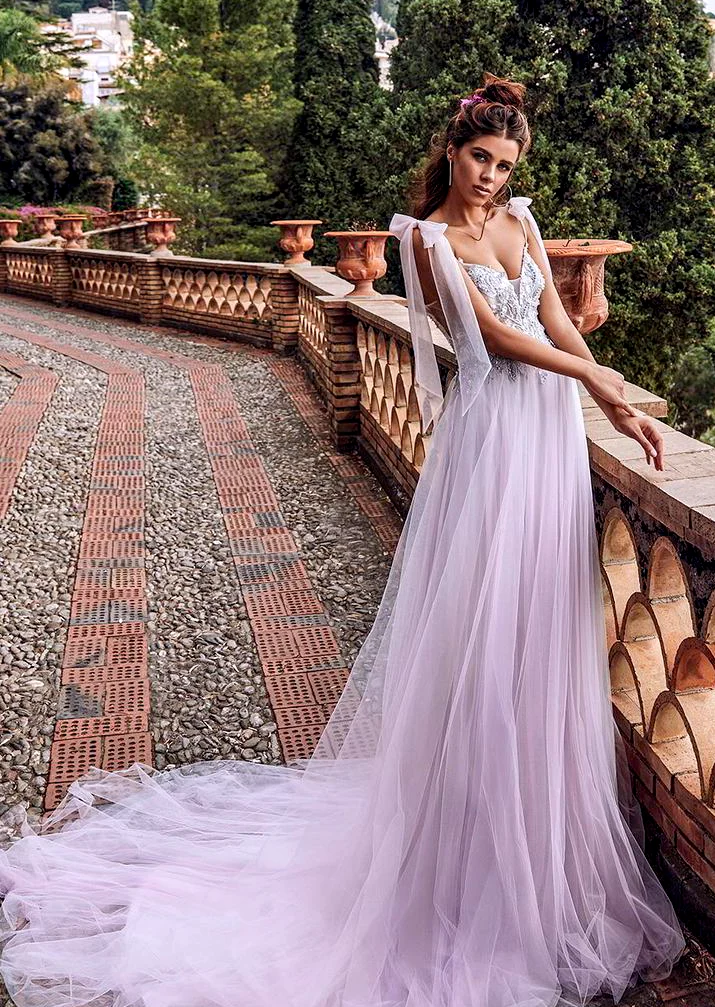
The pale lilac front shows fine straps and longer bow tails at the shoulders, leaving the arms bare. These strips are not short puff sleeves, even though they add lines beside the upper body. The other comparison combines a higher upper finish with patterned long sleeves following the arms more closely. It lacks the larger loose outward curve. Include both alternatives if you are unsure whether a sleeve contour or simply a noticeable shoulder feature attracts you. Each provides a different answer to that particular question.
Compare exposed arm first and side direction afterwards. Perhaps bow tails appeal more than an enclosed short shape. Perhaps you want long coverage with less loose surface, making a more fitted sleeve a useful comparison. A reference need not be interpreted as a puff to help you choose. Ask about the actual version of an offered garment, and avoid inferring removable sleeves from a band beside the shoulder. The pictures describe visible alternatives rather than establishing interchangeable parts. Select the real construction only after it has been explained on the candidate.
Assess the upper edge beside the sleeve volume
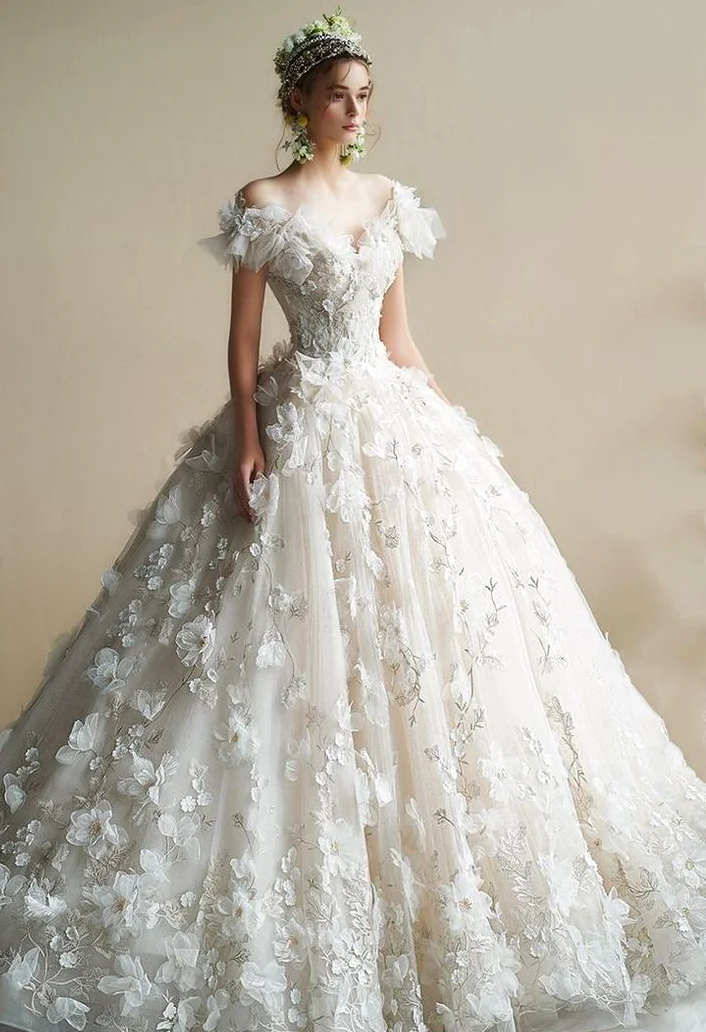
The short-puff close view places its upper side edge below the shoulder tops. Another complete dress combines smaller shoulder volumes with large floral patterns. The higher patterned front looks more covered above instead. These arrangements change the visible distribution between neck, shoulder area and arm. Choose the upper edge deliberately beside the sleeve shape. You need not adopt the same neckline depth because a side puff appeals to you. Request a real variant that genuinely connects the two preferences rather than mentally assembling it from separate pictures.
Look at the shoulder area without added hair or ear ornaments first. In the complete floral reference, larger head and ear details contribute to the overall effect. You may like them, but they should not replace the question about the sleeve itself. Add them after the initial comparison. The floral wedding dress guide offers further questions about larger decoration. Motif scale remains distinct from fullness distribution: a smaller pattern may accompany a related contour without requiring you to choose an entirely different upper design.
Include hands, bouquet and a seat in the comparison
On the actual dress, bring your hands forwards, hold the planned bouquet or a similarly sized trial version, and sit. Observe where the sleeves then lie beside your hands. A longer gathered option may distribute its visible surface differently from relaxed-arm posture. With the shorter side puff, check how its upper form sits when hands come forwards. These are fitting observations rather than properties every model must automatically provide. Identify the particular place or action if it differs from what you want, so the next question can address that garment.
Check a table position through ordinary hand movements rather than arranging your arms only for the mirror. You should also like the selected shape after putting the bouquet down. If another upper layer is planned, try that exact combination. A close layer over it may cover or rearrange the visible form; establish whether the real outfit suits you by trying it. Do not infer warmth, weight or feel from a sheer-looking photographic surface. Those questions require product information or your own assessment of the actual garment, independently of the sleeve’s visible shape.
For additions, the bridal accessories guide extends the comparison. Choose earrings and headpiece first, then bouquet and bag beside the sleeve contour you want. Try the actual pieces in sequence so each change remains clear.
Confirm the ending and complete look on the candidate
Finally compare front and side with the selected accompanying pieces. Check whether sleeve fullness still plays the role you wanted. A wide skirt or large pattern may become equally prominent beside it. That can be your preference, but choose it consciously. Keep shoes, posture and bouquet position as similar as practical between two candidates. This reduces the chance of comparing the entire presentation instead of the fullness distribution that started the search. A quieter alternative can remain just as informative as the more prominent sleeve while you resolve that question.
Read the actual garment’s information too. The GINETEX care symbols help interpret care labels; a loose or sheer-looking sleeve cannot replace those instructions. Clarify unresolved care questions before treatment. Record sleeve length, principal area of fullness and desired end position for the next fitting. These three properties make a useful enquiry without claiming a particular fibre, interchangeable components or one fit shared by every garment. The selected result needs to be visible on the complete real dress, in the positions you expect to use.
Choose where sleeve fullness should sit before selecting its length. Compare short upper volume, longer gathered forms, bare-arm alternatives and fitted sleeves separately.
Frequently asked questions
Are long bow tails puff sleeves too?
The shoulder bows here are not puff sleeves: the arms remain exposed while longer tails create side lines.
Must a puff sleeve finish at the wrist?
Puff sleeves on a wedding dress can have short side fullness or longer loose forms. Choose length and fullness distribution separately.
Does a sheer-looking sleeve establish a fibre?
A sheer-looking bridal sleeve confirms neither fibre, weight nor warmth. Ask for information about the specific garment.
Which movement helps assess a longer gathered sleeve?
For a longer gathered bridal sleeve, bring your hands forwards and hold the planned bouquet. Check the sleeve ending and loose surface on the actual garment.


