A sexy party dress does not mean the same thing to everyone. You may want a short length with a high neckline, prefer an uncovered shoulder line or enjoy a deliberate opening at the waist. What matters is which areas you want visible and how the dress sits during your planned movements. You do not need a hierarchy of body shapes or an assumption that showing more skin must be the right answer. Your preferred look supplies the starting point.
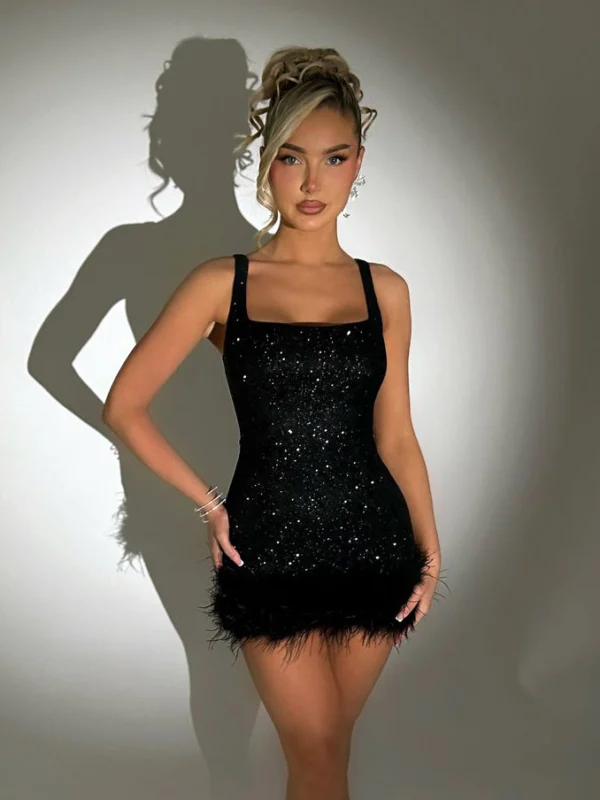
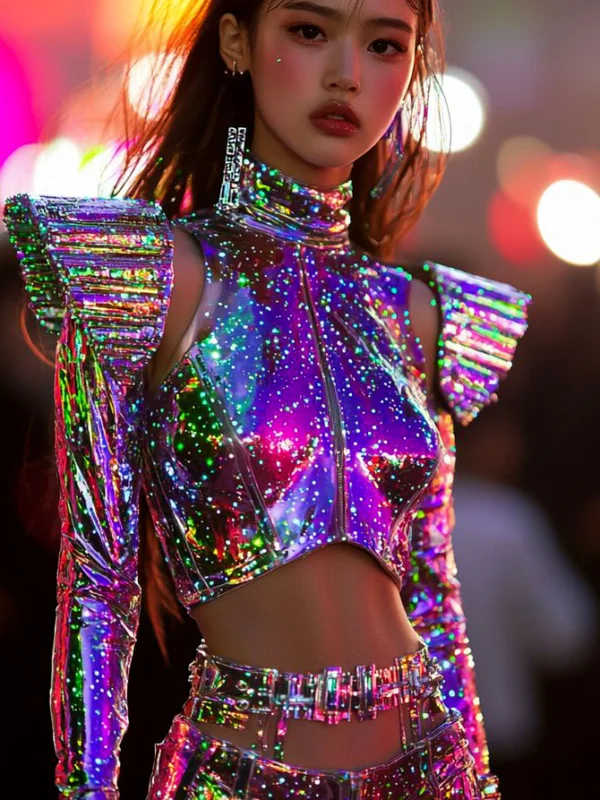
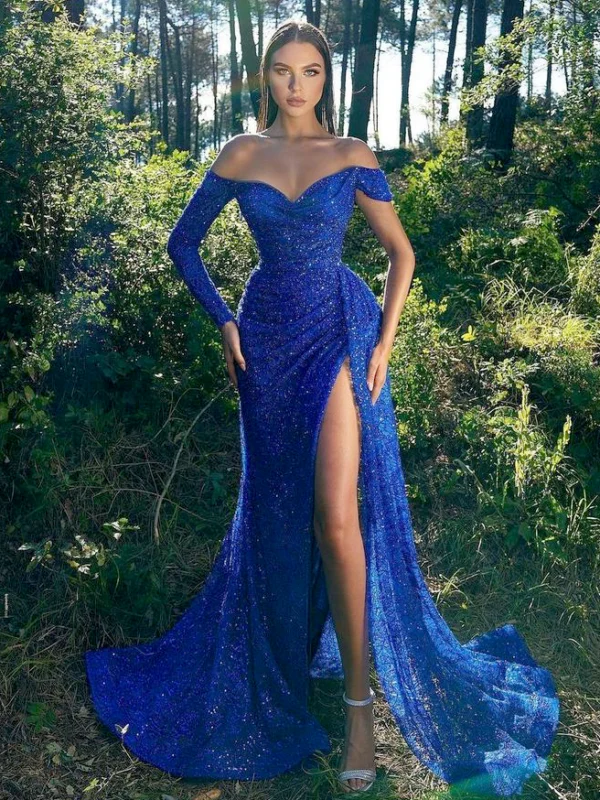
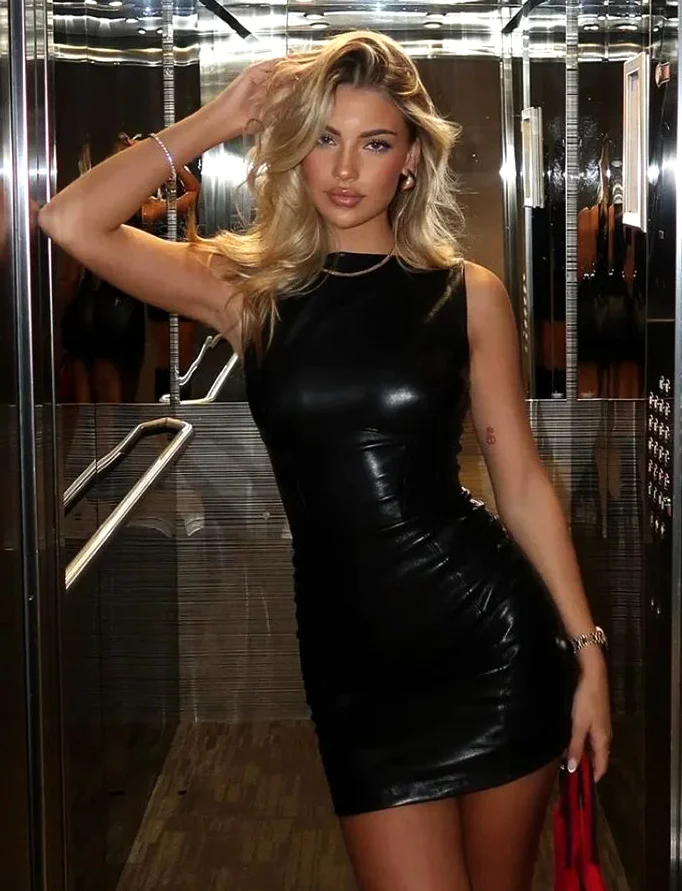
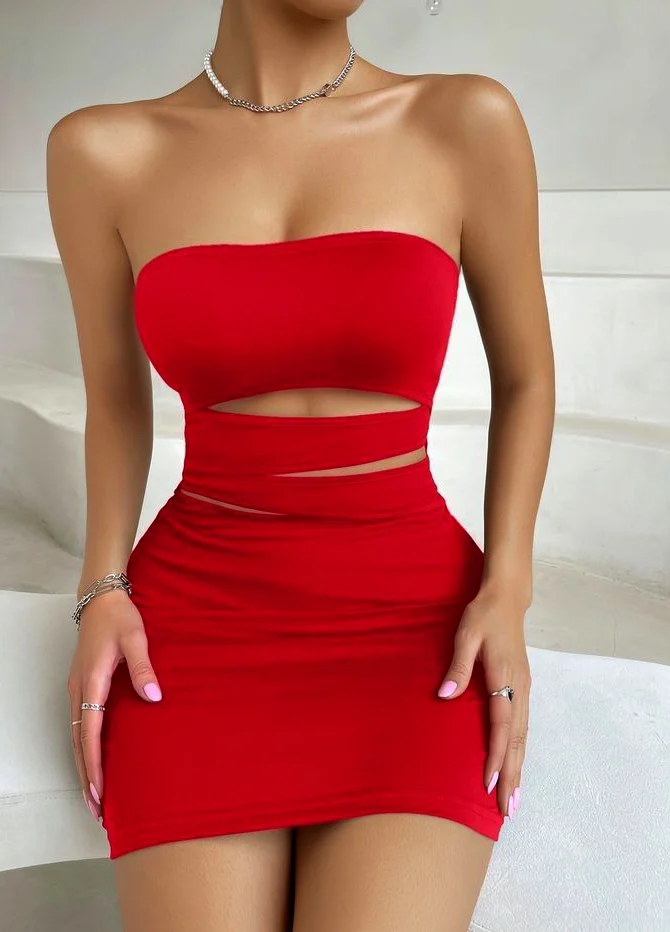
The pictures show several directions: a high-neck black mini, a red apparently strapless dress with horizontal openings, a black shape with a floral centre panel, and different shoulder or ruffle arrangements. They cannot establish hidden support or your individual fit. Use the visible lines to define your own boundaries and prepare a specific fitting rather than attributing unseen construction to a photograph.
A separate named example combines different coverage choices: House of CB describes Lucinda with chest and waist openings alongside long sleeves. This belongs only to that model and identifies no archive dress. It illustrates naming a preferred opening’s actual position beside a covered area instead of treating sexy as one required amount of overall exposure.
Choose a sexy party dress by your preferred open areas
Write down which areas you want open or covered in the outfit first. You can enjoy a short hem and still prefer a closed neckline. The sleeveless black mini demonstrates that visible design combination. You can equally choose a longer or more covered alternative without having to justify the look. The words describe a styling decision rather than an objective characteristic of the person wearing it.
Assess a dress against that list instead of an especially striking pose. Which preferred area does it reveal, and which additional areas does it introduce? The red example combines an open shoulder zone with two horizontal openings at the middle. If you like only one of those ideas, look for a different version with that detail. Enjoying one feature does not require you to adopt the complete photographed combination.
Assess the open shoulder and arm movement separately
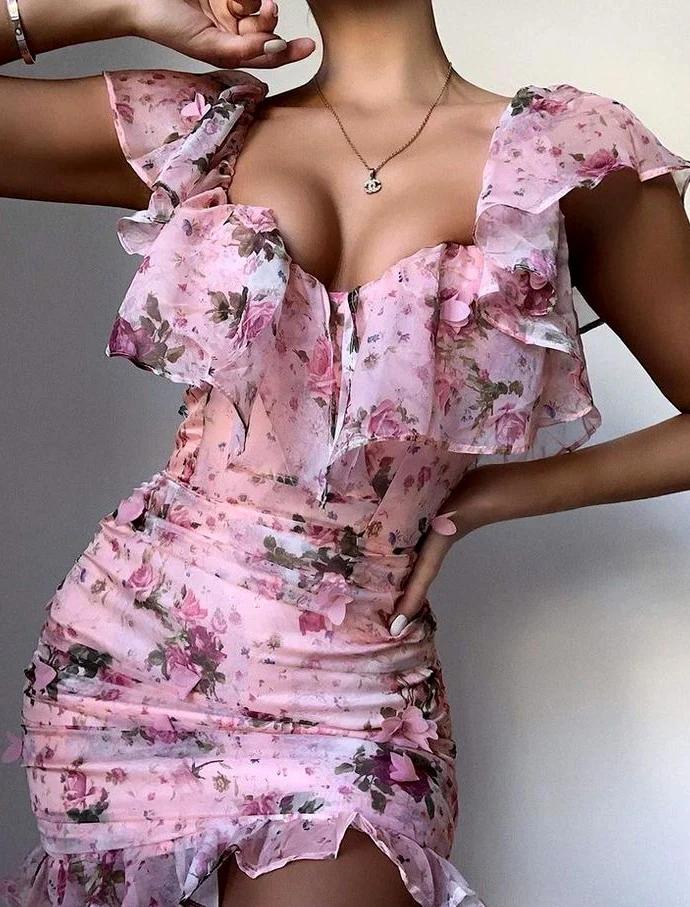
The brown mini places its upper edge below the shoulders, while the sleeves have volume near the upper arm and become closer below. The pale floral example adds a broad ruffle across the upper area. Both create an uncovered shoulder line without creating the same arm outline. Your fitting therefore needs more than a resting pose. Raise your arms for actions you genuinely expect, such as putting on a jacket or greeting someone.
Look at the upper edge afterwards. Would you want to rearrange it, or does its position suit your preference? That is a concrete selection question. A photograph cannot establish secure holding from a visible sleeve or ruffle. Ask how the actual garment is intended to be worn and check it yourself. Your desired room for movement belongs to the look just as much as an attractive still front view. Both deserve attention in your decision.
Compare waist openings deliberately
The red dress shows two horizontal open areas separated by a red strip. The pink floral version instead has a deeper central neckline between ruffles. Compare the visible edge positions in an ordinary stance initially. Decide whether you prefer straight lines or the floral-framed shape. This does not require any claim that a particular body should display or conceal one particular area. Choose according to the arrangement that you want to wear.
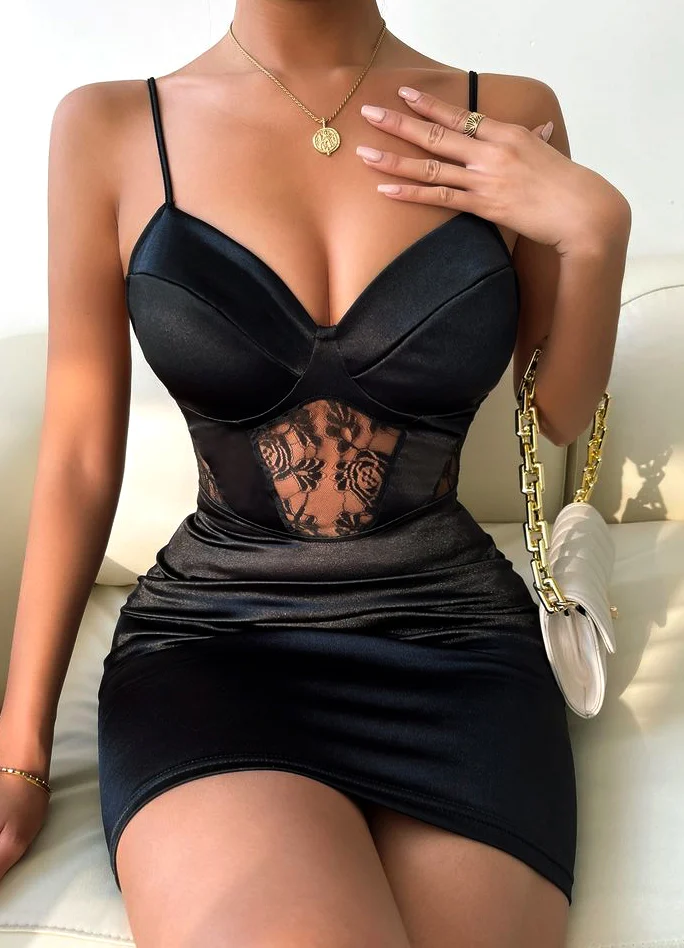
Sit down in the planned combination next. Check how the edges sit and whether you still want the resulting visible area. A standing photograph cannot answer that question. Include the outer layer and how you carry the bag as well. A strap placed directly across an opening changes its appearance. You may choose that extra line deliberately or avoid it with a different carrying position. Test the actual placement rather than assuming the accessories will remain separate.
Distinguish a patterned panel from an open area
The black strappy dress has a visible floral centre panel with a different surface from the rest of the dark dress. This differs from the red model’s horizontal open zones. Start by describing what is visible: pattern, background showing through and side boundaries. The actual layers require checking on the product. A photograph alone cannot establish whether an area is lined or how it will appear under other lighting conditions.
If considering that kind of detail, try the intended garments underneath together with the dress. Choose according to your own preferences and the real construction. A universal underwear instruction cannot replace the check. Look at the front, side and back where relevant to your choice. Decide which lines may remain visible rather than assuming one supposedly ideal invisible solution applies to everyone. Product information can answer questions that the photograph leaves open.
Consider ruffles and the short hem together
The two short floral dresses distribute ruffles differently. A broad upper ruffle frames the uncovered shoulder zone on the pale model. The pink reference places volume and small projecting details around the shoulders and skirt as well. The short lower outline remains a separate question. Try an ordinary seated position and step while looking beyond the upper body. Enjoying the top detail does not automatically establish your preferred length below it.
For further length and outfit questions, the cocktail dress guide offers context. The shimmering party dress article discusses another possible emphasis through surfaces. This page keeps the narrower decision attached to the areas you choose to reveal. A glossy high-neck mini can provide a starting point just as a floral open-shoulder model can. You determine which arrangement belongs in your own outfit.
The cut-out evening dress comparison develops opening placement beside the overall outline. Use it for a specific opening shape while choosing your own desired coverage.
Check your boundary in the finished outfit
Finish by wearing the intended shoes and adding the bag and outer layer. Carry out the actions relevant to your evening. After each change, check whether the edges and open areas still match the boundary you chose. If a model requires more rearranging than you want, another version is a reasonable alternative. That result assesses the particular combination rather than your body, and makes the practical comparison useful rather than personal.
Read the real item’s label for treatment and care. The GINETEX care symbols distinguish different processes; an open panel or glossy appearance cannot produce one common washing instruction. Your finished selection should answer two clear questions: which areas do you want visible, and does their position suit your actual movements? That makes the styling choice specific and directed by your own preferences throughout the evening.
Choose which areas you want open or covered, then check their position when sitting, raising the arms and wearing the complete outfit.
Frequently asked questions
Does a sexy look require a deep neckline?
No. The high-neck black mini offers one combination of a closed neck edge, uncovered arms and short length.
Are floral panels the same as open cut-outs?
No. A visible patterned section and an open area need separate assessment; check the actual layers on the product.
What if I keep wanting to rearrange the dress?
Decide whether you want that repeated handling on your chosen party dress. Another version is a practical alternative rather than a judgement about your body.