You can select a modern wedding dress through the relationship between decorated and quieter areas without needing a current trend claim. These five references show pale floral bodices beside long skirts of different fullness. Their upper edges range from a deeper V through a broader curved border to higher translucent-looking areas. Choose which pattern you want where first. A current personal look develops here through your specific combination rather than adopting every property of an image described as modern. Name the area that particularly interests you before requesting the real candidate’s relevant complete views.
1. Place floral details deliberately on a modern wedding dress
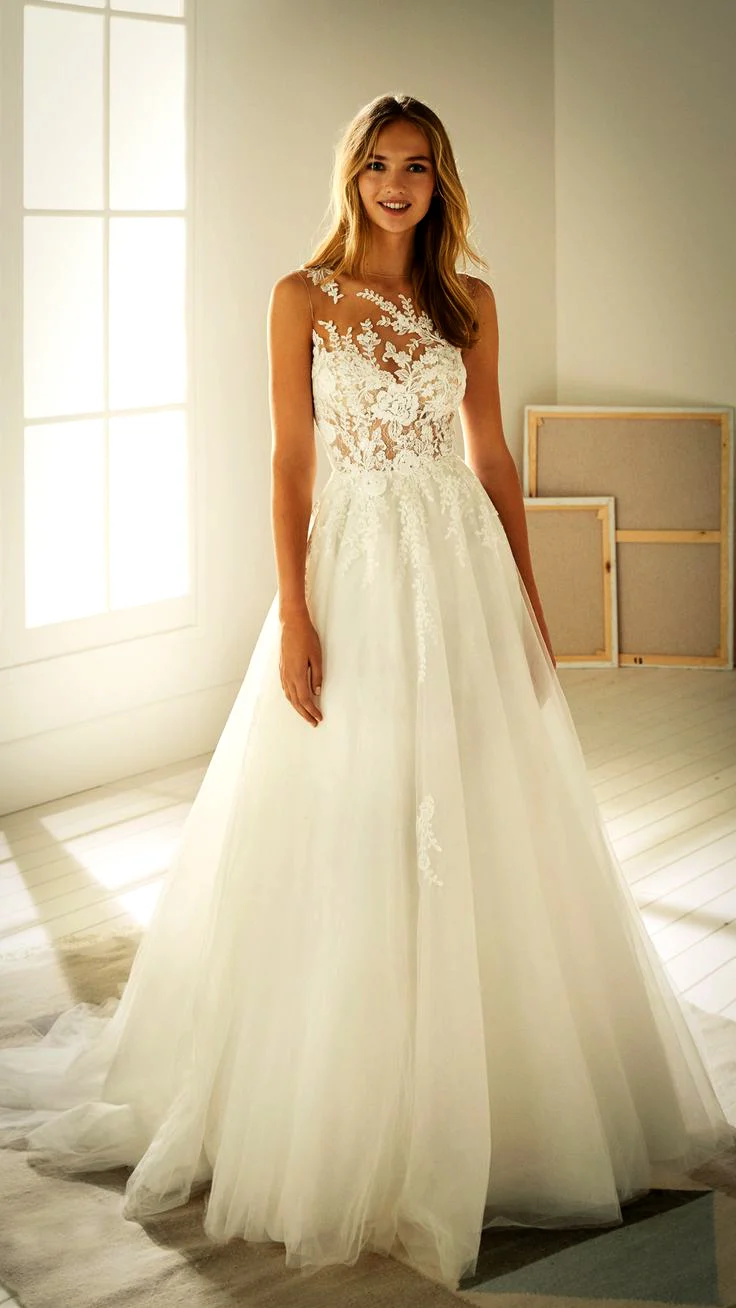
Begin with distribution. Separate floral forms occupy chest and neck-adjacent areas in the picture with a higher upper surface, while its skirt remains quieter across larger areas. The long-sleeve reference continues pattern over the arms too. The sleeveless V dress has a denser openwork-looking upper surface. Choose whether decoration should stay on the upper body or continue across other areas. Shared pale colour establishes neither identical construction nor a fixed selection of components. Ask what is actually offered before treating those bodices as versions of a single available garment.
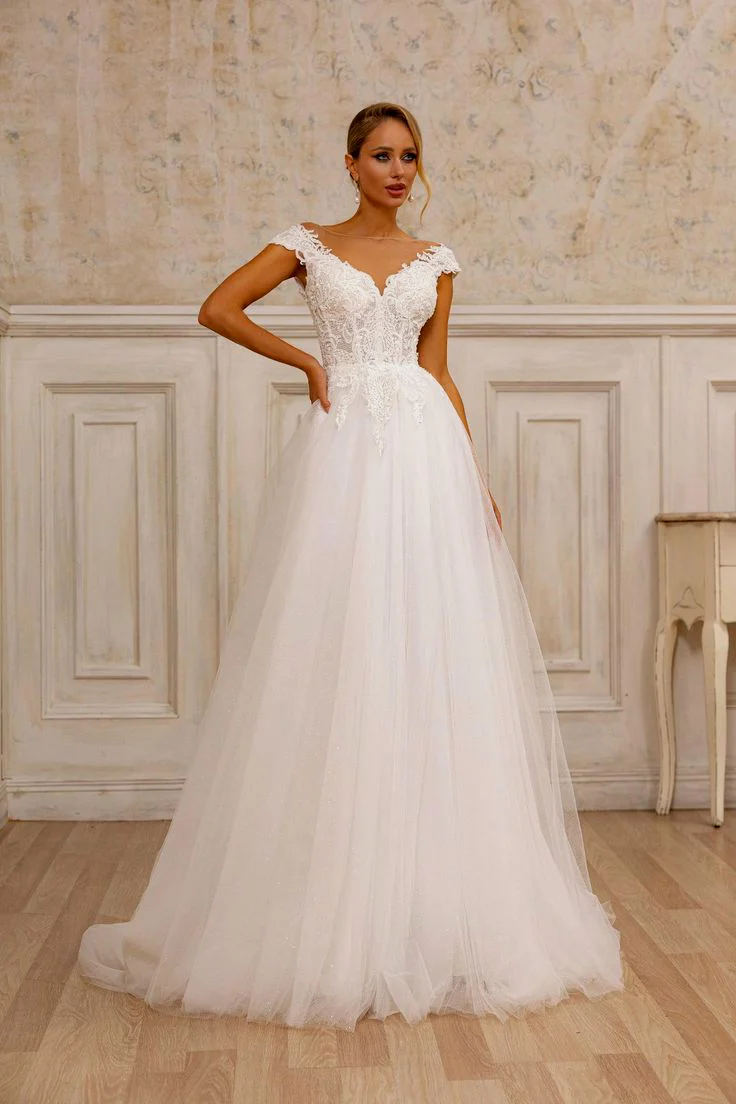
A manufacturer description can separate these areas explicitly. Adore by Justin Alexander describes Laila through a decorated bodice, cap sleeves and A-line skirt, with a lined bodice version offered for that model. Those details identify none of the archive photographs. Ask about your candidate’s genuinely available layers and version. The floral wedding dress guide develops visible motif scale if that is your first decision. Do not transfer another product’s fabric or lining information through visual similarity.
2. Separate the outside neck frame from the deeper centre
The smaller shoulder-cap reference has a V-like front ending. The higher upper area on another sleeveless example carries floral extensions closer to the neck. The closer picture with a side hair clip creates a broader curved frame above a longer middle opening. These are not all the same neckline shape. Follow the outside border first and name the centre afterwards. Establish which areas are open and which are covered by fabric on the actual model. An individual motif extending higher cannot establish where the whole neckline finishes.
Try the offered version with intended underwear and assess it straight from the front and the side. A translucent impression cannot fully explain inner layers. The V-neck wedding dress comparison helps choose a deliberately deeper centre. Selecting depth does not automatically select the reference’s complete sleeve or skirt arrangement too. Request its matching rear afterwards. Five different front pictures cannot establish your preferred candidate’s back. View both sides on the same actual model before connecting a front preference to another attractive rear photograph.
3. Assess the pattern ending at the waist
Smaller motifs continue beneath the waist before larger quieter skirt areas begin in the complete front with short shoulder sections. Several longer floral lines reach farther into the skirt on the closer hair-clip reference. The V dress with a bouquet presents a more definite transition between denser bodice and finer lower area. Choose a clearer boundary or softer trailing motif. Individual flower endings need not coincide with the actual constructional connection. Follow visible pattern, then ask about real joins rather than treating those two kinds of information as one line.
Choose two real candidates with reasonably similar skirt fullness when comparing that transition alone. Keep hands away from the middle initially and view the area from normal distance, then closer. Ask about construction when the boundary between motif and ground remains unclear. Decoration position also belongs in any alteration discussion. An extended outlined motif confirms neither a particular seam, fibre nor handwork technique. Identify the area you want retained on your own candidate. Reassess its place within the complete garment afterwards to connect the close preference with the overall silhouette.
4. Treat shoulder area and sleeves as independent choices
The references range from broader sleeveless shoulder connections to smaller side sections and long floral translucent-looking sleeves. Choose how much arm area you want visible independently of bodice motif quantity. A related front frame can appeal with different coverage. Try the real combination with relaxed arms, bring hands forwards and hold your intended flowers if relevant. A turned or supported pose should supplement that ordinary first view rather than replace it. Reassess the edge after movement on the same worn candidate instead of relying only on a photographed static arrangement.
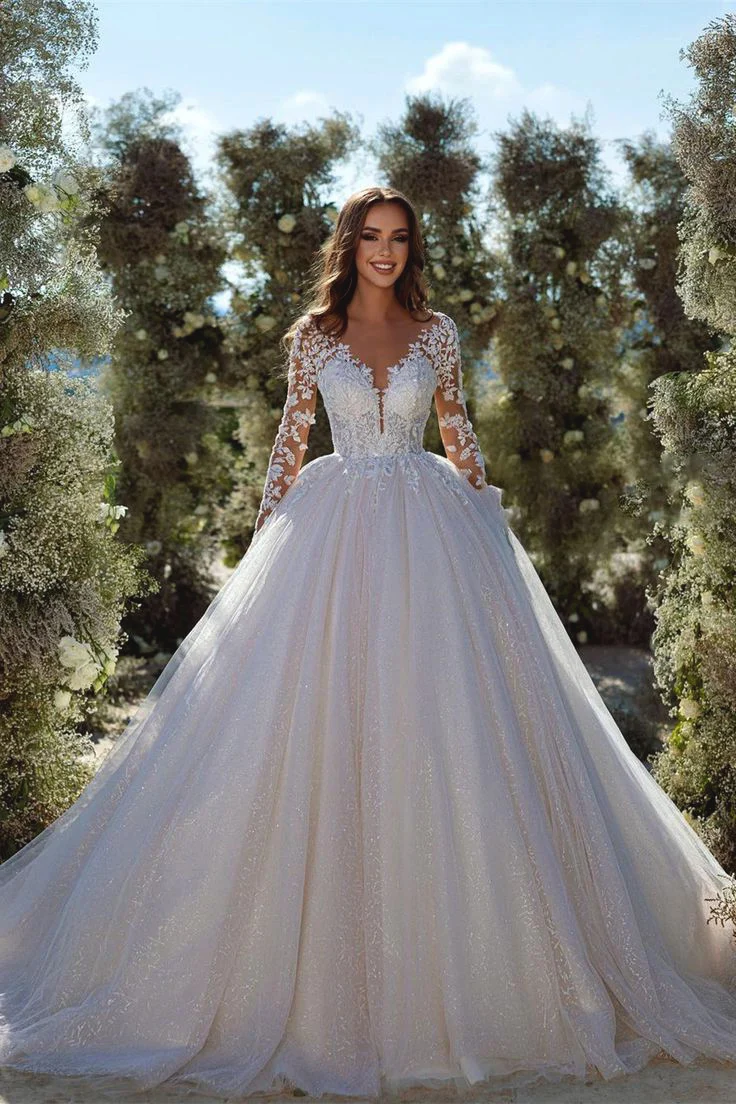
Hairstyles supply different states too: up, fastened at the side or loose over a shoulder. Clear hair from the desired edge initially and add your actual intended arrangement afterwards. The broader neck frame remains distinct in the closer clip picture, with jewellery beside the ear adding another accent. Choose whether you want that area exposed. The pictured hair establishes neither suitability for a specific occasion nor a fixed jewellery set. Try your own earrings separately at the real neck edge, keeping other pieces unchanged to identify what the addition alters.
5. Select the quieter skirt area completely
A visually quieter surface can still be broad, extended behind or divided into narrower folds. The long-sleeve picture has a particularly substantial lower area. The bouquet reference has a less widely arranged silhouette and quieter fall instead. Compare actual skirts without holding them sideways before choosing fullness. Front length needs intended shoes and ordinary standing. A hem cropped in the closer picture remains missing information rather than something supplied by another complete garment. Obtain your candidate’s own lower view to assess how the chosen upper motif sits within the whole shape.
Walk, turn and sit in the real candidate. Reassess the bodice-to-skirt transition afterwards. If less rear fabric appeals, request an actually offered version or a specifically assessed alteration. Do not infer spare length from the broad photographed arrangement. A quieter skirt is a visible design preference rather than a promise about weight, fibre, movement room or universal care. Those details need to belong to the actual garment. Separate what you selected visually from what the provider must explain, assessing the whole lower finish through intended use.
6. Add flowers, jewellery and outer layer individually
The pink bouquet in one reference is held lower at the side. It adds colour beside the pale dress without fully concealing the front middle. Test your own flowers in the intended hand and then before the body. Choose which motifs should remain visible. You need not always carry a bouquet sideways because the photograph does. Ordinary hand position is another deliberate companion to the selected decorated area. You may prefer the middle motif partly concealed at times; decide using the same actual garment and flowers rather than treating another person’s pose as a fixed requirement.
Add jewellery and headpiece individually afterwards; the bridal accessories guide supports assessing neck line and ear area together. Try a real jacket or wrap if intended and reassess borders after removal. Cleaning and pressing need product information and labels. GINETEX explains care symbols, while floral forms cannot determine treatment. Record motif distribution, coverage and the assessed skirt shape finally. Your modern wedding dress remains a specific choice of actual properties instead of an unclear general style label. Keep those personal priorities together with the selected garment’s own information.
Choose where floral details should sit on your modern wedding dress first. Compare neck edge, shoulder areas and pattern endings, then assess the selected skirt with shoes and your actual accompanying pieces.
Frequently asked questions
Must a modern wedding dress have a plain bodice?
A modern wedding dress can carry floral details. Choose their location and density deliberately and compare them with quieter areas rather than treating simplicity as compulsory.
How can I compare the floral bodice-to-skirt transition?
Keep skirt fullness similar on wedding dress candidates initially and compare a definite motif ending with longer floral extensions. Establish actual construction separately from visible decoration.
Which information remains missing across several attractive fronts?
Your wedding dress selection still needs the same candidate’s matching back. Front views of different models cannot be combined into an assumed complete version.


