A feather-look wedding dress can place its main emphasis in very different areas. Fine projecting structures at the upper edge read differently from large arm trim or a denser short hem. Choose the location and extent of the trim first. Then test where it meets a bouquet, veil and seat. These photographs show feather-like shapes without establishing real feathers or particular fibres. The visible design and information about the actual offer should guide the decision together, rather than an assumed material identity.
The description of the separate KYHA Peach jacket provides an example of distinct product information: shape, fabric information and fastening appear under separate headings. Use that distinction when asking about trim. A feather-like shape in a photograph replaces neither a component description nor an explanation of its attachment; none of our images is thereby attributed to that maker.
If you plan to add a veil, compare its own edge first. The wedding veil guide helps separate that outer border from existing trim. Then try both pieces together, particularly where their surfaces meet.
Feather-look wedding dress: choose location before quantity
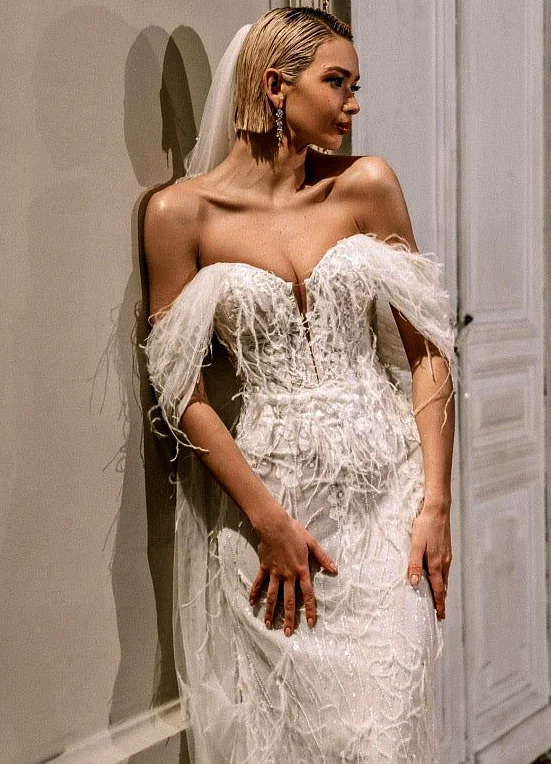
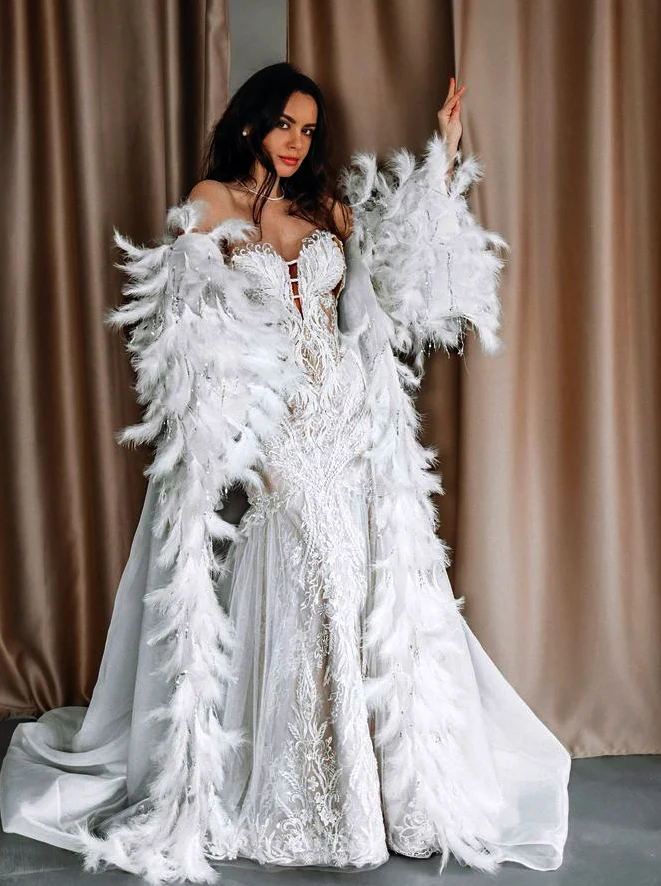
The closer front view with fine projecting structures shows accents along the upper edge and middle, with clearer areas between them. The fuller photograph with expansive arm areas spreads the effect much farther beside the body. Decide whether you want that lateral width or an accent kept closer to the outline. Only then does the quantity of individual elements become a useful comparison question.
Look at each idea once without jewellery or an additional outer layer, so you can recognise the trim’s own effect. Add what you actually intend to wear afterwards, one item at a time. The shimmering wedding dress guide provides another route if you mainly want reflections on a surface instead of projecting structure. The effects can be combined while remaining separate preferences.
Test arm areas with a bouquet and hand position
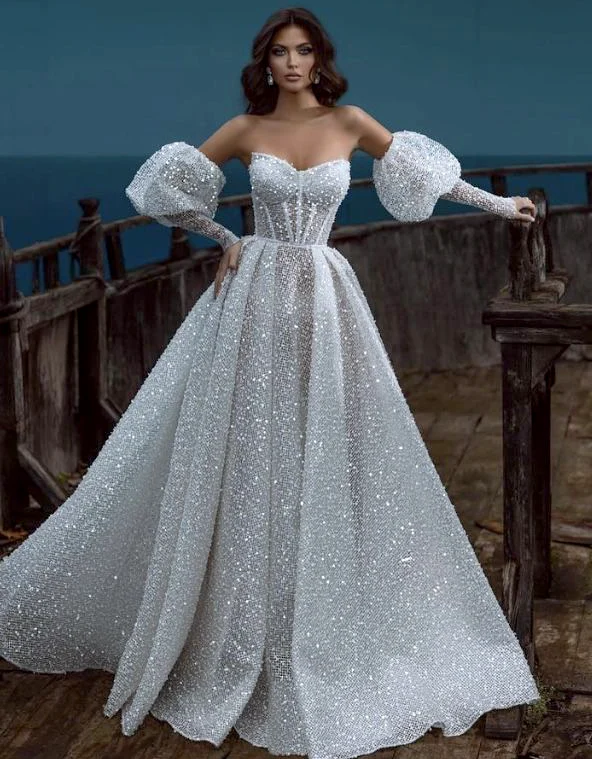
Two images show particularly large feather-like areas beside the arms. In one, hands sit at the middle; in the other, an arm is raised. Those poses explain lateral extent without demonstrating ordinary handling. Try a bouquet at its intended height on the actual outfit. Rest your hands in your lap and bring them forward again. Observe which sections meet rather than assuming the photographed pose explains the full movement.
If you like the side areas, ask how they are held or connected on the offered dress. The photographs do not establish removable arm pieces. Also compare whether you would prefer a similar effect with less width. This concerns the space you want beside your body, rather than a general rule that a bride must hold her bouquet or hands in one prescribed way.
Connect a waist accent with sitting
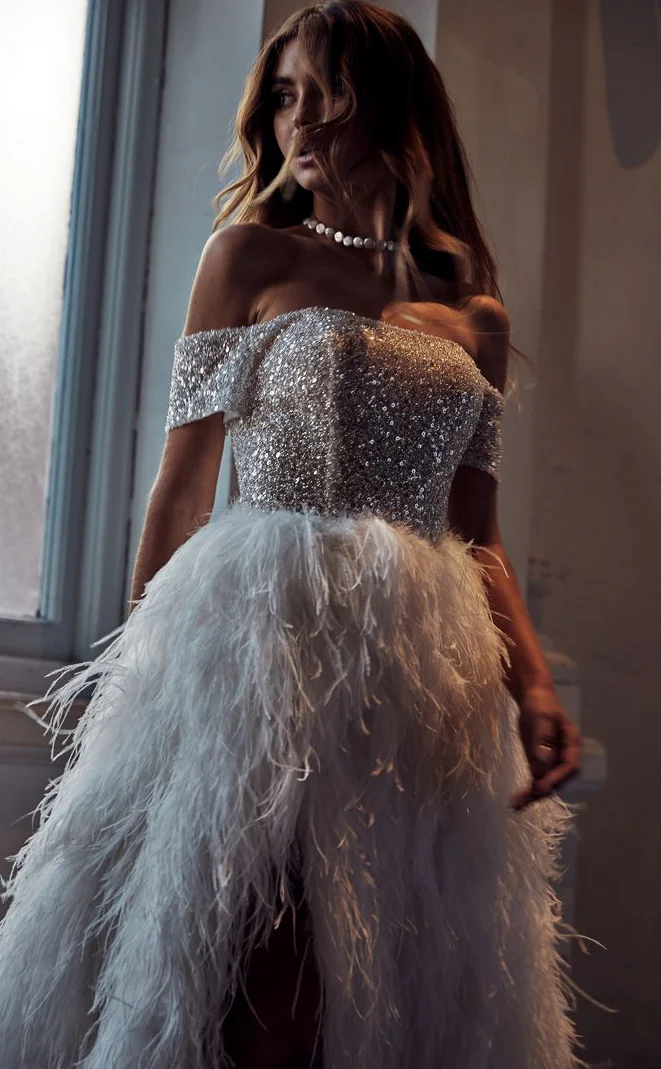
The close view with a reflective off-shoulder bodice starts a broader pale feather-like area beneath it. This makes the middle boundary easy to recognise. If you want the emphasis there, examine it while sitting too. Stand at the mirror without a bag first. Sit on a comparable chair, stand again and inspect the placement before the surface is rearranged for another photograph.
Compare a narrower and more expansive middle section if both are genuinely available. The question is not only which spread arrangement looks more impressive in a picture. Decide which contour you want during your intended movements. Have the adviser explain what adjustments the actual version offers. A photograph of projecting decoration supplies a design idea, rather than a confirmed alteration possibility.
Distinguish a short border from a long surface
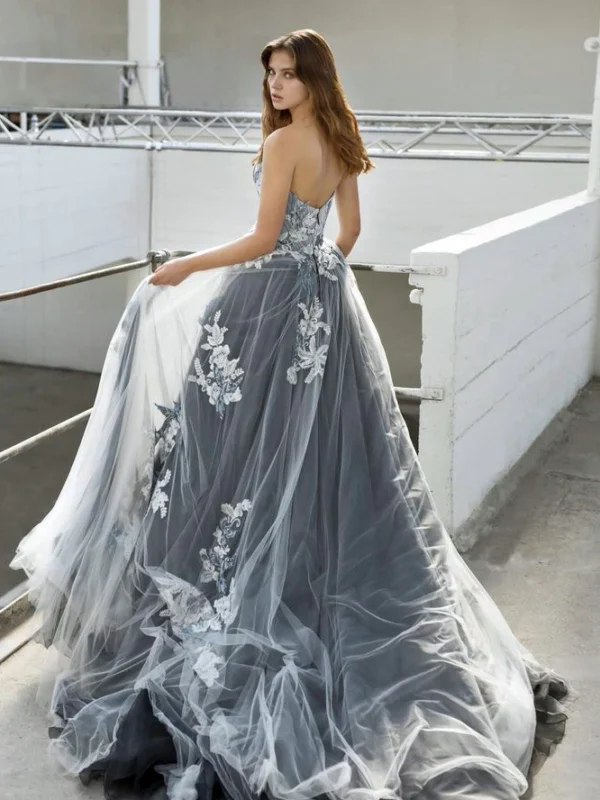
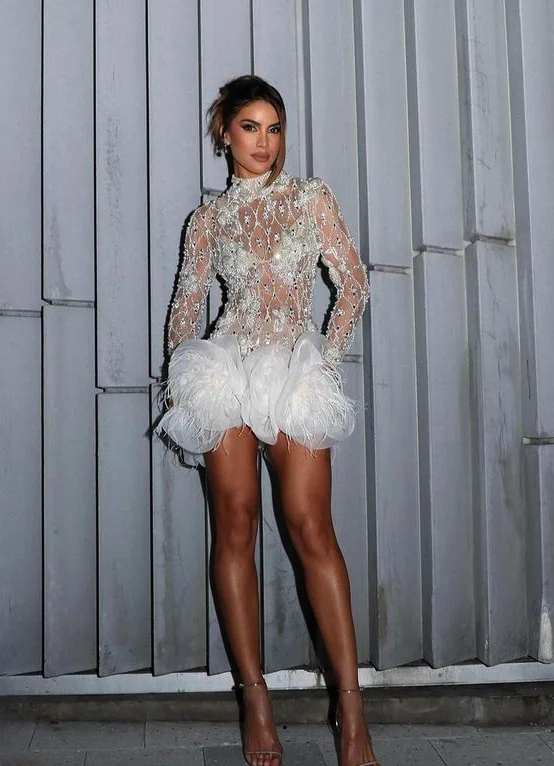
The short high-neck example concentrates larger curved pale shapes at the lower finish, leaving legs and shoes clearly visible. The long rear view instead distributes finer strands over a larger surface to the back end. These are different ways to guide the eye downwards. A limited dense border can create a clear finish, while a longer pattern accompanies the whole skirt area.
With a short form, check the line you want to see when standing naturally and sitting. With a long version, also examine the rear surface after walking. Name individual components only after receiving actual product information. A fine long structure is not automatically the same component as a larger curved accent. Compare the visible outline without assigning one shared material identity to different photographs.
Try the veil and jewellery beside the structure
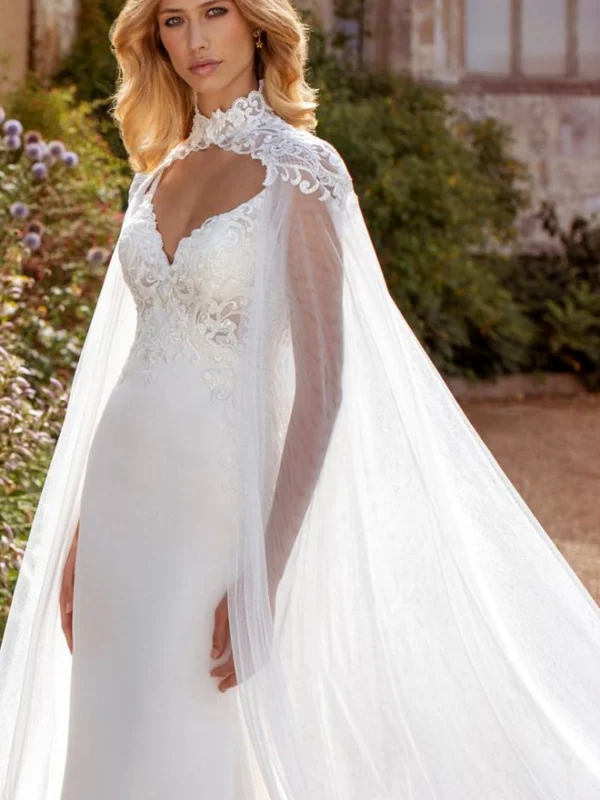
A veil can form another surface next to projecting details. Check which contour you want exposed and where the pieces meet on the actual outfit. A quieter veil panel and a strongly drawn border are different additions. If you want an arm area visible, do not leave the veil permanently across it during the fitting without comparing another arrangement. A side view makes the covered and exposed sections easier to identify.
The bridal accessories comparison helps with necklace, earrings and headpiece. Add one item at a time and judge the connection with upper trim. The photograph combining dense reflections and a rounded necklace shows a possible strong upper emphasis, rather than a compulsory pairing. Decide which line you want to recognise first and whether a smaller addition leaves the feather-like contour clearer.
Confirm information and handling before deciding
Ask about the actual components, their connection and care information for the chosen version. GINETEX explains care symbols; visual resemblance does not replace the label on your dress. Request an explanation for the specifically decorated areas when a treatment or alteration is proposed. Do not transfer a general recommendation simply because two photographed surfaces appear similar.
Record the preferred location, tested extent and actual contact points. Note which handling was demonstrated and which question remains open. Choose the combination whose visible contour you like and have tried with your intended additions. This turns a striking image idea into an understandable bridal outfit without inferring unsupported material, function or comfort claims from feather-like details. A clear record also gives the next appointment a specific question to complete.
Choose between an arm accent and a waist accent
If two images appeal equally, do not immediately combine every projecting detail for the fitting. Imagine the narrower upper border with freer arms first, then compare a larger arm surface. Use the same bouquet in both cases. Hold it at the height you actually prefer rather than arranging your hands to match each photographic pose. This reveals which area remains clearly visible beside it.
Change only the proposed jewellery addition afterwards and inspect the middle again. You might prefer the large side area without a necklace and want another accent beside the smaller border. That is a specific combination to test against real offers with the adviser. It connects your preferred contour with actual hand positions instead of making several decorative preferences into one compulsory outfit.
Choose the location of projecting trim first, then test its proximity to bouquet, veil and seating. The photographs do not confirm real feathers.
Frequently asked questions
Are the visible elements real feathers?
These photographs cannot confirm that. Ask for the actual component information on the particular offer.
Must the whole skirt be decorated?
No. The selection shows arm areas, a waist accent, a short lower border and drawing distributed over a longer surface as separate options.
Can a general cleaning method be used?
Use care information for the actual version and ask about decorated areas. Visual similarity does not determine the treatment.