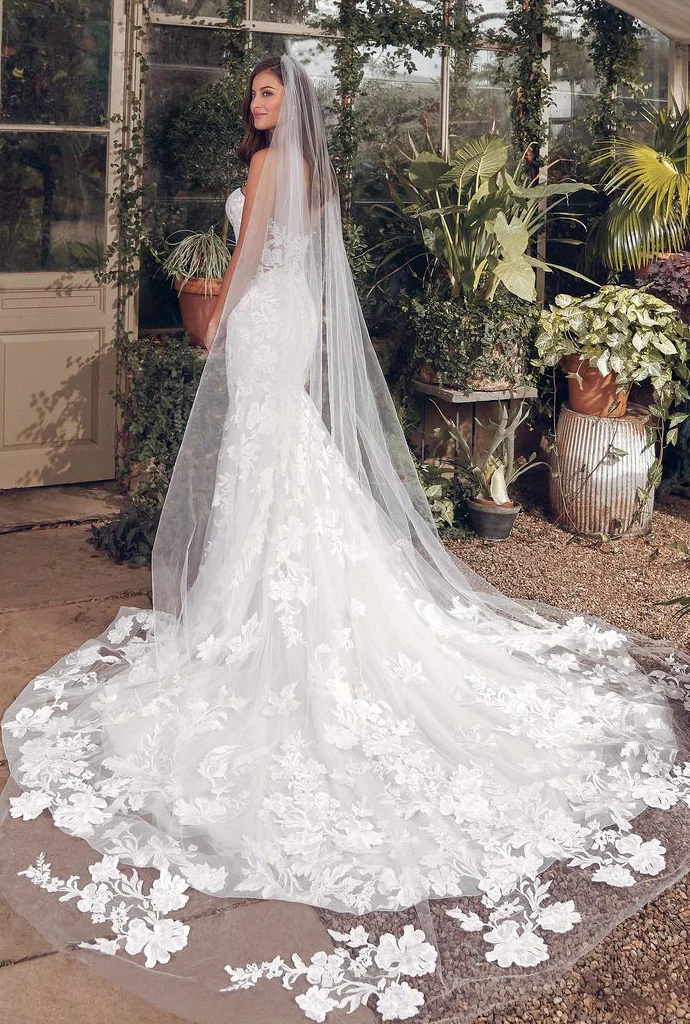
A floral veil border forms a wide outer curve on the ground in this rear three-quarter view. A second floral area belonging to the back of the dress lies beneath it. Above the border, the long veil panel looks quieter and more transparent. The closer upper dress outline and wider lower finish are visible, but the two patterns overlap near the floor.
Use this angle to decide which pattern you want to recognise first. Follow the outer flower border once, then trace the dress finish below it. Where the patterns come together, a particular boundary may become less distinct. If that shared floral area is precisely what appeals to you, record it as a deliberate preference.
Try a slightly different panel placement on your own outfit before immediately ordering another length. Look from a normal distance and from the side. Ask for a demonstration of the real attachment and repeat the rear view after walking. The overlap does not establish shared manufacture or the exact fibres of either piece.