A veil for a fit and flare wedding dress joins a lower outline that already changes direction. The narrower skirt opens farther down and may finish in a wider rear area. Length alone therefore cannot settle the choice. Look at where the veil edge falls in relation to the opening skirt, its hem and any train. A visible interval keeps the two finishes separate. An overlap creates a shared surface in which borders and patterns need to work together. Choose the arrangement through your intended appearance and an actual fitting, rather than a length name alone.
If the veil will later be removed or replaced, add a real change sequence to the edge comparison. The bridal look change guide helps organise the pieces and assistance involved. Assess the dress after the change you actually plan as well.
Veil for a fit and flare wedding dress: separate two edges
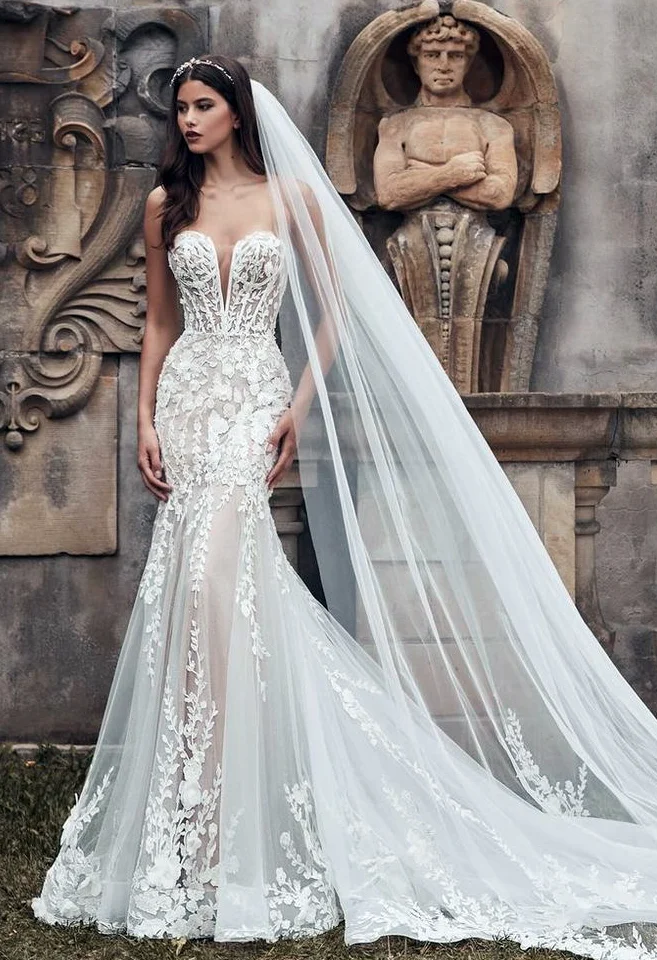
In the frontal photograph, the long, relatively plain veil leaves the narrow waist visible. Its side panel continues outside the widening lower dress. This is a different decision from selecting the skirt silhouette itself. Start by deciding whether you want to recognise the dress hem immediately from the rear. If so, try a shorter veil edge or a different placement before assuming the skirt must be spread out for every photograph.
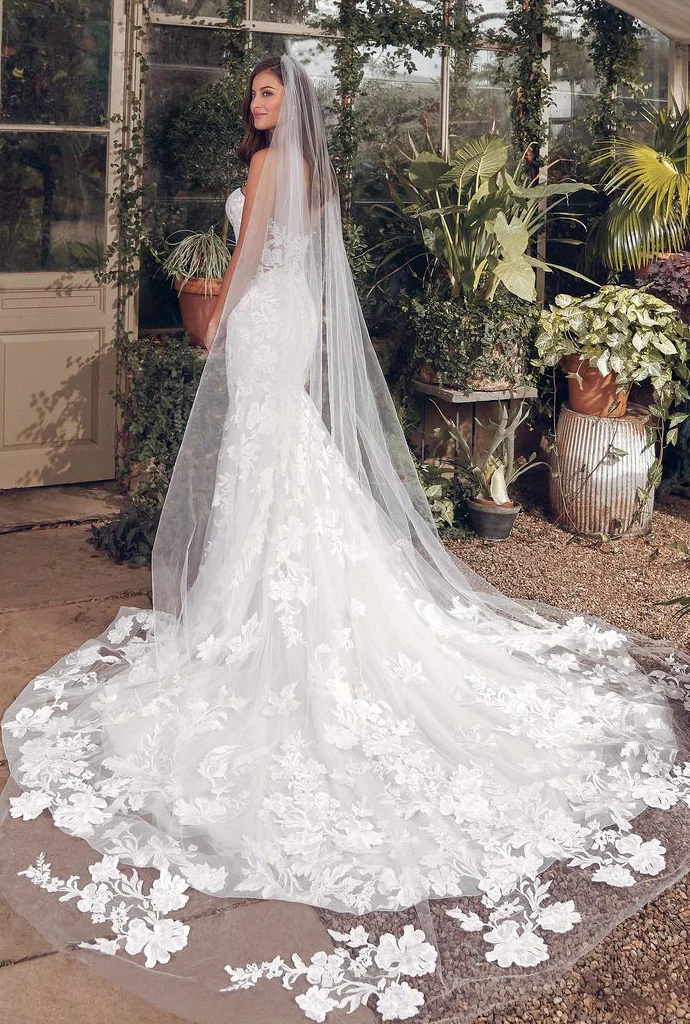
The rear three-quarter view shows a wide floral veil border over an already floral lower dress. That combination does not demand one particular length, but it makes the relationship between the patterns especially relevant. Record both arrangements from the same angle. If you are still choosing the underlying skirt, the mermaid wedding dress comparison provides a separate starting point for that question. Settle the dress outline before judging the extra finish added by a veil.
Give a visible interval a specific purpose
A clear stretch between the lower finishes can make the flared skirt outline easier to follow. Compare an edge that stops before the prominent hem decoration with one that continues beyond it. Do not concentrate only on the very back tip. Side panels may fall against the narrower hip area or across the spreading lower skirt. Decide which part you want to remain exposed before looking for a named veil length.
Try the positions by laying the actual pieces differently during the fitting, without altering either one. A helper can point out the edges while you stand upright. Then release the arranged fabric, walk a few steps and stop again. A carefully spread floor display is a useful photograph idea, but it does not explain where the two finishes settle after normal movement. Compare the prepared arrangement with that second, less arranged state.
Read overlapping patterns from a normal distance
In the floral rear photograph, two pale patterns meet. Close up, you can follow individual flowers; farther away, they may read as a single denser field. Either result can be intentional. Before choosing, say whether you want to show the dress pattern, the veil border or their combined surface. Then look for that information in the rear view. A generally decorative impression does not answer which particular edge you want to see.
For a quieter frame, begin with a less strongly patterned veil surface. Alternatively, a more decorative outer border may supply the finish you want. Change the veil while keeping the dress, hairstyle and shoes consistent. That makes the effect of the new edge easier to identify. The photographs do not establish fibre content or how the floral decoration was made. Those details belong to the description of the actual garment and accessory.
Check side placement with the intended hairstyle
A side view reveals whether the veil falls close to the fitted skirt section or sits farther outside it. Its position on the head can affect this arrangement too. Try the intended hairstyle with the outfit early enough to compare alternatives. Ask the shop to demonstrate the attachment on the actual veil. A photograph alone cannot reliably show the fastening or how it behaves when you turn your head and body.
Hold the hair clear of the back once and reassess the surface. The backless wedding dress guide helps if you also want the back pattern to remain visible. The main decision here is still the lower connection: check whether an upper placement change moves the veil edge below. Repeat the same side and rear views after each attempt, so a different camera angle does not become the reason one arrangement appears more successful.
Read the dress before adding a veil
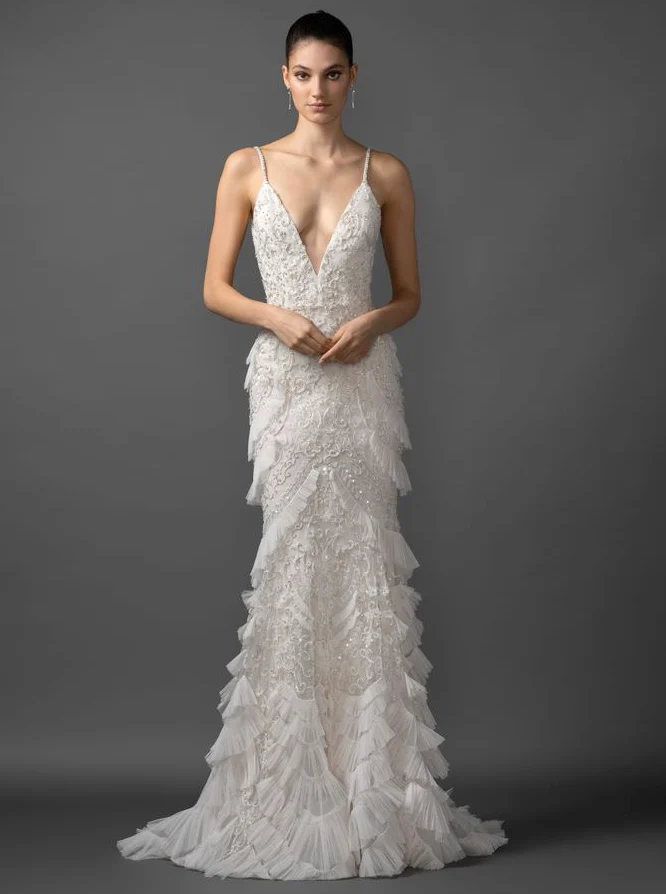
The photograph with repeated diagonal skirt tiers shows an active dress finish without a visible veil. Use it to assess how much decorative direction the dress already contributes. Should an additional border follow that sequence, form a deliberately different frame or remain as quiet as possible? A veil does not have to repeat every detail. The choice becomes clearer when you can first name the line you want to retain on the dress.
Bring the actual chosen dress to the consultation whenever possible, rather than a similar bodice photograph. Differences in the lower tiers or rear finish change the combined pattern. The Pronovias fit-and-flare selection groups differing product shapes under the term. Use that vocabulary as a search aid; do not turn it into a universal knee position or one compulsory veil length for every dress. The particular garment provides the more useful comparison.
Recheck both finishes through the planned movements
Walk in the intended shoes, turn and then sit on a comparable chair. Observe where the veil and skirt settle after each movement. Agree with a helper which area you would like arranged for a planned photograph and which you want to manage freely during the ordinary sequence of the day. If an actual fastening or removal option is offered, ask to see it demonstrated instead of inferring a practical feature from the image.
Finish with two concrete combinations, such as a quiet veil with a clear interval and a floral border with deliberate overlap. Record the veil placement on the head, lower edges and handling required for each one. Choose the connection that shows your preferred dress line and works understandably in your own trial. The veil then becomes a decision about the complete outfit, without reopening the separate question of which skirt silhouette you wanted in the first place.
Compare a clear interval with floral overlap
For a specific choice, place two aims side by side: keeping the dress hem individually readable or making the lower flowers into one shared area. Show the quieter frontal veil view for the first aim and the floral rear photograph for the second. Then request two suitable arrangements on the same actual dress. The unrelated pictures are comparison ideas, not a documented before-and-after sequence of one product.
Recheck both arrangements after a short walk. Does the preferred interval remain recognisable, or would you want the edge arranged for particular photographs? Decide which handling belongs to your plan. You can enjoy a deliberately laid-out photograph while choosing another position for the ordinary sequence of the day. Keep those intentions separate so a desired image does not become an untested expectation for every movement.
Treat the veil edge and dress hem as two separate lines. Compare a visible interval with deliberate overlap on the complete outfit.
Frequently asked questions
Must the veil extend beyond the dress hem?
No. A shorter edge can leave the dress finish exposed; a longer edge can create an outer frame. Compare both arrangements on the actual outfit.
Can a floral veil work over a patterned skirt?
Yes, if the drawing you want remains readable in the overlap. Check the places where the two floral patterns meet.
Does every photograph show a veil?
No. The photograph with repeated diagonal skirt tiers is an explicit comparison showing the dress without a visible veil.


