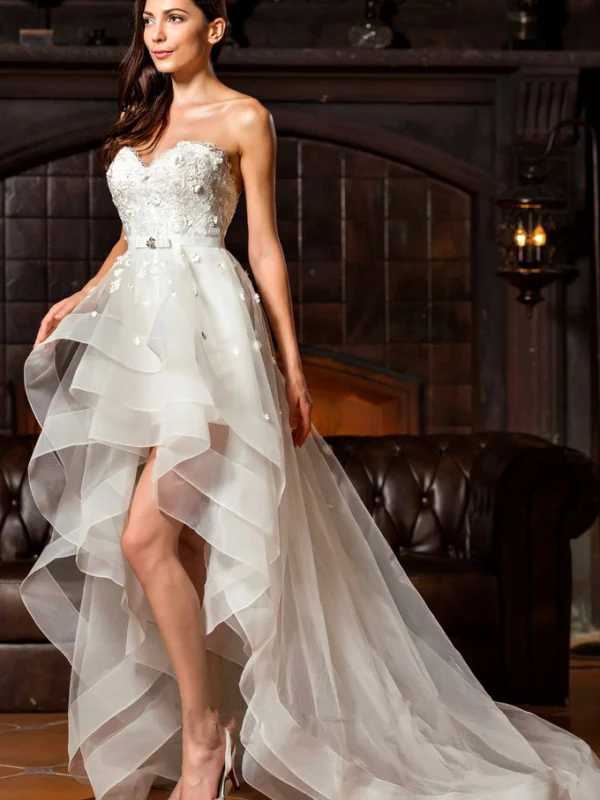
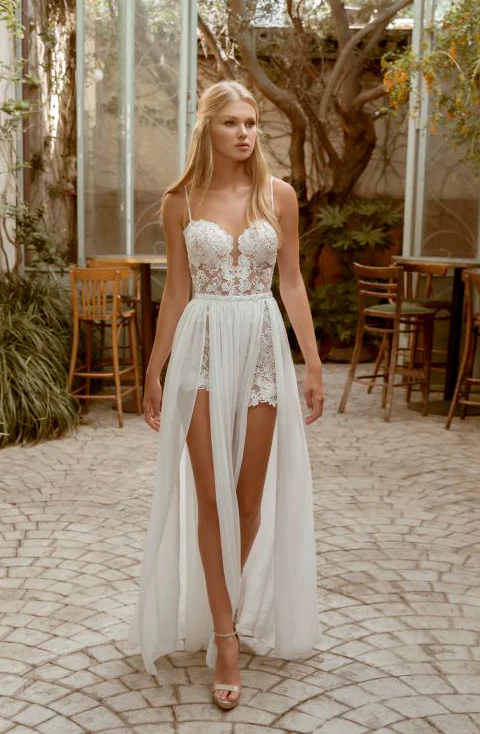
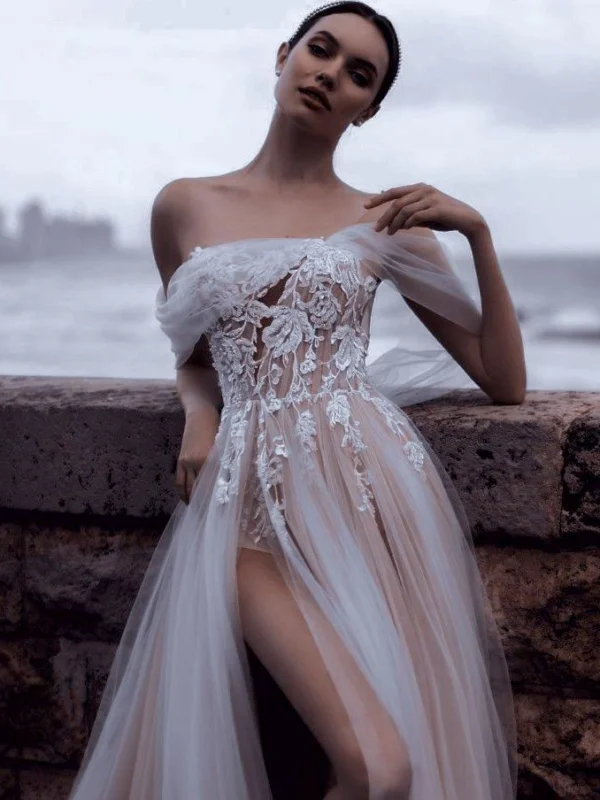
Uneven bridal skirt edges appear in different ways in this selection. Broad curling ruffles connect a short front with an extended rear. Another full view places a short inner section beside long open outer panels. The floral photograph with an exposed leg omits the complete lower finish instead: the opening is visible, but the whole hem cannot be followed.
Guide to comparing these images
Separate the outside edge, inner length and draping
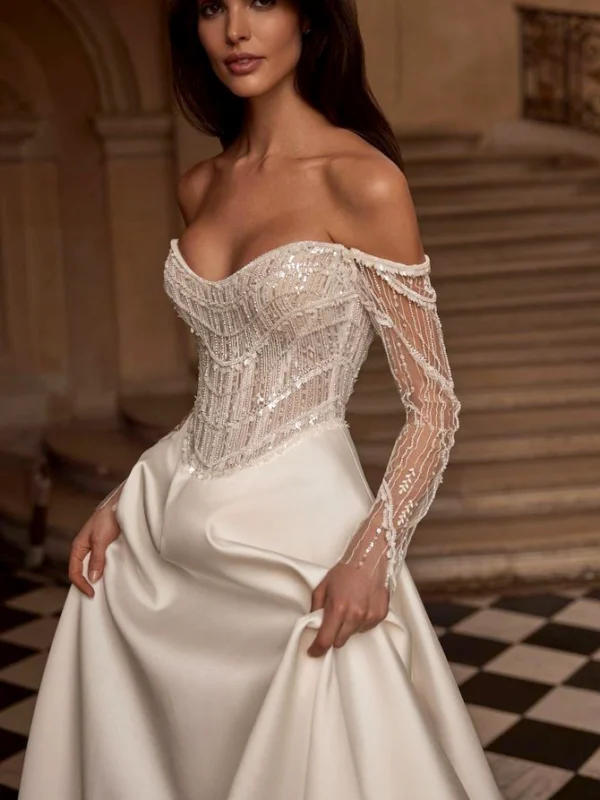
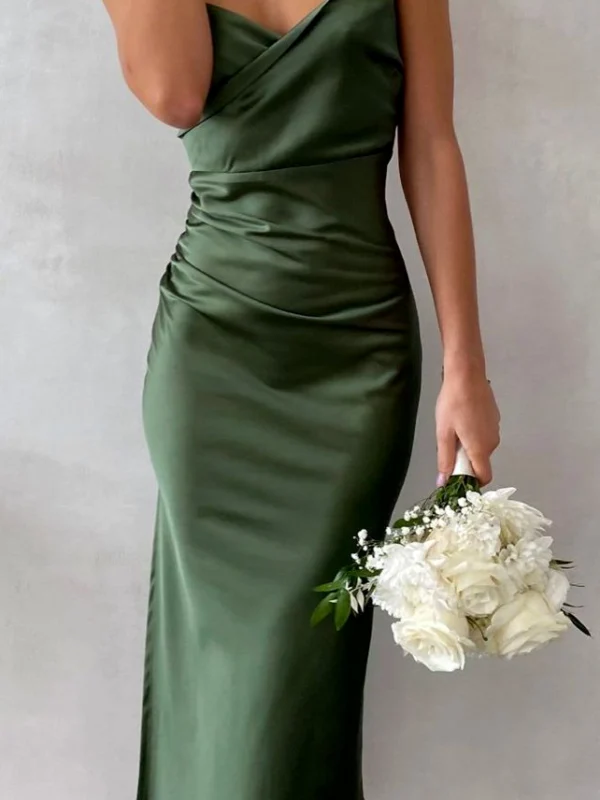
Two quieter comparisons change the question. The pale dress combines long embellished sleeves with a broad lower surface. The green fine-strap dress places diagonal folds mainly across its upper and middle areas. Neither view should be labelled evidence of an uneven hem simply because of a pose or an angled fabric line.
Follow the visible edge first and distinguish it from the opening, inner length and fold direction. Prepare a complete front and side view on your own garment. Check footwear and exposed leg area in a natural stance and when walking. The photographs do not establish fibre type or removability; those require the actual product description and a demonstration of any offered function.
Begin by placing the two more complete open-front photographs side by side. In the broad ruffled example, you can follow an outside edge from the high front towards the extended rear finish. The narrower fine-strap dress instead shows a short patterned inner section between long outer panels. This difference matters even though both photographs expose a substantial leg area. Identify the edge you mean first, then describe the size of the opening. Comparing exposed leg alone would merge two different arrangements into one vague request. Keep the inner and outer outlines separate in your notes.
The more closely cropped floral photograph connects with these fuller views through its opening, but cannot replace a complete hem view. Look at the pale dress with long embellished sleeves and the green fine-strap dress afterwards as quieter alternatives. Ask where the strongest change of direction occurs: at the top, the middle or the bottom? In the green example, the obvious diagonal belongs particularly to the upper edge and the folds. This lets you choose an angled accent without treating every such feature as a short front hem. Request the missing full view before ordering a specific garment, and distinguish a skirt held out for a photograph from its unassisted outline.