A wedding overskirt fitting needs more than a look at a broad outer surface in the mirror. A dependable decision requires the real construction, a demonstrated connection and a complete trial with your dress. A photograph can show a narrower inner outline and broad side areas without establishing removability. Separate visible design from the function actually offered. Start by establishing which pieces you can try together, then check waistband placement and how any explicitly offered change works on that particular outfit.
If you also want to change the veil or cover-up after a confirmed overskirt change, use the bridal look change guide to organise the steps. Rehearse the sequence with the actual additions so separate changes do not become confused.
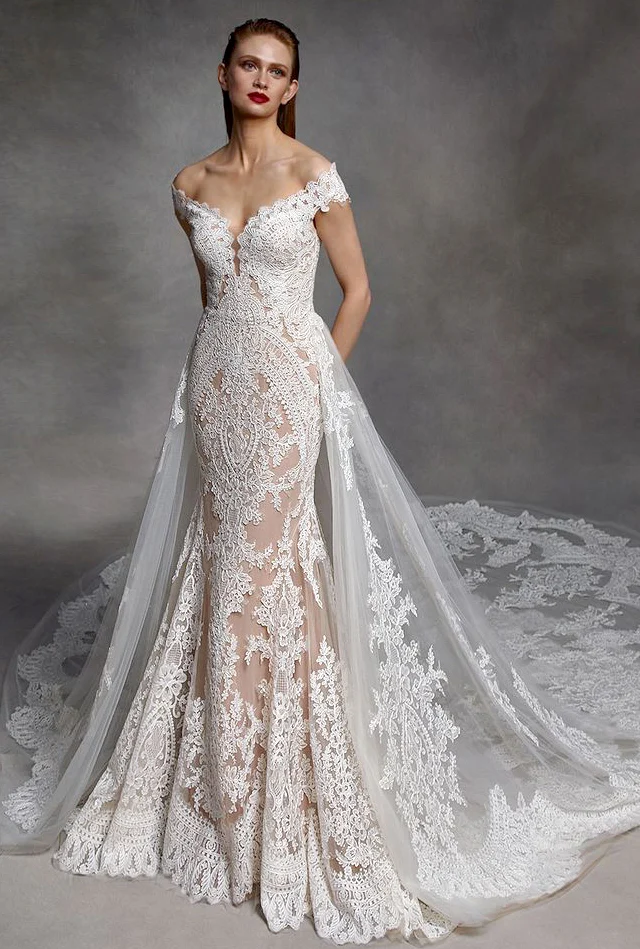
Wedding overskirt fitting: establish the actual offer
Ask the adviser to show what belongs to the particular dress. Is an additional outer area permanently connected or offered as a separate accessory? Which version is actually in the shop? A description and matching demonstration are more useful than a vague name. The Pronovias selection explicitly names a detachable overskirt for particular offers. That illustrates a stated product feature, rather than identifying the archive dresses pictured here.
Request the complete offered outfit together. An overskirt shown on another sample size or a different underlying dress cannot answer every question about your combination. Record which pieces were actually tried and which details remain open. You do not have to guess the connection from the photograph or already know which fastening system the actual version uses.
Check waist placement from front and rear
The full view with a narrower floral inner outline and broad outer side areas makes the middle transition a useful observation point. First check the height of that visible boundary. Do you want a clear finish, continuing floral pattern or a less noticeable division? That design question remains relevant whether or not the particular garment has a releasable connection.
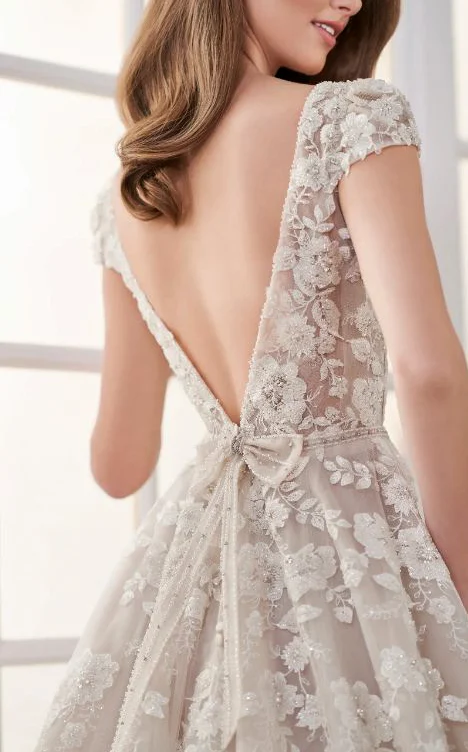
The rear photograph with a deep V and bow shows the same body region from another direction, but not the same dress. Use it to prepare a rear-placement question. On your actual outfit, inspect the connection from front, side and back. Check whether an outer waistband or existing decoration covers the line you want to see. These photographs provide comparison points, rather than proven fastening instructions.
Ask for the real connection to be demonstrated
If the offer includes a removable overskirt, ask the adviser to demonstrate its intended connection. Ask which sections to handle and where the accessory should be held while it is put on. Watch the whole sequence first. Try it under guidance afterwards if the shop permits. That is more accurate than general instructions about hooks, buttons or ties that may not apply to your model.
Establish whether you want help and who would provide it later. A decorative bow is not evidence of the system being used. Ask the adviser to show how you recognise the correct position of the connection. Your notes should describe the real product. An unconfirmed mechanism or an improvised fastening method should not become the preparation for the wedding day.
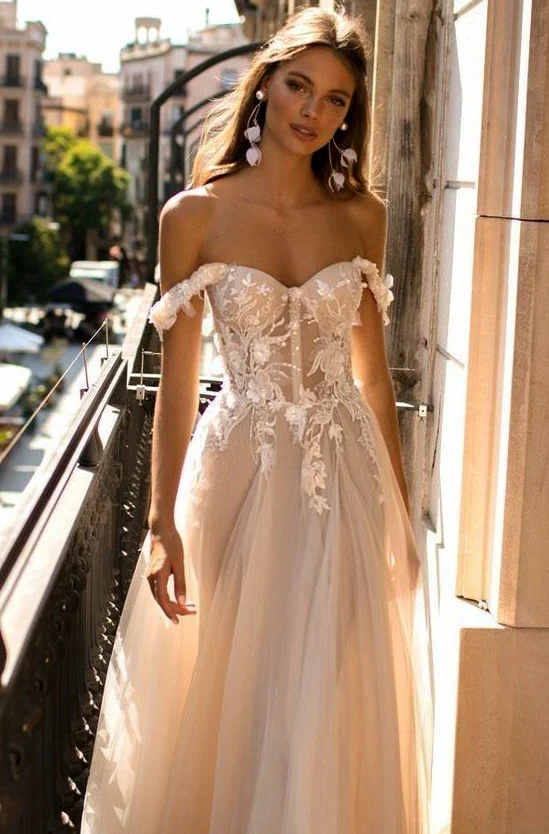
Test sitting and standing with both pieces
Sit on a comparable chair in the complete combination. Stand again and inspect the waist before anyone rearranges the fabric. Has the visible transition moved? Is there a particular place you want corrected? Name the actual observation instead of stopping at a general comfortable or uncomfortable judgment. The trial should show how your outfit lies in that specific situation.
Repeat with the intended shoes and underlying garments where these are already decided. Walk a few steps and turn. Ask for an explanation if a section sits differently than expected, and compare any adjustment after professional advice. The full bridal skirt guide helps with the separate question of how much lower surface you want to manage overall. Keep that width question distinct from the location of the actual connection.
Rehearse the confirmed change in full
If a change is genuinely offered and planned, consider the complete action: where you stand, who helps, where the removed accessory goes and how the dress looks afterwards. See both states with the same underlying garments and shoes. Briefly holding a separate piece beside the dress is not the same trial. You want to assess the real combination, rather than two disconnected items.
The narrower rear view in this selection is an explicit comparison without a confirmed overskirt. It shows how an independent closer outline and rear surface can read. It is not a documented after-state of the broad floral example. In your own fitting, keep the actual before-and-after views clearly paired. That lets you assess the offered change without combining unrelated photographs into an invented product sequence.
Bring design and the purchase decision together
Finally, compare the visible middle transition with the rest of the outfit. The two broader front views distribute floral motifs differently across waist and skirt. Decide which pattern should remain visible at the connection. The simple wedding dress comparison provides a quieter reference if several pattern boundaries feel too prominent together. Choose the line you prefer instead of adopting a universal decoration rule.
Record confirmed construction, tested size, waistband placement and any help needed. Add open alteration and care questions for the actual offer. If a promised function has not been shown, request its demonstration before deciding. The fitting should result in a complete understandable outfit with a connection you have actually assessed. An attractive outside curve does not have to establish an invisible product property.
Compare a complete connection rather than separate items
Suppose you have chosen a floral dress and want to assess an additional outer surface. Start with the dress alone and point out the motifs you want visible at the middle. Have the actual offered accessory put on. Inspect that pattern connection before asking for the rear surface to be spread widely. The impressive overall width then cannot obscure the smaller but important connection question.
Sit and stand again, then ask to see the offered change in its intended sequence. Decide after seeing the actual second state whether you like both views. Preferring only the spread outer surface is a different intention from wanting a change you will actually use. The fitting should distinguish those aims and let you name your own priority clearly before making the purchase decision.
Establish the actual construction before checking waist placement and connection. Compare standing, sitting and any offered change in a complete fitting.
Frequently asked questions
Is every broad outer area a detachable overskirt?
No. Its visible shape does not establish a releasable connection. Ask about the actual construction and a demonstration.
Should the waistband be checked only while standing?
No. Also sit, stand up and walk so you can assess where the real connection sits in those situations.
Does a visible back bow explain the fastening?
The bow initially establishes a visible shape at the middle. Its actual function needs explaining on the particular garment.


