A square-neck wedding dress draws its upper edge differently from a plunging V: a more horizontal chest edge meets the side lines of the straps. That frame is clearly visible on the white dress with a full skirt. The other three views show a higher fine outer edge or floral V shapes. Use them to describe the opening you want. Select the visible neckline first, then skirt fullness, jewellery and coverage. Similar pale colours do not make these four dresses alternative versions of one model.
Choose the upper width of a square-neck wedding dress
Look at the frame from the front before assessing the whole skirt. Broad straps stand beside a relatively straight upper edge with recognisable corners in the leading reference. Decide whether you want that defined change of direction or a softer line. The Pronovias neckline guide describes a square neckline through its straight horizontal line. This helps name the shape; it does not identify the makers of the unknown dresses pictured here. Trace the actual available neckline rather than choosing from a label alone.
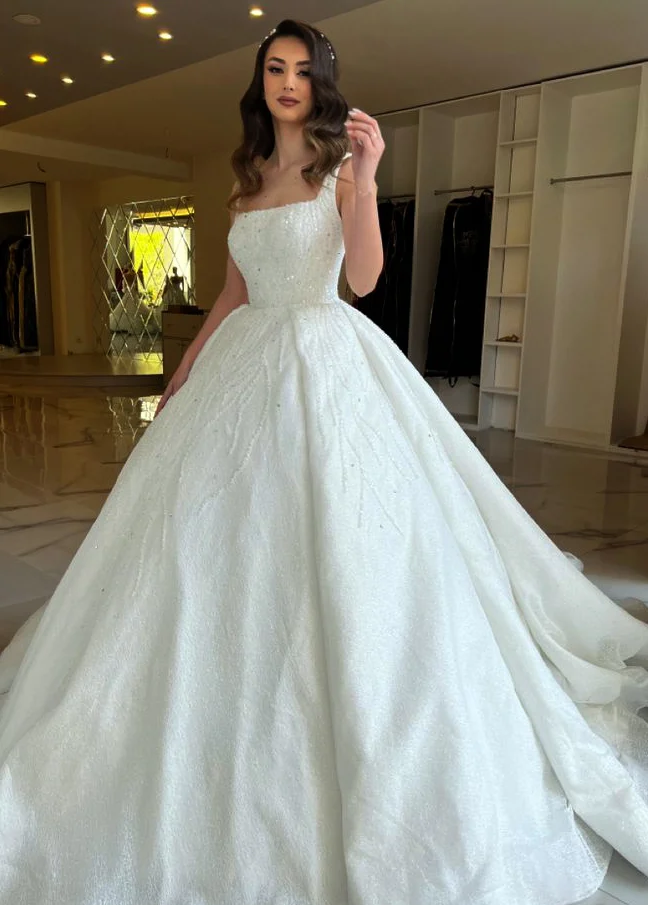
Compare two available neckline widths on actual dresses if you are still searching. Look at the corners and the distance between them instead of ordering only by the style name. Request a slightly side-on view too. An edge that looks defined from the front may run differently beside the arm. If considering an alteration, point to the specific corner or height and have the possibilities explained on the existing model. Do not plan around a newly cut shape before that proposal has been discussed.
Separate strap width from neckline depth
Broad straps are a visible part of the square reference’s frame. They do not determine the front edge’s depth on their own. Try the real dress with relaxed arms, assessing chest height and sides first. Decide which area you want exposed, then compare a finer strap arrangement. This keeps it clear whether you chiefly like the shoulder width or straighter neckline rather than selecting both properties as one inseparable package. Photograph the same upper area from a consistent distance for that comparison.
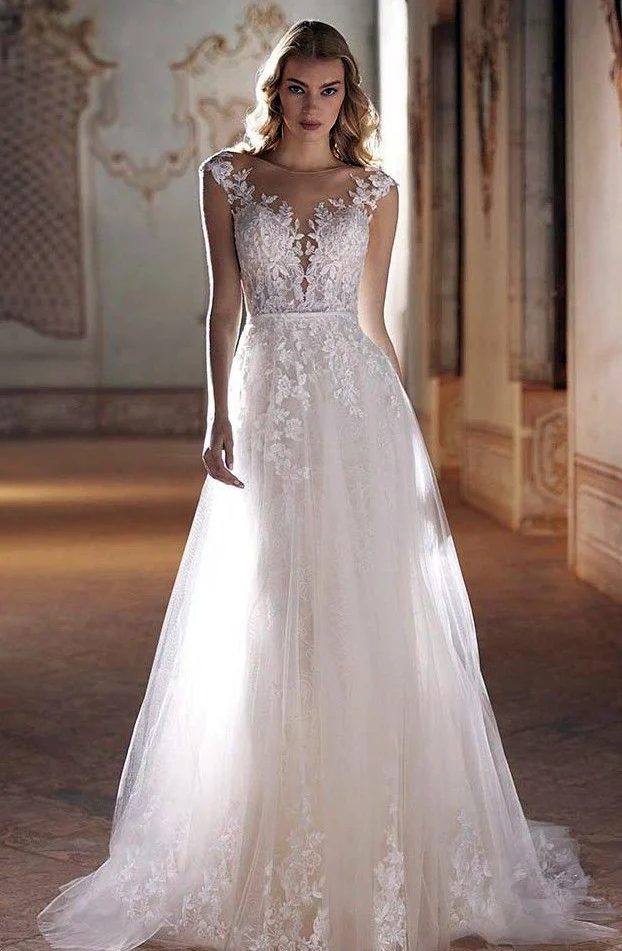
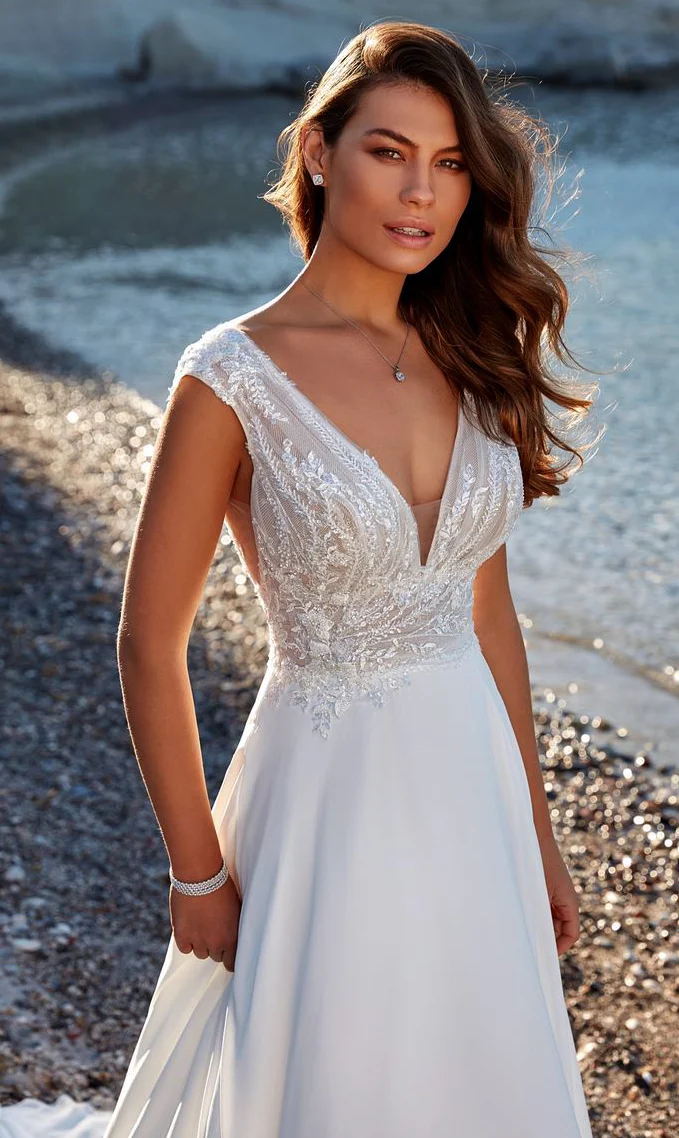
The garden view’s narrow floral straps lead into a deeper V. The waterside close-up has broader decorated shoulder sections beside another V centre. You can therefore retain a broader shoulder line while choosing a different front opening. The V-neck wedding dress guide develops that comparison. Follow the actual outer edge in each view rather than reading the direction of motifs as the neckline itself. Ask to see both front and side on your own candidate before settling their relationship.
Establish the actual upper layers
In the interior reference, a fine higher edge lies above the deeper floral V pattern. Skin remains visible between motifs. This offers a different choice from a front genuinely cut to the same depth. If you want more coverage, identify the relevant area on the worn dress. Ask about the existing layers and a genuinely available addition. A high outer line or dense-looking decoration cannot explain your preferred coverage by itself; the selected garment needs its own front and side assessment.
Wear the intended underwear at the fitting. Look from the front and side in comparable light, then reach both arms forward. Check the upper edge again afterwards. If you repeatedly want to rearrange one place, describe the movement that prompted it. Front photographs do not establish internal support pieces or the complete fastening. Request the actual back view and a dressing demonstration, keeping the frame you selected connected to the model you might buy or have altered rather than filling in unseen features from another reference.
Try jewellery within the open neckline
A square-neck wedding dress can be assessed without a necklace first. You can see how much space remains between chin and fabric edge. Then try one necklace you actually own and an earrings-only version. The small pendant in the waterside view offers a concrete possibility beside a V, not required jewellery for the square frame. Compare the bottom of the jewellery with the dress edge and turn your head. The necklace does not have to repeat the straps’ direction for the combination to appeal.
Include your planned hairstyle in that trial. Longer earrings beside hair drawn back can appear more prominent than the same shapes beneath loose strands. Add a hair ornament after deciding the neck and ear jewellery. The bridal accessories guide supplies more comparisons. Record the selected set from the front and side so a later hair change does not silently alter the jewellery decision too. Return to those views with the same dress if you change one accessory before the final fitting.
Treat the full skirt as another choice
The square reference connects its frame to a very full floor-length skirt. The V comparisons have different lower folds and plainer areas. You can like the angular upper line without seeking exactly the same fullness. Request your actual candidate’s complete view. Consider the proportions between waist and straps first, then lateral skirt width. Describe both preferences separately if seeking another combination, rather than assembling photographs into a garment that may not exist among the available models. The complete dress is what needs to work for you.
Test the skirt with intended shoes and a suitable chair. Hold any planned bouquet at its real height and check whether the upper frame remains as visible as you want. The raised arm in the square-neck photograph is a particular pose. Add a view with both arms down at your own fitting. This assesses neckline, waist and skirt as you might stand talking or holding flowers. Walk several steps and return to the same stance to compare where the real hem and upper edge settle afterwards.
Record the final neckline trial
After choosing, note the neckline width, underwear and planned jewellery. If an alteration is agreed, request the same views again afterwards. Your square-neck wedding dress decision remains assessable on one specific garment. Before cleaning or pressing, the GINETEX care symbols help interpret its actual instructions. Ask about treatment of the whole dress where decorated and plainer sections differ. A photographic surface effect cannot replace composition or care information, so retain the real product details with the fitting record.
Choose the edge width and height of a square-neck wedding dress first. Try straps, preferred coverage and jewellery together on the actual garment.
Frequently asked questions
Do broad straps always need a square neckline?
No. The broader floral shoulder sections of one V reference show another front line. Compare strap width and neckline depth as separate features on an available dress.
Which necklace should I compare with a square neckline?
Try your actual dress without a necklace first, then with one you intend to use. Compare its bottom with the fabric edge and assess an earrings-only version too.
How should I discuss another neckline width?
Identify the specific corner or height on the worn model. Have actual alteration possibilities explained and request the same front and side views after any change.
When should I add the bouquet to a fitting?
Hold it at the planned height after choosing the upper arrangement. Check neckline and waist visibility with both arms down, adding shoes for the complete skirt view.


