Choose a pleated wedding dress through the fold pattern you can actually see. The leading example has many finer regular lines across several overlapping skirt tiers. Other references show larger hanging areas, floral decoration or broader folds near the bodice. They are comparison ideas rather than further established pleated fabrics. Decide whether the fine repetition, tiered ending or overall skirt fullness appeals first. Then look for those properties on the real garment offered and add your preferred upper coverage. A shared pale colour cannot establish the same construction across different outfits.
Name the folds without inferring a technique from a picture
A product term needs its own view too. Jenny Yoo describes the Vella model with a pleated skirt. That information belongs to that model rather than the unidentified archive garments. It shows that you can ask about folds in a particular garment area. A finer or broader effect still needs assessment on the real surface. Request composition, construction and care rather than assuming permanent pleating through a word or a bright reflection. The product you actually choose needs its own specific information.
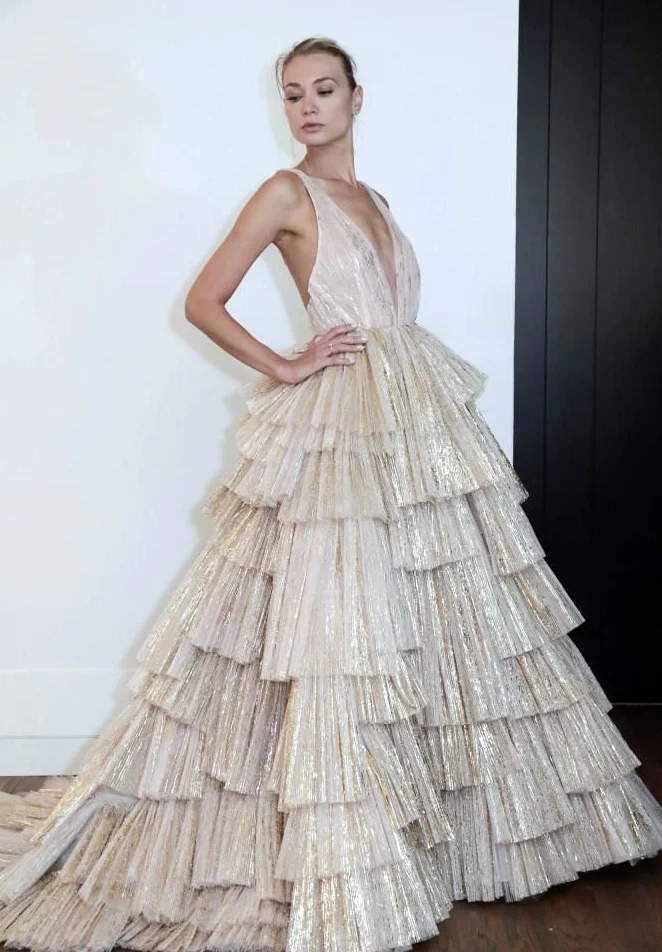
Inspect a limited area close up, then follow the same lines from ordinary distance. Finer light and dark bands repeat inside each tier of the leading reference. Broader diagonal areas on another bodice divide the surface differently. Name the repetition you want and where it should begin. Strong photographic lighting may make lines more distinct. Request another clear view of the same candidate if you cannot assess their width adequately. This connects a close detail you like to the impression of the entire worn dress instead of treating the enlarged image as its only appearance.
Choose tier endings separately from fold direction
The leading dress combines finer vertical folds with several horizontal tier endings. Describe those two directions separately. You might enjoy repeated vertical lines while preferring a continuous skirt without tiers. Alternatively, broad horizontal finishes with a quieter surface may appeal. Identify the area on the real product before requesting another version. A different tier count or hem requires a specific explanation; the visual difference you want does not itself confirm an available alteration. Ask to see the actual offered combination before deciding what belongs in your final outfit.
Compare the waist and where the highest tier begins. Does its broad edge sit immediately below or farther down? Assess the front and side because overlapping areas may appear differently. Choose the amount of upper decoration afterwards. The shimmering wedding dress guide compares more reflective areas with quieter sections. Pleating, shine and tiers need not form one fixed package. Look for the genuine candidate combining your preferred features rather than assuming that one photograph explains every available skirt arrangement or that a similar colour guarantees matching fabric.
Assess the neckline beside the detailed skirt
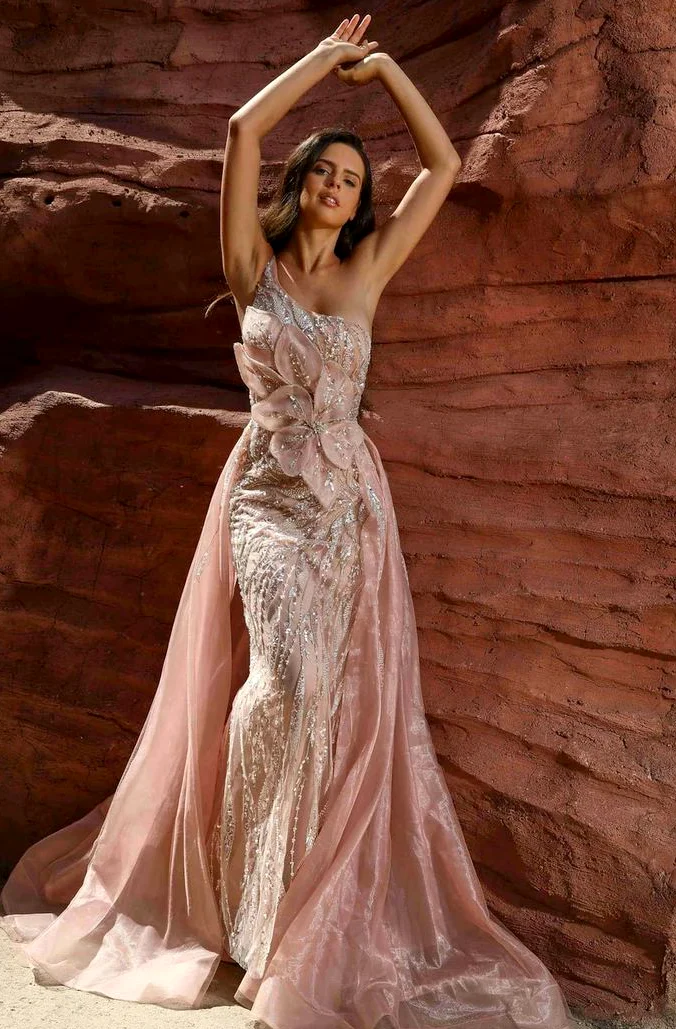
The tiered reference has a deep V and narrower upper shoulder connections. Counterexamples range from off-shoulder edges to one covered arm and a strapless bodice with long outer areas. These differences help select the upper frame separately from the skirt. Decorative lower fabric does not determine your intended coverage. Try the real neckline with planned underlayers and view it directly from the front and slightly sideways. Decide through the offered outfit instead of mentally inserting another reference’s bodice. Request its own rear view before settling the complete upper arrangement.
If a quieter upper area appeals, begin without extra earrings or necklace. Assess existing garment details alone. Add one real jewellery piece afterwards and view the whole upper section from a little distance. The pink reference’s larger flower forms create another emphasis from the regular skirt lines. The larger sleeve-volume comparison can help if shoulders matter particularly. Choose scale on your own dress rather than using it solely as a presumed counterweight to a particular skirt width. Keep hair unchanged during the first accessory trial so the added piece explains the difference.
Assess length with relaxed hands and actual shoes
A tiered skirt needs a full view of its lower edge. The leading photograph shows the front area clearly and some rear fabric on the floor, but feet are hidden. Wear your actual shoes at the fitting and place both feet normally. Release the skirt before assessing the front finish. Request a rear view too. Another pale dress in the selection cannot measure this candidate’s length. If you plan different shoes later, assess that actual second combination separately rather than assuming the first hem trial supplies both results.
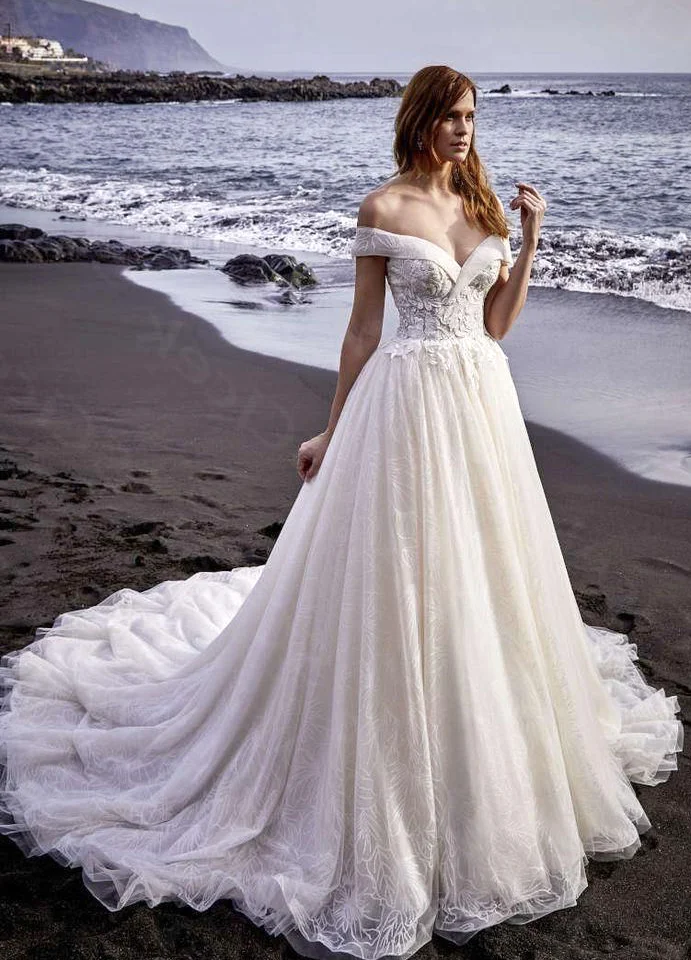
Walk several steps, turn and sit. Reassess how tiers overlap and which areas remain visible afterwards. Choose whether you want the available fullness. Ask about another length on the actual skirt and have the affected tier or edge explained. An apparently simple hem change can alter the visible pattern; specific construction determines the result. The long evening dress guide expands questions about front length and rear area without supplying a universal heel height. Your movement fitting supplements the photograph with information about the garment you would actually wear.
Add bag and outer layer individually
Hold the intended bag at the side and then before the waist. Decide whether it may cover the highest tier or bodice transition. The references prescribe no completed bag combination. Use a real existing model with planned contents and open it while wearing the outfit. Another strap may cross the bodice, creating an additional line. Assess it alongside the neckline before choosing only through similar pale colour. Change hands if that is how you expect to use the bag, keeping the dress and jewellery otherwise unchanged.
Add the jacket or wrap you actually intend to use next. Check its ending against the start of the tiers. Compare an open and closed view where the real layer allows both. Practise removal without constantly rearranging skirt areas for a photograph. If a long veil is planned, assess its border separately from the horizontal tiers. A counterexample’s cape-like area is not a confirmed addition to the pleated garment; its connection would require explanation on an actual available outfit. View your complete real combination before treating the outer layer as settled.
Establish care and alterations on the real material
Cleaning or pressing needs the product label and information about its actual fold construction. GINETEX explains textile care symbols. The name pleated alone determines neither temperature nor washing method. Request a specific explanation for the chosen model when instructions are unclear. Finish by recording fold width, tier distribution and the lower length you assessed wearing it. This selects a pleated wedding dress through checked lines and complete views rather than a general promise of lightness or movement based on its photographic appearance.
Compare repeated folds close up and on the complete dress first. Choose tiers, skirt fullness and bodice afterwards, then assess actual length with your shoes.
Frequently asked questions
Can I choose fine folds without a tiered skirt?
Look for a genuinely offered combination. Vertical fold repetition and horizontal tier endings are different visible features; the pictured dress combines them without requiring that arrangement for every model.
What should I ask before a hem alteration?
Show the intended new length with your shoes and have the affected tier and fold areas explained. The actual construction determines possible changes.
How should I add a bag beside the upper tier?
Hold the real bag at the side and before the waist. Check with planned contents whether it covers the skirt transition, then choose its carrying position.


