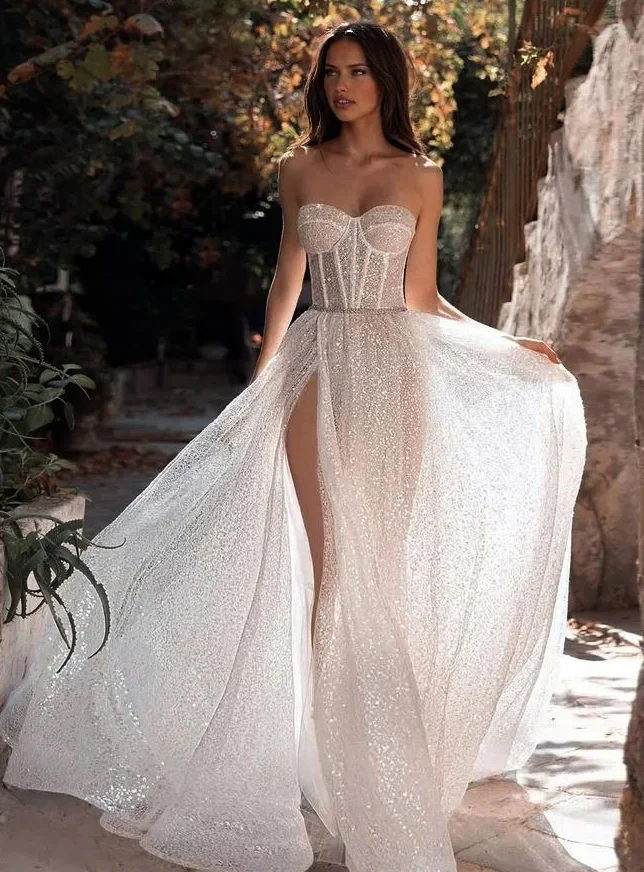
The strapless wedding dress with a held skirt has a shaped upper edge and vertical bodice lines. A horizontal transition defines the waist. The broad fine skirt has a high front-side leg opening. One hand holds fabric outwards while the leg remains deliberately visible. This is a separate garment, rather than an additional view of the pointed-waist reference.
Compare its more horizontal upper-to-skirt transition with the downward centre of the other strapless shape. For your movement trial, the next useful view is the usual position without hand support. Let the actual skirt fall, take a step and sit. Choose which opening you want in those situations rather than copying only the deliberately exposed leg in the photograph.
Assess the lower layers actually supplied with the intended shoes too. If a train fastening or another alteration is offered, have it demonstrated specifically. Repeat the same movements afterwards. You can then choose the full lower shape around your own plans, while using the held-skirt photograph as a purposeful additional view rather than evidence of dancing performance.