Long bridal earrings create a visible line beside the face and neckline. On the floral off-shoulder reference, pale elongated shapes hang beside hair worn back. A shaped upper edge and narrow floral arm sections remain visible below. Begin with that relationship: which length do you want beside the actual gown? Four other references show a short V-shaped necklace, different shoulder bands, partly obscured ear areas and fine straps with head decoration. They provide comparison settings rather than a complete jewellery collection.
Choose long bridal earrings beside the shoulder edge
Look first at the visible line from ear to the end of the drop. Compare it with the highest part of the upper-arm decoration, rather than only the lowest neckline point. On the floral reference, the elongated pale earrings remain visible beside the neck. There is already pattern below them. Decide whether you want a clear gap between those areas or would like to try a stronger visual connection between jewellery and dress.
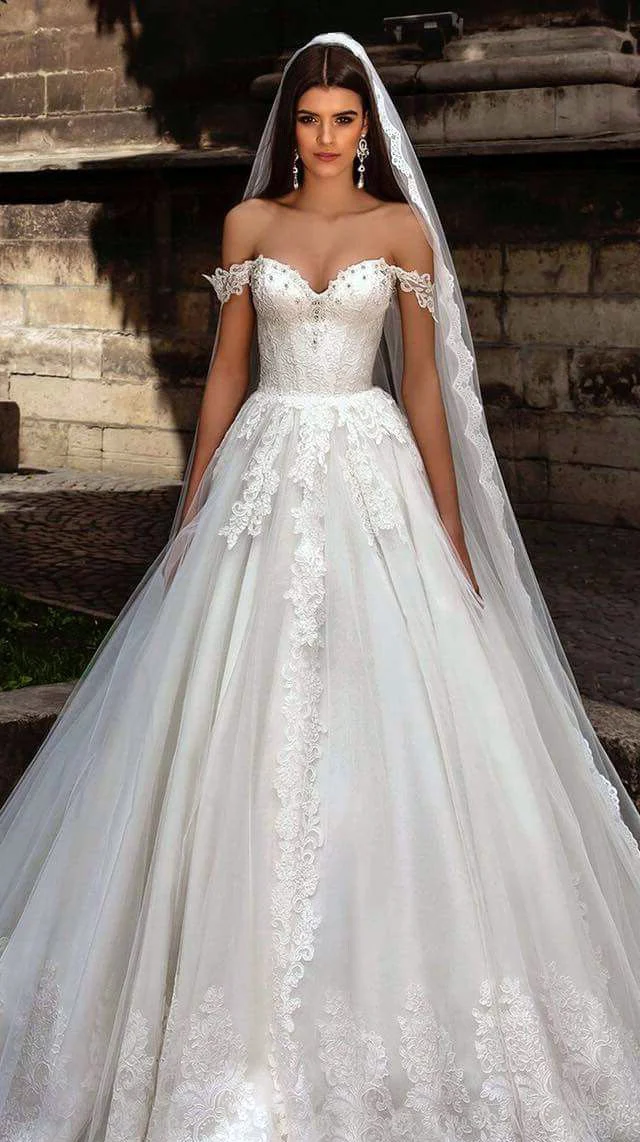
Bring an actual intended pair to the gown fitting. A close-up alone does not show its length beside your own neck and shoulder edge. Assess the front and both sides with your head in a normal position first. Turn it carefully afterwards as you would during conversation. Compare where the ends sit or move. The decision concerns the real pair on you, rather than a supposedly ideal length for every person.
Compare width separately from moving parts
A narrow long drop and a broader elongated piece may reach a similar low point while looking quite different. Assess width alongside length. In its own long earring designs, Tiffany describes both moving and more fixed arrangements. This does not establish the construction of the pale pieces in the photograph. Ask about your candidate’s actual design and see how it behaves while worn rather than assigning movement from appearance alone.
Compare shapes with the same hairstyle. If you pin hair behind one pair and leave it over another, you are also changing visibility. Try both clearly beside the face first, then introduce the intended strands. Note whether you enjoy a clear long line or a broader shape. You can ask for a specific alternative in the shop instead of simply requesting increasingly noticeable jewellery without identifying the feature you want.
Use floral arm edges and broad folds as settings
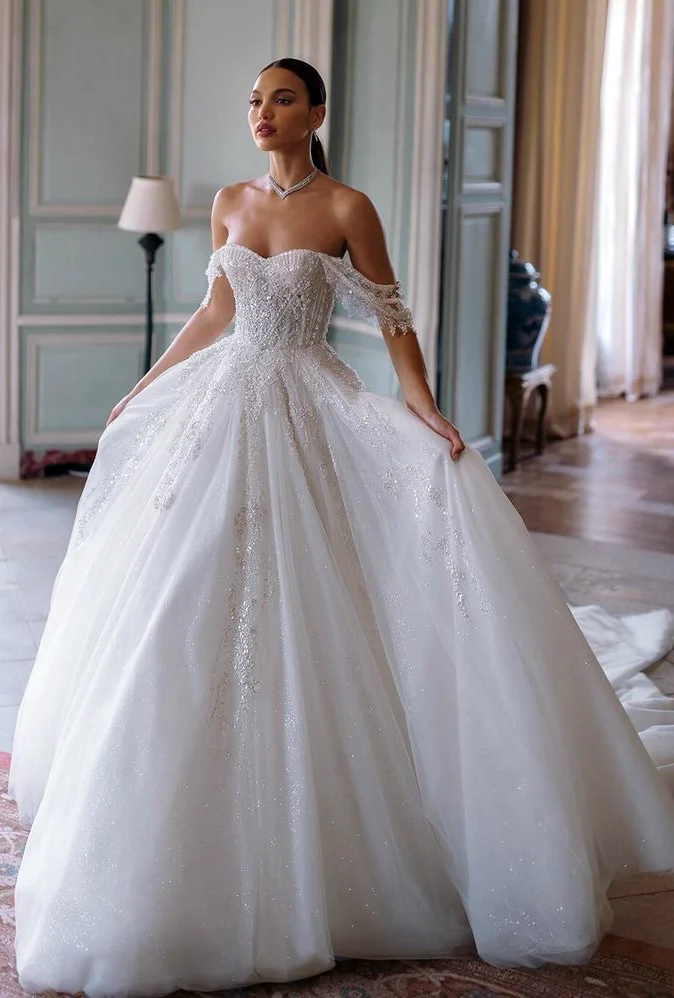
The reference with long pale earrings has narrow floral sections at the upper arms. Another off-shoulder dress has broader quieter fabric folds there, while floral forms are more prominent across bodice and skirt. Use that difference as the setting for your jewellery. You may choose differently beside an already patterned shoulder line and a broad plain edge, without treating either combination as automatically unsuitable for long earrings.
Do not compare the dress only when laid on a table. Wear it with its intended upper parts so earring and arm edge occupy their real positions. Add a jacket or wrap afterwards if planned. Carefully assess where the pieces touch. Also decide whether you want to keep the jewellery on in both states or plan another sequence. That is a more specific question than a general prohibition against long earrings beside decoration.
Add a short necklace as a deliberate comparison
The other floral off-shoulder dress shows a short pale V-shaped necklace. It places the line in the neck centre rather than beside the face. This is a comparison for distributing your accents. Try the intended earrings alone first, then add your necklace. Decide whether you enjoy the side and central lines together. The photograph does not establish particular jewellery materials or a maker for the pair you will actually buy.
The bridal accessories guide explores overall distribution. Here, length beside the ears remains the focus. If you want to add a necklace, keep its position consistent during earring comparisons. Otherwise you might prefer the new central line rather than a different earring length. A photograph of the whole head-and-shoulder area is more useful for this decision than separate close-ups of the jewellery and gown.
Coordinate hair and a veil with the actual pair
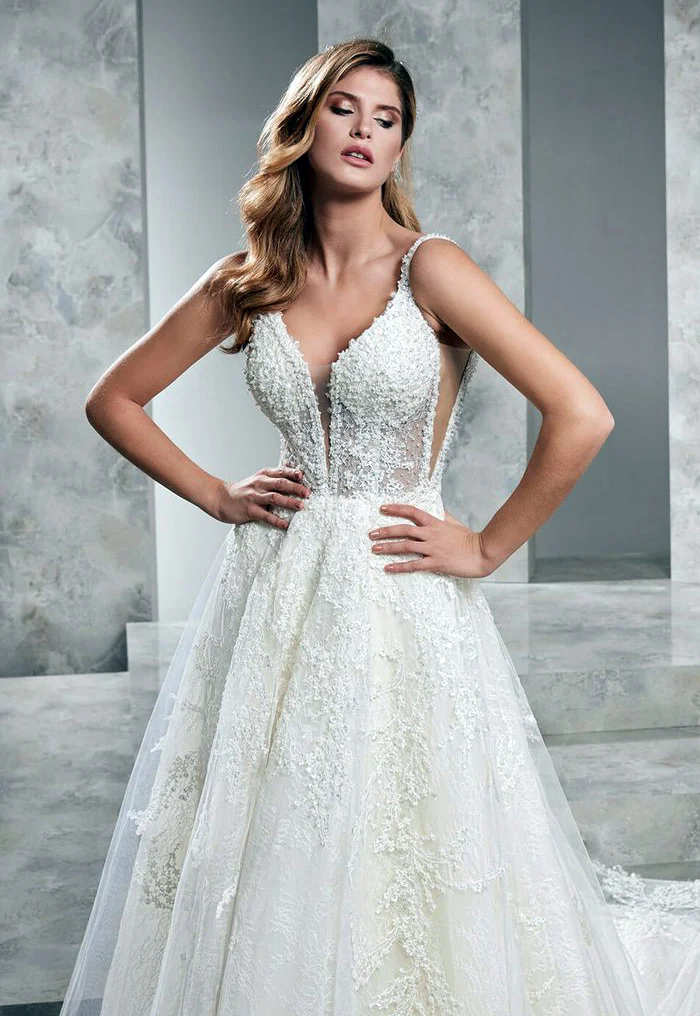
The closer strap view has long wavy hair beside dense floral bodice details. Parts of the ear area are less clearly visible. This does not prove an absence of jewellery there. For your comparison, choose how much of the selected pair you want visible beside your hair. Wear the earrings at the hair trial and compare strands in front of the ear with a more exposed side arrangement on the same outfit.
The full strap dress with a narrow head ornament offers another setting. Add any intended hair decoration after trying the earrings. With a planned veil, check its fall with the stylist and move your head carefully. For distributing accents beside a noticeable bodice, jewellery with a statement dress offers further comparisons. Use them for the amount of emphasis you want, rather than as a requirement to wear a particular combination.
If a veil belongs to your planned look, include its side edges in the jewellery trial. The wedding veil styling guide helps compare its fall and border. Assess the actual pair with the veil and after its intended removal so the earring choice belongs to both states you want to wear.
Complete the final pair choice with product information
Finish with two real candidates, perhaps a narrower long drop and a shorter pair, using the same completed hair arrangement. Allow time for comparison during ordinary conversation and sitting. Choose the pair you actually want to wear rather than only the longest visible option in a standing pose. Ask about the specific closure and have putting it on and taking it off demonstrated if you would need assistance with that process.
Long bridal earrings should come with their actual composition and care information. Pale rounded areas in a photograph do not confirm real pearls or a particular stone. Keep jewellery instructions separate from the gown’s care details. Record the selected pair together with hair, neckline and any planned veil. Its length then belongs to a specific finished look, rather than needing to be chosen again between untested hair and necklace alternatives on the day.
Choose long bridal earrings by their visible length beside hair and the shoulder edge. Try the actual pair with your dress and a planned veil.
Frequently asked questions
How long should earrings be beside bare shoulders?
Choose the visible length on the worn dress. Compare the gap to upper-arm decoration from both sides and move your head carefully with the actual pair.
Do I have to leave out a necklace with long earrings?
No. Try the earrings alone first, then add your intended necklace. Decide which combined distribution you enjoy around the neckline.
What should I bring to the hair trial?
Bring the actual intended earrings and your planned veil or reliable details about it. Compare exposed ears with strands in front during the same appointment.
How do I establish the pair’s composition and care?
Read the actual jewellery information and ask about closure, components and care. A pale surface in a photograph does not confirm pearls or a particular gemstone.


