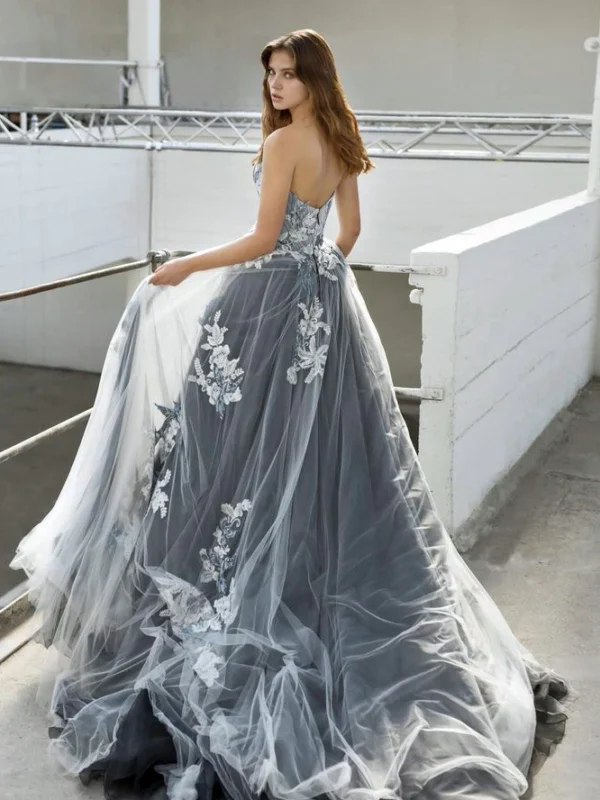
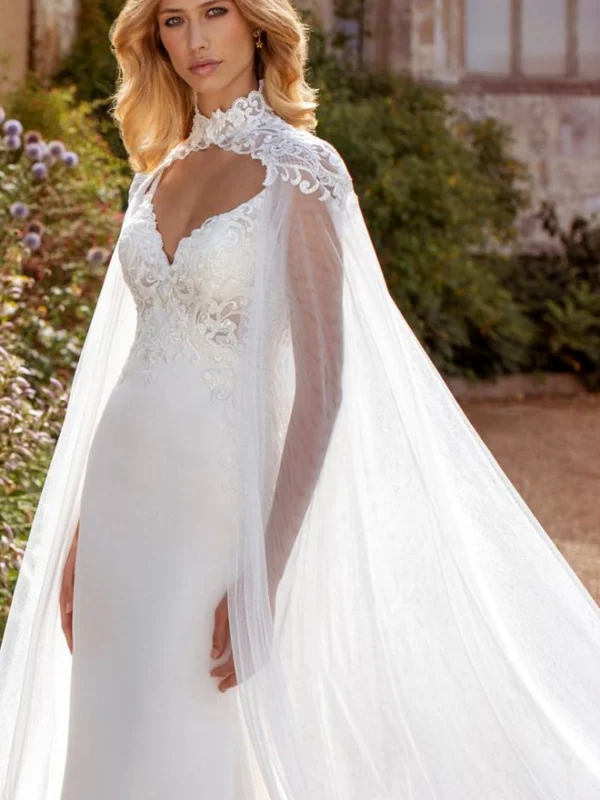
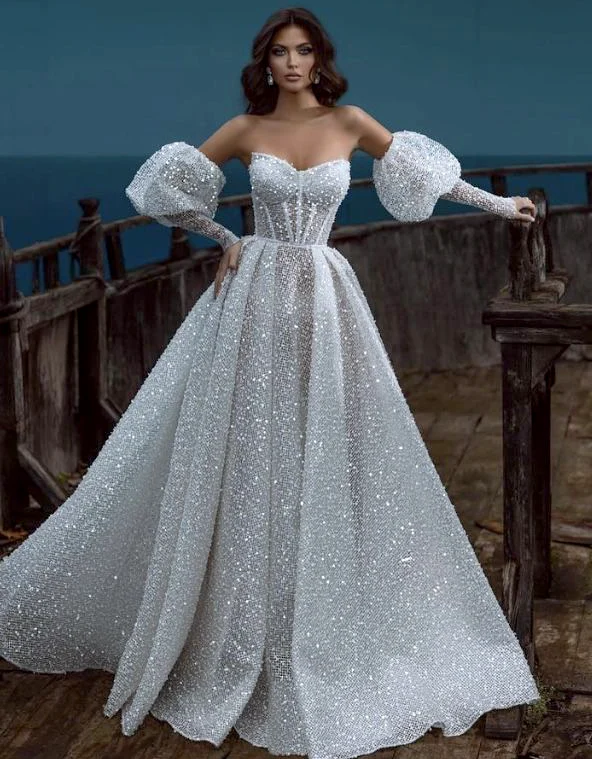
A backless wedding dress hairstyle starts with the back neckline you have already chosen. You do not need to select the whole gown shape again. Instead, choose which parts of its edge should remain visible beside the hair. Four references show low pinned hair, a low ponytail, a smooth bob and long loose waves. Their different lengths and positions provide specific starting points for your hair trial, without making any one arrangement compulsory for every open-back dress.
Begin your backless wedding dress hairstyle from behind
On the worn gown, identify the parts you deliberately want to show: upper straps, a side motif border or the lowest meeting point at the back. With low pinned hair, much of the patterned V-shaped edge remains exposed. A few loose front pieces soften the head area without covering the whole back. If you like this direction, show the stylist where you want the hair to sit rather than bringing only an isolated hairstyle photograph.
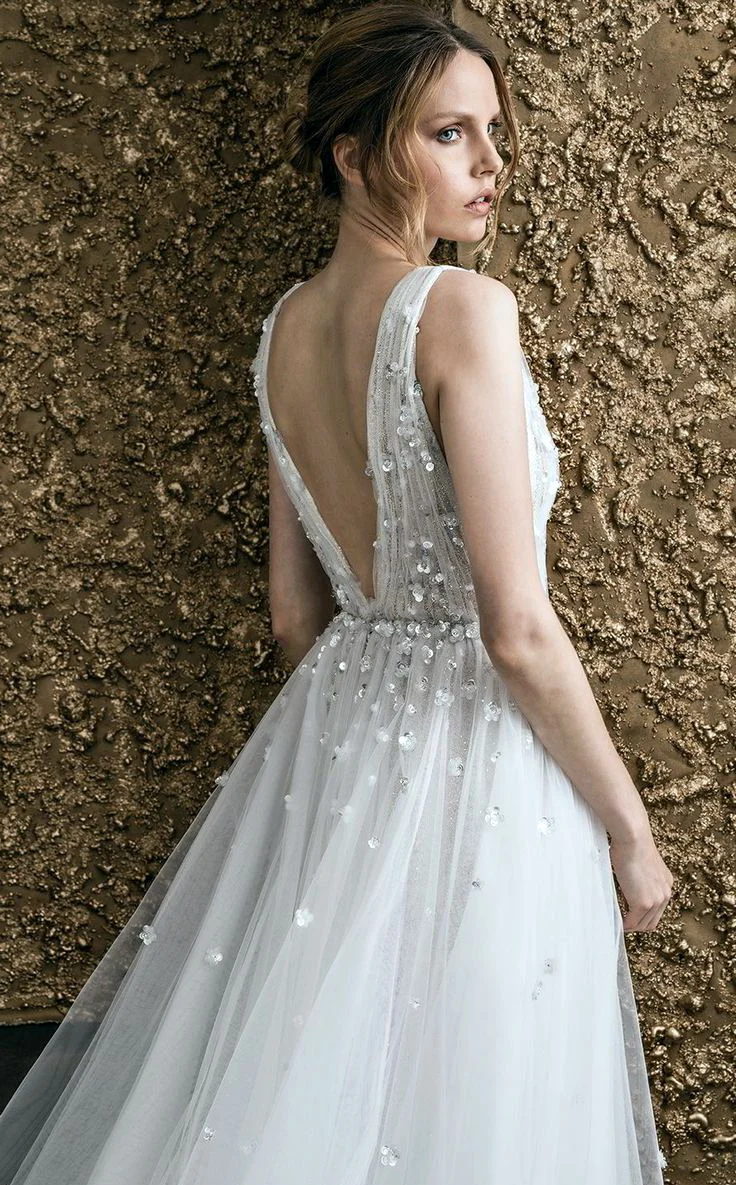
Then choose whether the back edge should stay clearly visible or be partly framed by hair. ghd’s bridal hairstyle tutorials present waves, a ponytail and a low bun as different directions. That does not create a compulsory hairstyle for a particular neckline. Placement on your own gown remains the decision. Prepare the fall of another long layer with the wedding veil styling guide and assess it at the same hair trial.
Compare low pinned hair with a low ponytail
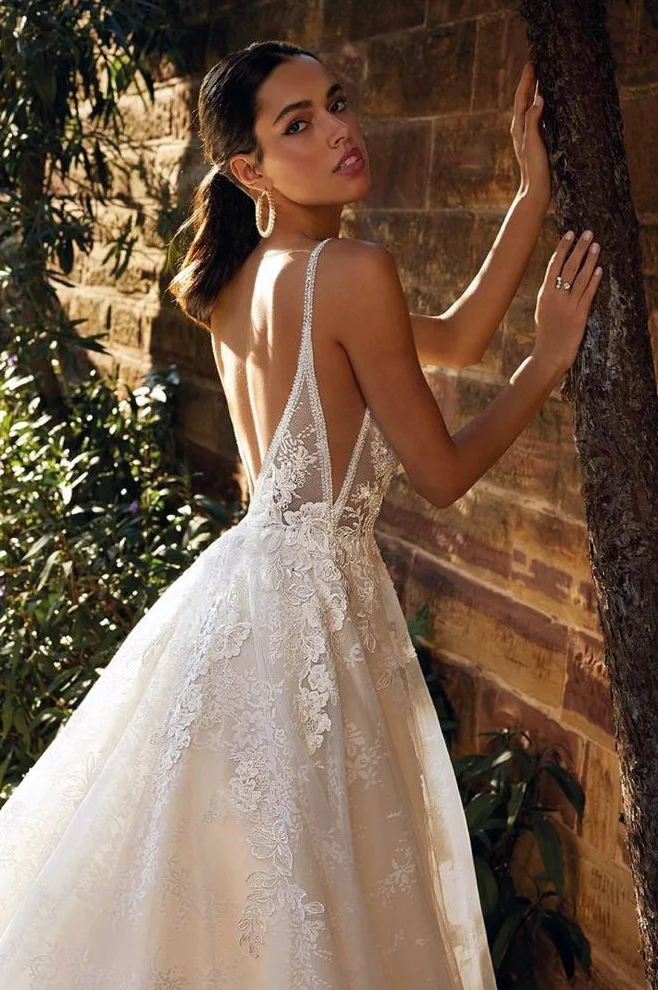
The first reference places low pinned hair above broad finely patterned straps. The ponytail view instead shows finer pale straps, a deep open back and large light-coloured hoop earrings. Compare hair placement without asking for a new dress back at the same time. A ponytail extends a longer line behind the head; pinned hair gathers the lengths into a more contained area. Try both arrangements using the hair you actually have.
At the trial, turn your head to both sides and look down briefly. Ask to see those ordinary positions too. You can assess whether the lengths remain where you want them and whether an earring disappears behind strands. Choose any loose front sections separately. They can change the side view even if the back stays largely visible in both versions. A rear photograph alone does not record that part of the decision.
Treat a bob as its own hair-length comparison
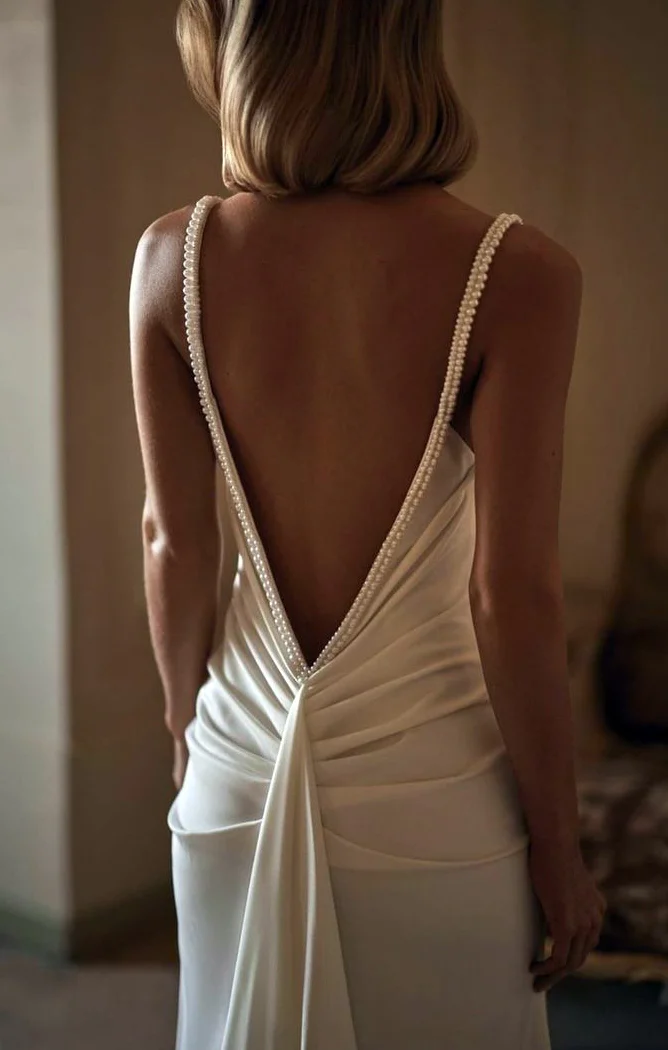
The short smooth hairstyle ends above a very low V-shaped back edge. Two rows of pale rounded decorations follow the upper dress lines. The visible hair length leaves this area clear without requiring an updo. Do not read that as an instruction to cut your hair for the dress. Use it as a comparison if you already wear shorter hair or are considering that hairstyle independently of this outfit.
With your actual length, check where the ends fall in a relaxed stance. A strand carefully placed behind you can move when you turn your head. Ask for more than the final arranged rear view. Add both sides and decide whether the ends should finish above the dress edge, against it or below it. The discussion becomes more specific when you can show the stylist the real gown or reliable photographs of its upper back.
Place loose waves over the back edge deliberately
In the long-wave reference, hair covers part of the upper back. The deep V remains visible below, while floral detail continues farther down the dress. You may prefer that combination precisely because you do not want every edge fully exposed. At your trial, compare the same lengths loose behind you and placed towards one side. Assess their relationship with the gown from a similar distance in each view.
If you are still deciding on the back shape itself, the backless wedding dress guide helps with that earlier choice. Here, hair placement on an already selected model remains the focus. Ask which motif sections you want the waves to frame and which may disappear behind them. Partial coverage then becomes a deliberate design choice rather than something that automatically requires a different dress.
Add earrings and a planned veil at the hair trial
Large hoops beside the low ponytail create a different side view from strands placed in front of the ear. Bring your intended earrings and assess both sides with the gown. Try that addition before introducing more head decoration. The bridal accessories guide helps choose a leading accent. Here, look particularly at the ear areas that remain visible in your actual hairstyle, rather than judging the earring only in a close-up.
If you plan to wear a veil, have its attachment and intended fall demonstrated at the trial. Look at the back with the veil and after its planned removal. Carefully check with the stylist where hair, decoration and veil touch. An exposed edge in a photograph does not establish an unseen attachment. Use the real arrangement to choose which later state you want and what help you would need to make that change.
Connect hair placement with the rest of the day’s outfit
Finally put on your intended outer layer and see where its collar or wrap sits beside the hair lengths. Decide how it will be put on with the person helping you. Compare a normal seated position as well as the rear mirror view. Photographs from the front, both sides and behind record how the hairstyle belongs to the complete outfit. You can also check whether the hair returns to its intended place after the outer layer comes off.
Your backless wedding dress hairstyle is then chosen through placement and desired visibility. Record the preferred version with the real earrings and note outstanding veil or jacket questions. Dress composition and decorative components should come from product information rather than pale surface reflections. A clear agreement about where the hair should sit gives you a more specific result than a general rule that every open back must remain completely uncovered.
Choose a backless wedding dress hairstyle by the edge you want to reveal. Compare hair placement with earrings and a planned veil on the worn dress.
Frequently asked questions
Do I have to wear an updo with an open back?
A backless wedding dress hairstyle does not have to be an updo. Decide whether you want the back edge fully visible or partly covered by hair. Compare those two choices on the same worn dress.
How do I plan loose waves beside back decoration?
Place loose waves in the intended direction during the backless wedding dress hairstyle trial and move your head carefully. With the stylist, check where hair, visible decoration and a planned veil touch.
Should I choose earrings before deciding on the hairstyle?
Bring your intended earrings to the hair trial. Compare exposed ears with strands in front of them; length and visibility belong to the same decision.
Which views help record the finished hairstyle?
A relaxed back view and both sides help record the chosen hair placement against the open-back dress. Add the intended outer layer and the states with and without a veil if you plan to wear one.