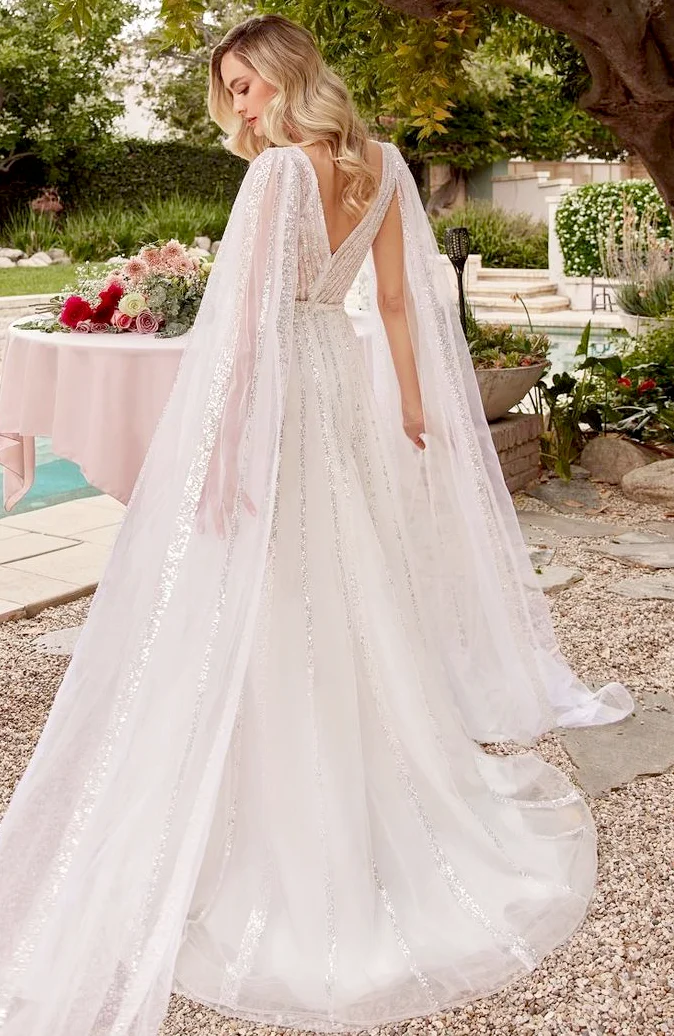
Patterned cape panels fall from both shoulders to the floor. Numerous bright vertical details run over the translucent-looking outer areas. Between them, a deep V dress back is framed by wider patterned shoulder sections. The skirt below also extends behind. The head turns to the side; long panels obscure parts of the arms. This rear view explains several long areas more clearly than a front close-up, but belongs to a different dress from the one-sided example. It does not establish another version of a shared available product.
Use it to compare a bilateral frame with the one-sided idea. On the real model, follow each area from its starting point to the floor and distinguish cape length from the skirt’s own finish. Then test ordinary walking and sitting. If you want only one long side, find that actual construction rather than mentally removing a symmetrical panel. Later removal needs a confirmed arrangement. Any proposed alteration and new border should be explained on the real piece before you settle the complete outfit you intend to wear.