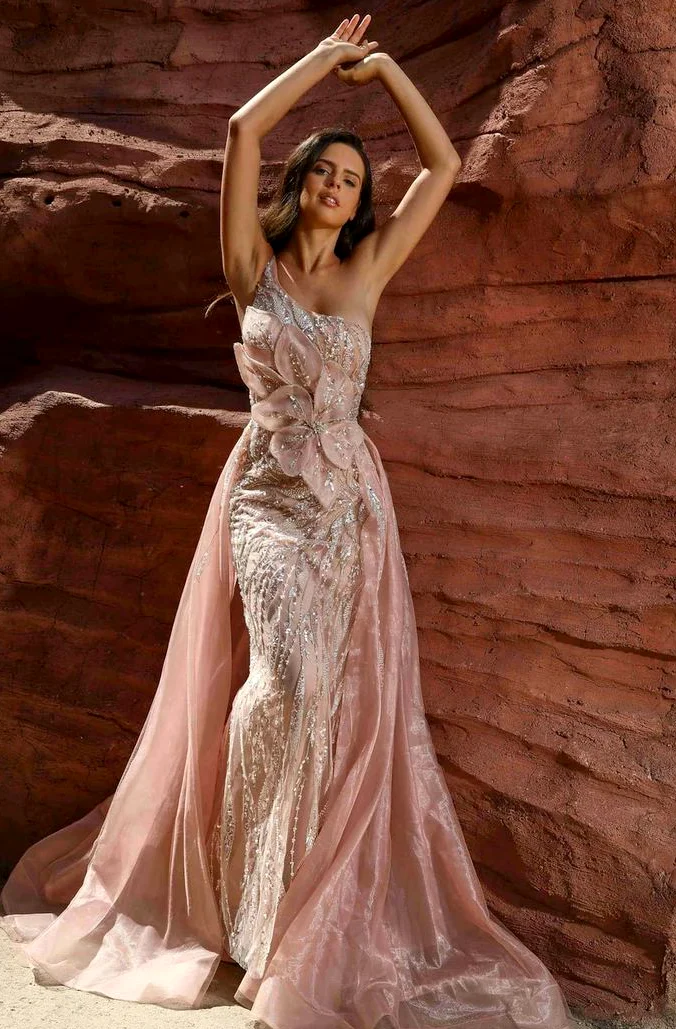
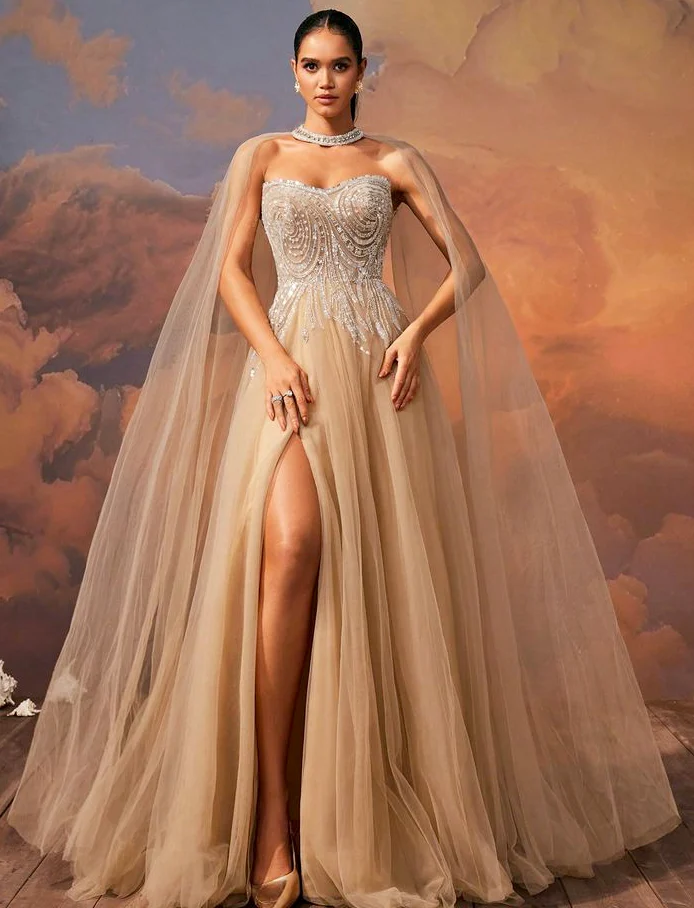
A gala dress should suit the event to which you are actually invited. An evening with a seated meal raises different questions from a mainly standing reception or a planned stage appearance. The four long references offer different ideas: a large flower shape at the hip, a decorated bodice beneath a long fine outer layer, a black dress with a broad folded neckline and an asymmetric silvery-blue option. The photographs do not establish a particular gala occasion. Use their visible forms to plan your own actual sequence.
Begin the gala dress choice with the actual invitation
Read the clothing guidance on the invitation and current event information. Does it name a dress code, theme or explicit exception? Ask the organiser about an unclear phrase before directing the entire search towards one photograph. The venue name alone does not provide a complete answer. Your role matters too: are you a seated guest, going forwards for a presentation or taking part in a programme item? Put that specific task in your selection notes so the fitting can include the movements you actually expect.
Debrett’s distinguishes dinner from dinner-dance in its Black Tie guidance and explains that dresses need not be black. Use that as named orientation rather than approval for every photographed outfit. The actual invitation remains decisive. Our opera evening dress guide also considers checking the specific event. Here you additionally plan how the table, any stage appearance and shared photographs will fit together at your gala, without assuming one event title supplies every clothing requirement.
Select one main emphasis for the complete dress
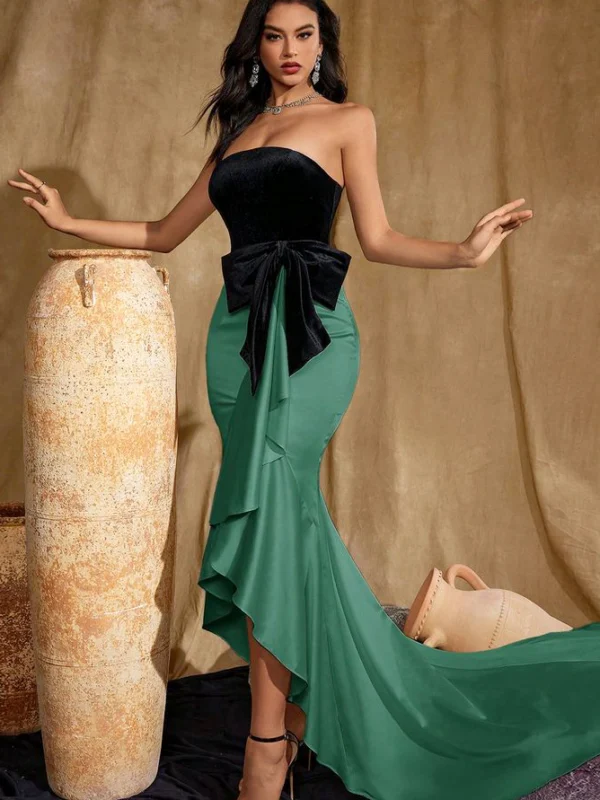
The pink view places a very large projecting flower shape beside the waist. Long fine panels travel to the floor next to it while the dress itself remains more fitted. That differs from the black option, whose broad folded neckline and quieter surface are stronger features. Compare those two approaches first: one large motif or a definite upper shape. You do not have to settle colour, jewellery and complete length simultaneously to identify which feature you would actually like to seek in another garment.
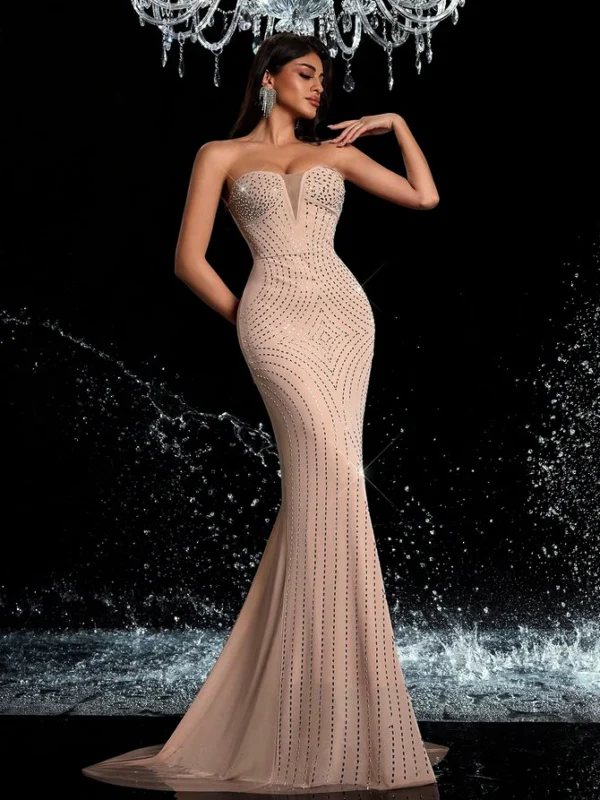
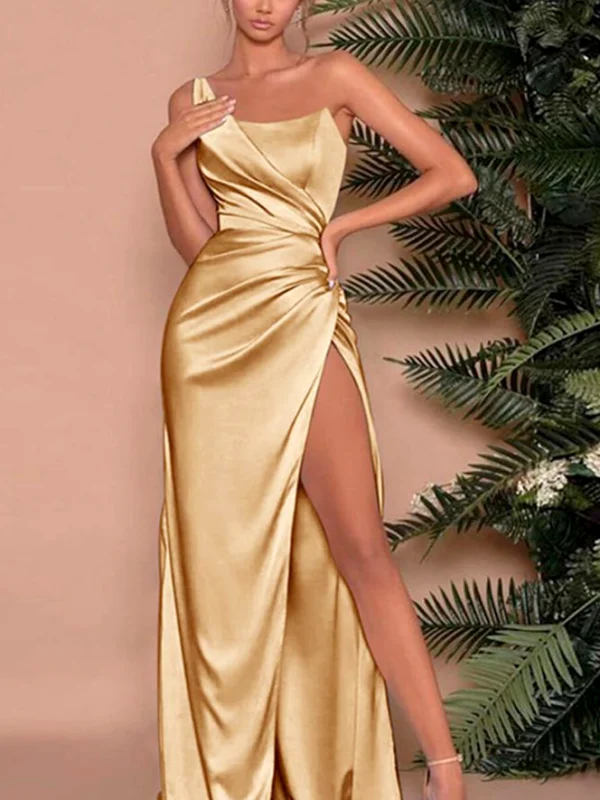
The paler outer layer and silvery-blue asymmetric view supply other distributions. Pale curved rows concentrate on the beige bodice, with a more finely marked fuller skirt beneath. Silvery blue spreads many smaller reflections across the body and emphasises one shoulder through its broad folded edge. Choose which part you want recognisable in an ordinary full-length view. A detail photograph may appeal while you prefer a less dominant distribution for the actual evening. Compare both distances before choosing the whole arrangement through its most enlarged feature.
Test the dinner phase on the actual garment
If a longer meal belongs to your schedule, sit at a table in the real dress. Include sitting down, standing again and the position of your hands rather than testing a chair briefly. With a large side flower, observe where it lies beside the seat. With a long outer layer, establish which section you want arranged behind or beside you. Request the offered model’s intended handling instead of assuming invisible attachments. An appealing photographed shape does not demonstrate how another product can be arranged.
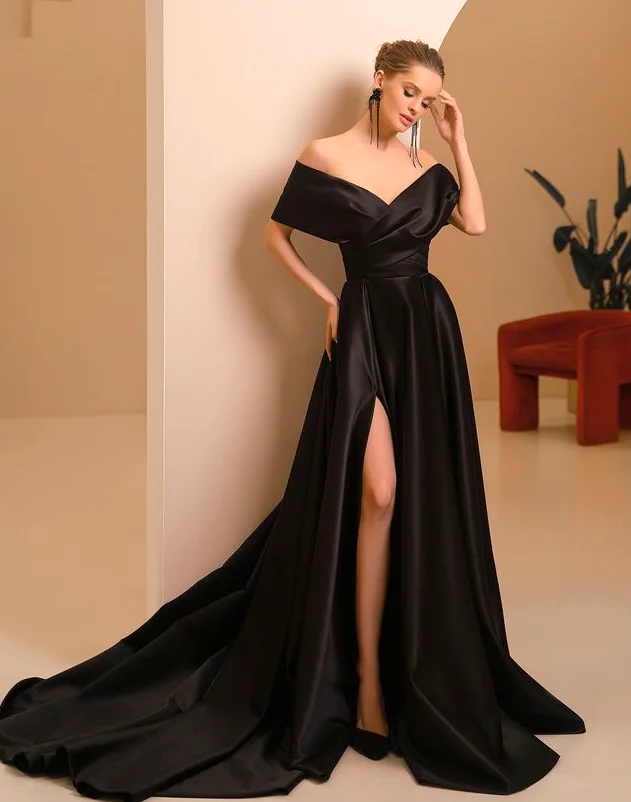
Look at the upper edge again while seated. The broad black fold leaves a different open neckline area from the decorated beige bodice. Choose the coverage you want on the garment worn. You can like a special shape and still ask for a different position or actual alteration. Have feasibility explained and try the result again. The table test is a concrete part of the evening for which you are choosing, rather than a judgement of posture or a demand to remain in one photographic pose throughout dinner.
Include the route to a stage or photograph position
If you expect to walk forwards, ask about the actual access. Are there steps, a narrow passage or a longer route between tables? That information helps choose real skirt length and any side panels. The raised arms in the pink photograph are a pose rather than instructions for an appearance. Rehearse the movements you genuinely need: ordinary walking, a turn and holding any intended object. A similar-sized trial item can help when a microphone or presentation object belongs to your plan, without assigning that role to the photographed wearer.
A gala dress with longer fabric on the floor needs checking with your planned shoes. Have the handling demonstrated if a section needs lifting or rearranging. Do not assume a hidden loop or detachable panel. If you will stand beside someone for a photograph, try that proximity and arm position too. The chosen shape is then considered within a useful part of your actual programme rather than only alone in an open area. Normal steps add information that a carefully spread skirt cannot supply by itself.
Coordinate neckline, earrings and bag together
The black view shows long dark earrings beside a broad folded open neckline. The beige dress instead combines a short pale necklace with its decorated bodice. Use these as alternatives rather than collecting every jewellery item. Begin with the garment’s neckline, add earrings and introduce a possible necklace afterwards. Choose the free space you want visible at each stage. The actual effect on the real dress helps more than a general rule about the permitted amount of jewellery, especially when your intended hairstyle is included too.
A gala dress with a larger side detail also needs the bag at the fitting. Hold it where you intend during the reception or photographs. Check whether it hides the motif or adds a line you want. Our jewellery with a statement dress guide explores deliberate use of open areas. You do not need another accent everywhere. A simpler bag can belong to a strongly designed complete outfit when that is the quieter area you want, assessed through the real pieces in their intended positions.
Choose the outer layer and arrival as part of the outfit
The long fine outer layer in the beige view changes the side width considerably. It does not clearly show its attachment or establish that it can be removed. Check that on the actual product if you plan different arrival and indoor arrangements. Compare both states worn. Another jacket or coat belongs over the intended dress as well, particularly where the bodice has broad folds, a higher shoulder edge or larger motifs. Do not assign warmth to the pictured fine layer simply through its coverage.
Establish where outer pieces can be left after arrival. Observe the neckline and sleeves remaining as you take them off. The silvery-blue option has one full fine translucent-looking sleeve beside a differently shaped opposite shoulder, requiring a different trial from two bare arms. Retain the actual inner garment when comparing the outer solution. Neither a street nor indoor photograph establishes the properties of an additional unshown layer. Separate arrival and indoor pictures can help compare the real outfit in both intended stages of your evening.
Finish with two real candidates rather than four wish pictures
Keep two actual gala dresses for the last round and assess them with the same intended shoes and bag where possible. Record one visible emphasis and one unresolved practical question for each. Perhaps you particularly like the definite black neckline while the other dress’s large flower still needs a table trial. That concrete comparison explains what you are selecting and which answer you still require before ordering. The option with more decoration does not automatically become the stronger choice for your particular evening.
Finally, secure exact model information, included pieces, care instructions and confirmed alterations. Ask for the real delivery schedule rather than assuming immediate availability from a photograph. The finished gala dress should match the clarified invitation and the phases of the evening you have tested. You do not need to hold somebody else’s pose permanently. Your decision can rest on the shape you want visible and specific handling you tried with the actual outfit, with the final check comparing the delivered garment against those practical notes.
Choose your gala dress through the actual invitation and your sequence. Compare one large accent with definite folds or distributed reflections on the complete tested outfit.
Frequently asked questions
Does a gala dress have to be black for Black Tie?
Debrett’s explains that Black Tie dresses need not be black. Check the actual event requirements; colour alone does not establish suitable formality.
How can I test a large side motif for dinner?
Sit at a table in the actual dress. Check the motif beside the chair and the position of hands and bag before choosing the model.
What should I rehearse for a planned walk to a stage?
Clarify the actual access, including steps or narrow routes. Try ordinary steps, turning and required hand movements with the intended shoes.
Can I remove the long outer layer indoors?
Have the actual connection and intended handling shown on the offered model. Compare a change only when it is genuinely possible and you want it.