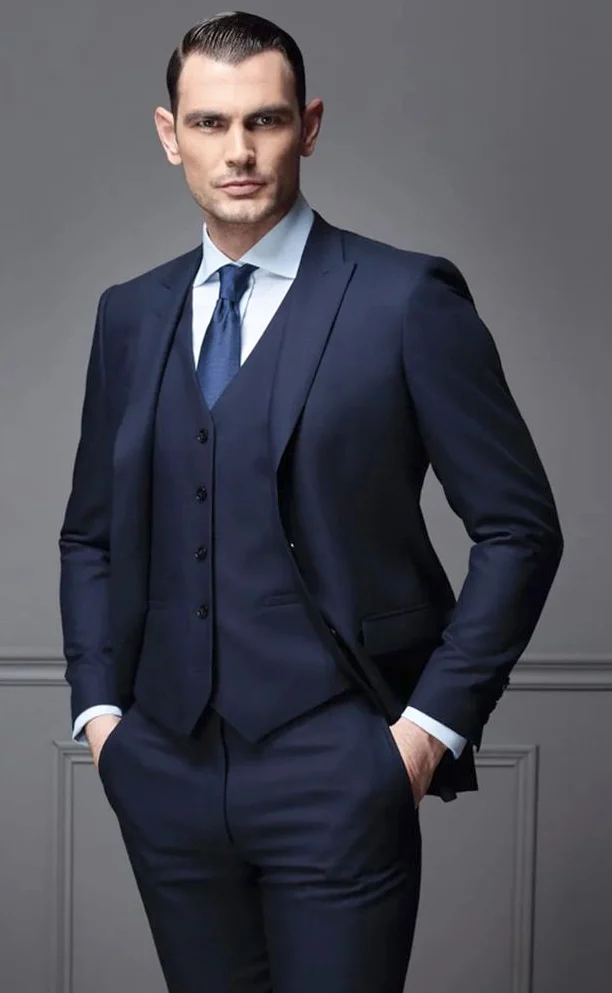
A navy three-piece connects jacket, visible waistcoat and trousers with a pale blue shirt here. A blue tie stays close to the darker colour area. Narrower lapels frame the centre while pale shirt cuffs appear at the wrists. Both hands are in the trouser pockets. The upper trousers are visible, with complete hems and shoes outside the picture. This supplies a quieter colour comparison to the striped jacket without confirming shared fibre or showing the interior. The dark continuous appearance therefore does not establish a particular workmanship classification for the actual product.
If you prefer this quieter arrangement, ask about included pieces and their respective material information on the offered model. Have the jacket opened and compare specific inside areas with the other candidate instead of making quality depend on the smooth dark appearance. The waistcoat belongs as a separate piece in the description and agreed alterations. Add a stance without hands in pockets at the fitting. You can assess the preferred front while checking whether description, supplied garments and demonstrated execution genuinely belong together before an order involving alterations is completed.