A wedding dress with a plain skirt can be interesting precisely because of its contrast: a clearly embellished bodice above a broad, largely unpatterned lower area. The four dresses show that transition in different ways. Dense motifs visibly end at the waist in one, while individual forms extend onto the hips or upper skirt in others. This is a decision about decoration distribution. You may still prefer a full skirt, a pronounced neckline or a patterned veil. Choose the parts you want to show together and assess how they work while worn.
Choose motif endings on a wedding dress with a plain skirt
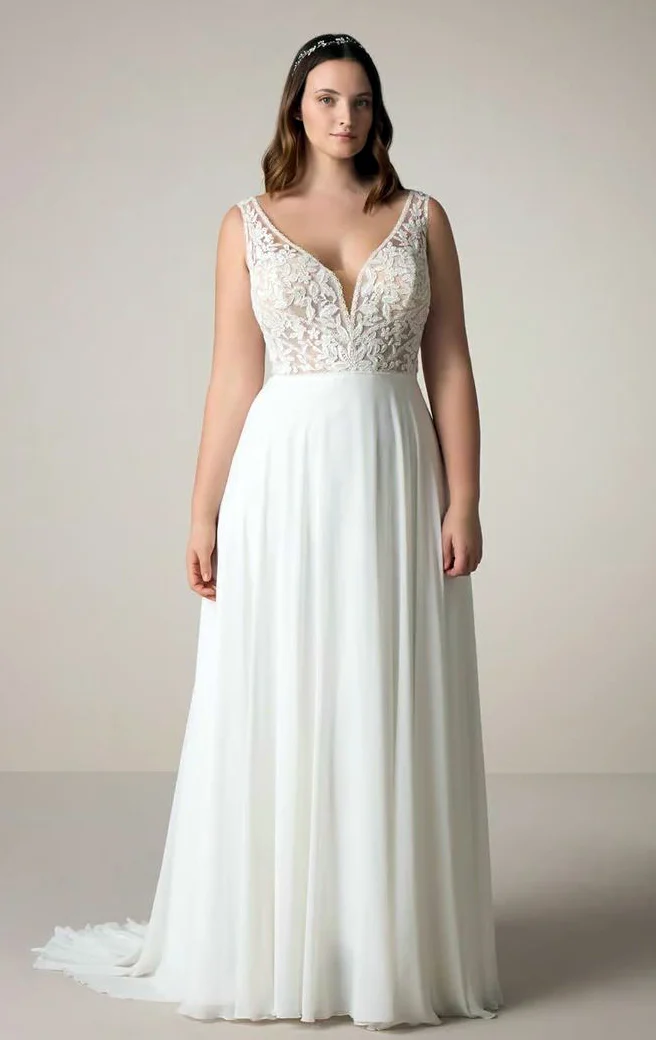
The view with broader straps and a V neckline creates a clear boundary between its floral-looking bodice and long quieter skirt. Fine folds begin beneath the waist while the dense upper pattern largely stops there. Compare that defined change with the shop-setting dress, whose fine decorated straps create another upper arrangement. Begin by looking only from the chest to the upper thigh so that the motif ending remains the main question.
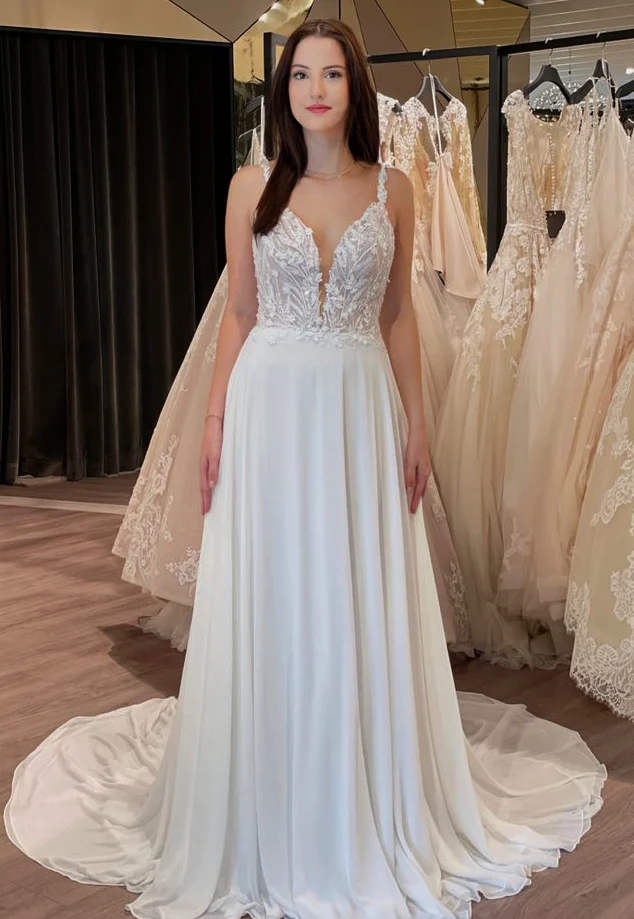
The fuller dress with a veil lets individual floral details extend from the waist across the hips. This spreads the transition more gradually. At your own fitting, decide how far the motifs should continue. You might like a few forms on the upper skirt while retaining a large plain area below. Request a complete front view to see that distribution at a useful scale rather than judging it from a close crop alone.
Check the waist transition while standing and seated
The join between bodice and skirt can appear as a defined line or be overlapped by the pattern. Choose the visible transition you prefer first. Then try the actual dress with the intended lower pieces. Stand with your hands away from the waist. Different hand positions in the references can distract from how the join lies without a deliberate pose, so include a relaxed view in your own comparison.
Sit briefly and stand again. Check whether you can comfortably arrange the transition afterwards and whether the bodice feels as you want to wear it. If considering an alteration, identify the specific location rather than asking only for a tighter waist. Have the available changes at that join explained, including how they would affect the motifs extending onto the upper skirt. Decoration placement and an alteration request need to be considered together.
Select plainness and skirt fullness separately
A largely unpatterned skirt is not one fixed silhouette. The references range from long, relatively vertical folds to a much broader lower outline. Liking the plain skirt area does not require adopting the same lateral width. Compare two complete views with similar upper decoration where possible, keeping the difference in lower volume clear. Request a side view as well to understand how that width occupies space beside the body.
The full-skirt wedding dress guide develops the decision about lateral space. For this comparison, keep the amount of decoration reasonably consistent. You can then choose between a plainer narrow line and a plainer fuller line rather than exchanging pattern and volume together every time. Test both with a few steps and a chair suited to the intended setting before settling on the outline.
Coordinate lower layers with the actual model
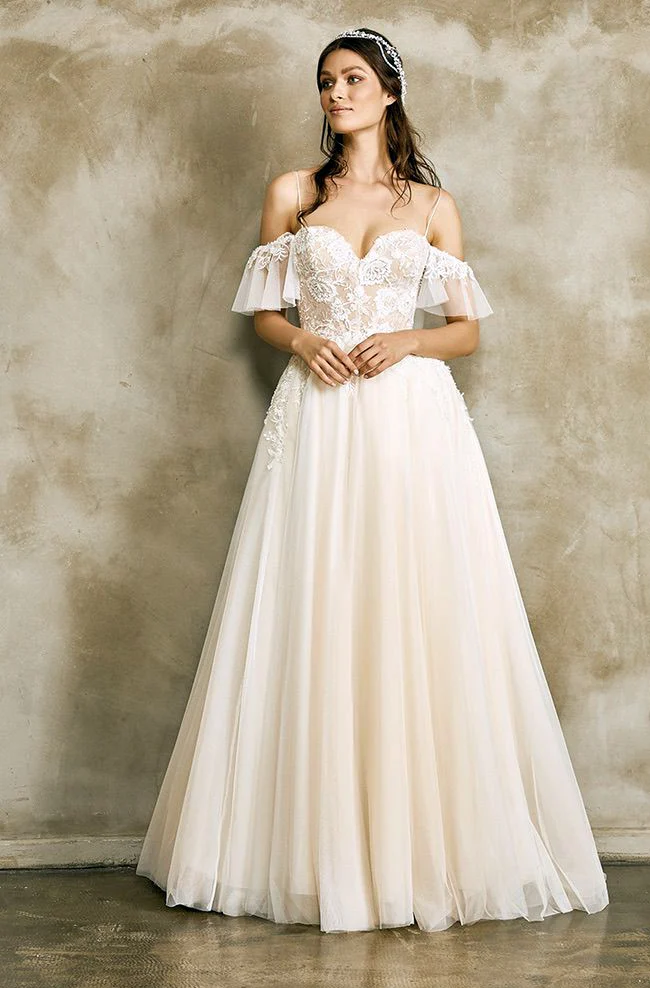
The dress with fine straps and short dropped shoulder sections shows long pale folds in its skirt. The available garment needs to establish which layers produce that effect. Ask which pieces are actually supplied and try them together. If additional petticoats are proposed, compare each complete arrangement. Another lower layer can change the exterior shape you have just selected, so assess the whole dress rather than the added item alone.
Check your preferred coverage with the intended underwear during the fitting too. Look from the front and side in comparable light. If you want to change the lower layers, have the consequences explained on the actual dress. Its plain outer area should still fall as you want after the alteration. Record which pieces were worn at the last fitting so the next comparison begins with the same underlying arrangement.
Assess the veil beside the bodice decoration
A veil is visible alongside the dress in two references. It introduces another pale area and, in places, another pattern. Compare a quieter and a more decorated veil on the same dress if both interest you. Look at the bodice first, then the plain skirt area. Decide which motifs should remain prominent within the complete outfit, including sections of veil that lie in front and extend behind.
A wedding dress with a plain skirt can accommodate a decorated veil if you like that combination. You can also retain a broad uninterrupted-looking area. For a more restrained whole garment, the simple wedding dress guide develops that broader choice. The specific starting point here remains an embellished upper section against a quieter skirt. Add the intended bouquet at a comparable height before settling the waist transition.
Record the hem and final combination together
Choose length with the intended shoes and every lower piece you will actually wear. Check which parts reach the floor from the front, sides and rear. A skirt spread behind the wearer in a photograph does not establish its position while walking. Ask to see the real lower shape without deliberately spreading it and try the route to a chair. Clarify any planned train fastening or change on the available dress.
The GINETEX care symbols help you read the instructions. Ask for the guidance covering the entire dress where decorated and plainer sections differ. Photograph the selected combination in the same three views. Your wedding dress with a plain skirt is then described through specific decisions: motif ending, waist transition, fullness, layers and veil belong to the same complete selection. Record the shoes too, keeping later length comparisons consistent.
Choose where decoration ends on a wedding dress with a plain skirt. Compare a defined waist transition with motifs extending onto the upper hips.
Frequently asked questions
Does a plain skirt have to be narrow?
No. A largely unpatterned skirt can fall more narrowly or have pronounced fullness. Choose decoration distribution and lateral width as separate properties.
Should the decoration stop at the waist?
Compare a defined ending with motifs extending a little onto the upper skirt. Decide which transition you prefer in a complete front view.
Which veil should I compare with it?
Try a quieter and a more patterned veil with the same dress. Assess the bodice motifs and the veil area visible in front of or behind the skirt.
When should I settle the skirt length?
At the fitting with your intended shoes and actual lower layers. Assess front, side and rear views, walking and sitting before agreeing to a definite alteration.



Thoughts on this article