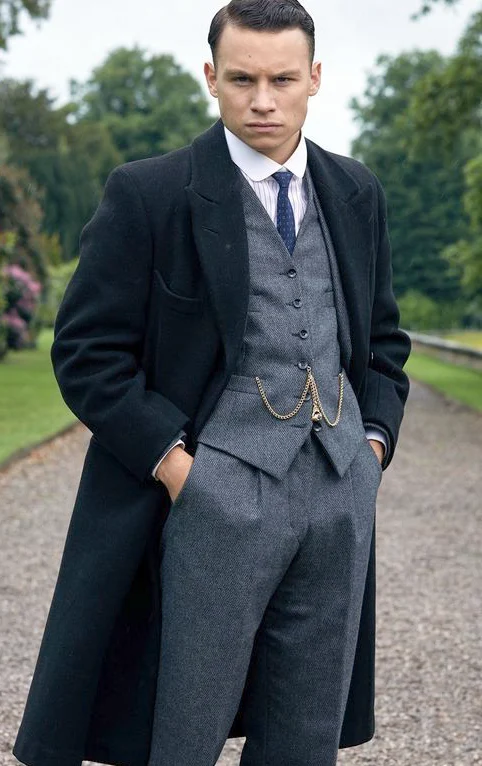
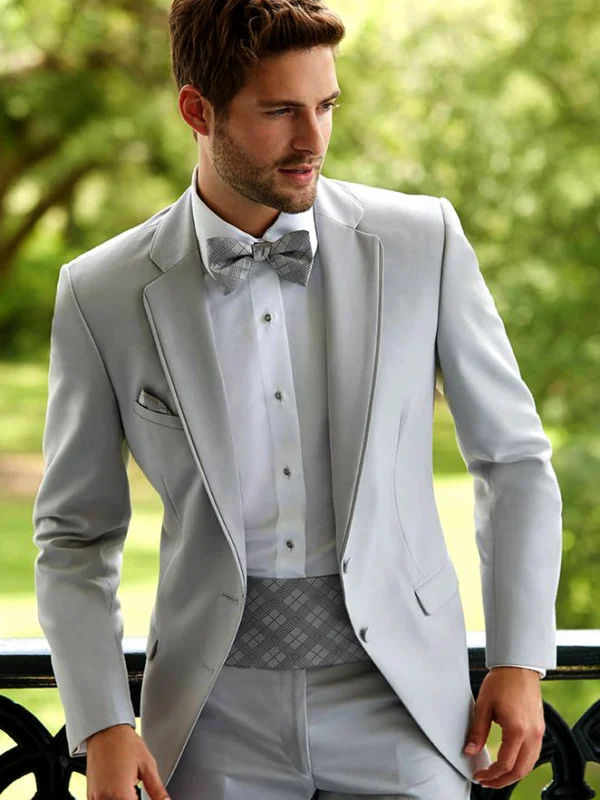
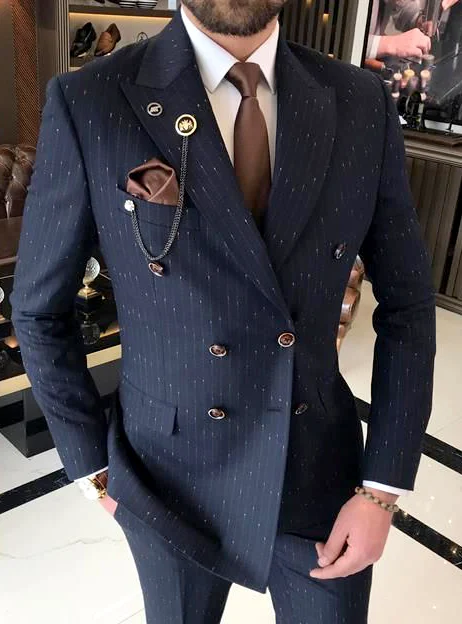
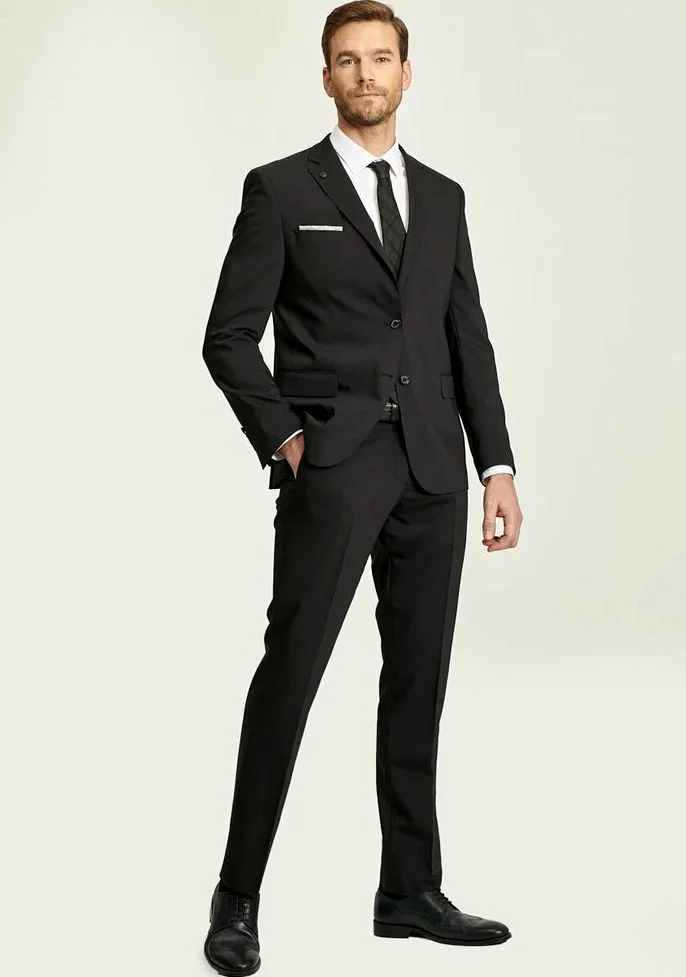
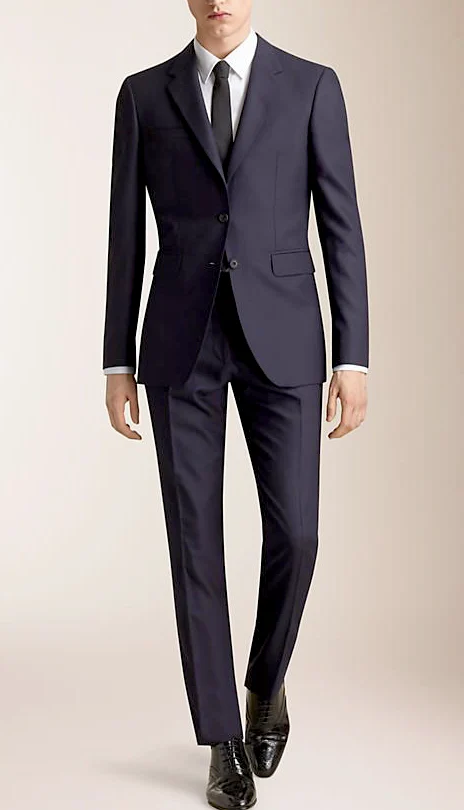
Suit trouser length determines where the hem meets the shoe and how much ankle or sock remains visible. The five examples offer different starting points: small folds above black lace-ups, quieter finishes, shorter navy trousers and a light grey suit with visible ankles above loafer-style shoes. An olive jacket with dark trousers adds a separates combination. Choose a preferred lower finish from these references. Establish whether it works on your trousers with their actual waist position, your own shoes and a relaxed stance rather than treating a single model photograph as your measurement.
Begin suit trouser length with the waist position
Wear the trousers as you intend to use them. Add the planned belt or other actual waist support. Set the waistband before looking at the hem and walk a few steps. Check whether it remains in your chosen position afterwards. A waistband pulled higher only for a photograph does not give a reliable basis for the length you want to wear throughout the day.
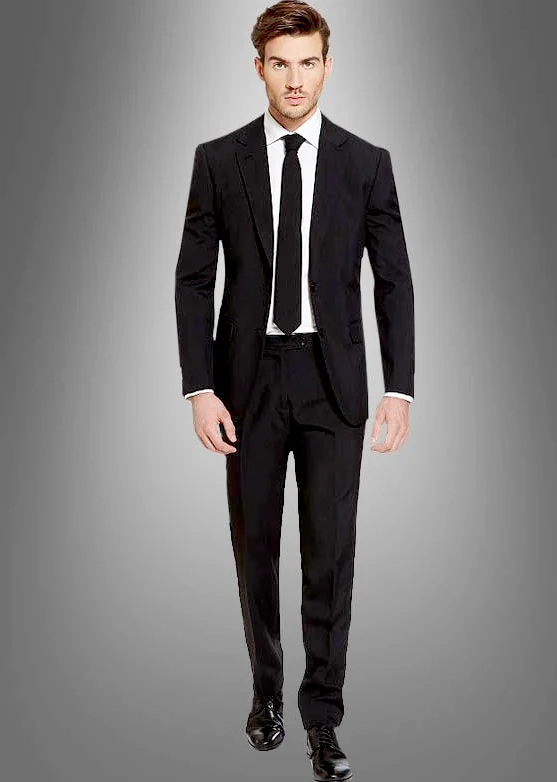
Compare two lengths after establishing this. A belt is visible beneath the open black jacket, while more of the upper trousers sits beneath a closed jacket in other references. Temporarily move that upper coverage aside at your fitting to show the waist position. Then restore the complete outfit. This clarifies which change below belongs to the trousers and which impression has resulted from wearing the waistband at another height.
Choose the break and visible ankle deliberately
Proper Cloth defines trouser break through the fold where fabric rests on the shoe, with length and lower width working together. The black walking view shows several small folds near the shoes. The navy reference instead shows a gap above the shoe. Assess those visible differences without translating them into an exact measurement or a definite fit diagnosis from the image alone.
Compare some hem contact with a shorter option. View both from normal distance with the shoes visible. Decide whether you prefer a more exposed ankle or a quieter transition into the shoe. Include actual dress requirements where they apply. A personal preference for a shorter finish can be demonstrated on the worn garment rather than described only through a general style name, making the alteration request more precise.
Have length and lower width assessed together
The leg opening affects how the lower outline appears beside the shoe. When folds bother you, inspect more than length. Show the worn trousers from the front and side and ask for both properties to be assessed together. Have a proposed shortening pinned first. You can then see the changed finish before relying on a permanent alteration, using the same shoes to make the source of the difference clear.
Sit down and stand again next. Observe whether you want to rearrange the trousers by hand afterwards or like their position as they are. Describe that actual behaviour at the appointment. A photograph with one leg forward can show a different lower line from a relaxed stance. Your decision should include ordinary use rather than only the neatest front fold or a deliberately extended pose.
Keep the intended shoe in the comparison
Black lace-ups and the loafer-style shoes in the light grey combination have different upper shapes. Proper Cloth notes the lower rear edge of loafers in its comparison based on lace-up dress shoes. If switching between these types, try both with the same trousers. Decide whether you want a finish that works with both or will mainly wear the trousers with one pair.
The shoes with a suit guide helps select the actual pair. Keep that choice fixed for the length fitting afterwards. Wear the same socks and inspect what appears between hem and shoe standing and seated. Add another shoe as a deliberate second comparison. Otherwise length, shoe height and visible colour change together, making it harder to evaluate the finish you are trying to select.
Add front, side and rear views during movement
The reference stances differ. One leg is forward with the black suit, the light grey combination has slightly offset feet, and the olive jacket appears in a walking pose. They are useful clothing views rather than identical measuring conditions. For your selection, stand with both feet relaxed on the floor and request front, side and rear photographs from similar heights, keeping the whole shoe visible in each.
Add several normal steps and the route to a chair. Assess which hem areas you want visible while seated and whether you still like the result after standing up. If choosing jacket and trousers as a whole too, the modern men’s suits guide develops that ensemble comparison. Suit trouser length remains its own decision within the outfit, tested with the other pieces rather than inferred from the jacket style.
Agree on alteration, reserve and a final fitting
Bring the intended shoes to the alteration appointment and show the preferred waist position. Ask about the actual possibilities for these trousers, including any fabric reserve. Have both legs checked and the proposed new length pinned temporarily. Assess the result from every side and during movement. Ask for the scope of the change rather than transferring a fixed shortening amount from another garment.
Keep the care information too; the GINETEX care symbols help you read it. Arrange the final fitting with the same shoes and socks. Record which pair and waist position the trousers were adjusted for. The preferred hem is then described practically: visible transition, movement test and specific alteration agree with each other, while another pair of trousers may still need another length.
Choose suit trouser length with the actual waist position and intended shoes. Assess hem contact, movement and a temporarily pinned alteration together.
Frequently asked questions
Which shoes should I take to a length fitting?
Bring the pair you intend to wear with the trousers. Compare other shoes at the same waist position before agreeing to a permanent shortening.
Must the trousers completely cover the ankle?
That depends on your preferred finish and the actual dress requirements. Compare an exposed ankle with a hem meeting the shoe; these pictures do not supply one universal measurement.
Should I shorten trousers immediately if they fold above the shoe?
Have waist position, length and hem width assessed together first. Request a temporarily pinned version so you can compare standing and moving before a permanent alteration.
How should I prepare for an alteration appointment?
Bring the shoes and intended belt or other waist support. Show front, side and rear views, ask about the actual fabric reserve and arrange another fitting to check the result.