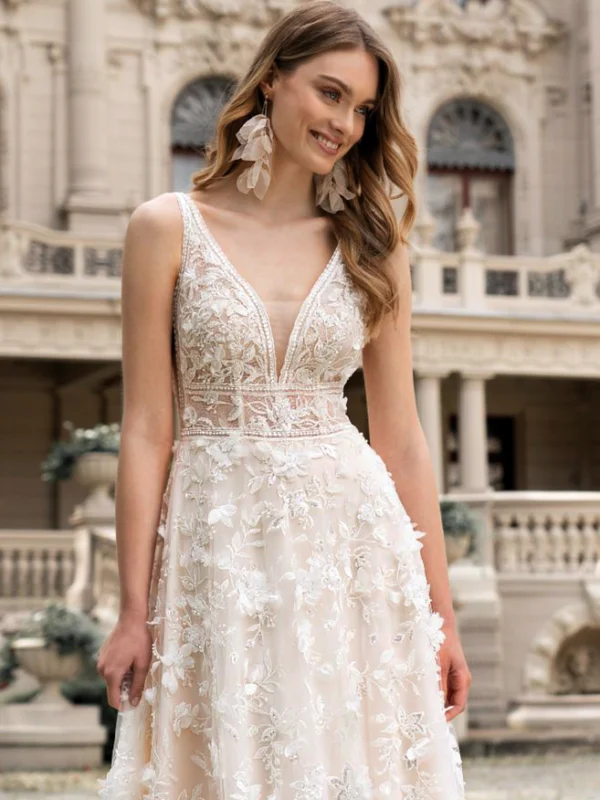
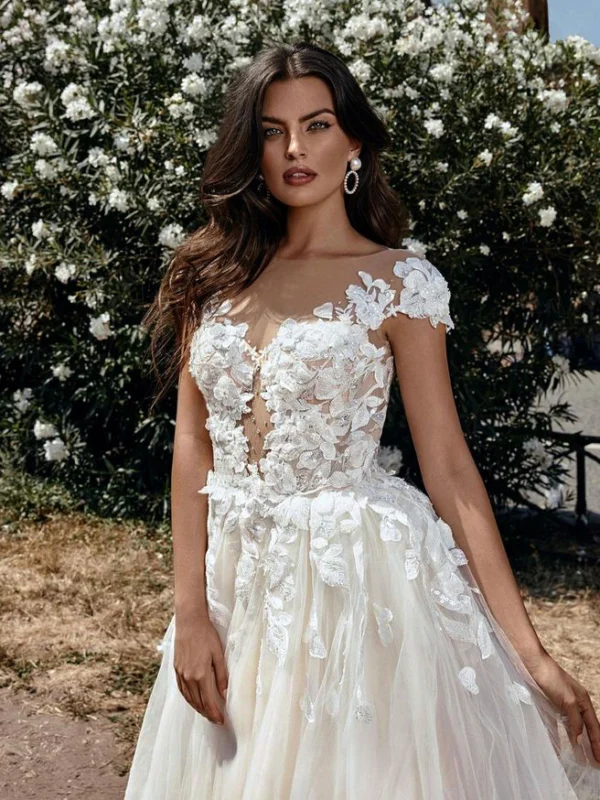
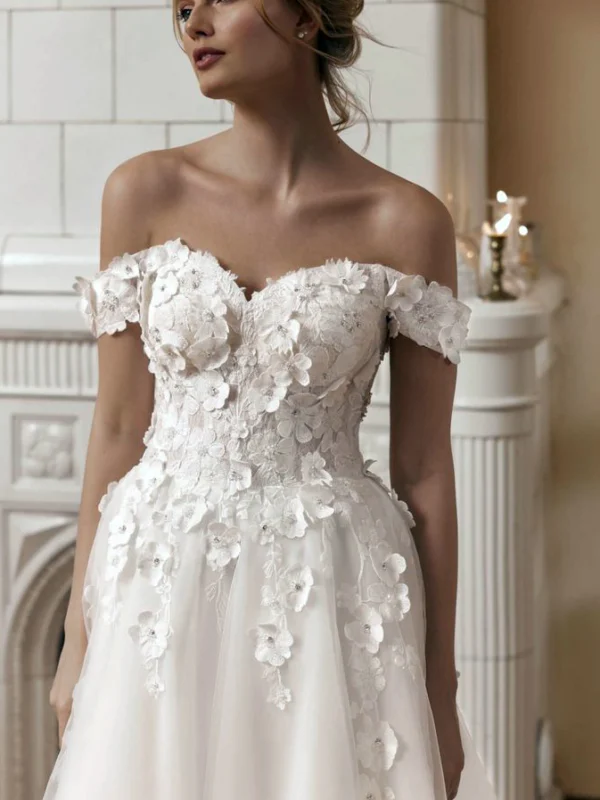
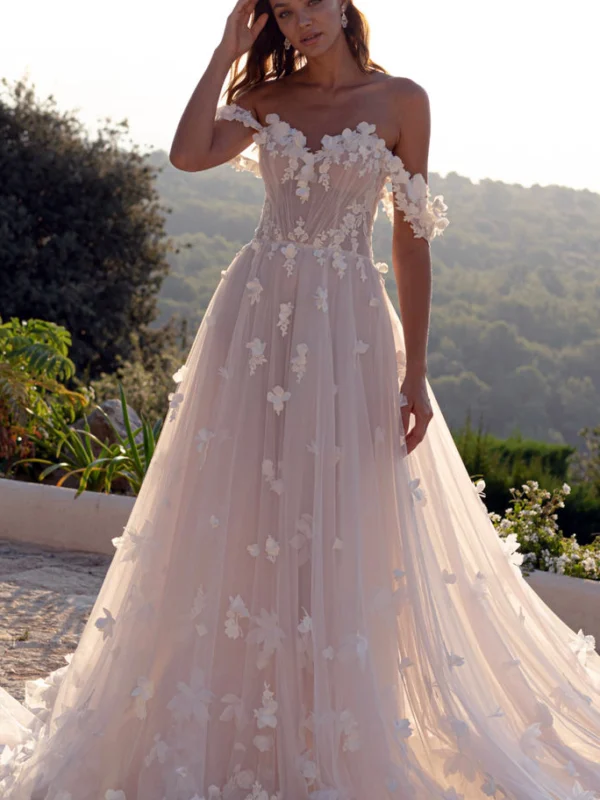
Earrings with a floral dress are compared here through four sizes and shapes. The leading image combines large pale hanging flowers with a floral V bodice. Another close-up has an oval drop below a round stud beside a higher floral neckline. The off-shoulder reference with larger flower shapes uses a small pale stud, while the long blush dress shows longer earrings. Compare how clearly the jewellery remains visible beside each fabric edge first. An earring beside a flowered dress does not necessarily have a recognisable flower shape itself.
Choose two available pairs for your own trial: the larger flower you want and a smaller alternative. Wear them in turn with the same dress and hairstyle. View the arrangement from the front and slightly to the side before adding a necklace or hair ornament. These references explain a scale choice, rather than the pictured pieces’ weight, material or fastening. Request those details for the actual pair. A complete fitting should also include your real dress length, an intended jacket and the wearing time you are planning.
Guide to comparing these images
Follow flower and drop outlines on their own first
The first picture’s large hanging forms have clear flower-like outlines. The oval pendant beneath a round stud instead draws a closed, longer contour. Compare ear crops at similar size before reading the fabric as a shared flower theme. This names the preferred jewellery shape more precisely than simply suitable for a floral dress.
Distinguish where the large flowers sit
Beside the small stud, larger petal-like shapes appear at the open dress neckline and waist. The leading photograph adds another large flower area at the ear. Record whether the main motif should remain on the garment or repeat towards the face. That distribution is separate from counting visible jewellery pieces.
Keep a wider upper crop beside each ear detail. Enlarged ear photographs can make small studs appear prominent; the wider view shows their share beside neck edge and shoulder. If your camera zooms in automatically, add a photograph from the same distance as the alternative before comparing their apparent scale.