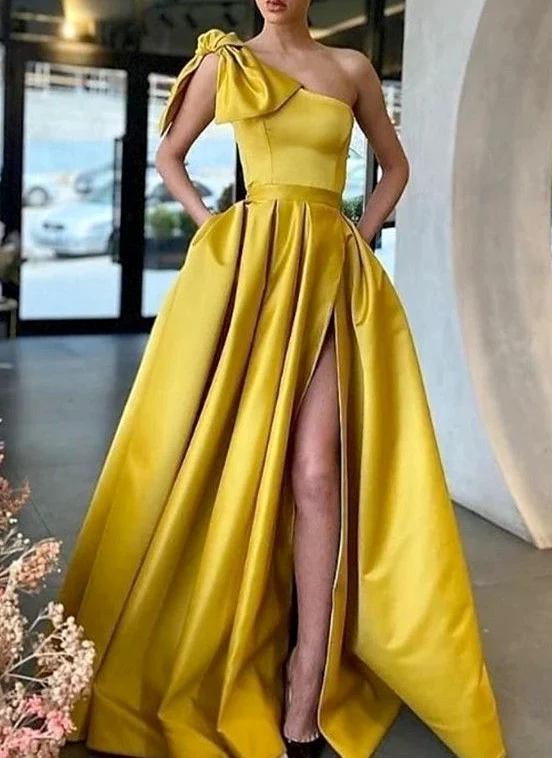
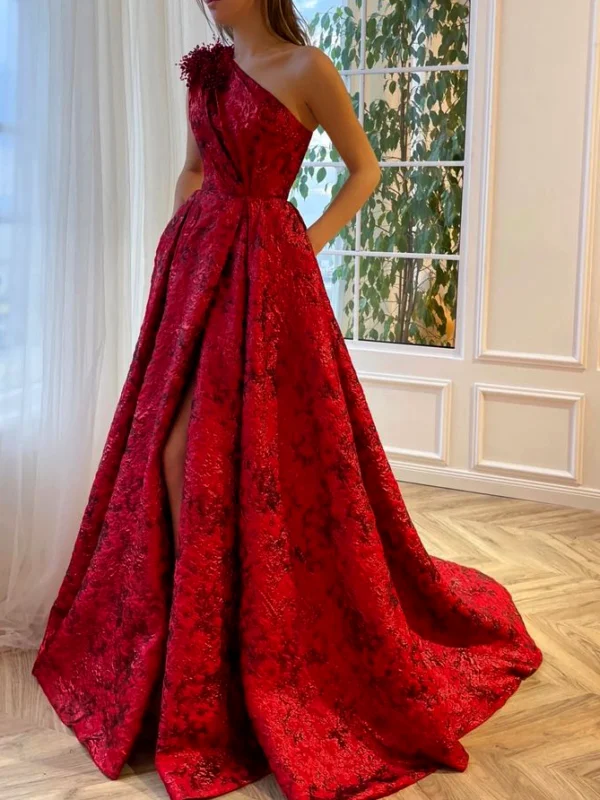
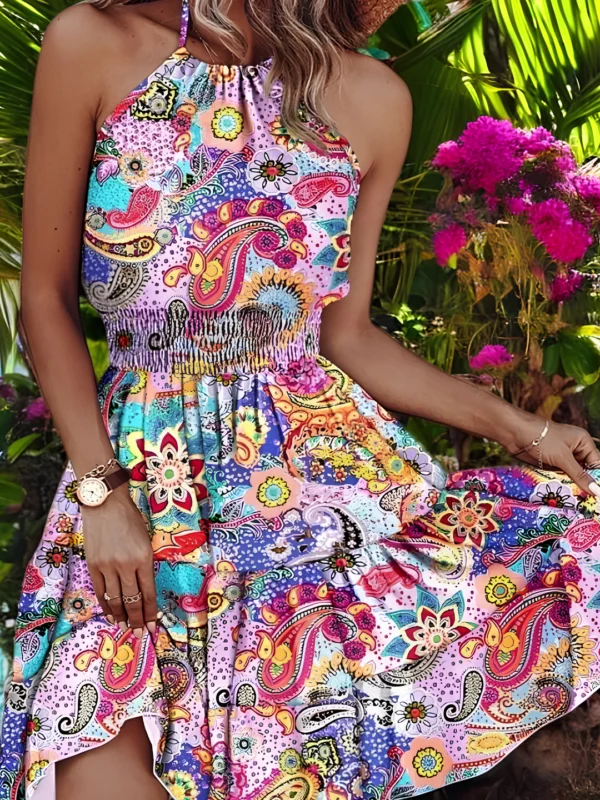
Yellow and red party dresses do not represent a single compulsory party rule in this selection. The yellow dress combines a broad shoulder tie with a quieter bodice, wide folded skirt and front opening. The red view uses another asymmetric frame and a more densely marked outer surface. Compare the lead colour first, then surface and skirt shape. Liking yellow does not automatically mean preferring that exact tie or lower width. A third view adds a multicoloured short patterned dress with a higher neckline and gathered middle.
Look at corresponding real candidates with shoes and a bag you already own. Change only the bag first. Decide whether the main colour should continue quietly or receive a stronger companion. Add jewellery after the upper edge and shoulder detail are clear.
Test the lower shape while walking and sitting without spreading the skirt for a photograph. The images do not establish fibre or the dress code of your event. Use the invitation and actual product information for those questions. The earlier archive year is not trend evidence either. Your own comparison of hue, pattern and usable shape makes a more specific basis for the complete occasion outfit.
Guide to comparing these images
Set the shoulder accents beside each other
Yellow concentrates a large tied shape at one shoulder above a quieter central area. Red uses an asymmetric upper frame beside denser drawing. Compare how much attention comes from an added shoulder shape and how much comes from the surrounding surface. This distinguishes two preferences that a strong lead colour can easily hide.
The multicoloured short dress adds a higher neck boundary and a gathered middle. Its seated side pose is not directly equivalent to the full long views. Use it for colour distribution first, then request a clear standing view of any similar real candidate.
Check the same accessory against each surface
Choose one actual bag and keep its size and carrying position unchanged while trying two candidates. Compare whether the bag forms a separate colour area or sits within an existing patterned region. Then repeat with the bag set down. Record which part of the dress becomes more noticeable, rather than making an accessory decision from an isolated product picture.