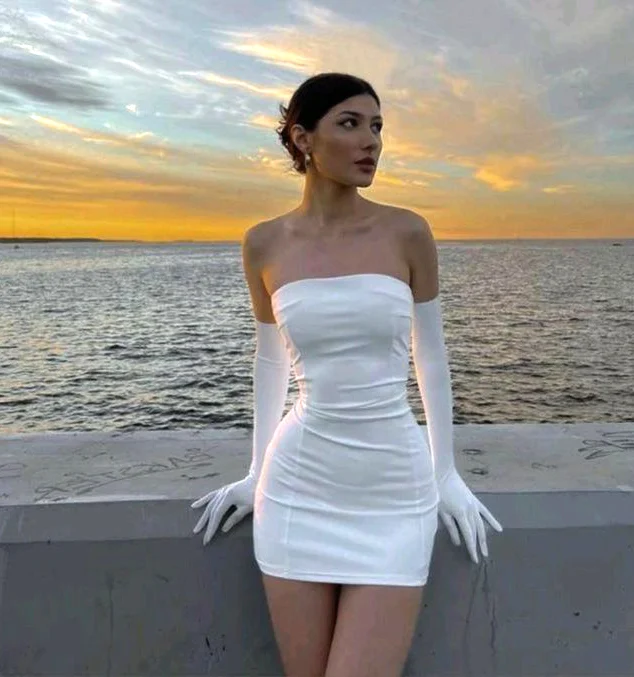
An ornamental wedding dress starts with a straightforward decision: should its pattern lead the whole outfit or define one particular area? This selection pairs a long white dress with a densely drawn high bodice and a wide, quieter skirt with a short white strapless shape and long gloves. The comparison makes the role of decoration easier to see. It does not establish a particular culture, tradition or making technique for either garment. Visible design, your intended use and verifiable product information remain three separate questions. Keeping them separate gives your fitting a clearer purpose.
Ornamental wedding dress choices begin with pattern placement
In the long example, pale geometric lines spread from the neck area across the chest. A larger, less densely marked surface begins below the bodice. That division directs attention upwards first. Decide whether you want this emphasis before comparing individual motifs. A view from several steps away can help more than another close photograph of the details. Place a real candidate beside a quieter alternative rather than choosing only between nearly identical patterns. You can then distinguish your interest in the decoration from your preference for the overall outline.
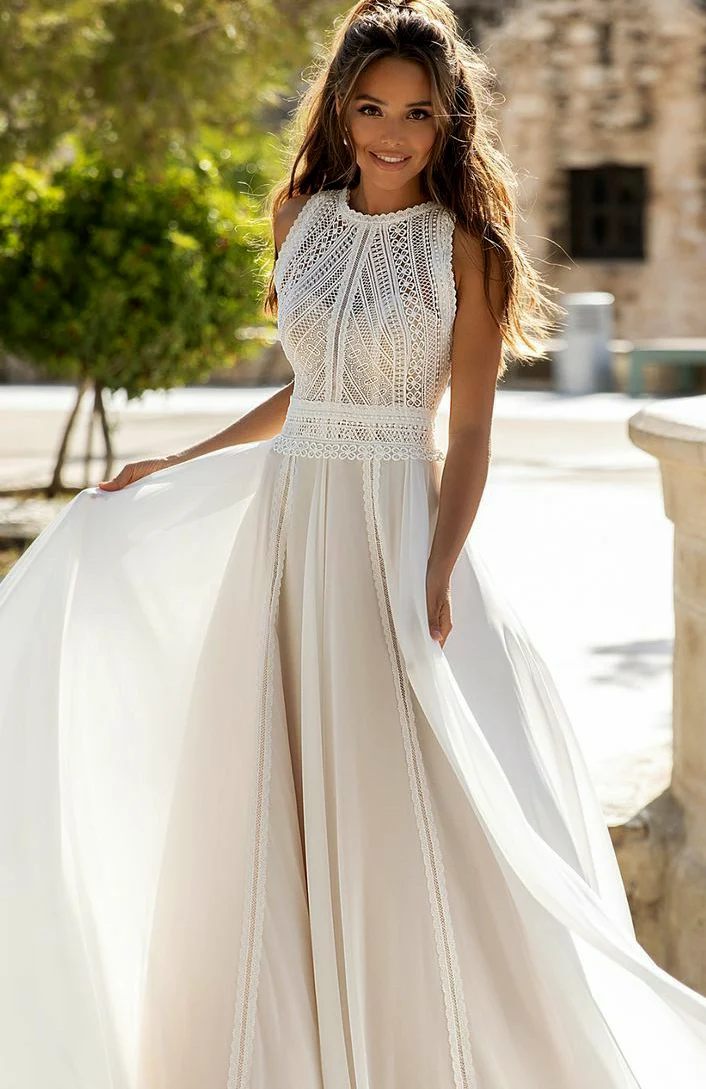
Next, decide which areas you would like to leave quiet. A less decorated skirt can give the upper lines space, but this is not compulsory. You may prefer a more extensive distribution of pattern. Add a veil or jacket temporarily and see which areas remain visible. If both layers have a pronounced design, compare them at normal conversation distance. A magnified detail photograph leaves much of the finished outfit outside its frame. Your intended distribution of emphasis is a better starting point for the next comparison than the amount of decoration alone.
Check technique and visible details on an ornamental wedding dress
Begin with terms such as geometric lines, high neck frame, dense bodice and wide skirt. Whether a surface is embroidered, crocheted, applied or made in another way needs actual product information. A photograph does not provide a complete technical examination. Request close views of the outside, the inner construction and the junction with the skirt. Ask the supplier which technique is used in each area. A specific question is more useful than repeating a broad decorative style label, especially when you are deciding which details should remain after alterations.
The lace wedding dress guide offers further ways to compare pattern and background. Use the relevant questions without deciding the technique of your own candidate in advance. If you specifically want flower shapes, the floral wedding dress comparison addresses a narrower subject. The pale geometric arrangement here provides a separate starting point. You can like a garment because of its visible design while still asking for clarification of its advertised provenance. Those decisions do not need to be bundled together.
Check provenance claims for an ornamental wedding dress
A broad word such as “ethnic” is not a documented object description for this selection. If a particular family or cultural connection matters to you, name it and ask for reliable information about the chosen piece. Who designed it, and what information accompanies the motif? A familiar-looking line does not establish the same meaning. Also distinguish a contemporary design reference from a documented historical garment. These questions can support your personal choice without turning every wedding outfit into a general claim about a culture. Your own association deserves a clear explanation rather than an invented history.
The V&A guide to researching its collections explains that object pages combine catalogue information and curatorial knowledge. Such records can support focused research; they do not identify the provenance of our photographs. Discuss a personally meaningful motif with the designer or supplier. Keep confirmed information separate from your associations with the look. That distinction makes it easier to explain what is documented and what you are choosing for yourself. A family keepsake can also prompt a direct conversation about how its owner would like it to be used.
Compare a plain short white dress with the patterned bodice
The short white dress has a straight upper edge and folds gathering towards the sides. Long white gloves extend the pale area along the arms. Start by comparing the neck area: do you want a high patterned frame or a more open space? Consider length separately afterwards. A short skirt is not simply a reduced version of the long dress; it changes the relationship between garment, legs and shoes. Give this decision its own comparison instead of accepting every detail from one photograph. You can take different ideas from the two references.
Try corresponding real shapes with your intended shoes. Walk several steps and sit down. With the shorter candidate, notice the hem position when seated; with the long one, watch the lower edge when turning. Test gloves separately. Open your planned bag and hold an object you will actually use at the occasion. Decide whether the additional white arm area belongs in your outfit. You do not have to adopt all the accessories in the reference together. Connecting each addition to your actual use makes the comparison more informative and easier to repeat.
Finish with clear styling and ordering decisions
Choose jewellery after the neckline when the upper pattern is prominent. A necklace may cross the design, while small earrings create a different distribution. Add pieces individually, then compare the whole outfit. The same necklace may stand out more clearly against the plain strapless dress. Choose the emphasis you deliberately want to wear. Before discussing alterations, ask whether the proposed change affects a pattern boundary, the neckline or the skirt junction. Point to the actual area rather than expecting a general promise about the result.
Keep three notes for your final choice: the intended pattern area, the shape you have tried and the product information you have confirmed. Retain unresolved technique or provenance questions so they can be answered before ordering. Check care and alteration options for the actual version. A broad, uncertain style term can then become a specific occasion outfit, whether patterned, plain or personally combined. The useful outcome is a design you can explain and use, with no need to turn an unverified cultural association into a statement of fact.
Separate visible pattern, your preferred silhouette and documented provenance. A densely patterned high bodice and a plain short white shape offer two distinct comparisons.
Frequently asked questions
Does the pattern on an ornamental wedding dress establish a cultural origin?
No. Similar lines do not replace information about the design, making or meaning of the actual piece. Start with what you can observe.
Must an ornamental wedding dress also have a patterned skirt?
No. A quieter skirt can leave more attention on the upper pattern; extensive all-over decoration is a different deliberate choice.
Do a short white dress and gloves prove a historical bridal tradition?
Colour and accessories alone do not establish tradition or the original purpose of a garment. You can compare the shape for your own occasion.


