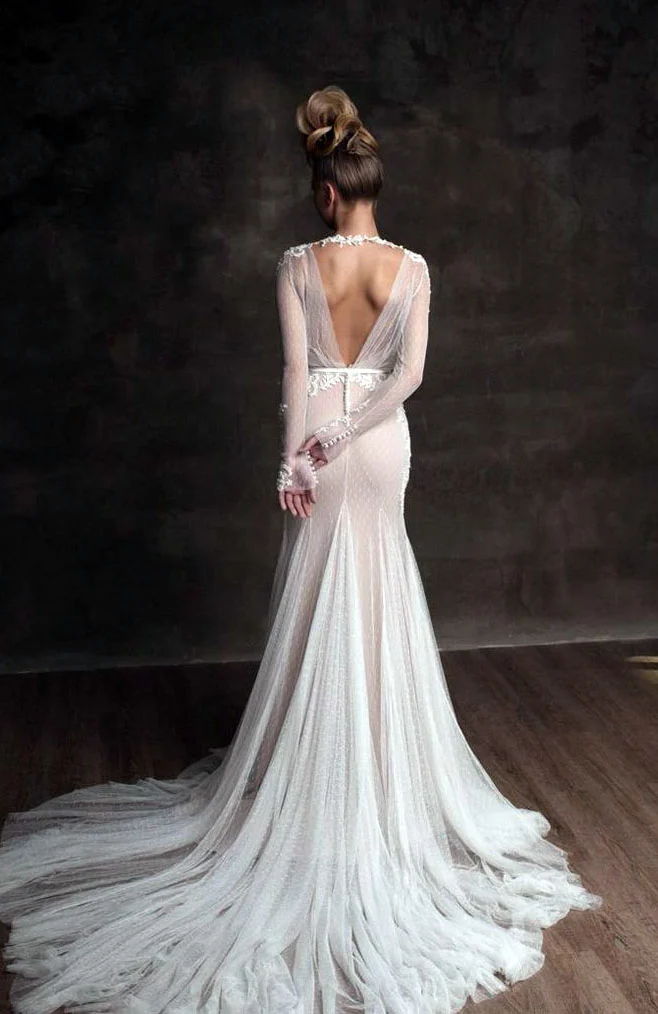
A wedding dress with a nape strap organises an open back differently from a design whose upper connection is not visible. In one view, a narrow pale bridge sits below raised hair above a deep V-shaped opening. The other rear photograph has floral-looking shoulder and side edges, while moving hair hides the nape. It cannot reliably establish that no connection exists there. Use the difference for a specific choice: which upper line should remain visible, and how should hair and accessories frame it? Upper boundary, sides and lower ending are separate questions.
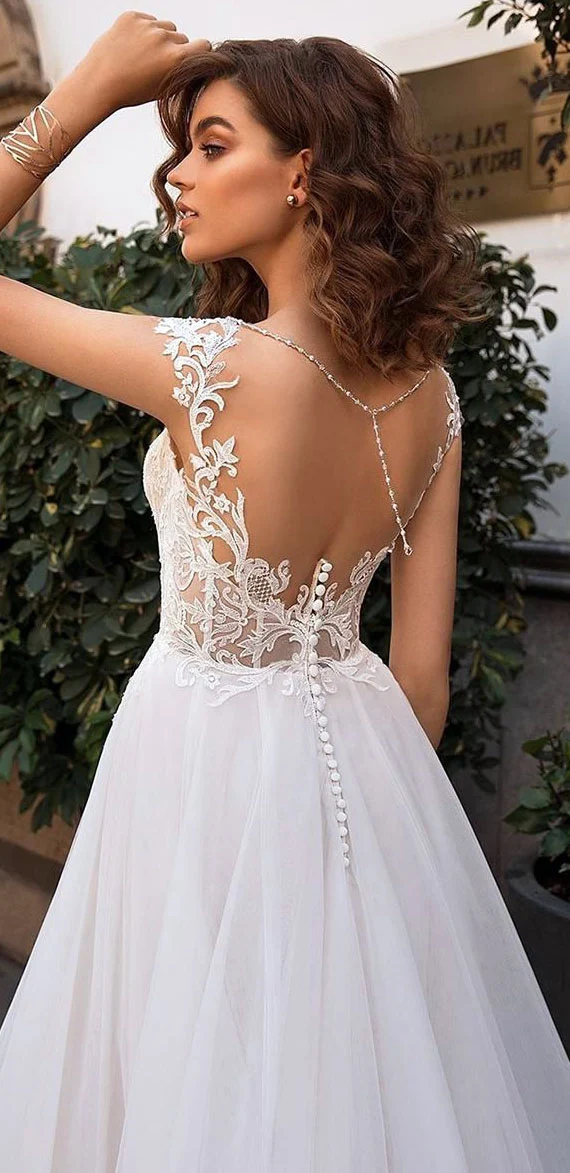
The contrast image for a wedding dress with a nape strap shows Y-shaped back jewellery between floral borders, rather than another fabric connection.
Read a wedding dress with a nape strap downwards
Begin beneath the hairline. In the long-sleeve example, a narrow decorated line joins the upper sides above the V opening. A longer exposed back area remains below it. The bridge is therefore an independent horizontal line beside diagonal side boundaries. Decide whether you like it as a visible detail or want to compare another upper arrangement. The depth of the lower opening is an additional choice and need not be settled simultaneously with the upper connection.
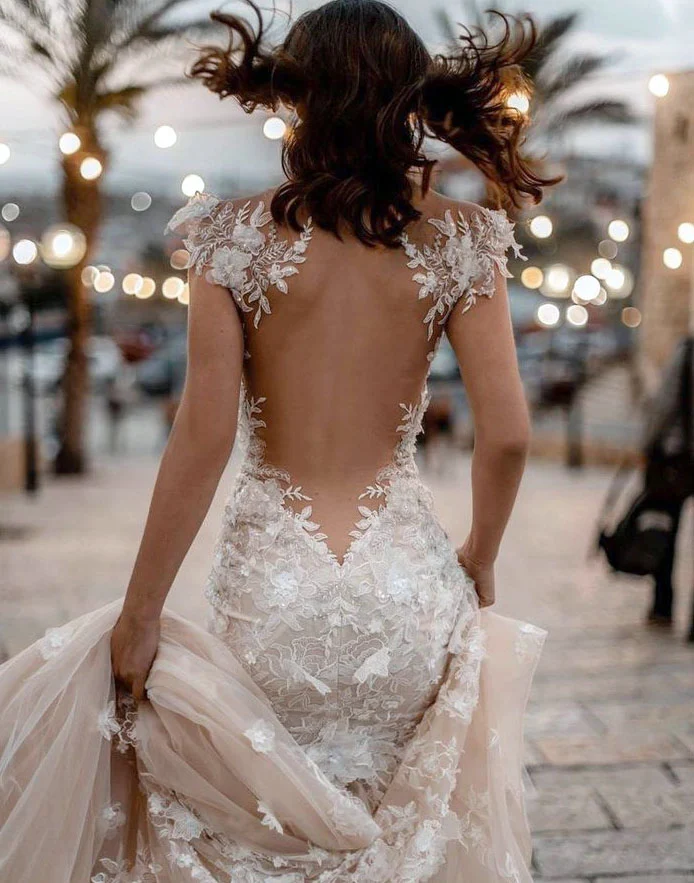
Request a rear view with hair moved away from the nape when assessing a candidate. This reveals the connection actually offered. Ask where it closes and which versions exist too. The floral-edged photograph shows how hair can change the impression: the large exposed area below is apparent, but the highest section is not fully explained. A missing view is not a confirmed product characteristic. Use the image for the area it does show rather than carrying an assumption into another garment.
Wedding dress with a nape strap: floral back borders or a clear V-line?
The floral rear view has a more irregular pale outline at shoulders and sides, with motifs continuing across the closer lower surface. In the long-sleeve picture, the upper opening creates a clearer V direction beneath the strap. These frames produce different exposed contours. Follow their route before considering extra back jewellery. An already prominent boundary may provide the accent you want without another piece being placed into every visible open area.
The backless wedding dress guide offers further questions about opening size and location. The crochet-look wedding dress comparison supplies another route if patterned coverage appeals instead of more exposed space. Use those alternatives to name the boundary more precisely. A visible pattern effect and a confirmed material type remain different things, even when both contribute to choosing an actual offered dress.
Hairstyle for a wedding dress with a nape strap: show or cover the strap
Raised hair in the long-sleeve image leaves the narrow upper connection visible. In the other photograph, moving hair covers the nape and frames shoulder motifs. Either can be a deliberate effect. Consider more than whether a hairstyle suits the front neckline. It changes the continuous area visible from behind too. Compare the rear arrangement with the hair length you actually intend to wear, rather than relying exclusively on another person’s photographic reference.
Move hair aside at the fitting first. Place it as intended afterwards and turn your head both ways. See which parts of strap or floral edge remain apparent. A temporarily covered detail is not automatically wrong; that softer frame might be precisely what you like. The useful distinction is choosing it deliberately. This allows the relationship between hair and the back of the outfit to be considered before an alteration has already been confirmed.
Weigh sleeves beside the exposed middle
The strap view combines an open back centre with long translucent-looking sleeves. Larger arm areas remain exposed in the floral photograph, with shoulders drawn more strongly through individual motifs. Those are different arrangements. An open back does not automatically require a short sleeve. Identify side coverage and exposed middle separately before seeking a model that genuinely connects your priorities. Breaking a reference into decisions can be more precise than adopting all its details together.
Look at the back with relaxed arms and in an ordinary carrying position. Hands hold lower fabric outwards in the floral view, while they sit behind the torso in the other. Both poses change the visible distribution. A short sequence holding a bag, sitting and standing provides other positions to assess. It does not replace product information about inner construction, but adds concrete observations to the decision about the outside frame you want to show.
Place extra jewellery and veil deliberately
A narrow decorated bridge already supplies an upper horizontal line. Assess it without another back chain first. If jewellery is wanted, compare its route with the bridge and the lower point of the opening. Several overlapping directions can produce a different effect from one exposed surface. Decide which should remain the priority. Remove an addition again after trying it so its actual contribution can be distinguished from the arrangement already present in the dress.
A veil may cover the upper connection at certain moments. Put the intended version on and remove it at the fitting. Compare the garment in both conditions, particularly if you plan to stop wearing the accessory later. Check contact points on the real model and clarify the intended handling. Floral-looking decoration and translucency do not establish one attachment method. Selecting a visible line and understanding actual product details are related questions, but one cannot simply answer the other.
Check the nape strap and back opening during the wedding dress fitting
Record three points: preferred strap position, chosen side boundary and the part your hairstyle should reveal. Discuss them with complete front and rear views. Phillipa Lepley describes mock-up fittings followed by further garment refinements. That is a particular atelier process. Ask your own provider which actual model can be used to check the intended upper-back arrangement and which changes are genuinely offered there.
Compare intended underwear and outerwear with the actual opening last. An upper bridge does not confirm invisible underwear or a particular support function. Ask specific questions before settling the back design. The result is a clear combination of visible connection, chosen rear frame and a hairstyle you have tried beside both. It need not be the deepest or most decorated version. Describing the rear view you deliberately want to wear matters more than collecting every possible detail in one garment.
For a wedding dress with a nape strap, establish the actual upper connection and back opening first. Compare hair, floral borders and veil afterwards; assess Y-shaped back jewellery as a separate accessory choice.
Frequently asked questions
Does a wedding dress back photo with loose hair prove there is no nape strap?
No. Hair can hide the nape area. A clear rear view of the actual dress is needed to assess the connection.
Will a nape strap make every undergarment invisible?
That cannot be inferred from the strap. Compare intended underwear with the actual opening and clarify internal construction on the model.
Does a wedding dress with a nape strap require an updo?
Raised hair exposes more of the upper connection. Loose hair creates another frame; decide which areas you want deliberately visible.



Thoughts on this article