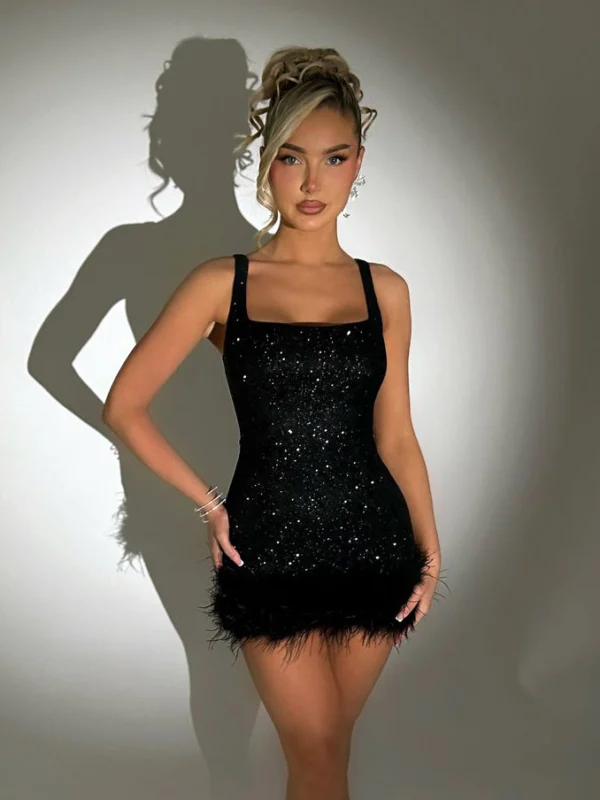
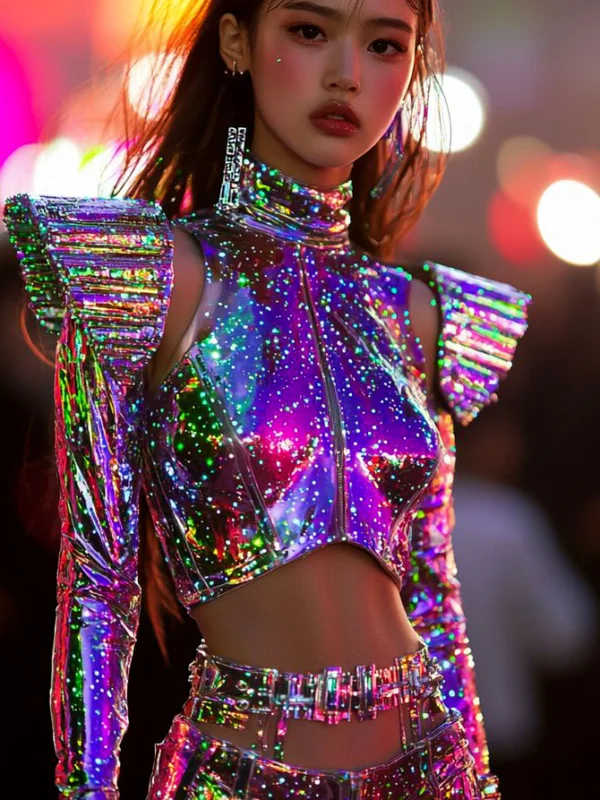
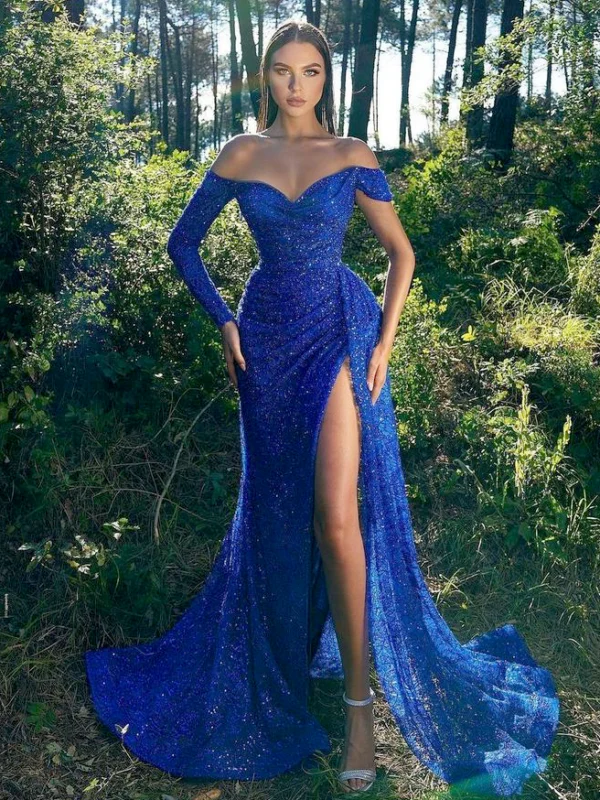
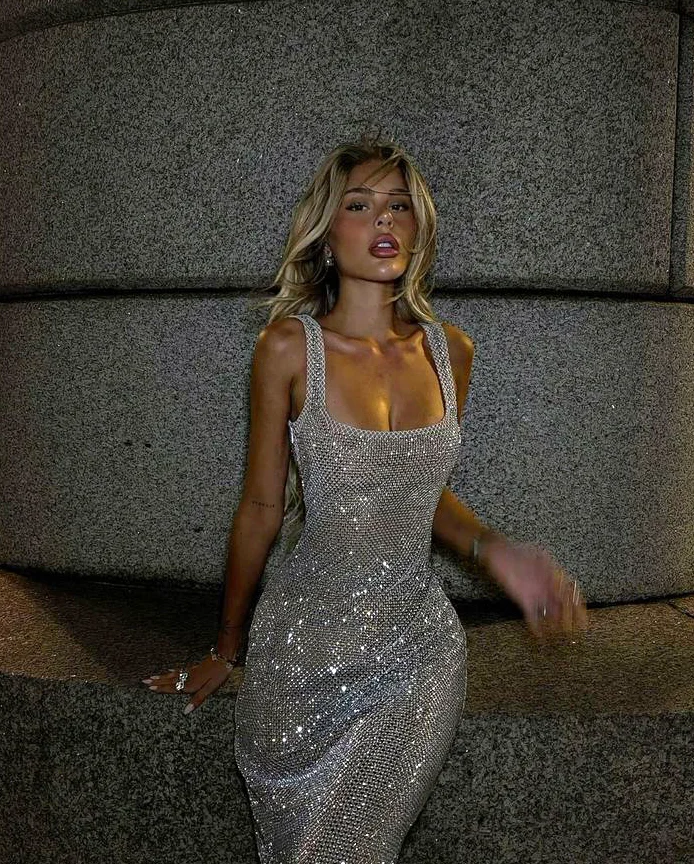
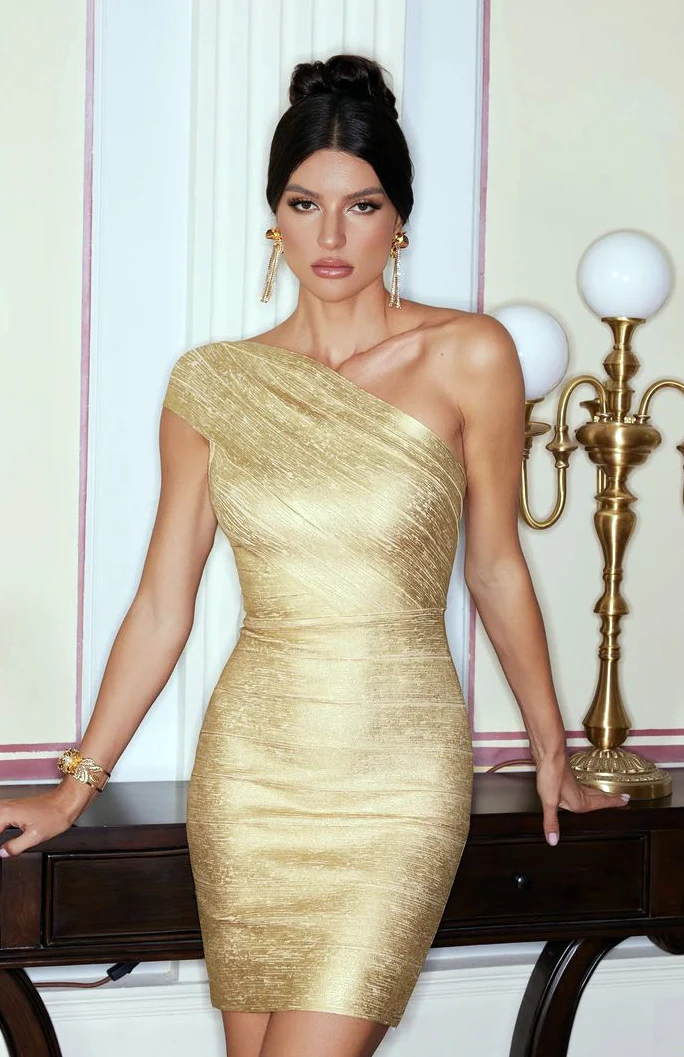
“Party outfits 2025” was the original subject of this image archive. Today it can be read usefully as a comparison of two specific design examples: a silver-coloured dress with broader straps and a squared upper line, and a short gold-coloured dress with one shoulder. This selection is not a statistic showing what was most widely worn in 2025, nor a forecast for another season. Its value lies in comparing visible decisions. You can turn those observations into fitting questions without treating an older calendar label as a current shopping recommendation.
Put party outfits 2025 in their archive context
An older topic year does not automatically establish the production date, collection or availability of every garment pictured. Those connections are not verified for these two images either. Work with visible design instead: where does the shoulder area begin, what boundary does the neckline create, and how is brightness distributed? Keep those observations separate from statements about the market. The reference remains useful even if you cannot find or buy an identical model today.
Write down the particular detail that attracts you. It might be the squared neckline in the silver image or the slanted upper boundary in the gold one. That is a clearer starting point than seeking an allegedly typical look from a whole year. Then find actual candidates that use that detail. Check the current product description and included pieces for each offer. A similarly presented photograph does not guarantee the same construction or the same effect within your own outfit.
Party outfits 2025: separate metallic colour from dress cut
In the silver photograph, many small bright points cover a close-fitting area. The gold look instead shows a more continuous brightness with fine diagonal-looking lines. Both surfaces appear reflective, but their photographic conditions differ. The silver figure is against dark stone, while the gold one is in a lighter interior. The immediate comparison cannot establish which real material always shines more strongly or produces a warmer effect. Lighting remains part of what you are seeing.
If your main choice is between gold and silver colour, compare actual garments in similar cuts where possible. Keep the other elements quiet and look from the same distance. Change the neckline afterwards. Otherwise a preferred shoulder shape can influence your colour choice without you noticing. The shimmering party dress guide adds questions about the relationship between surface and form. It does not replace a fibre description or turn a visible reflection into proof of a particular fabric construction.
Assess the party dress neckline before necklaces and earrings
The silver example shows a largely squared opening between broader straps. The gold surface crosses one shoulder while leaving the other visibly uncovered. These two contours need not use the same addition at the neck. Look at each boundary without a necklace first. Do you want to emphasise the shape itself or introduce another accent? An undecorated neck area can be an intentional and complete solution rather than an unfinished version of the outfit.
Add earrings and neck decoration one at a time. Long dangling earrings are already present in the gold photograph, but they are not mandatory for every similar shoulder arrangement. Turn in your own outfit and observe where jewellery meets the upper edge. Reach forward, then inspect that boundary again. A pose with one hand resting on a surface shows only one state. Assess the actual candidate through the movements you expect to make during your evening.
Party outfits 2025: distinguish visible length from an unseen hem
The gold dress has a short hem visible above the knees. The silver photograph ends before its full hem and shoes are shown. Do not describe that second garment as long or floor-length solely from this view. If you like its upper shape, you can independently look for a short or longer version elsewhere. Establishing the actual length of an offered garment requires complete views or specific measurements, rather than filling the unseen part with an assumption.
Try your intended length with the shoes you plan to wear. Walk, turn and sit, observing the lower edge before immediately arranging it again for the mirror. When comparing two lengths, keep the top and shoes as similar as possible. This helps you see which change really comes from the hem. Introducing another colour and a different shoulder design at the same time makes the observation harder to interpret and the eventual choice less clear.
Connect the reference with your actual evening
Consider the stages of the occasion: arriving, sitting, eating, standing and perhaps dancing. Select a short fitting sequence from those activities. Hold the intended bag in the way you would really carry it. In the silver image, one hand rests on a surface to the side. That is part of the composition, rather than evidence of how a dress will behave through hours of movement. Let the real candidate fall normally again after each step.
Now decide whether the reflective surface should be the main accent. A simple bag and a quieter outer layer give you a comparison baseline. If you want more detail, introduce it individually and look at the complete arrangement again. The guide to combining party separates supports this sequence. You do not need to reproduce an archive picture in full. Translating one clear design feature into an outfit suited to your own evening is enough to make the reference useful.
Check the real version before deciding
For a particular offer, ask about actual layers, fastening and included items. A metallic-looking surface does not establish a particular fibre or show that a specific alteration is possible. If you need another hem or more coverage at the upper edge, discuss that on the available garment before buying. Record the feature you need rather than using a year as a quality description. This makes a candidate easier to assess even when its photography resembles the archive image.
The GINETEX overview explains symbols for washing, bleaching, drying, ironing and professional care. Follow the label on the actual garment. Your archive comparison should leave three separate results: a preferred colour effect, a tested upper line and a verified length. An older party theme then becomes a concrete selection aid without making unsupported claims about current trends or availability.
Two archive images offer different metallic-looking surfaces. Separate colour from cut before developing a present-day outfit from their details.
Frequently asked questions
Do the party outfits 2025 archive pictures prove which looks were most popular then?
No. Two selected archive images are not representative trend research and do not establish the popularity of particular cuts.
Is the silver party dress in the image archive long?
The hem is outside the photograph. Establish the actual length through additional views or product information.
Should I compare gold and silver in the same cut?
That can clarify the colour decision. These images change both colour and neckline, so separate those effects when fitting your own candidates.