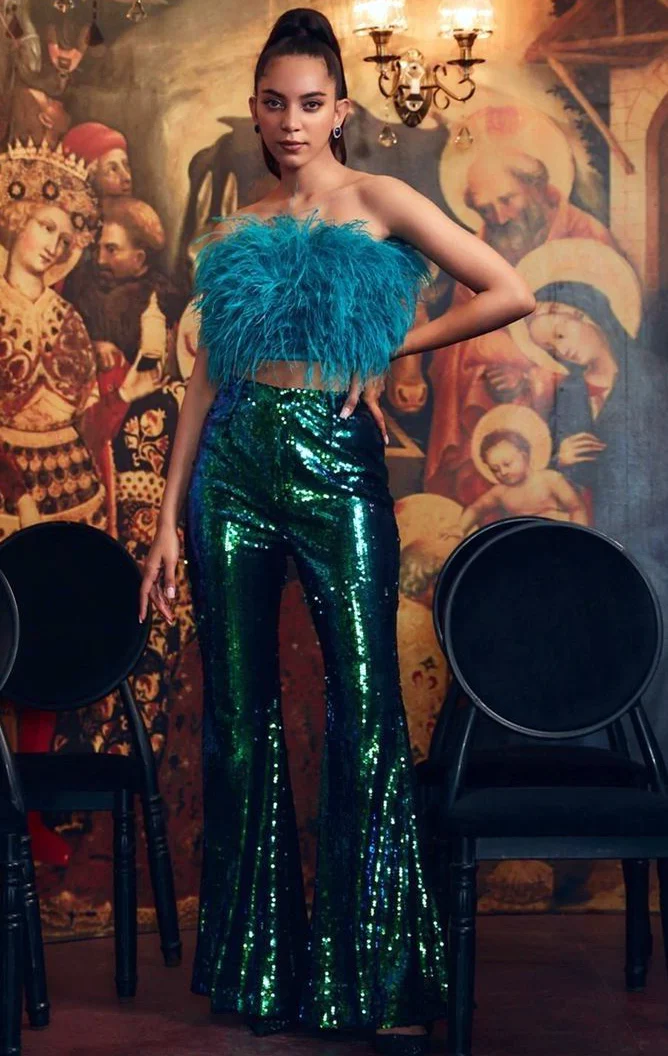
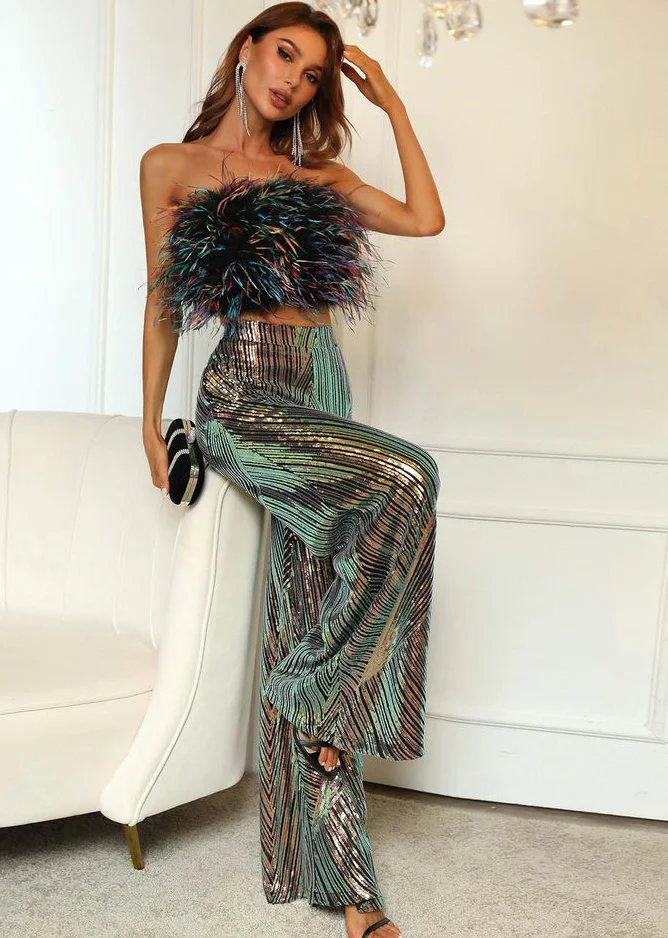
A retro party outfit can develop through a cropped statement top and flared trousers without recreating a specific era. Two photographs provide clear comparison points. The standing look pairs a turquoise feather-like top with green reflective flares. The seated version places a multicoloured textured top over striped flared trousers. Retro describes a personal styling direction here. A historical manufacturing year or specific origin has not been verified for these garments. The useful question is how to connect the visible areas into a present-day party idea through colour, pattern and shape.
Begin a retro party outfit with two clear roles
An eye-catching top does not automatically require an inconspicuous pair of trousers. In the green example, the lively upper contour differs from the more continuous lower colour area, even though both pieces remain noticeable. In the striped look, two separate surfaces compete more clearly: the irregular multicoloured top and the ordered stripes below. Decide whether you want that double accent or would prefer one piece to remain more in the background. This is a choice about emphasis rather than a compulsory styling rule.
Lay your possible garments together before wearing them. Identify the main accent and the area intended to accompany it. Then try only the top and trousers first. Adding all the jewellery from a photograph immediately makes it harder to see the effect of the garments themselves. If the combination feels too busy, change one part. You might choose quieter trousers without giving up the cropped top shape or its lively boundary. This keeps the comparison clear instead of replacing every element at once.
Connect turquoise and green in a retro party outfit
In the standing image, the turquoise top sits directly above green reflective trousers. The colours remain distinct without appearing as a maximum light-dark contrast. A narrow exposed area introduces another boundary between them. This is one option if you want to show two colours without connecting them solely through identical shades. The actual relationship of the pieces matters more than giving the palette a prescribed name. The image offers an arrangement to consider rather than a universal colour formula.
Compare plain trouser candidates beside the real top rather than only through separate screens. Observe which colour becomes more prominent and whether you want that result. A quieter bag can provide a comparison baseline. If you later introduce a third colour, add it on its own. Does it repeat something already present or create a new focal area? The green reference cannot establish one correct combination for every complexion or occasion; your own garments give that question a concrete setting.
Use striped flared trousers deliberately as another main accent
The seated view shows clear trouser stripes bending across the angled legs, with a multicoloured top above. First decide whether you enjoy the ordered lower pattern beside the irregular upper contour. The two patterns need not have the same direction or scale. Their relationship might instead come through repeated colours or a deliberately chosen contrast between top and bottom. What matters is understanding each piece’s role, rather than choosing both simply because their surfaces attract attention.
Look at actual striped trousers while standing and sitting. If you expect to spend much of the evening at a table, the straight frontal view should not be your only reference. Avoid blanket claims that a stripe direction changes every person’s figure in the same way. Ask which area you want to emphasise instead. The guide to shimmering party surfaces adds questions about reflection and form, even though this outfit uses separate garments rather than one dress.
Choose the top hem and trouser waist together in a retro party outfit
In both photographs, the noticeable top ends above or near the trouser waist, leaving a narrow middle area visible. Decide whether that is a space you want to show. Another top length or a higher or lower trouser position changes the relationship. Choose the pieces together rather than judging the top hem in isolation. The feather-like edge is less regular than a straight fabric finish and may partly cover the boundary differently with each pose.
Sit in your actual candidates and lift your arms slightly. Observe the gap afterwards. If you prefer a more covered connection, compare suitable real lengths or an independent layer underneath. This describes your desired look rather than an obligation to reveal more skin or copy the pictured pose. Record the intended combination as a whole. A later change of trousers can otherwise alter the upper concept without you noticing, particularly when both pieces are bought separately.
Connect flared legs with shoes and a bag
The green trouser legs widen noticeably towards the bottom and reach near the ground in the photograph. The striped version also has flared lower areas, but with bent legs and a more visible shoe region. Decide how you want the trousers to fall while standing normally. Try the actual shoes and walk several steps. Any proposed shortening needs discussion on the specific garment; width in an image does not reveal inner construction or available hem allowance.
Choose a bag through the whole outfit afterwards. In the seated example, a small dark bag supplies a clearer shape beside the active textures. You can use that role without seeking the identical model. Compare long earrings with a quieter alternative to see which better accompanies the upper surface. A necklace is not compulsory beside bare shoulders. Remove one accessory between comparisons so the effect of the remaining pieces stays understandable, rather than collecting every photographed detail into a single look.
Keep the style idea separate from verified origin
If you are seeking an original historical garment, you need different evidence from the visible combination discussed here. The vintage evening dress guide separates an older original from a newly created retro idea. For this sequence, the specific design is enough: a lively cropped top, selected waist position and flared leg. Do not assign an unknown garment to a decade or infer its fibre or quality from shine. The styling can appeal without adding an unverified history to it.
The GINETEX source explains symbols for washing, bleaching, drying, ironing and professional care. Read the labels on the actual pieces and clarify outstanding product questions before buying. The finished outfit needs no historical claim: it deliberately connects an upper texture, a colour or pattern decision and a trouser length you have tested. That clear arrangement makes the statement party idea personal and understandable through the garments themselves.
Two separates looks connect feather-like tops with flared trousers. Assign roles to colour, pattern and waist boundary before introducing jewellery and a bag.
Frequently asked questions
Are these verified original vintage outfits?
That has not been established. Retro describes a present-day styling direction here, rather than a claim about a particular manufacturing year.
Does the top in this retro party outfit prove it uses real feathers?
No. The photograph shows feather-like strands and an irregular contour. Establish the actual composition through product information.
Must the flared trousers in a retro party outfit rest on the floor?
No. Try the actual trousers with your intended shoes. Length depends on their real construction and how you want to use them.