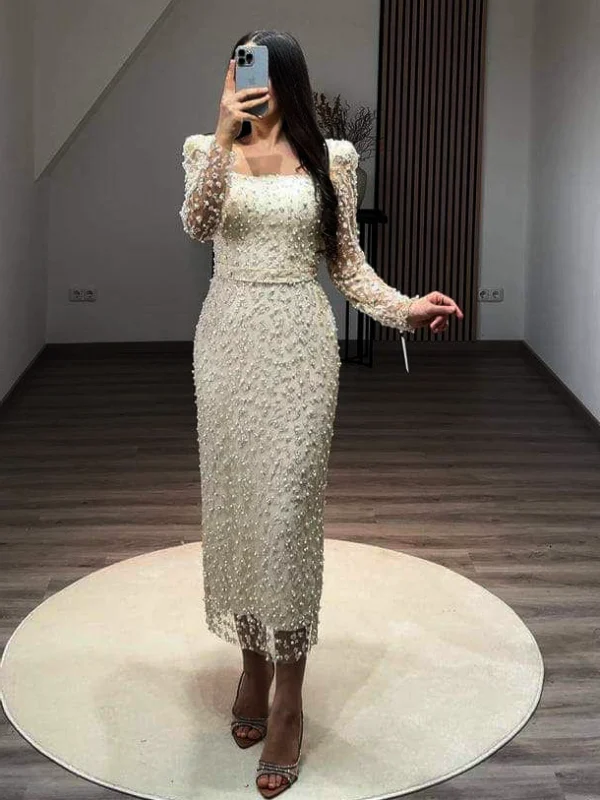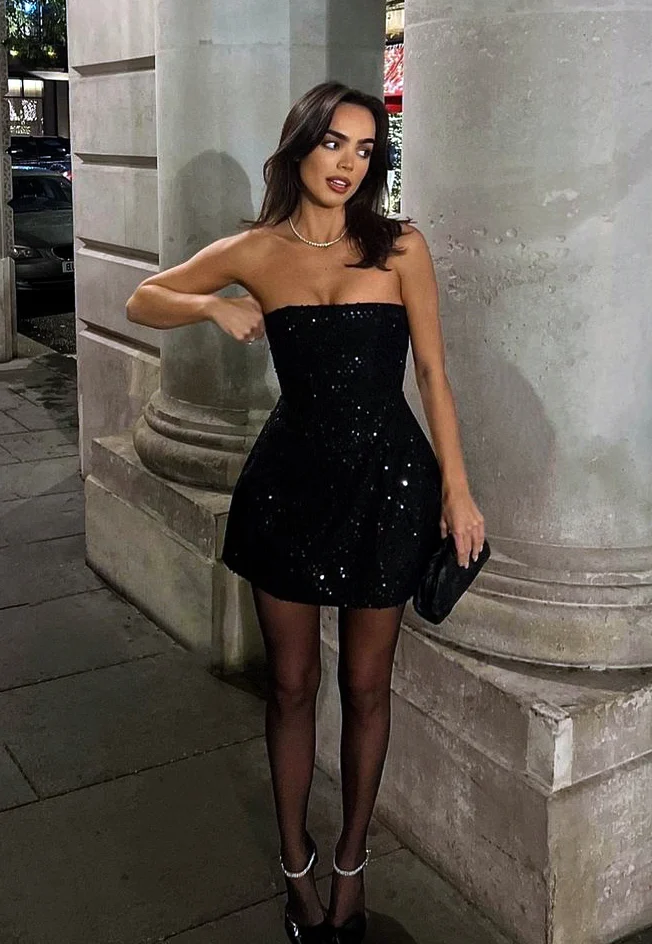
A sequin evening dress deserves a close inspection before the full-length mirror test. First establish what the actual decoration is; a shiny photograph does not identify individual sequins or their attachment. Then assess the places where that decoration meets skin, lining, jewellery and a bag. A dress can give the visual effect you want while still asking for changes that need careful discussion before purchase.
Use a simple sequence: confirm the product detail, inspect the edges, put on the planned underlayers, and rehearse ordinary movements with accessories. Only then discuss alterations. The pictured reflective black dresses provide different necklines and lengths for comparison, rather than proof of a particular surface construction. Their differences help you ask better questions about the real garment you are considering.
Sequin evening dress: confirm the detail close up
Ask for a clear product description and, when needed, a close view of the decoration and reverse. Individual reflective pieces, a continuous shiny surface and small scattered points can look similar from a distance. Do not choose a cleaning method, repair plan or alteration solely from the word sparkle. Write down what the seller can actually confirm about the garment, and distinguish that information from your visual preference.
At an in-person fitting, examine an area near a seam as well as the centre of a panel. Look for loose elements, visible gaps and places where the surface looks different from the rest. This is a comparison of the item in front of you, not a demand that every decorated dress should be perfectly uniform. Ask whether a visible irregularity is intentional before treating it as a fault or accepting an explanation that does not address it.
Neckline and underarms need separate checks
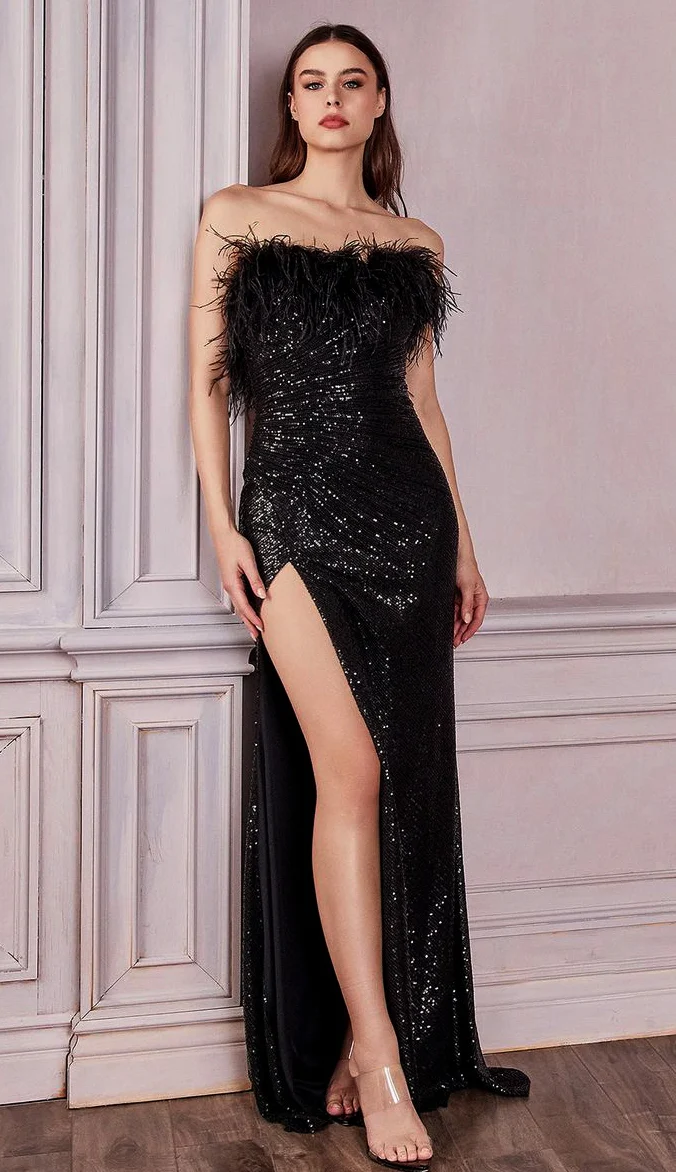
The long strapless example has a textured, featherlike border around the top. That border occupies the space where an outer layer or a necklace might sit. Try the neckline without jewellery first, then add one planned piece. Turn your head and move your arms naturally. You are checking your own experience of contact, rather than assuming the photographic model demonstrates comfort or that the trim has a confirmed composition.

Next let your arms hang by your sides and then reach forward. Where the inner arm touches a decorated side seam, see whether the edge feels acceptable through those movements. Try both sides rather than testing only the arm nearest the mirror. A neckline you like in a still pose may ask for a different jacket or different earring length once you move; solve that combination before adding more accessories.
Inspect lining and your intended coverage
Look at the actual lining around the neckline, side seams, waist and hem. Does it stay where you need coverage when you sit or raise an arm? Does an underlayer edge show in an area you wanted to keep visually clear? Try the underlayers you intend to wear, rather than judging with an unrelated fitting-room substitute. The desired result is a complete outfit that works in your ordinary posture.
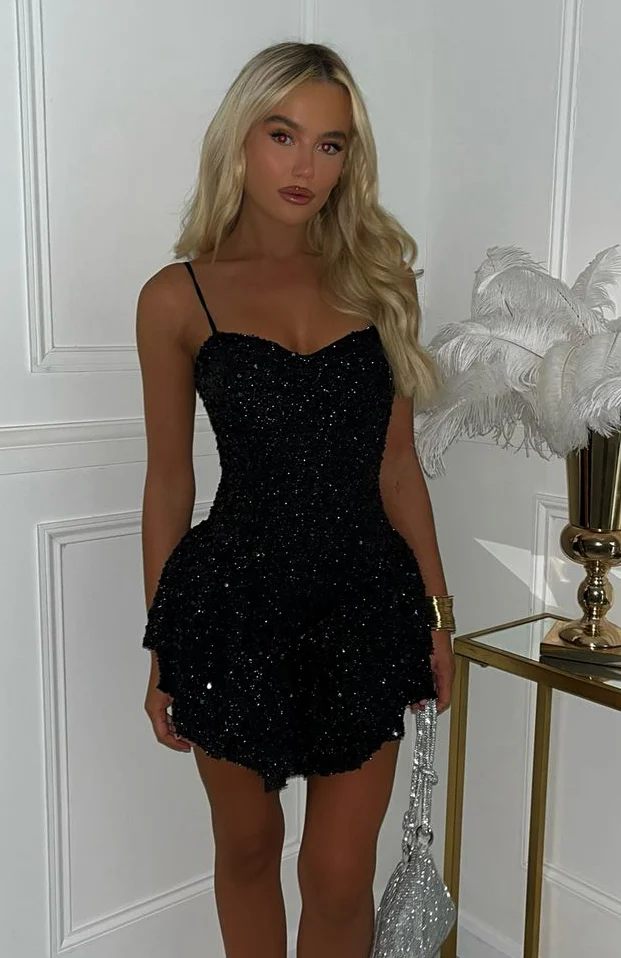
The short deep-neckline example and the narrow-strap example ask different coverage questions. With the former, lean forward and check the central opening; with the latter, check the strap position alongside your chosen underlayer. Do not solve everything by tightening or pulling. If the upper section needs an alteration, ask how it affects the neckline and neighbouring seams, and have the result assessed on the garment.
Rehearse bag and outerwear contact
Carry the actual bag at the height you normally use. Its corner may rest beside the hip, a chain may cross the bodice, or a clasp may sit against a textured section. Walk, sit and reach for the bag opening. Watch those points rather than merely checking whether the metal colour matches the earrings. If contact looks awkward, compare another carrying position or a simpler bag before assuming the dress needs changing.
Add the jacket or wrap you will use for arrival. Check its inside surface and how it moves across the dress when you remove it. This is especially useful with a prominent neckline border or raised-looking surface. You do not need to predict damage from a photograph; the purpose is to identify where the real pieces meet and decide whether the combination is practical enough for the evening.
Agree alterations before choosing the final size
Take your intended shoes and mark the desired length with the person doing the alteration. Ask them to inspect all the visible layers, the lower edge and the decoration near the proposed change. A short skirt with an irregular edge presents a different decision from a long narrow skirt with a leg opening. Do not assume the same shortening method or amount will preserve both designs.
Discuss the priorities explicitly. Would you rather retain the original lower outline, reduce trailing length or change the position of an opening? Ask what can be achieved on the actual garment and what will remain visibly different afterwards. For a strapless style, include a seated fitting rather than choosing size from the waist alone. A workable change plan belongs before commitment, particularly when returning the item after alterations will no longer be an option.
Complete the visual choice and care plan
Once the contact and fit questions are settled, decide how much extra shine you want. The guide to a shimmering party dress compares the visual distribution of reflections; jewellery with a statement dress explores where an additional accent can sit. Keep those styling decisions separate from the physical inspection, so a flattering mirror view does not leave an unanswered practical question.
Read the real care label before planning the first clean. GINETEX explains care symbols, including the maximum washing temperatures shown in the wash tub. That information does not prescribe washing for the pictured garments. Keep any specific product instructions with the dress, and ask about an unresolved care or repair question using the actual item rather than its photograph.
Inspect an embellished dress close up, then test its contact areas with the actual underlayers, bag and outerwear before arranging alterations.
Frequently asked questions
Can every reflective dress be called a sequin dress?
No. Reflections alone do not identify the decoration. Use the product information and a close inspection to establish whether individual sequin pieces are present.
Should the lining reach every decorated area?
Check the areas that touch you and the coverage you want. The useful question is whether the actual lining and edge finish work for your body and movements, rather than whether every dress follows one construction rule.
Can I assume an embellished hem is simple to shorten?
No. Ask the person doing the alteration to inspect the actual hem, decoration, layers and desired length before committing to a change.
How do I check a bag with the dress?
Wear the bag in its intended position, move your arm and sit down. Check whether its clasp, chain or corners contact the decorated surface or neckline.