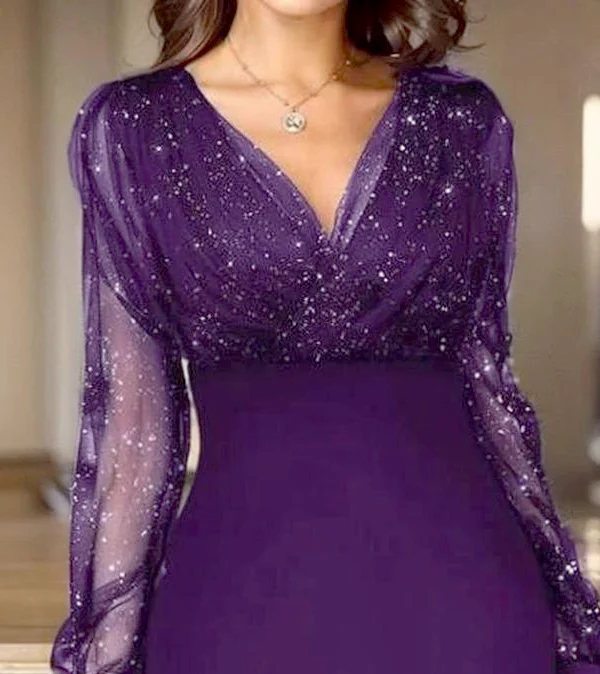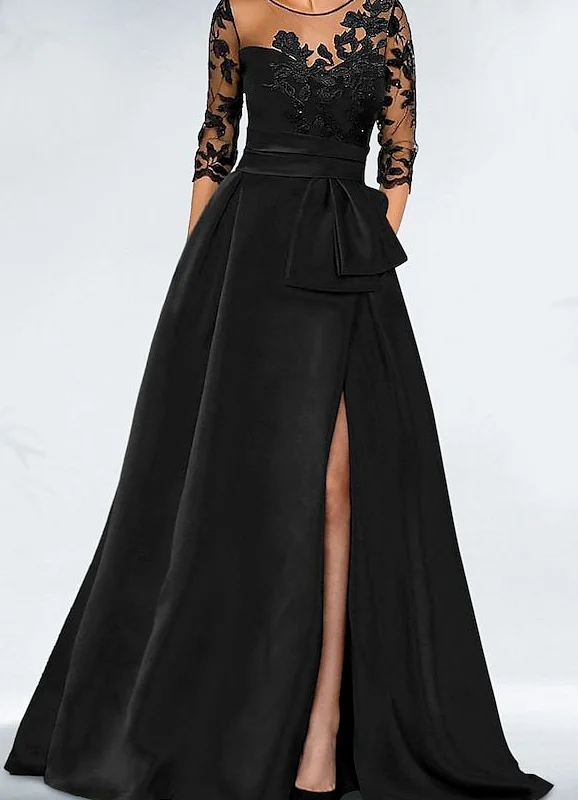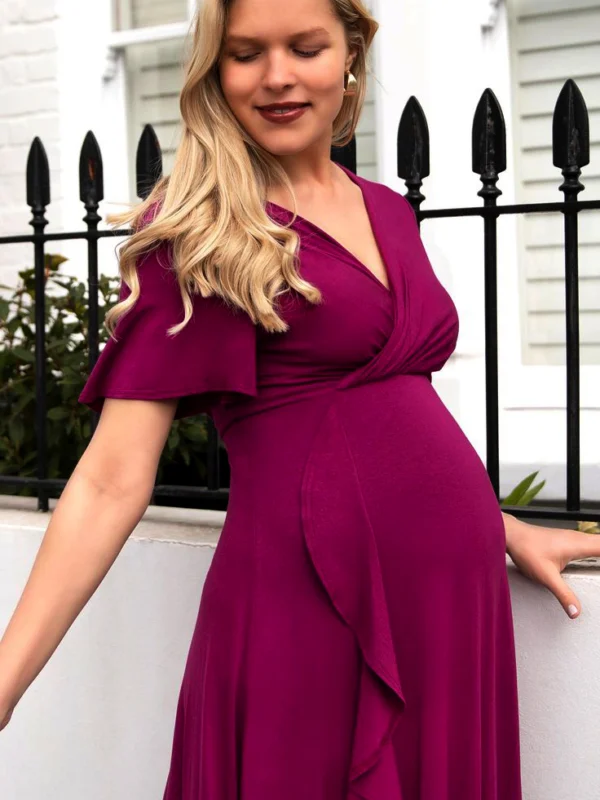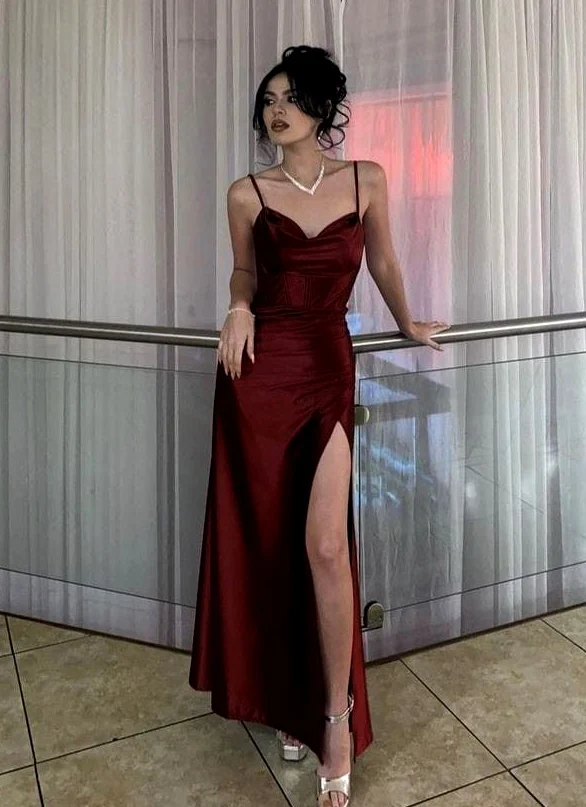
V-neck and skirt shape jointly determine how an evening dress appears to be organised. The same downward neckline idea can sit beside a long full skirt, a closer draped shape or a short lower area. The photographs show pale, purple and dark red versions with different strap widths. A long dark red example deliberately adds a softer rounded neckline as an alternative. Begin with two separate preferences: the upper opening you want to see and the lower shape you want to wear. Connect them on the actual garment rather than searching for one universal body rule.
Describe V-neck and skirt shape separately first
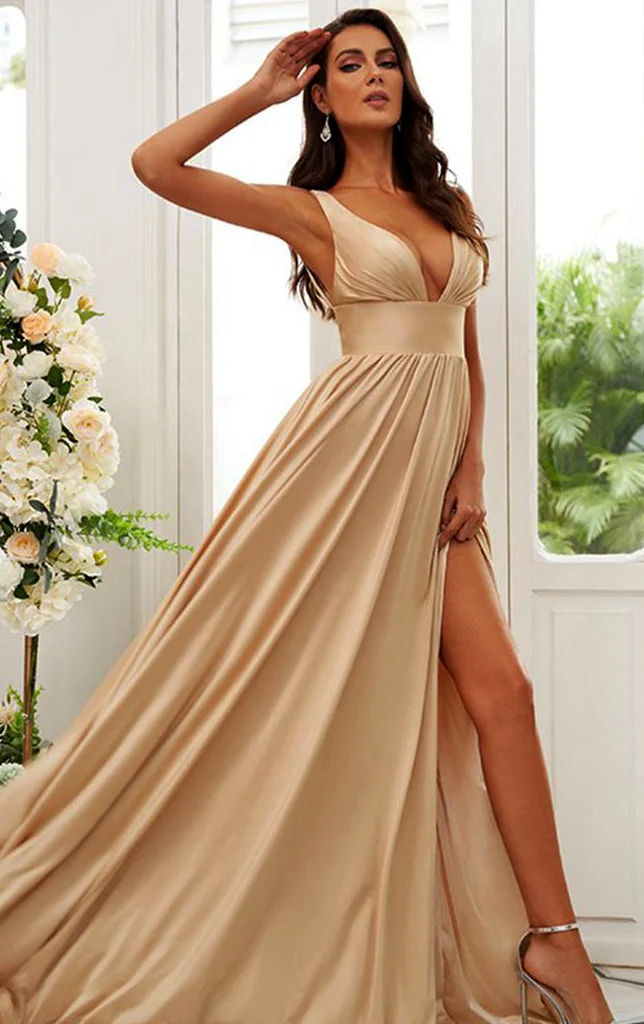
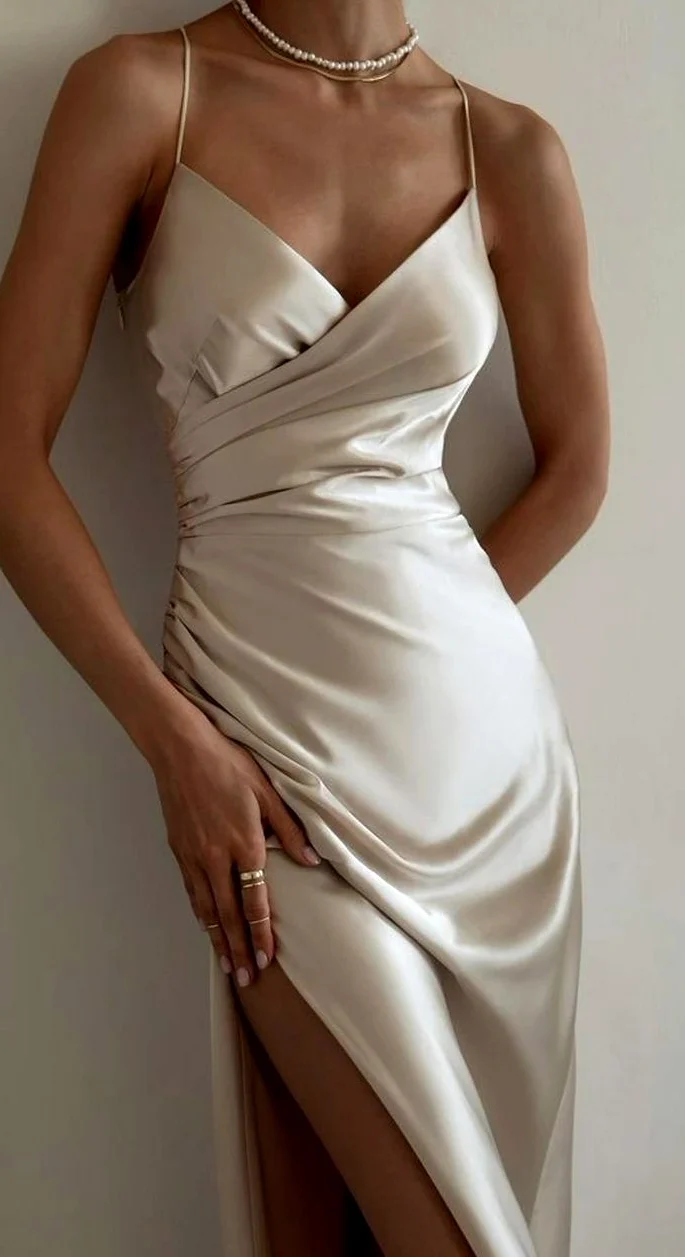
Look only at the upper section initially. The pale option with broader straps gathers small folds beneath the opening and ends at a wider horizontal band. The closer cream example crosses several fabric lines over the front and is framed by very narrow straps. Both show a V direction, but the neighbouring areas are organised differently. Describe what matters: an open centre with broader framing, narrow shoulder lines or visible crossing folds. The neckline alone cannot name the complete upper impression, even when two candidates share the same V label.
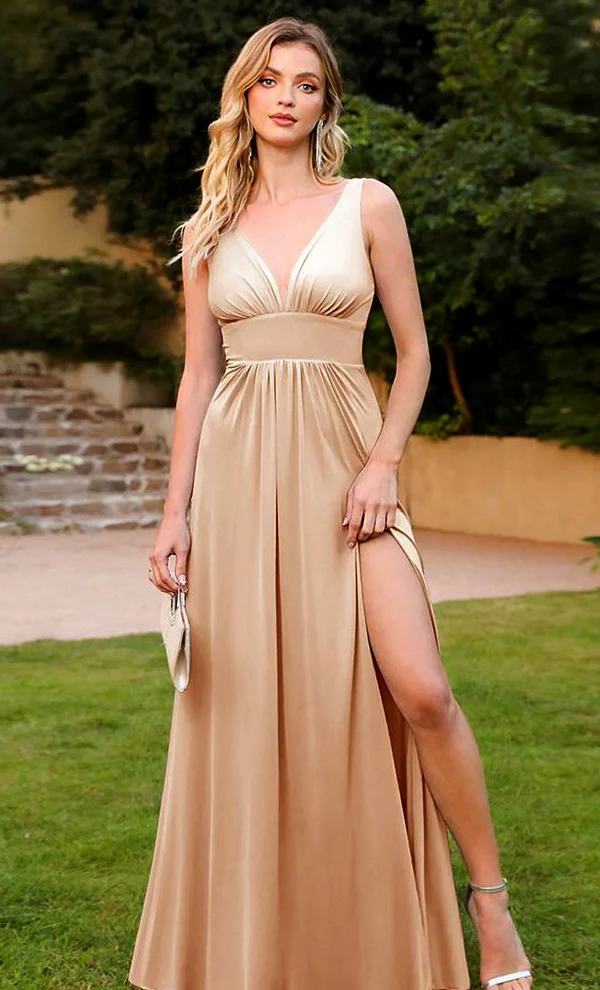
Choose a first skirt idea afterwards without making it the only possibility. The long purple skirt widens considerably, the short dark red version opens over less length, and the pale draped shape stays closer to the body. A similar upper preference can therefore connect to different lower areas. Find two complete candidates that answer that specific comparison. Numerous loose photographs with changing colours and accessories can obscure the actual decision, because several differences operate at once and the cause of your preference becomes harder to identify.
Compare broad straps and a quiet horizontal middle
The two pale long references connect a descending neckline to a wider band beneath the bodice. Longer folds and a larger skirt area begin below. One picture lets the skirt fall relatively quietly; another extends one side widely. Treat the band as a separate boundary between upper and lower sections. Should that division be clearly visible, or would you prefer a softer connection without a broad middle? Compare both wishes through real candidates with a similar neckline rather than adopting every feature of one image together.
Try the shape with relaxed hands and then while sitting. Decide whether you still enjoy the horizontal area during movement. A particular position is not a general recommendation for every figure. Choose through your own intended appearance and actual wearing experience. Evening dress with straps adds questions about shoulder framing, while Long evening dress supports assessing long hems. Use these guides to add specific checks without deriving a fixed rule about the only correct overall silhouette from one feature. The visible relationship you enjoy is more useful than the cut name alone.
Pair crossing lines with closer or shorter lower shapes
The closer pale dress carries several diagonal fabric lines from side to side. The V edge remains visible above while the lines continue into middle and lower areas. The short dark red example also crosses its upper sections but opens the skirt over much less length. Compare whether you want that diagonal movement to continue through the whole garment or remain above. That question is independent of the colour you like in the photographs; enjoying a shade does not automatically choose its fold arrangement and length for you.
A narrow form may show folds closer to the body, while a full short skirt creates another lower outline. Try two real options with the same shoe when deciding mainly about width. Change the shoe afterwards. The cause of the lower difference then remains visible. Include a neutral side view too. The front alone cannot explain how the lower area falls while seated or how a crossed section settles in ordinary movement. Repeating the same short sequence in each candidate makes the comparison more consistent.
Select the skirt opening and visible shoe together
The long pale and purple examples reveal leg and shoes through front or side openings. Some pictures also lift or extend the skirt side. Use that as an idea for a visible shoe area, but assess the real slit with the skirt falling normally. Stand with feet neutrally together first, then walk several steps and sit. Decide how much visibility you want in those states and whether the upper V still has the weight you intended beside the lower opening. Judge the complete outfit rather than one exposed area alone.
Compare a quieter shoe first and a more prominent one afterwards. A very long full skirt reveals it differently from a short shape where the shoe remains part of the picture continuously. Your choice need not be identical. Keep bag and jewellery unchanged so the lower alteration remains easy to assess. If an opening is to be changed, discuss it on the specific garment and test the proposed position again. A lifted hem in a photograph supplies no exact instruction for the eventual edge of the dress.
Use the softer neckline as a deliberate alternative
The long dark red photograph with narrow straps has a softly rounded draped front edge. It is not a clear V example. The useful comparison concerns how a quieter rounded upper line joins a closer long shape and visible leg opening. Put that alternative beside a definite V candidate if you are unsure whether you mainly like the point or the generally open neck area. Those properties are not identical and do not have to be chosen as one inseparable decision.
Keep length and lower width as similar as possible during that comparison. Otherwise, a preference for a completely different skirt may accidentally appear to be a neckline decision. Try jewellery with each upper line separately. A necklace sitting well above a V point may behave visually differently beside a softly falling edge. Choose position through the actual combination. Shiny-looking surfaces cannot reliably identify fabric; the visible lines already provide a useful starting point for this design question, with product composition clarified independently.
Confirm the connection in the complete outfit
Wear dress, intended underwear and shoes together for the final trial. Check front, side and rear, walk and sit. Record the upper opening, middle boundary and lower shape you selected separately. The decision then stays understandable if you compare another colour or jewellery candidate later. Change only the genuinely unresolved element and keep confirmed relationships as your reference, rather than rebuilding the entire selection whenever a new appealing object appears.
Read product and care information on the real dress. The GINETEX care symbols help interpret labelling rather than identify a fibre from visible shine. Discuss alterations directly on the specific model. Your result may be short and full or narrower and long. What matters is that neckline and skirt make the connection you selected and that you have seen it with actual companions through ordinary movements. You can then explain your preferred distribution independently of a photographed pose or a universal silhouette rule.
Choose the neckline and lower shape as connected decisions. Compare your upper preference with different skirt ideas without imposing a fixed body rule.
Frequently asked questions
Must a deep V be paired with a narrow skirt?
No. The references show several lower shapes. Choose the distribution you enjoy across the whole garment and test it in motion.
Does a lifted skirt side reliably show the slit?
It shows a pose. Assess the actual opening with the skirt falling normally while standing, walking and sitting.
Is the draped edge on the long dark red reference also a V?
That picture has a softer rounded neckline. It is explicitly used as an alternative here rather than described as a clear V-neck.