Wedding dress straps frame the shoulder area and visibly connect it to bodice and back. These six views show finer lines, broader motif surfaces and a double-looking band arrangement. Width is its own choice even where several dresses have a V-shaped front area. Decide how much drawing you want on the shoulder first. Compare the actual connection behind afterwards. An appealing front line cannot explain the complete construction or establish how the dress will feel to wear. Similar-looking widths can create different arrangements beside different bodices.
Compare wedding dress straps through visible width
In the closer front view with white flower motifs, finer shoulder lines meet the bodice. Other references use a broader patterned area along the shoulder. This changes the frame between neck and arm, even where the centre appears deeply cut. Choose the shoulder preference independently of desired depth. A broad motif may appeal while you seek a quieter centre. A fine line can also accompany a differently built bodice. Separating these decisions helps you seek a real candidate without treating every pictured feature as compulsory.
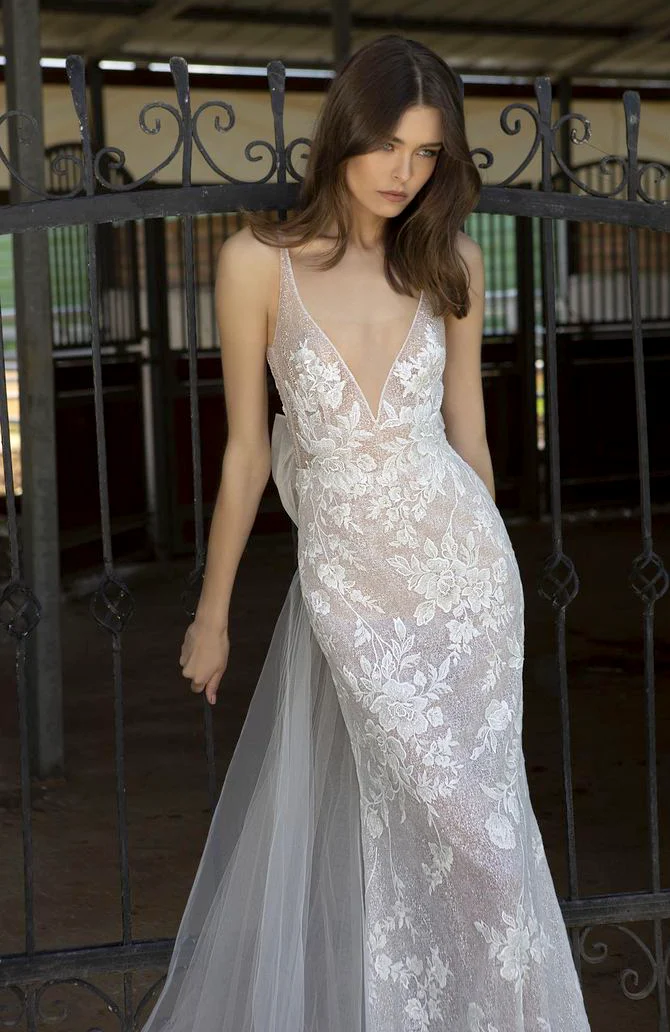
Compare candidates with relaxed arms and hair clear of one shoulder. Look from conversation distance first: should the strap read as a definite surface or remain a finer line? Inspect the edges close up afterwards. Two fine lines are not simply a broad strap divided in half, because the spaces between remain part of the visible arrangement. Seek an actual version rather than mentally assembling those changes in a photograph. The offered garment needs to show the relationship you want in practice.
Treat motifs and quieter bands as different drawings
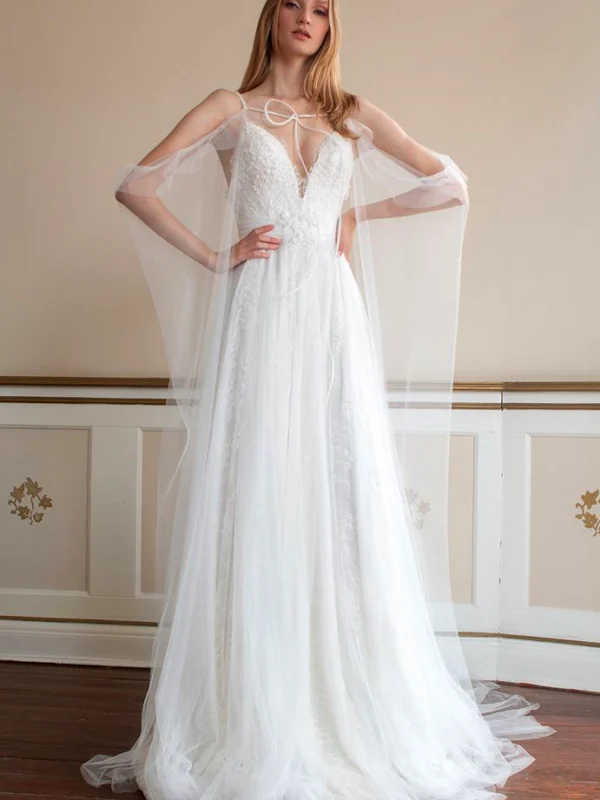
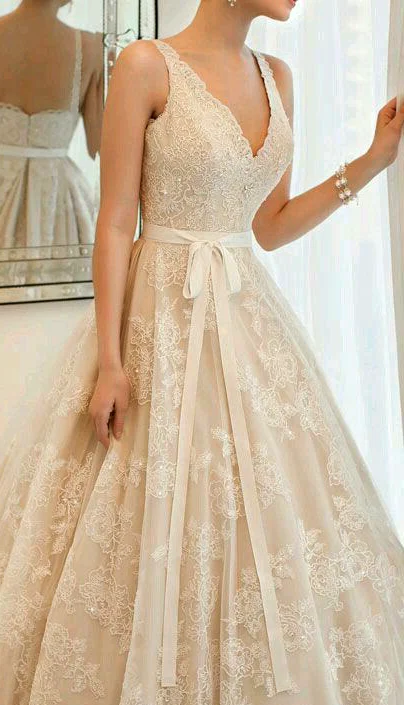
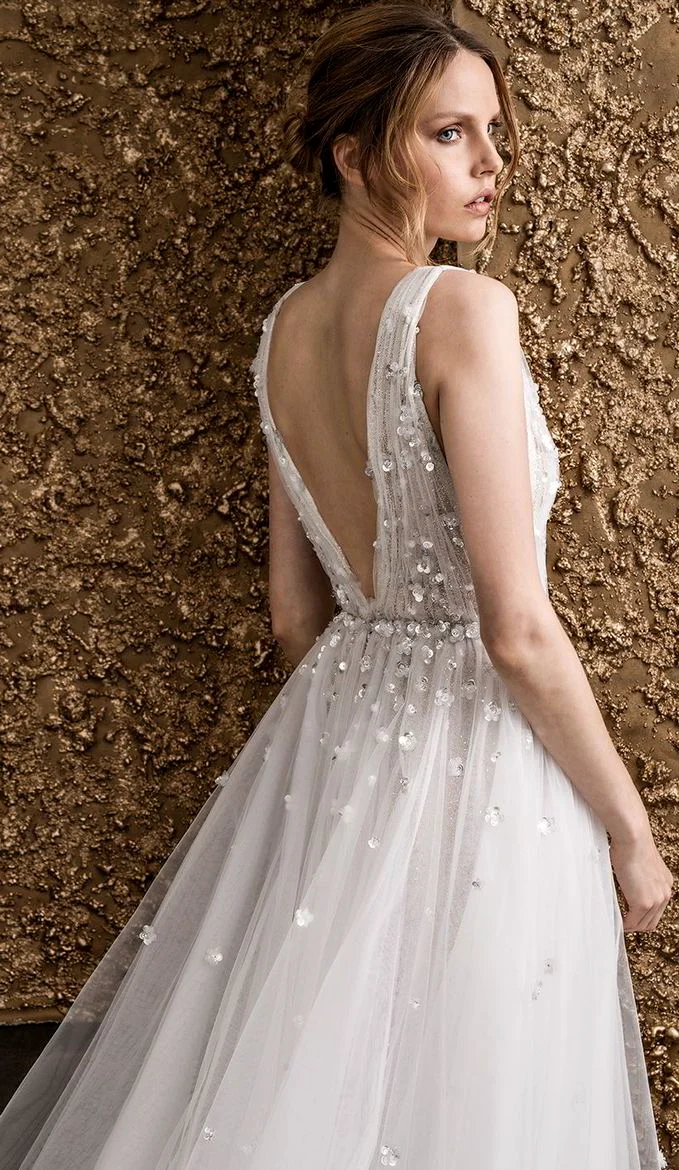
On the pale version with a waist bow, larger motifs continue from bodice to shoulder edge. Curved outer forms remain visible. The back view with smaller pale points instead places longer quieter bands beside a deeper open centre. Decide whether you want to read an individual motif on the shoulder or prefer a more even continuation. Similar pale colour does not make these areas identical. Their visible boundaries and spacing provide the useful comparison, even alongside a similar neckline direction.
Keep jewellery restrained initially. If a broader shoulder already has clear drawing, you may enjoy a freer neck area. Add a necklace afterwards and assess its distance from the strap edges. Do the same with longer earrings. Enjoying motifs does not require repeating them in several other places. Obtain composition and execution information about the actual dress; a motif shape cannot reliably establish a fibre or technique. You can choose the visible drawing without making assumptions about those separate product details.
Inspect the whole route behind
The rear reference shows broad longer shoulder areas framing a deeply open centre and continuing into the defined waist. This is a different view from another dress’s fine front lines. Avoid mentally treating them as a matching front-and-back pair. Request both actual sides of a particular candidate. You can enjoy the width in front while wanting another route behind. Describe those two preferences separately so the search becomes more precise. Hair or a veil may conceal part of that route, which deserves another deliberate choice.
Try your intended hairstyle. Let hair fall over the back once, then lift it clear. Inspect which strap areas remain visible in each state. Add a proposed veil as another layer. If you want an open rear centre visible, decide which line may cross it. Check the underwear connection on the actual dress too. A broad shoulder area cannot establish hidden straps or a particular support arrangement before you have seen and worn the real construction. Appearance and function need related but separate questions at the fitting.
Avoid adopting shoulder line and centre as a package
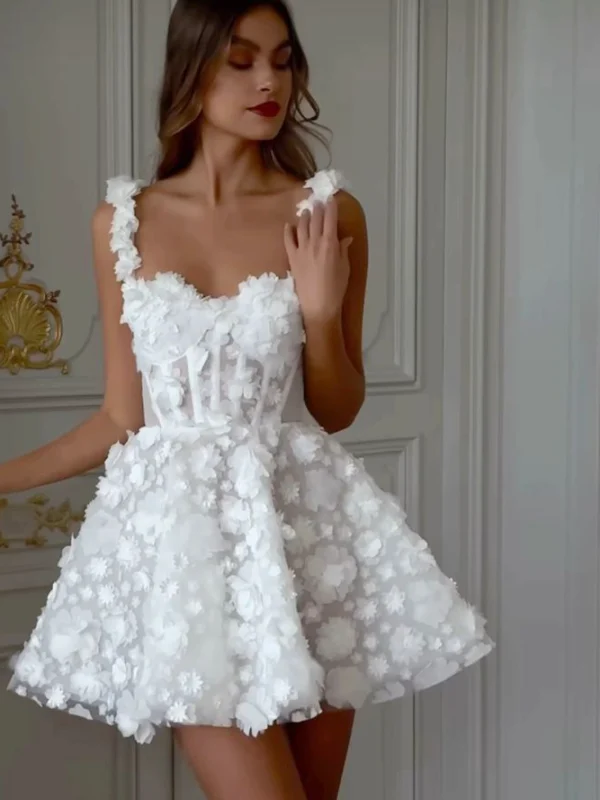
The front view with larger skin-visible side areas combines broad patterned upper sections with a clearly drawn waist. The picture with finer shoulder lines instead has denser flower forms on the front. Compare only the shoulder idea before assessing those other zones. You may seek the broader line beside a quieter waist, or a fine strap alongside less translucent-looking areas. Those preferences can remain independent of whether you enjoy the complete photographed arrangement. Liking one part is a useful start without committing to everything.
The V-neck wedding dress guide explores the centre choice in more depth. Here the question is which side shoulder areas should accompany it. Check how the pieces meet on the actual dress. A fine centre may appear different in motion from its standing view. Keep underwear and jewellery similar for the first comparison rather than changing every boundary simultaneously. Individual preferences can then develop into a complete bodice arrangement without treating strap width as an automatic consequence of neckline depth.
Test the connection through ordinary arm movements
Raise your hands, reach forwards and lower your arms. Notice whether a shoulder edge twists or needs arranging every time. Check both arms rather than positioning only one for a photograph. With a double-looking band arrangement, the space between lines is interesting too. Should it stay even, or would you prefer another distribution? The picture shows one possible position rather than every movement on your body. A few actions at normal speed provide different information from standing still at the mirror.
Include a bouquet or similarly held object next. Decide how much of the straps remains visible in your comfortable hand position. Show any troublesome point on the real garment. A general request for more support or less width could mean different changes. Ask which area would actually be altered and whether you can try it again afterwards. A new edge may affect the drawing you selected, so the visible form belongs in the reassessment as well. Improving function and retaining your preferred appearance are both relevant.
Finish with an outer layer and a clear priority
Try a planned jacket or wrap together with the straps. While covered, part of the shoulder drawing is temporarily hidden. Decide whether you enjoy that view too and how the arrangement settles once the layer is removed. For more arm coverage, the long-sleeve wedding dress guide adds other questions. This does not mean a visible strap can automatically be converted into any sleeve. Inspect genuinely offered solutions rather than relying on an imagined change to a photographed design.
For the final two dresses, record the main shoulder preference: broad motif area, quieter band or fine separated lines. Add the intended rear route and a specific movement observation. Read the actual label; GINETEX explains care symbols. Choose through the real connections on the worn garment. The useful question is not which width is universally better, but which visible shoulder arrangement you enjoy and how it works with your actual bodice. Those notes can guide a further fitting clearly.
Choose visible strap width and drawing first. Then assess the connection to bodice and back with intended underwear, hairstyle and ordinary arm movements.
Frequently asked questions
Do broad straps prove greater support?
Visible width alone does not explain internal construction. Ask to see the actual connections and test the dress through your own movements.
Are two fine straps the same as one broad strap?
No. Separate lines leave different spaces visible and meet the bodice differently. Compare both arrangements on an actual garment.
Do broad motif straps need a necklace?
Not automatically. Assess the shoulder drawing without neck decoration first and add your proposed necklace separately afterwards.
Why include a back view when comparing straps?
The front shoulder line does not show its entire route. Width, spacing and connection to the bodice may appear different behind.